It was an interesting contrast to take our day trip to Dolores Hidalgo on Thursday from here in Guanajuato just after catching up on my three day trip posts from the fall in Perugia. Day trips in Mexico are very different from day trips in Italy, though there are similarities too. Here’s how we made our trip to Dolores Hidalgo with a few thoughts on the contrast.
Figuring Out the Trip
We almost weren’t able to do the day trip to Dolores Hidalgo because I couldn’t find anything online about busses between here and there, even though it is only an hour away. I checked my usual sources for bus schedules – Rome2Rio, GoogleMaps, and BusBud – but none listed any schedules. I figured there were probably collectivos making the journey but a one hour journey through the mountains in a speeding crowded collectivo van didn’t sound appealing. So Chad and I decided we’d skip Dolores Hidalgo, despite it being a pueblo magico and extremely important to Mexican history.
However, I saw a post on a local Facebook from someone planning to make the journey and asking for confirmation of departure points and bus times and several people responded with fairly specific instructions: there’s a bus departing every half hour or so starting at 6:50 a.m. that you can catch from the bus stop across from the Oxxo closest to the Dos Rios roundabout. That location is actually fairly close to our place, so we decided to give it a try. Apparently you can also get the bus from the stops at the Jardín El Cantador.
We’d planned the trip for the last Tuesday in February, about a week before our departure from Guanajuato. However, two days before, the Mexican government killed the cartel leader El Mencho and people were recommended to “shelter in place” Sunday and Monday by the US Embassy and Mexican government. Even though things were back to normal by Tuesday, we decided to postpone the trip by two days to make sure things had fully settled down.
In contrast, for all the day trips we did in Italy, I was able to find all the transit instructions on Google maps and prepurchase tickets online or through the Trenitalia app.
Breakfast and Departure
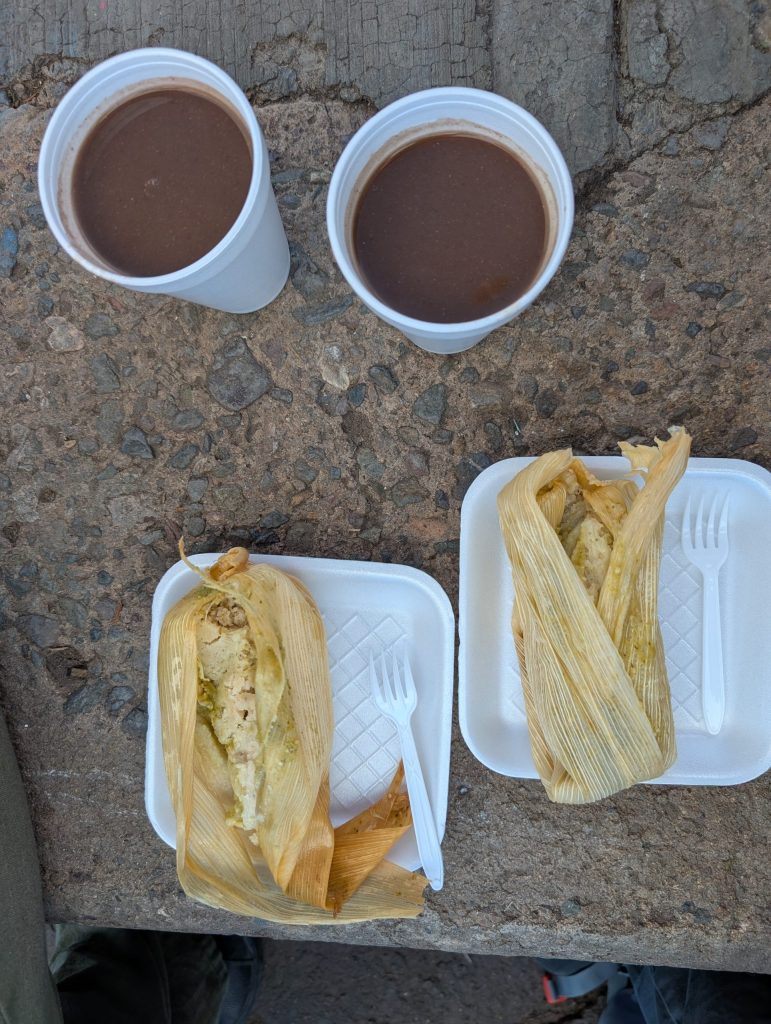
We decided to start our day with a local breakfast prior to taking the bus, so walked down to the tamale cart across the street from the Alhondiga. In addition to craving tamales, we also wanted to get some of the chocolate-maize beverage champurrado that my Spanish teacher, Ammi, had given me in Zihua. We split two tamales, one queso and one pollo, and each got a cup of champurrado, though that was way too much of the sweet, hot drink, as delicious as it is. As we enjoyed our meal, Chad recalled getting tamales and hot chocolate when we made our day trip to Monte Alban from Oaxaca seven and a half years ago. We realized that was probably also champurrado and we’d just forgotten what it was called. It is definitely worth making a point to try it when in Mexico!
Our tamale breakfast was a little more rustic than the cappuccinos and pastries we got when heading out on our last Italy day trip. However, if was very delicious, filling, and inexpensive (80 pesos for all of it) and the man who served us at the tamale cart was very kind and friendly. We know now to look for the big metal buckets. They’re usually filled with tamales.
After breakfast, we made a quick stop back at our apartment on the way to the bus stop to put our remaining cup of champurrado in the fridge. Then we headed up to wait for the bus. It actually arrived right on time at 9:20 a.m. A woman was there a few minutes before to start selling tickets, which we bought from her right before boarding the bus. The price was 101 pesos per person each way.
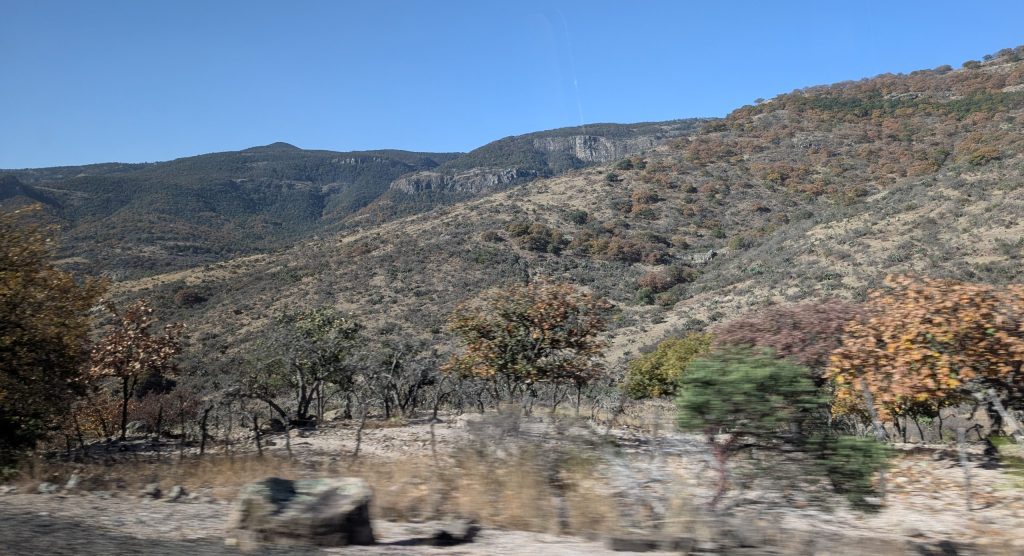
The landscape between Guanajuato and Dolores Hidalgo is very beautiful, but too windy to try to read or write anything on the bus. It took about an hour to arrive at the Dolores Hidalgo bus station, which is about a 20-minute walk from the centro historico. Before heading that way, we asked at the counter about the return bus times and were told they’re every 30-40 minutes until 8:30 p.m. I like to know my exit strategy!
Plaza del Grande Hidalgo and Church
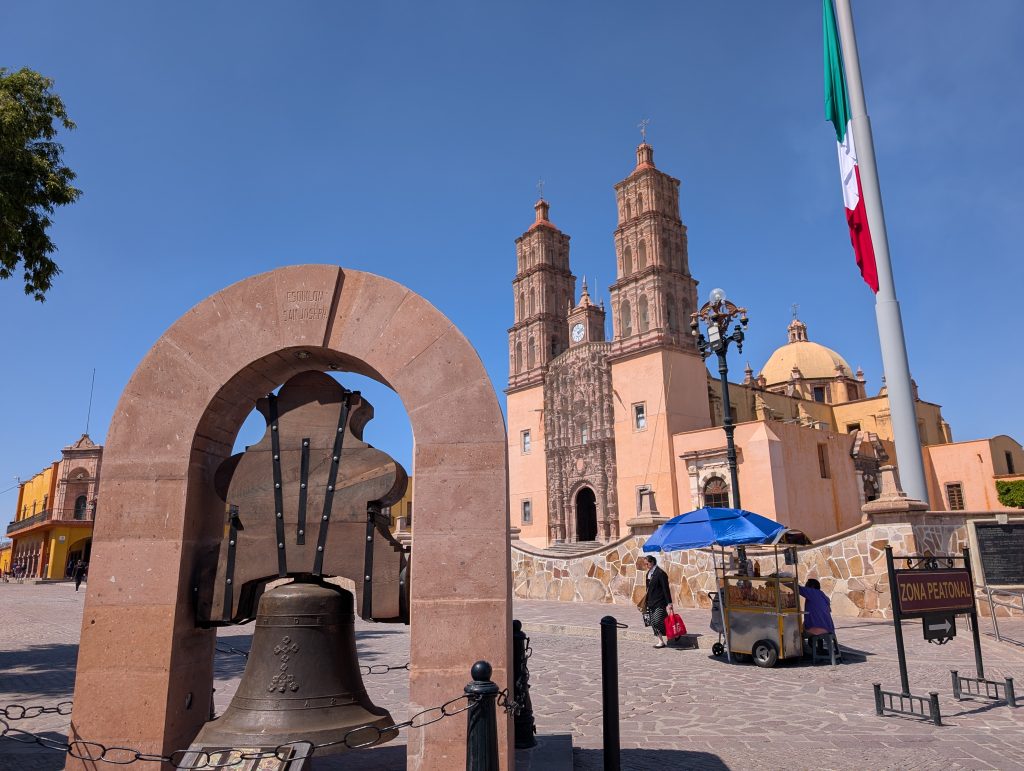
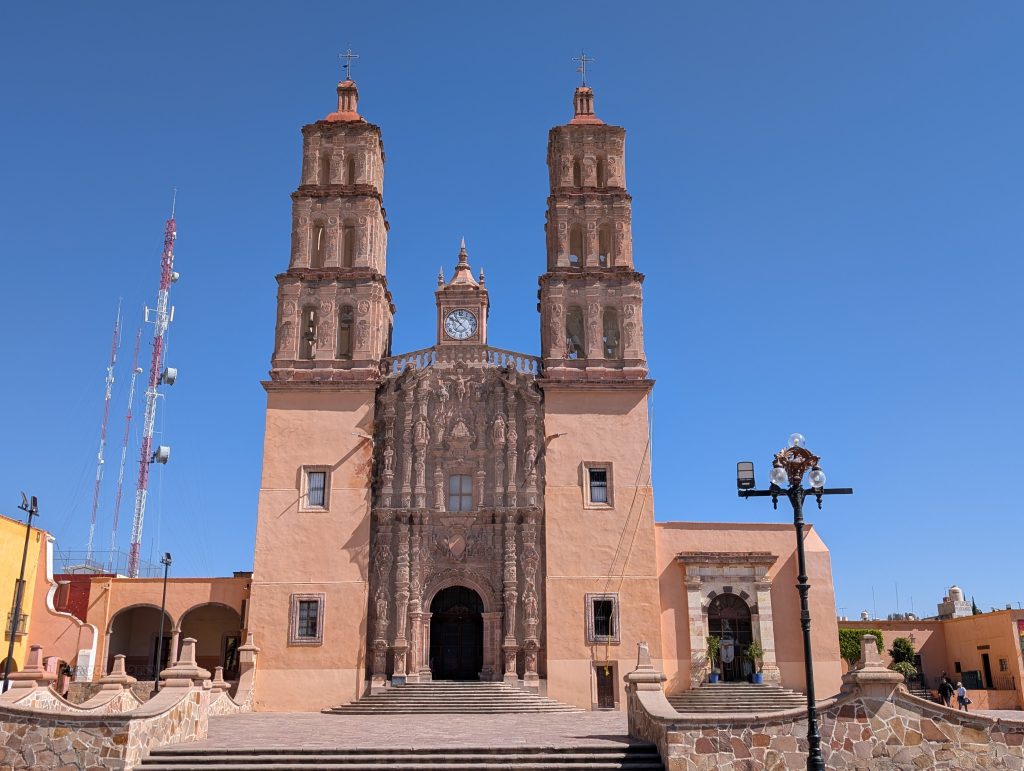
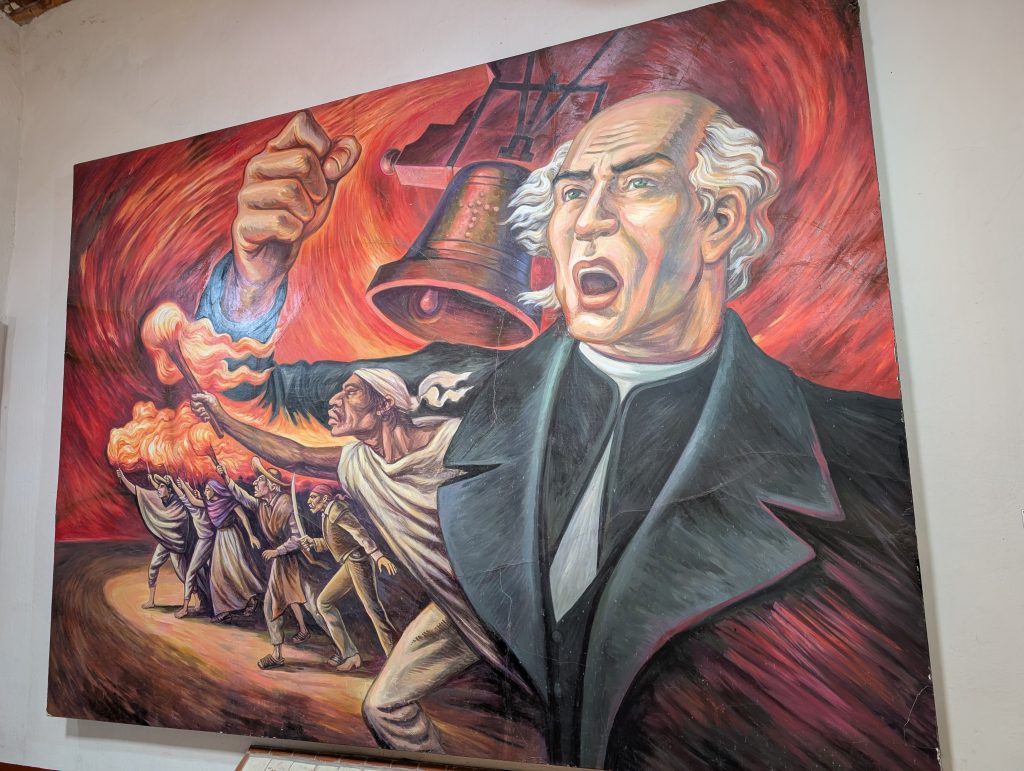
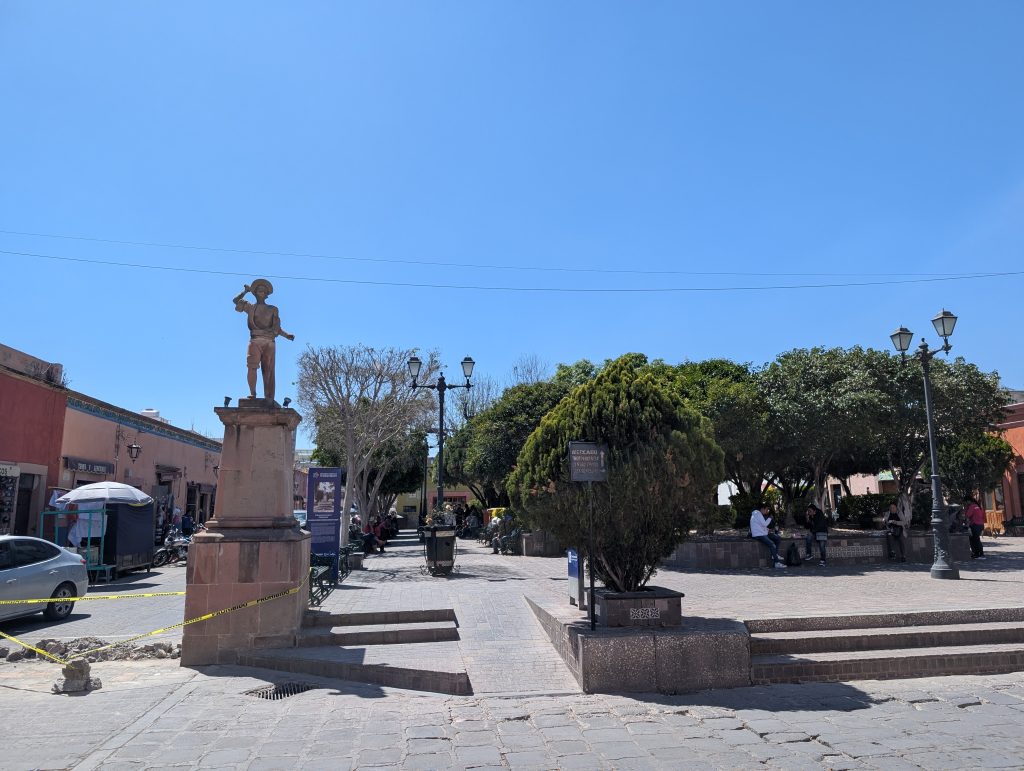
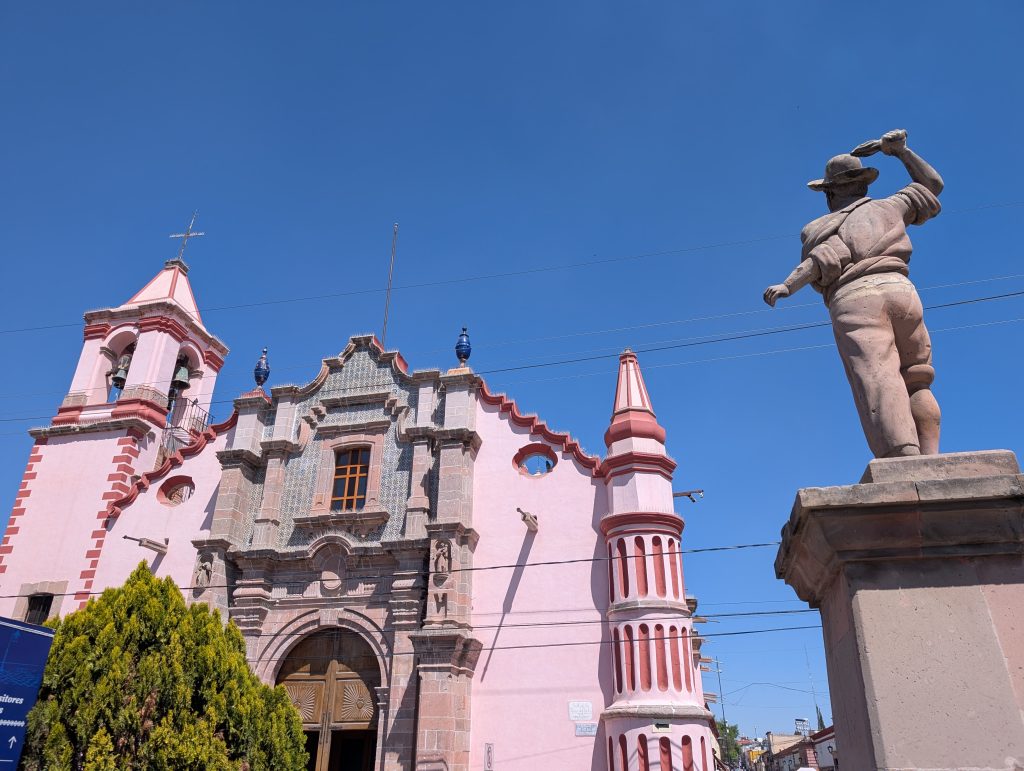
Our first destination was the Plaza del Grande Hidalgo, which is next to the famous church Miguel Hidalgo served when he helped start the war of independence with a speech known as El Grito de Independencia (grito translates as yell, shout, or cry) during which he rang the church bell and urged a revolt against the Spanish. Mexican Independence Day is celebrated annually on September 16, which is the date of this speech in 1810. One cool Mexican tradition is that each year for Independence Day, the Mexican president rings the same bell and reenacts the cry, incorporating the names of fallen Mexican hero and ending by chanting Viva Mexico three times. I have to say, I teared up when I saw a video last fall of Claudia Scheinbaum doing this as the first woman president of Mexico. It was very powerful. You can find it on YouTube if you’re interested.
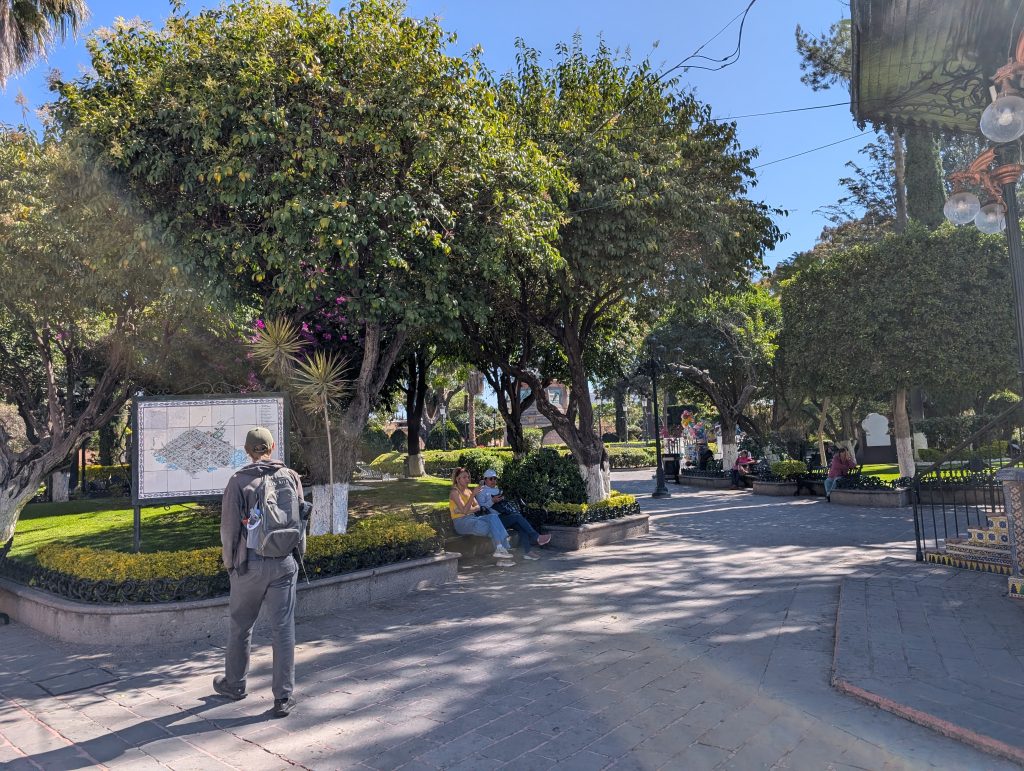
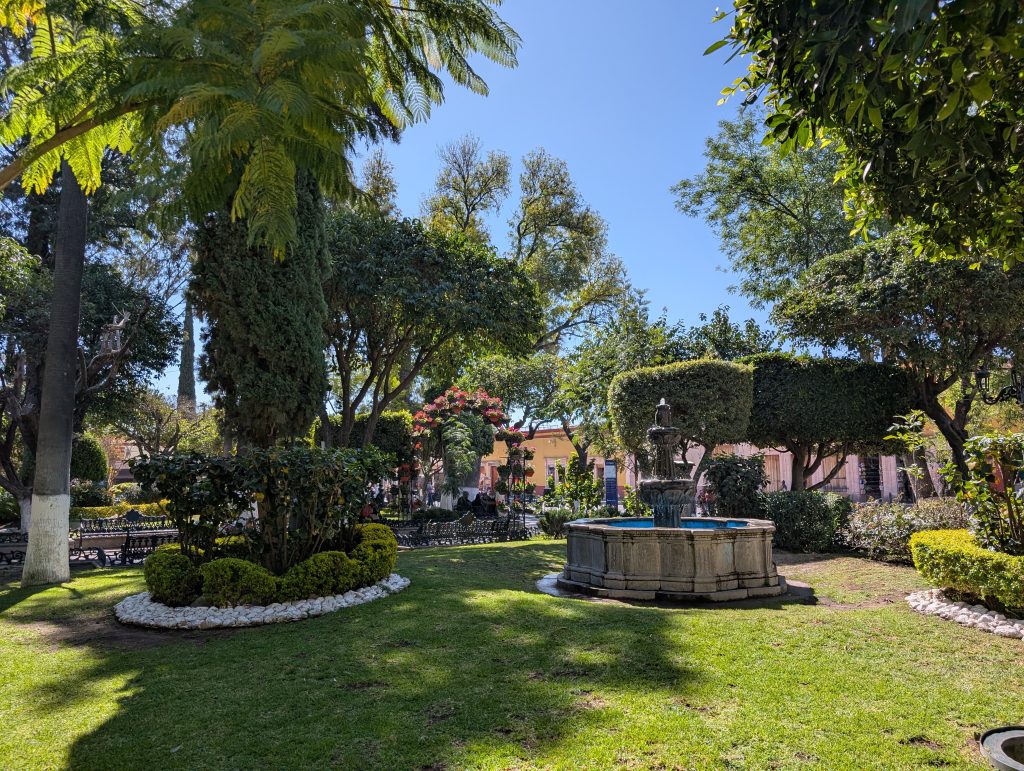
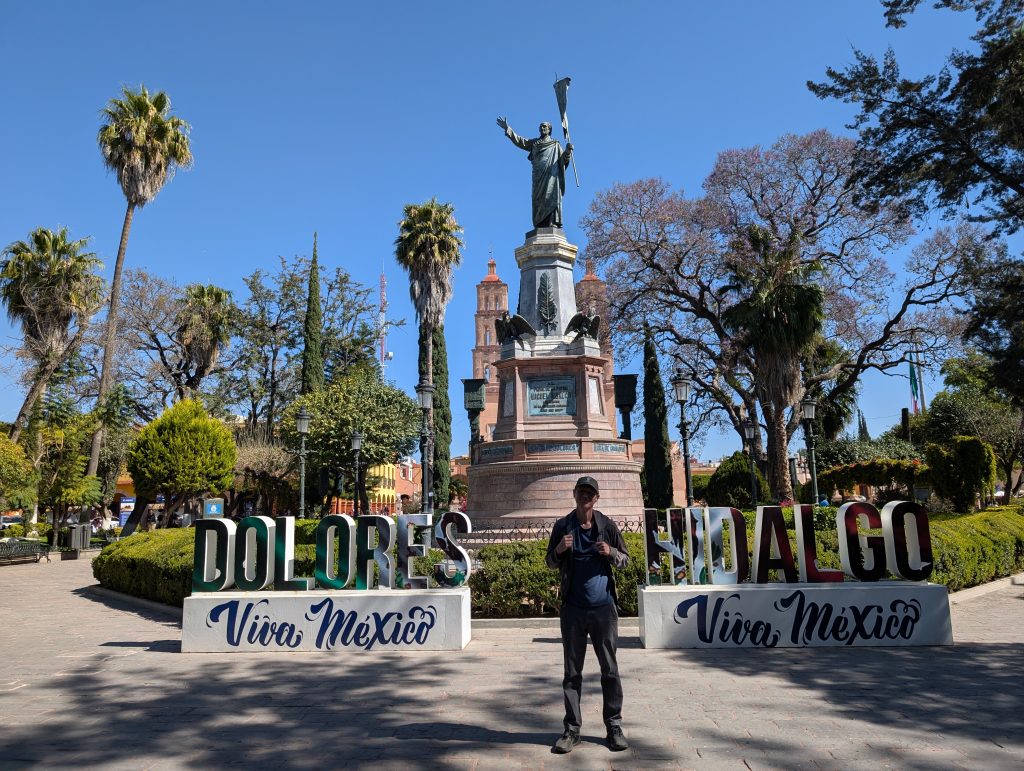
The plaza is very pretty with lots of greenery and fountains and a large Hidalgo statue. It also has several speakers that were playing smooth jazz music on the day we visited, which was unexpected and kind of interesting.
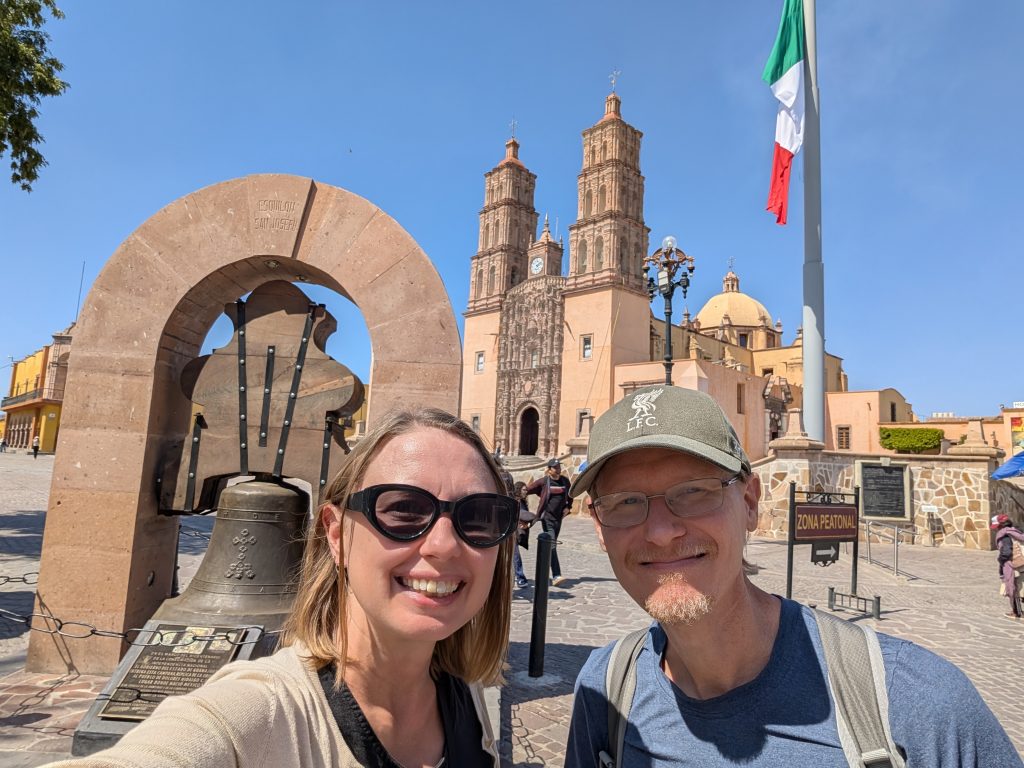
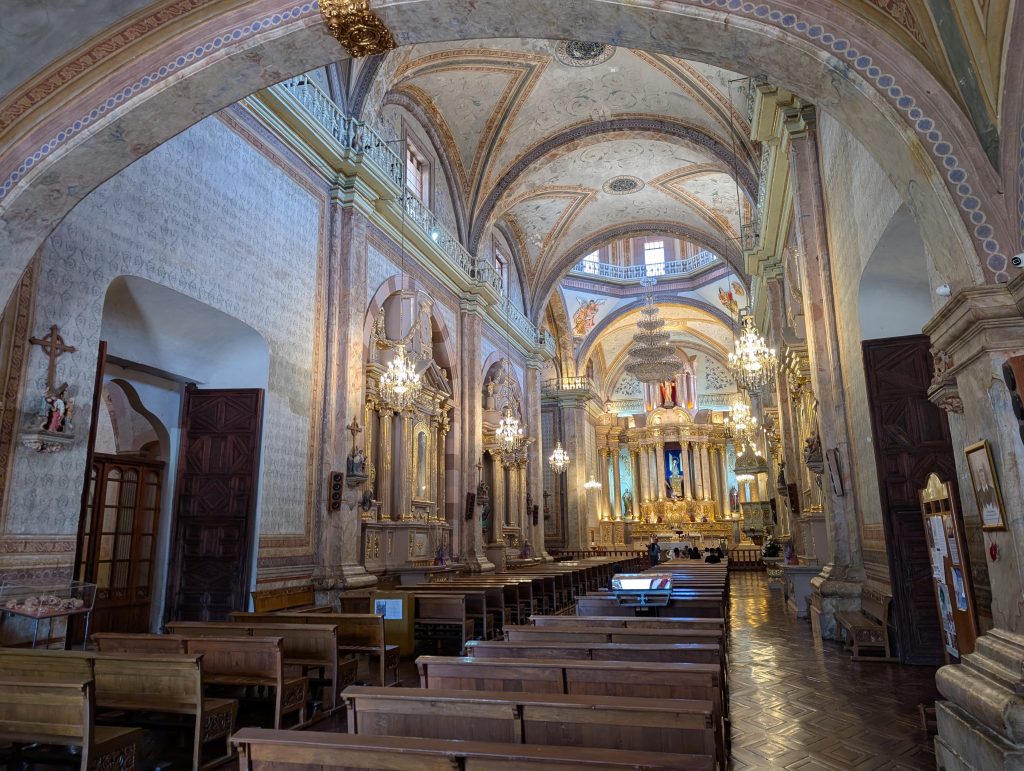
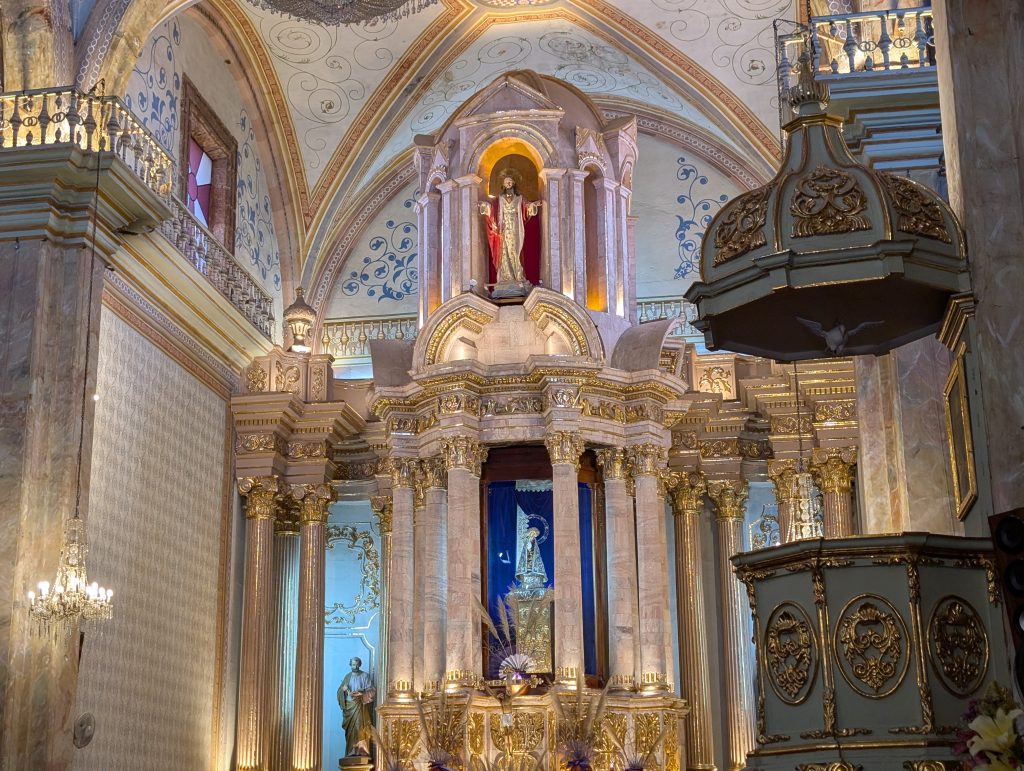
The church, Parroquia de Nuestra Señora de los Dolores, is over 300 years old, founded in 1710, exactly 100 years before the start of the war. It is also very impressive and pretty, especially inside.
Independence Museum
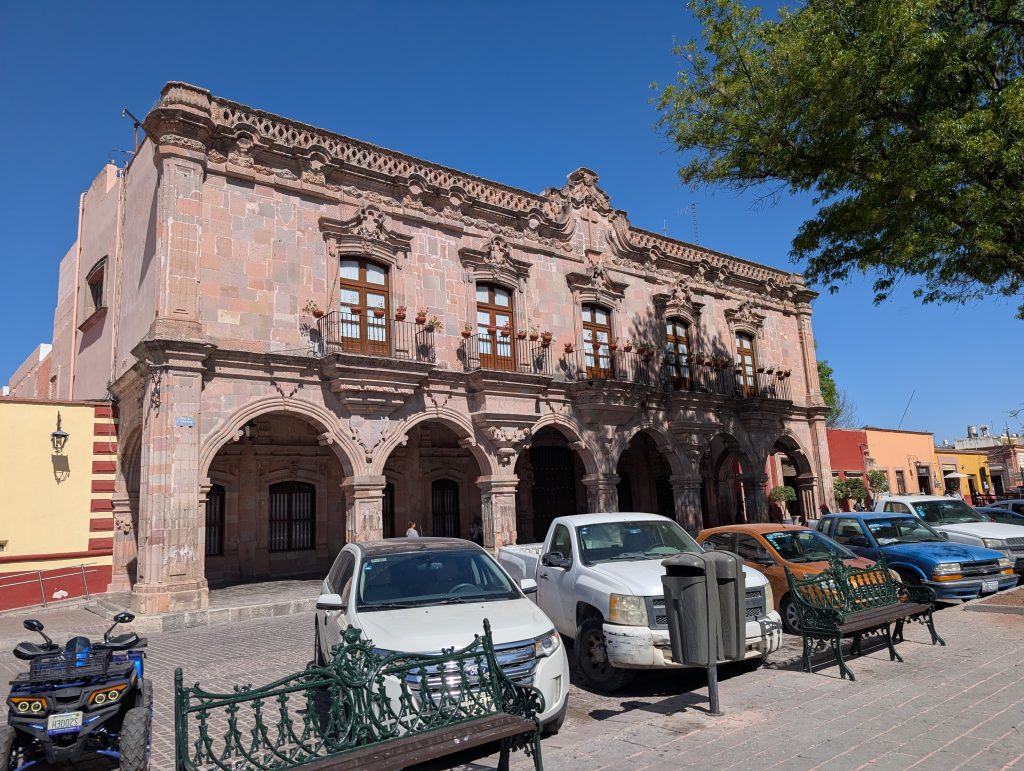
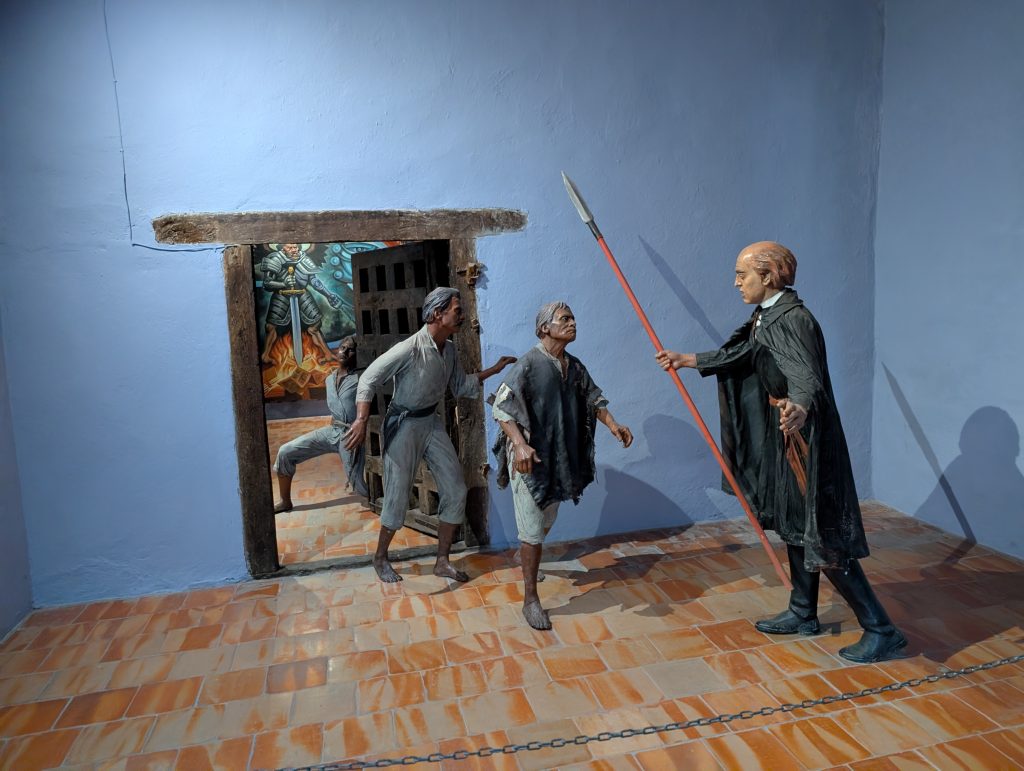
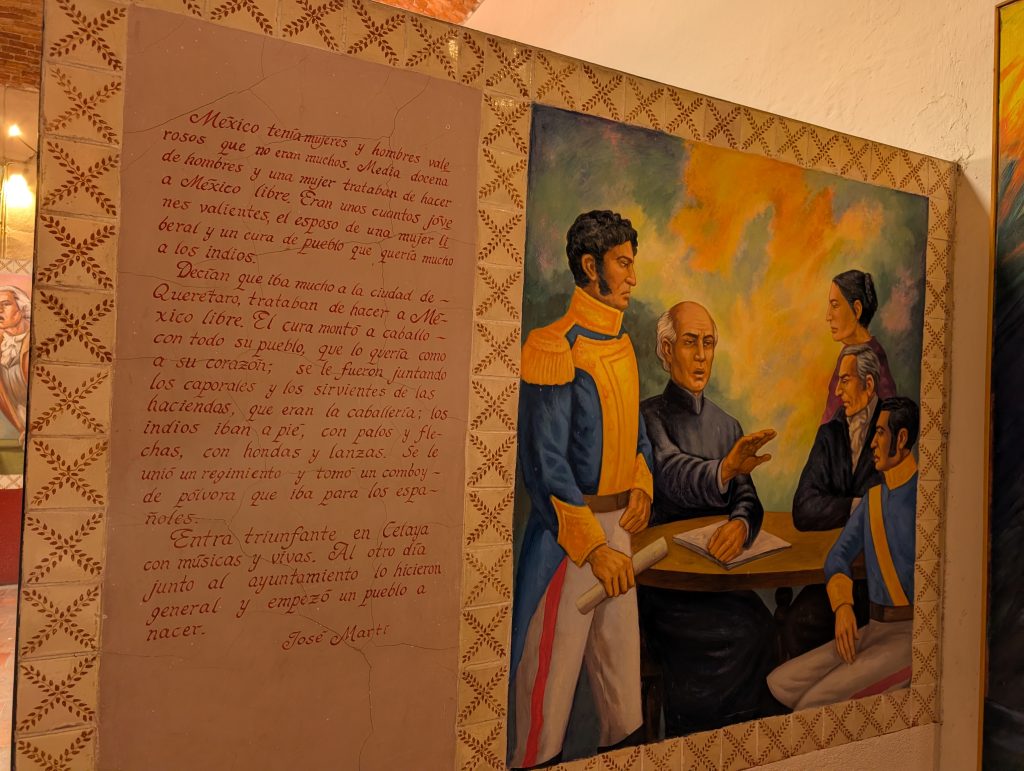
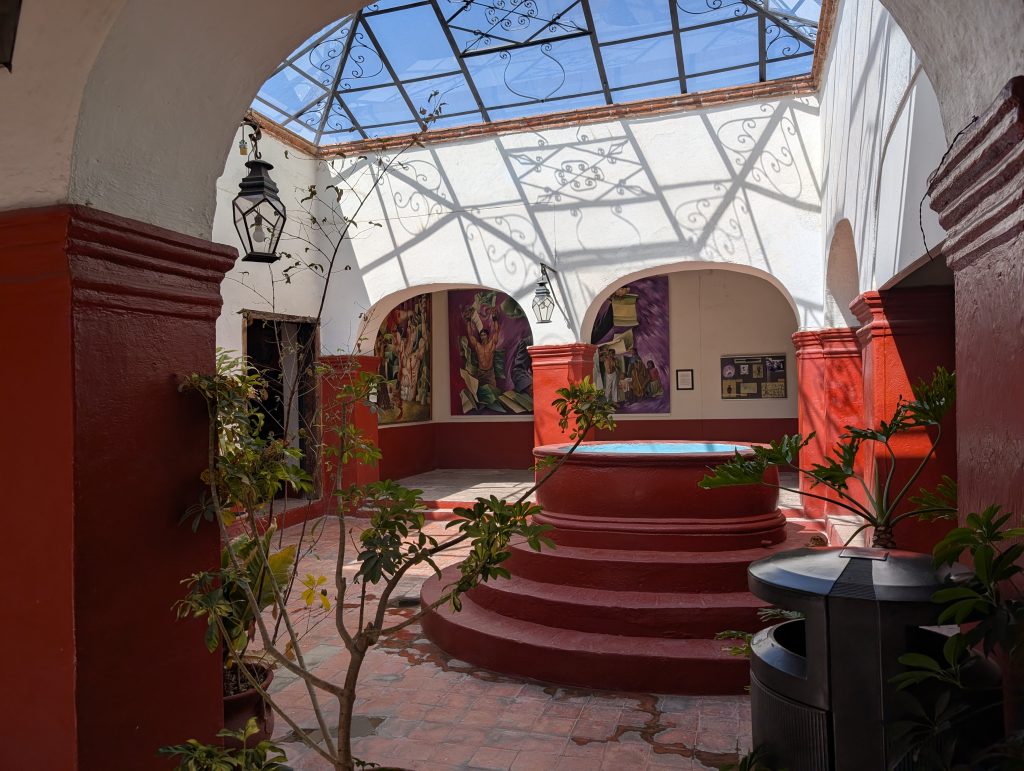
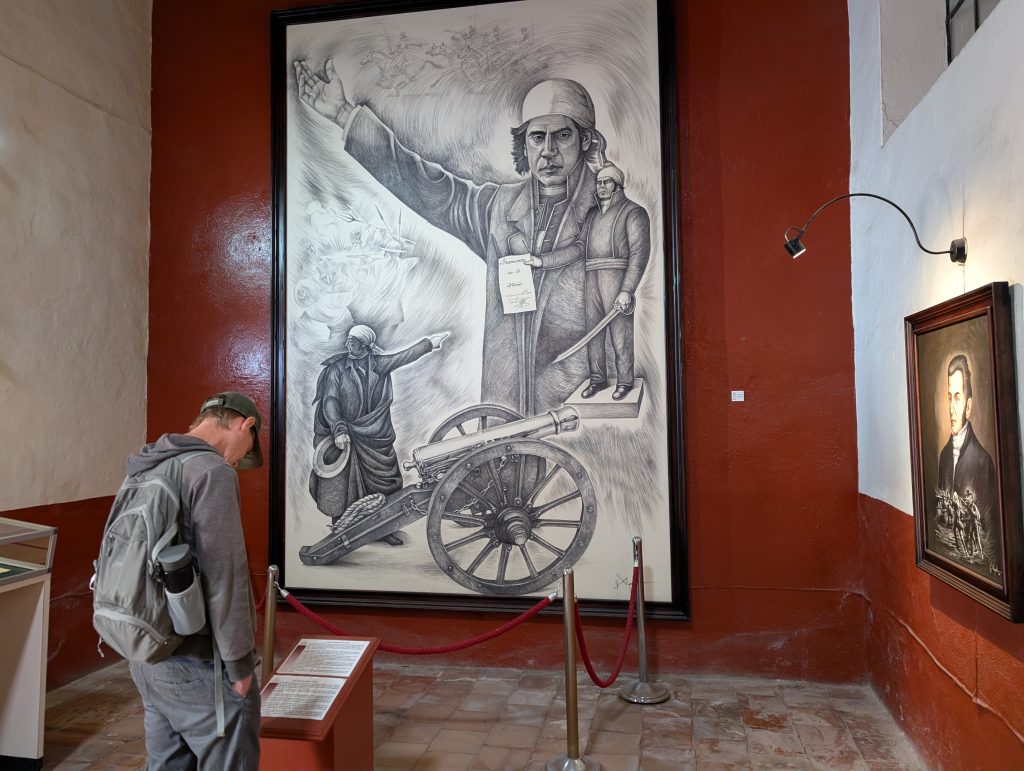
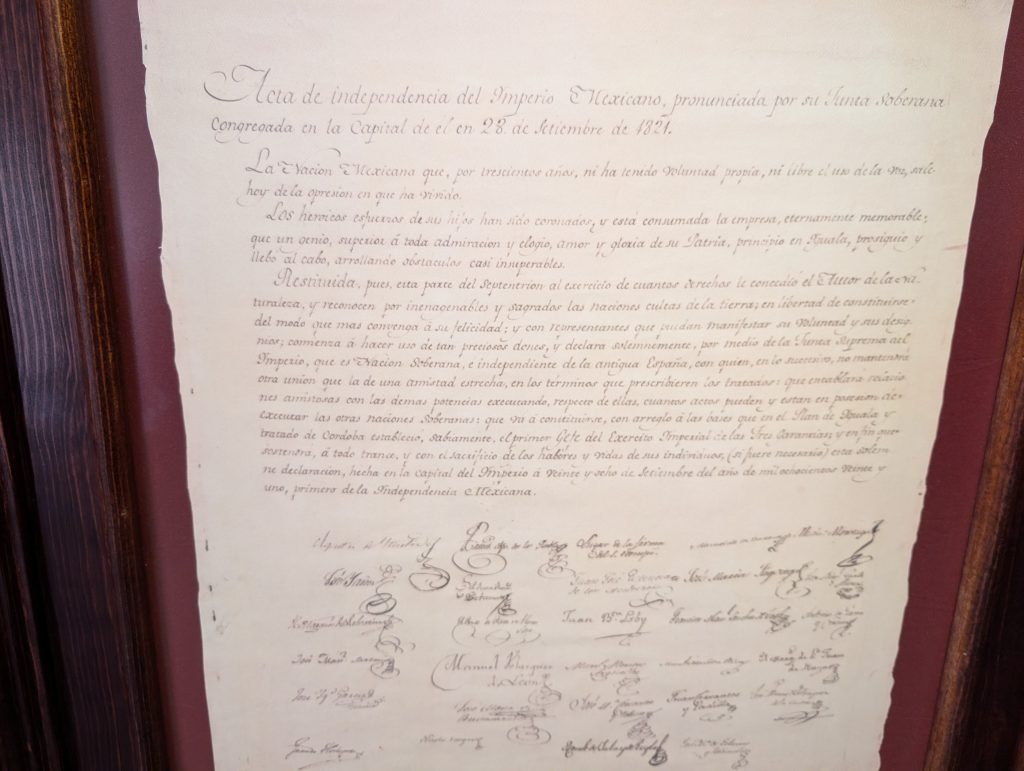
After getting our bearings, we headed to our first museum stop, the Museo de La Independencia. The price was just 25 pesos and it was very interesting and well done. Like everything seems to be in Mexico, it is located in a colonial-era building. It was a prison prior to Independence and after giving his famous yell in front of the church, Miguel Hidalgo freed the prisoners and asked them to join the fight. The first exhibit room has a recreation of that moment and a famous quote from Hidalgo.
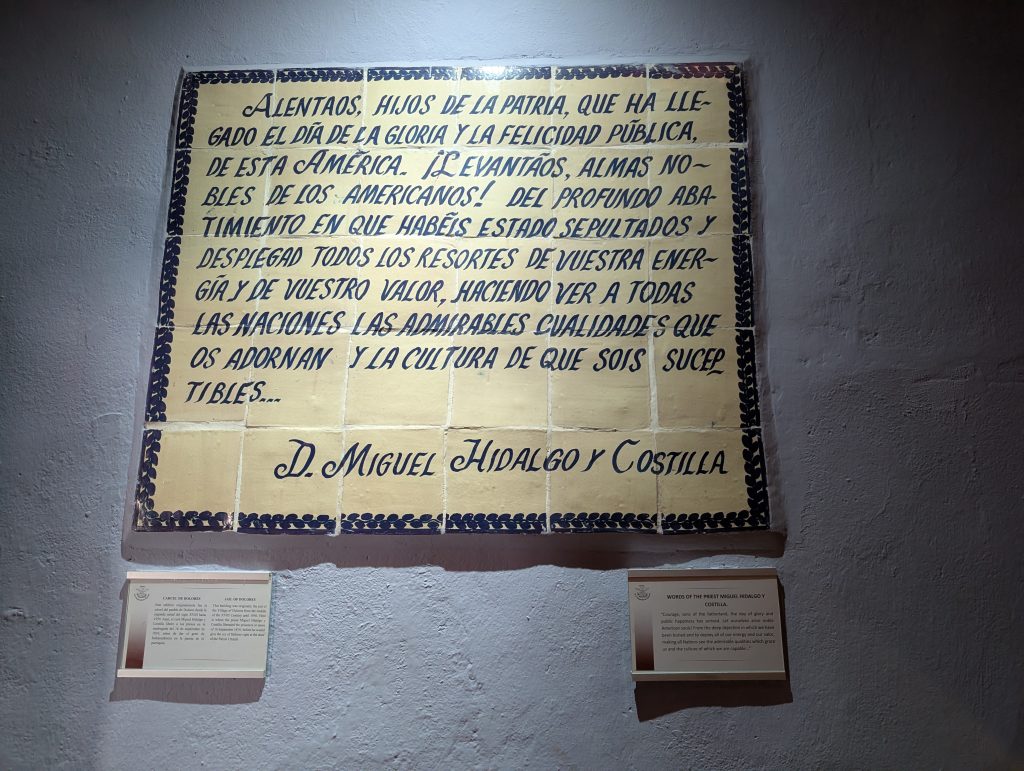
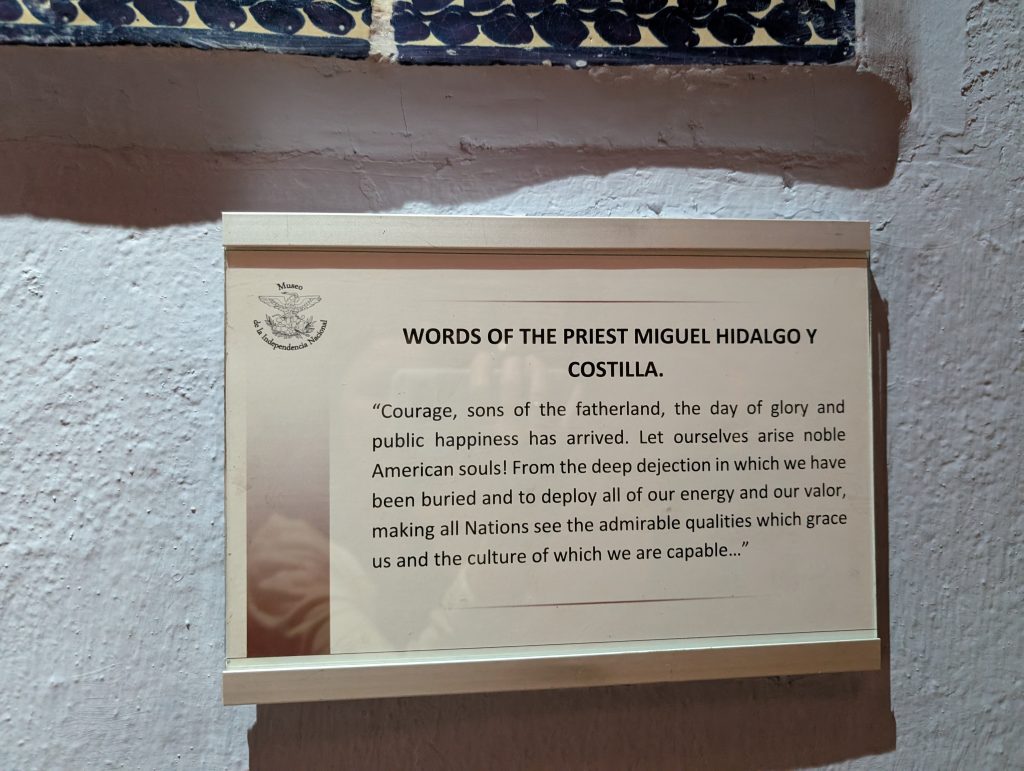
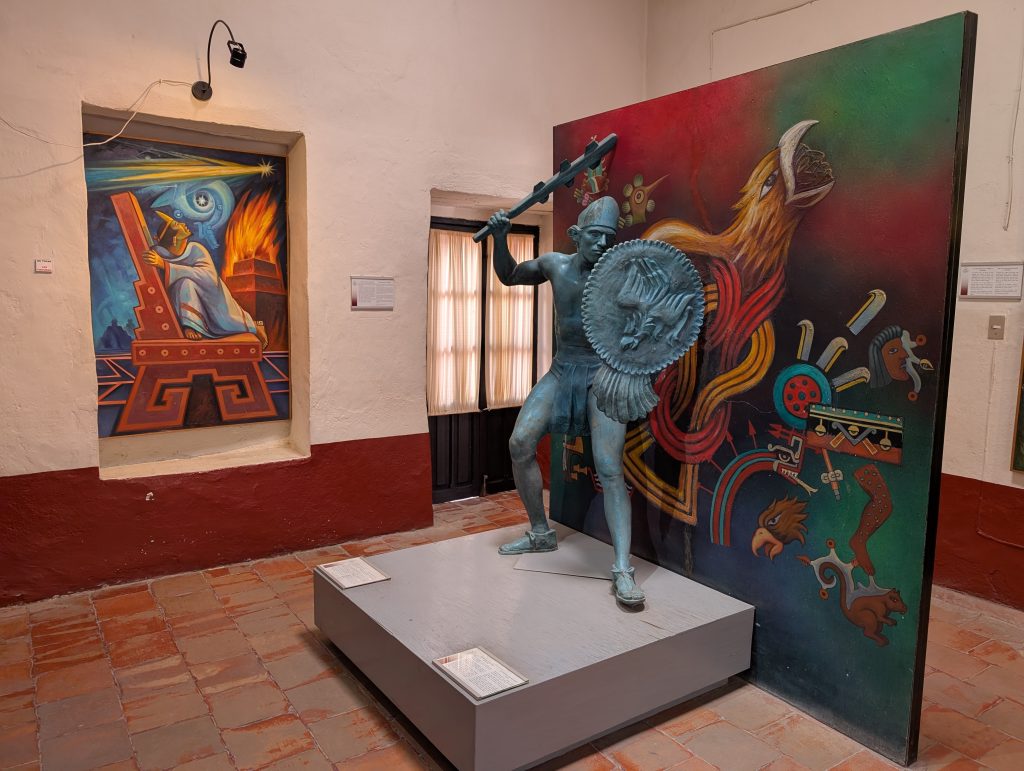
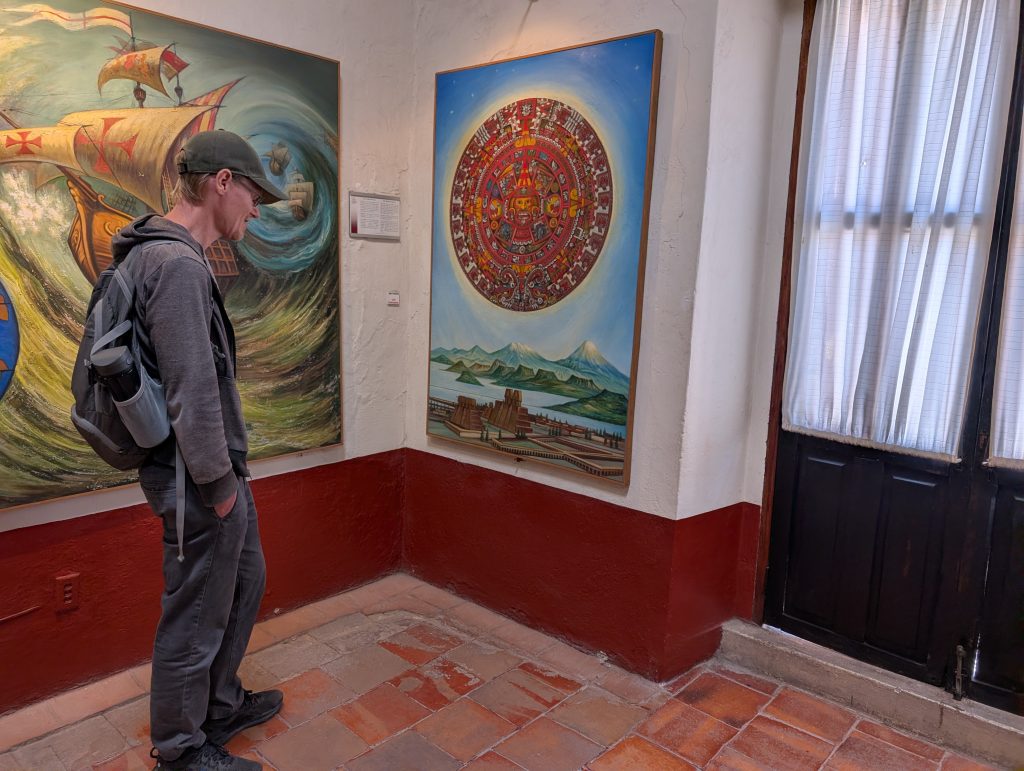
The remaining exhibits trace the history of Mexico from indigenous times to the start of independence with a special focus on the life and career of Miguel Hidalgo. He was widely read and very influenced by the Enlightenment. He was fired from his role as rector of a major monastery for trying to change the curriculum, which is how he ended up as the priest of the church in Dolores (which was later renamed Dolores Hidalgo for him; actually, the town’s full legal name is Dolores Hidalgo Cuna de la Independencia Nacional, which means “Dolores Hidalgo, Cradle of National Independence”).
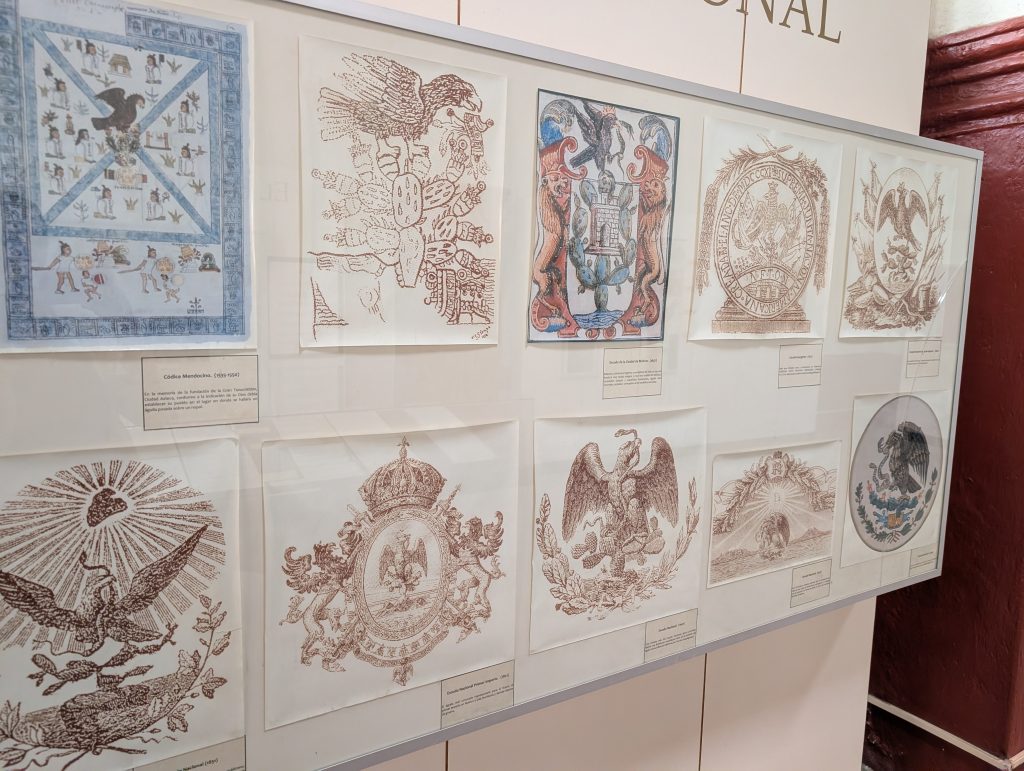
The museum paintings and exhibits really brought the story of independence to life in a slightly different way than the Alhondiga, another important site museum we visited in Guanajuato. It really reinforced the history we’ve been learning here and I think we’ll remember it better now. We also really enjoyed seeing an exhibit on the establishment and evolution of the Mexican shield and flag and learning how far back the symbol of the eagle with a snake in its mouth standing on a cactus seems to go. It connects with the indigenous history as well, which is very cool.
Parque Alameda and Museo Casa Hidalgo
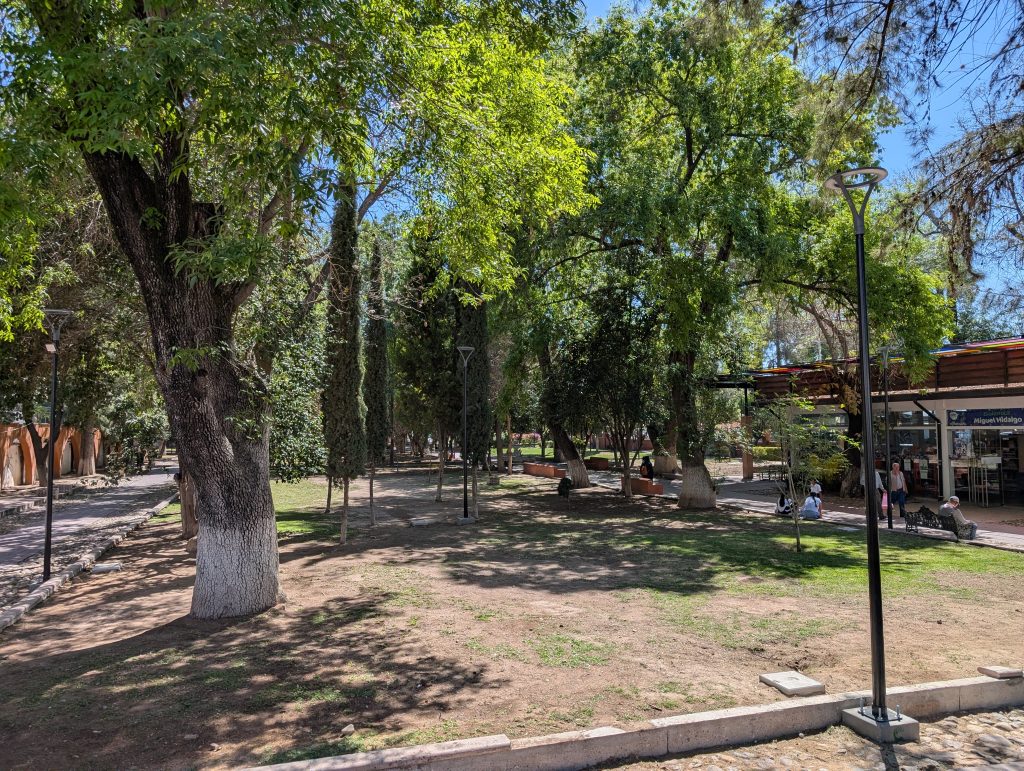
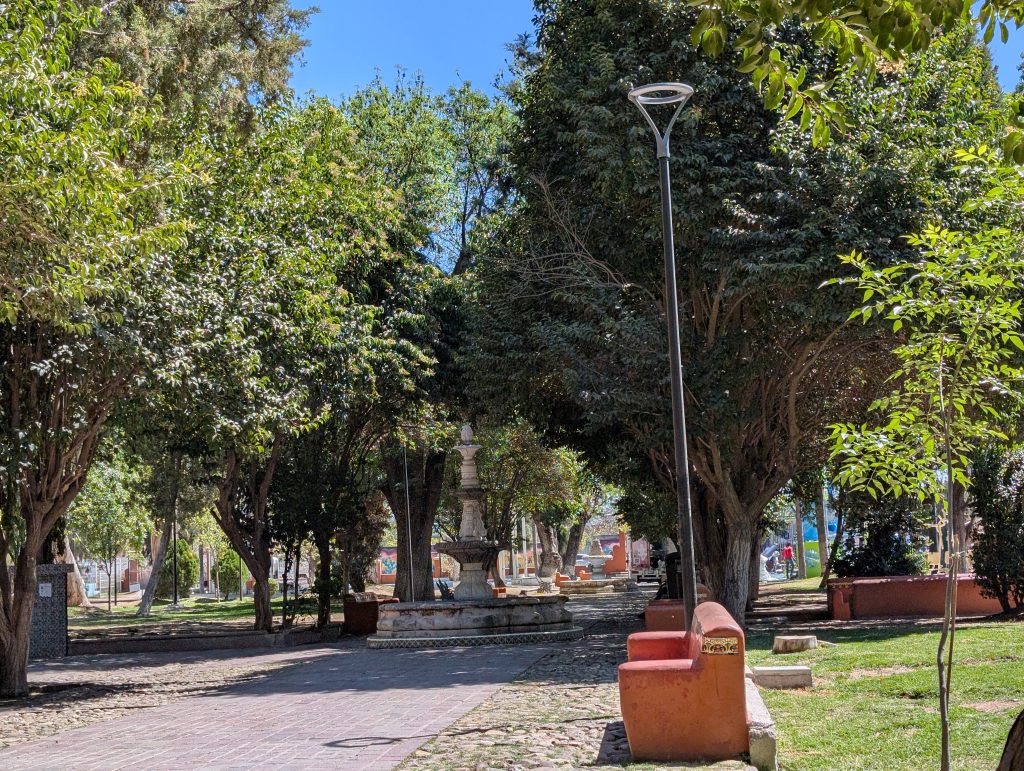
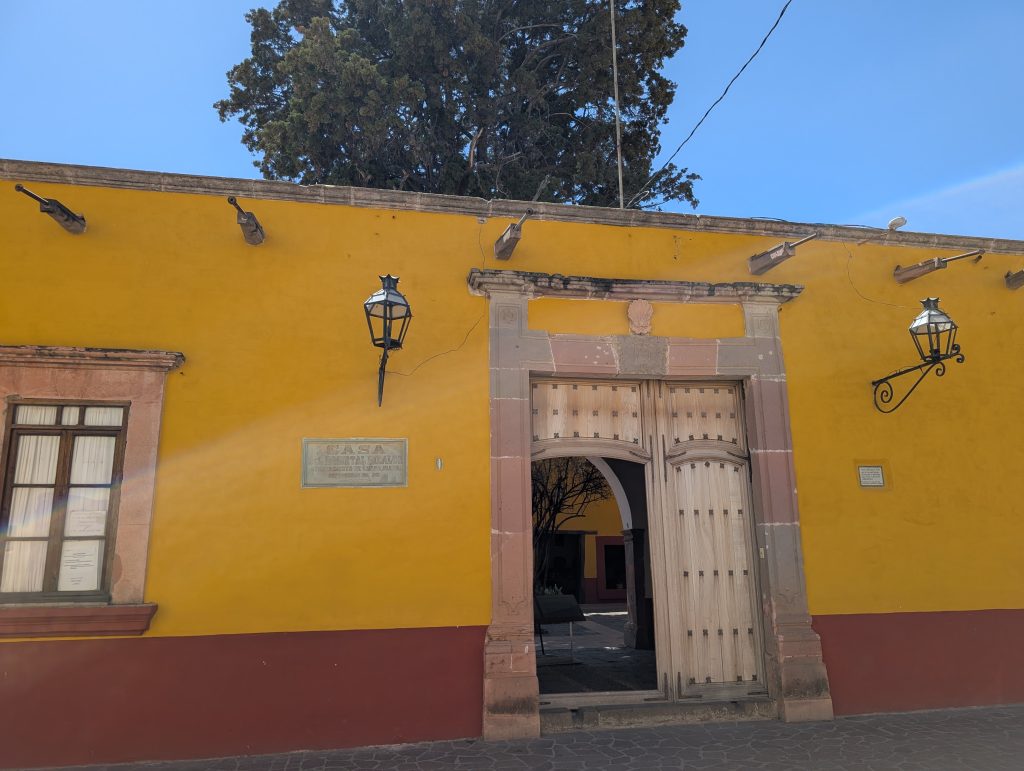
After the museum we walked down to the Parque Alameda to stretch our legs and rest a bit and then came back to the centro historico for another museum before lunch. Museo Casa Hidalgo preserves Miguel Hidalgo’s historic home. It was much pricier at 145 pesos per person for non-Mexicans and an extra fee to take photos, which we chose to forego. It was interesting but a lot like other colonial historic homes we’ve visited. But we were glad we visited and to see it being preserved since it is so important to Mexican history.
Lunch, Helado, and Departure
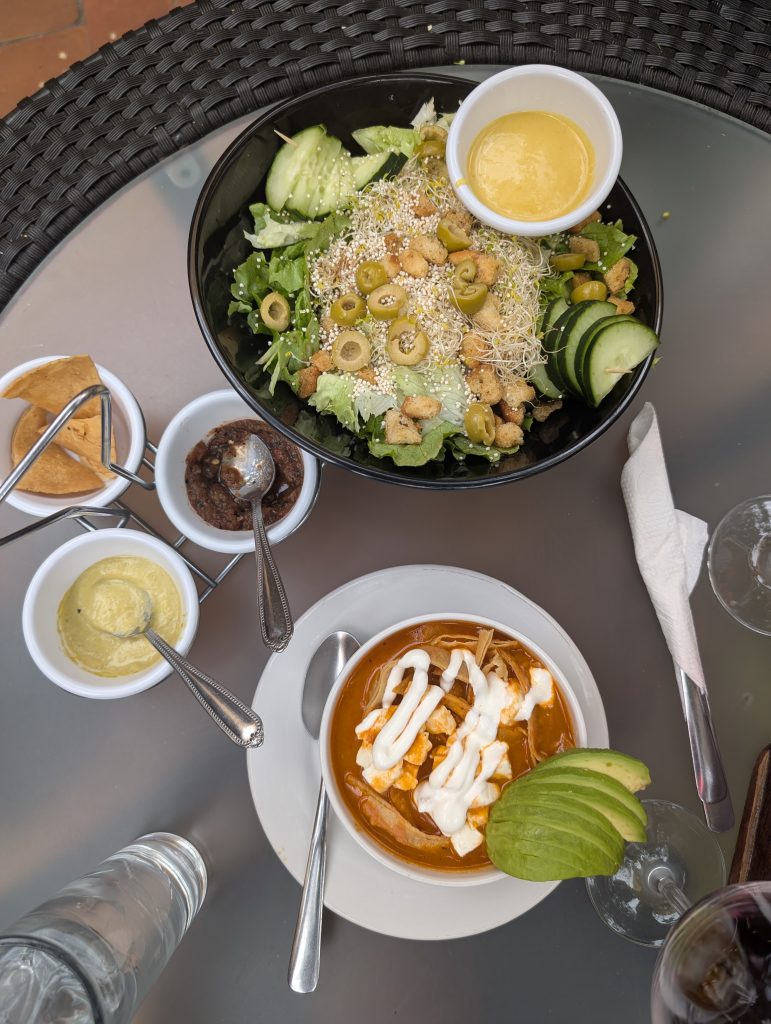
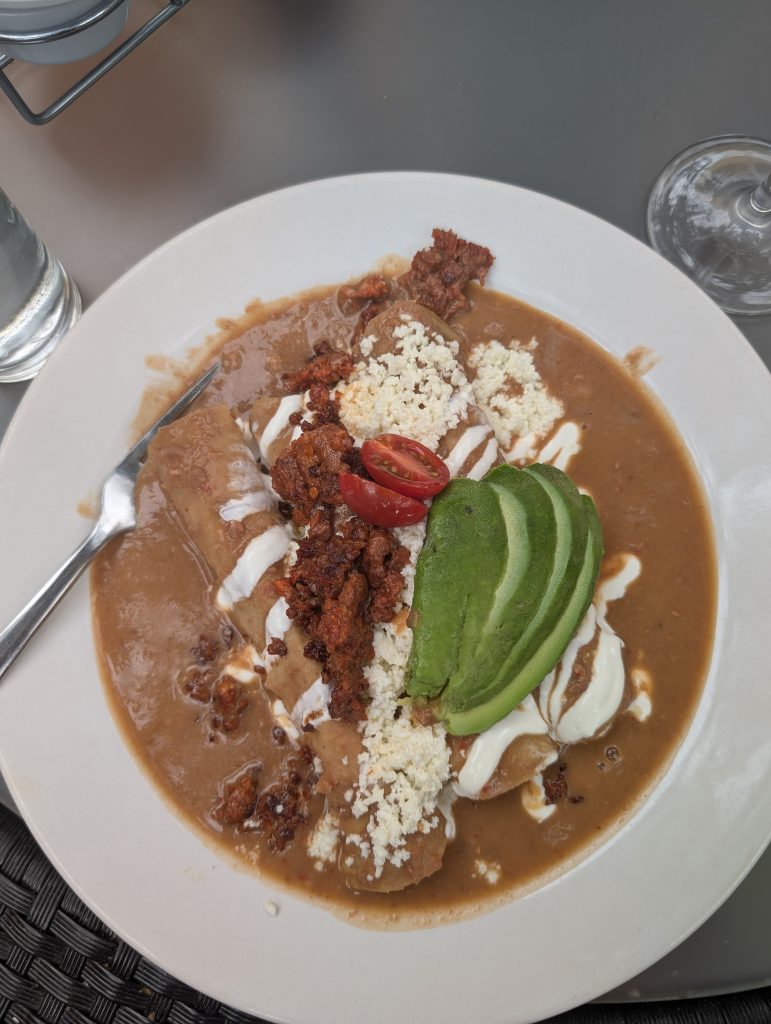
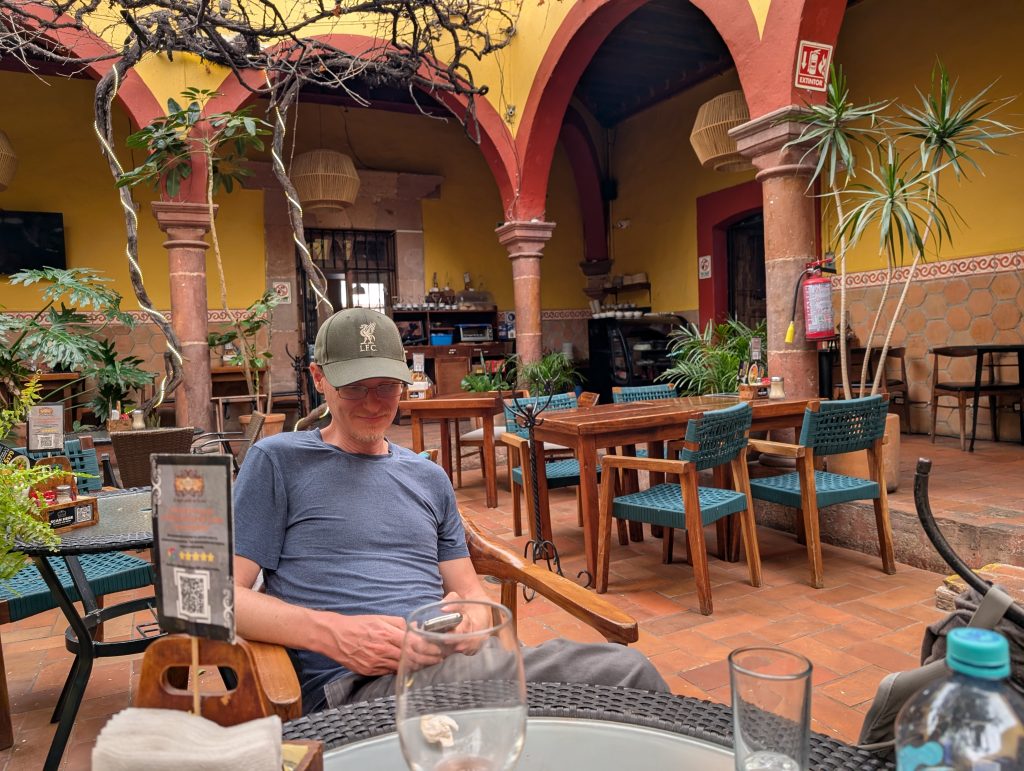
After the Casa Hidalgo, we were finally ready for a late lunch. We chose Restaurante El Fruty, which was mentioned in the one blog post I’d read about Dolores Hidalgo (link here) and it proved to be a great choice. It is located in a pretty courtyard and though I’m normally suspicious of large menus, it had a couple of regional dishes we hadn’t tried. We started with Aztec soup and a green salad (both familiar) and then shared an order of enfrijoladas, which are enchiladas in bean sauce. We also tried a couple of wines from a local winery called Cavas Manchón with our lunch. I got a rosé and Chad had the red blend.
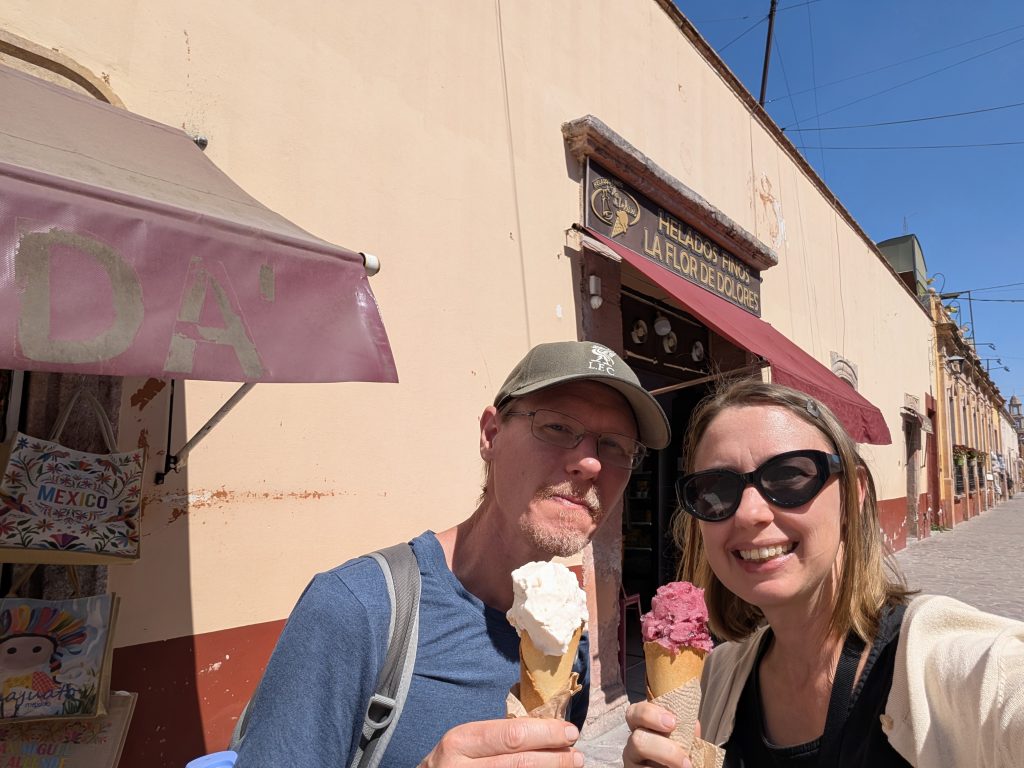
After lunch, we picked up ice cream at Helados Finos La Flor de Dolores. Dolores Hidalgo is known for its interesting ice cream flavors so we chose varieties we’d never heard of. I chose red wine and blueberry and Chad got chongos zamoranos, which is a traditional Mexican dessert made with curdled milk and cinnamon. Both were yummy. On our way back to the bus station, we walked along the street with many pottery stores, another claim to fame of Dolores Hidalgo, but we didn’t stop for any shopping.
We reached the bus station just in time to buy tickets for the 2:50 p.m. bus back to Guanajuato and just managed to board before the bus departed. We were dropped off just in front of the Oxxo a short walk back to our apartment.
All in all, Dolores Hidalgo was a really fun and meaningful day trip. It may not have been as spectacular as our three Italy day trips from Perugia, but it is another one we’ll remember.