When planning for this leg, we had figured we’d spend a week in Santiago de Querétaro (frequently just called Querétaro) and another week or so traveling around visiting the many Pueblos Magicos in the area and on the way to Mexico City. But when I was researching the towns and transportation options, such a broken up week sounded exhausting. So we decided we could do some as day trips (Dolores Hidalgo and Bernal), skip others (Mineral de Pozos, Tepotzotlán), and extend our settled time in Querétaro to 10 days. Because we had quite a bit of work during our time there, it was good we had the extra days!
Arrival

Our Guanajuato Airbnb host was kind enough to give us a ride to the bus station, though we had a couple hour wait there between our check out time (12 p.m.) and our bus at 2:30. We passed the time planning out what activities we wanted to do in Querétaro and when. We traveled by bus on the Primera Plus line, a typical Mexican luxury tourist line with very comfortable seats including padded leg rests and tv screens. Tickets were $24 USD each.
Though the bus departed on time, we were a little late arriving, getting to the bus station around 5:30 p.m. In Querétaro, the bus station is far from the historic center where our Airbnb was so we took a taxi. They had a set price of 140 pesos to centro which we arranged at the taxi window and then were assigned a taxi to take us. We had a little mix up with the address, but the driver was kind about taking us to the correct spot so we paid 200 pesos total (about $12).
Our Airbnb (review below) was much smaller than our places in Zihua and Guanajuato but still more than sufficient for our needs. Chad took the larger bedroom as his office because it had a small built in desk and because it was on the street and we noticed the host had provided ear plugs, which we figured was for the street noise. We took the smaller back bedroom to sleep in and it was quiet enough. I alternated working on the small sofa in the living/dining room and on the bed. The house stayed warmer overnight than our Guanajuato place and we were very comfortable there. The host provided a 20L bottle of water for our arrival, which we were able to refill at a station half a block away for just 25 pesos.
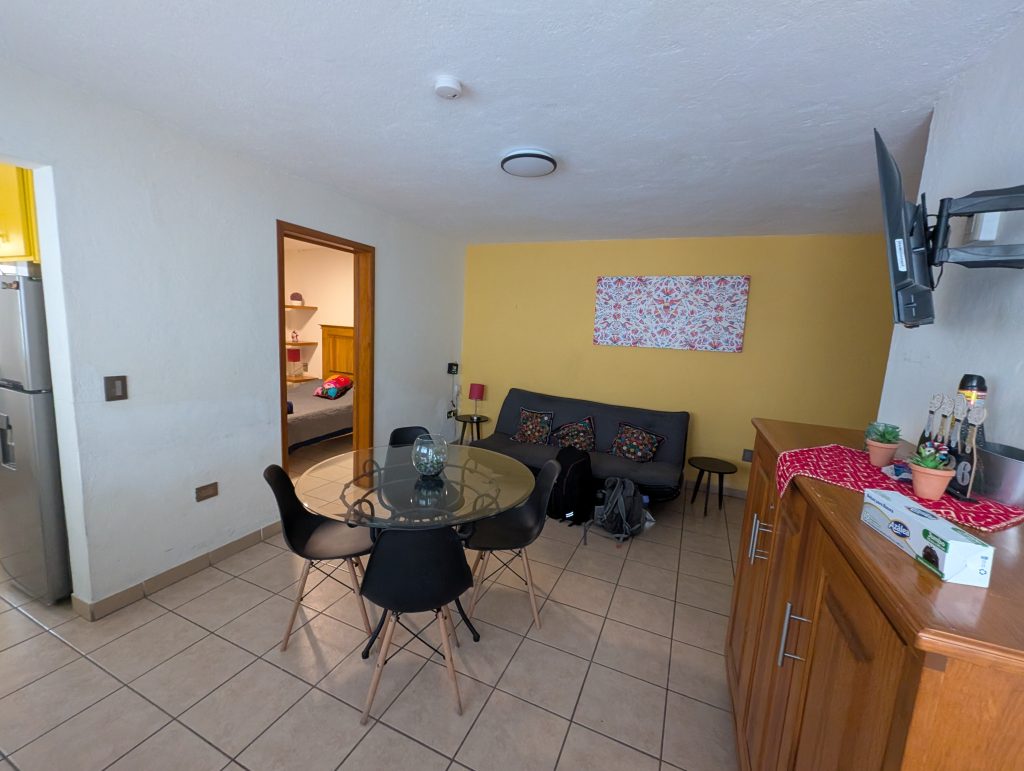
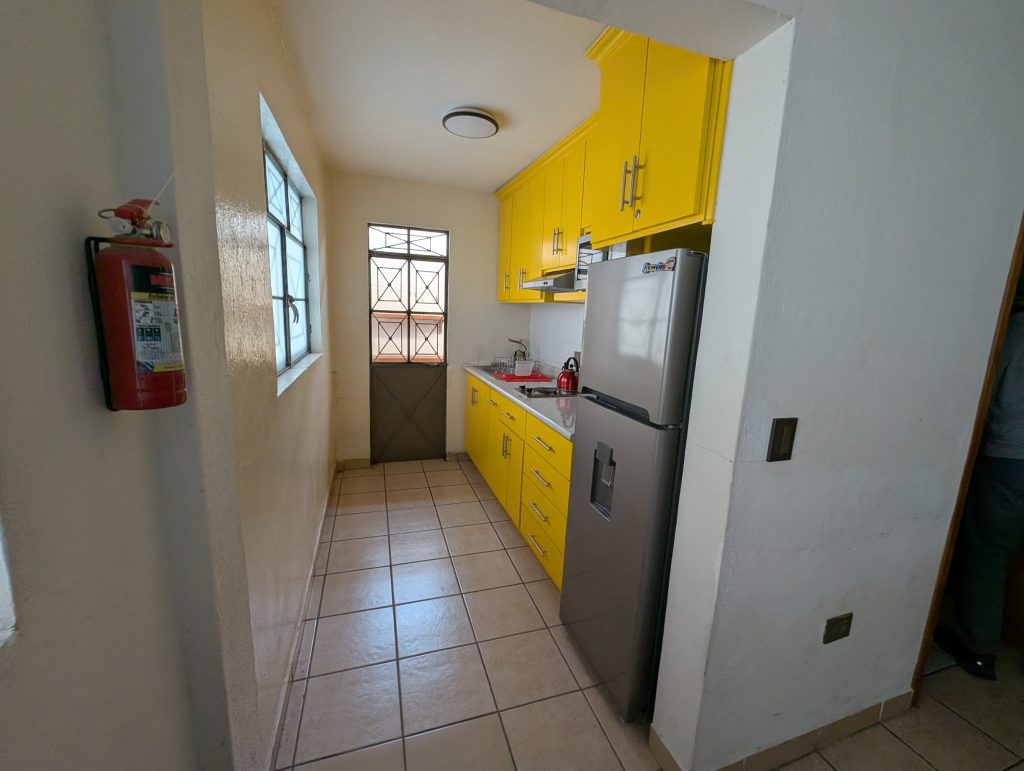
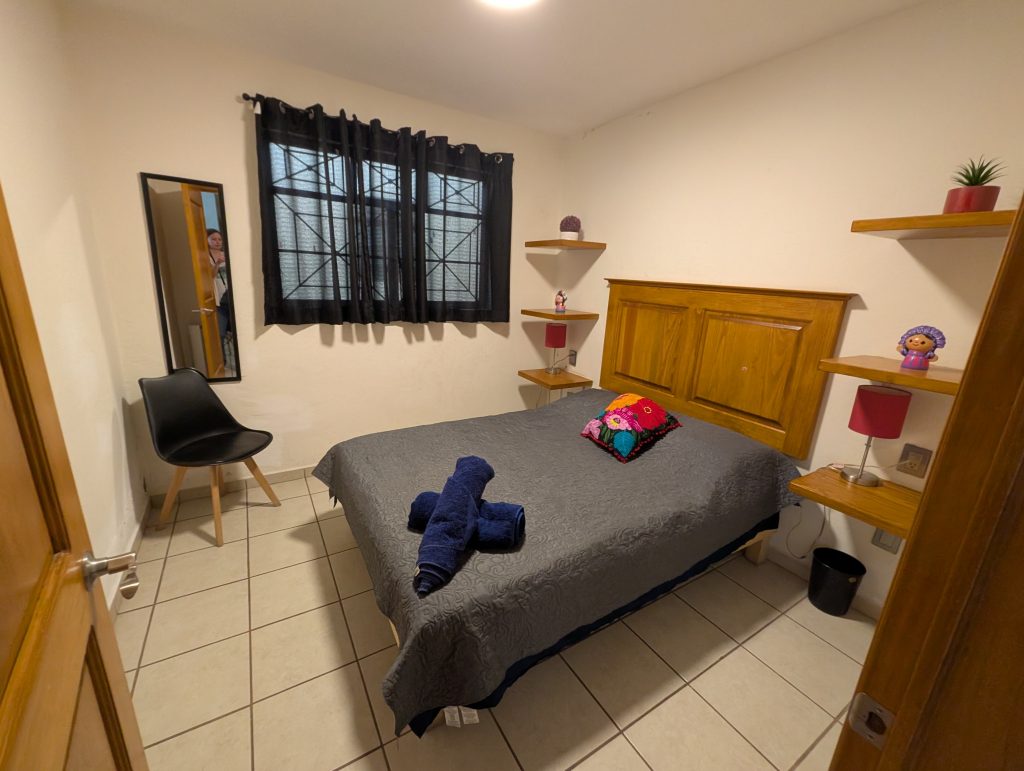
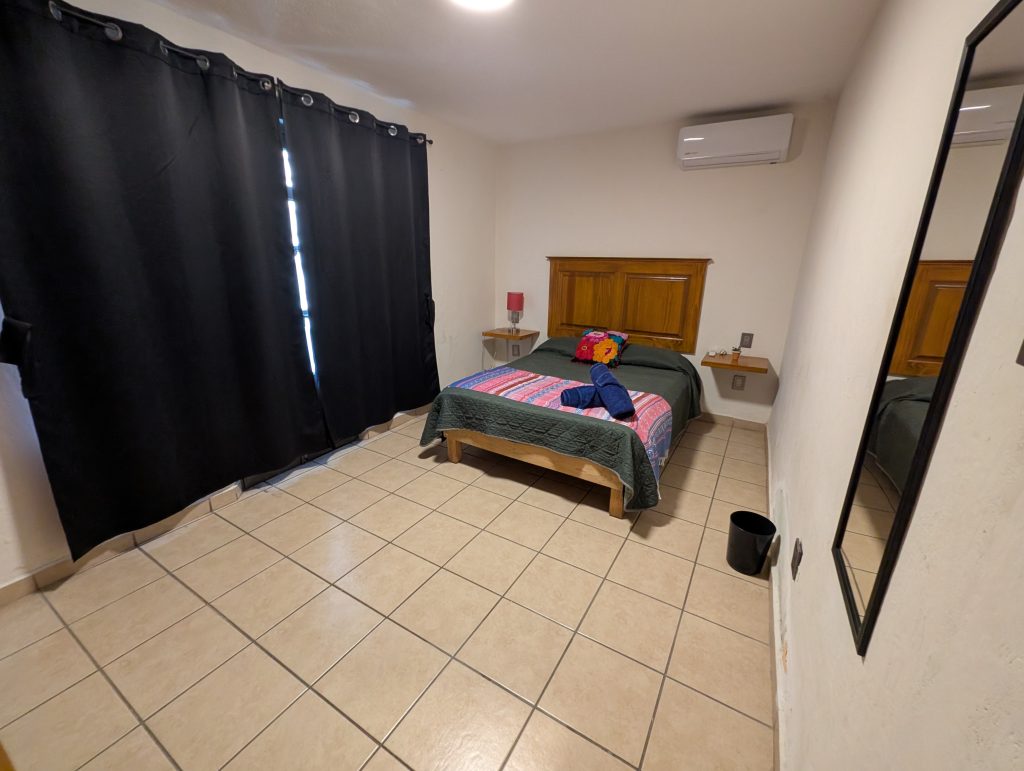

Even though it was a relatively easy travel day, it was still pretty tiring. We managed to walk to the grocery store and picked up a roast chicken and sides and enough other groceries to get through lunch the next day.
Park Experiences
From Google maps, our Airbnb appeared to be very close to a large park that included a national park area, which we thought would be great for picnics and Chad’s running. Instead, most of the green area was a university campus and the park was on a large hill. We visited it as our daily walk on our first full day in the city. Though it was disappointing as a potential running spot, it was an interesting park to visit with great historical significance. It’s called Cerro de las Campanas (Hill of the Bells) and is known for being the site where Emperor Maximillian was executed with his two generals in 1867. With the fall of the empire, Mexico had a brief period as a republic under Benito Juarez, Mexico’s first indigenous president, until the dictatorship of Porfirio Díaz started in 1876. At the top of the hill, there’s a large Benito Juarez statue and bronze model of the city. There’s a small fee to enter the park (less than 10 pesos) but it was well worth our visit.
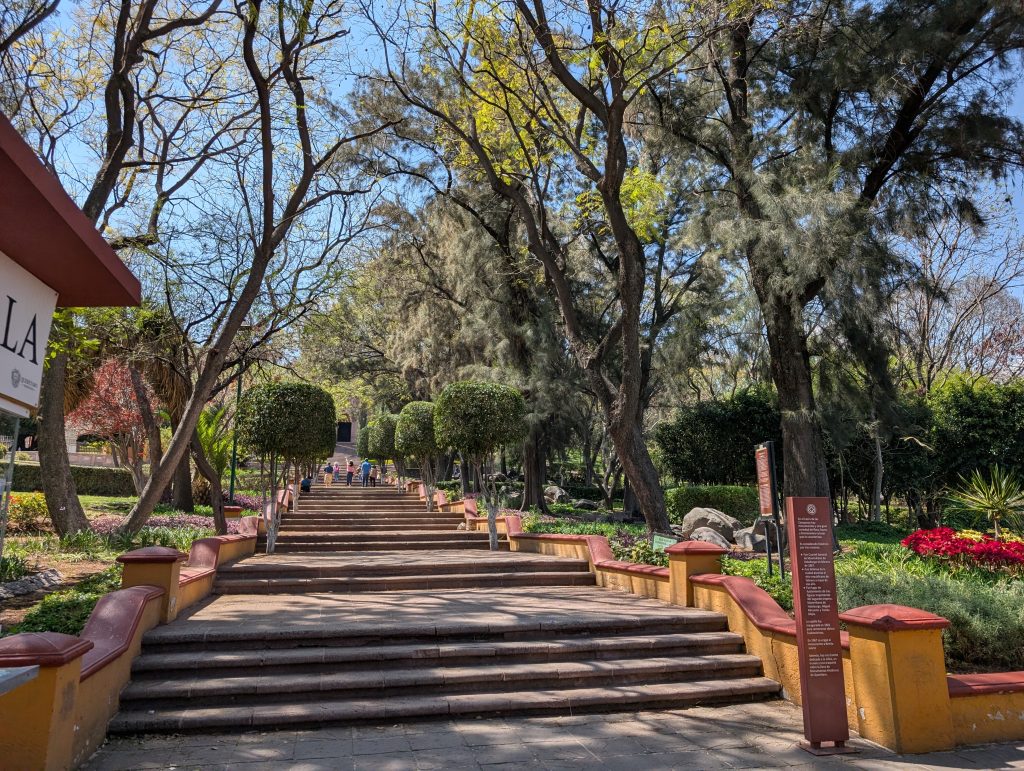
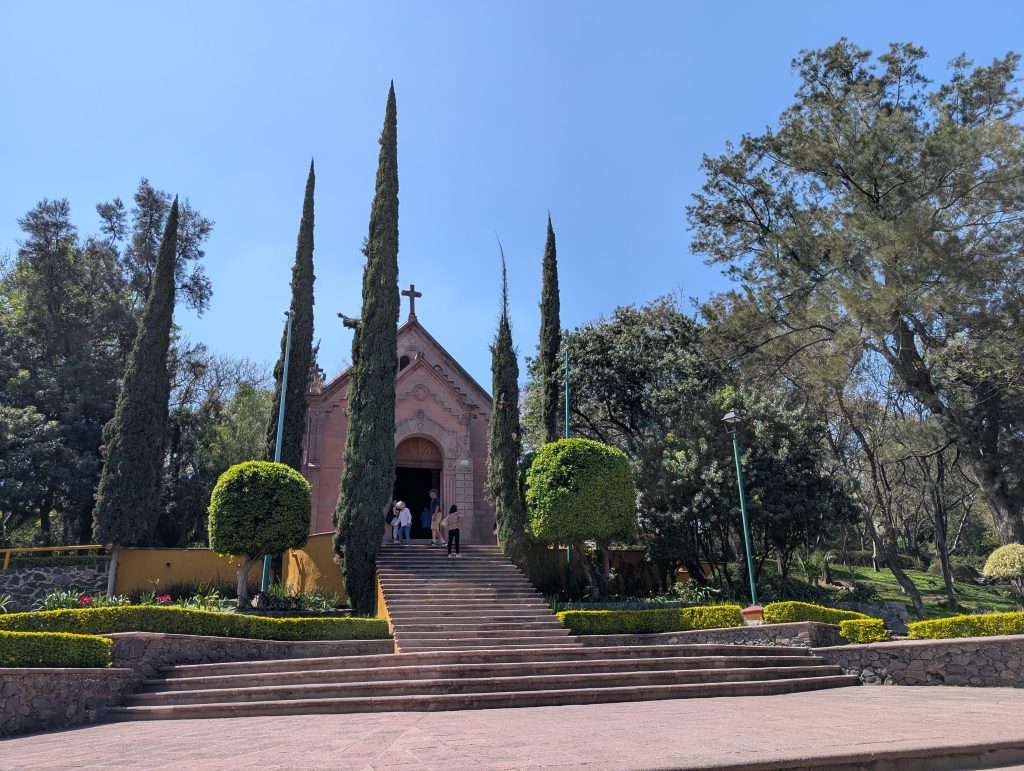
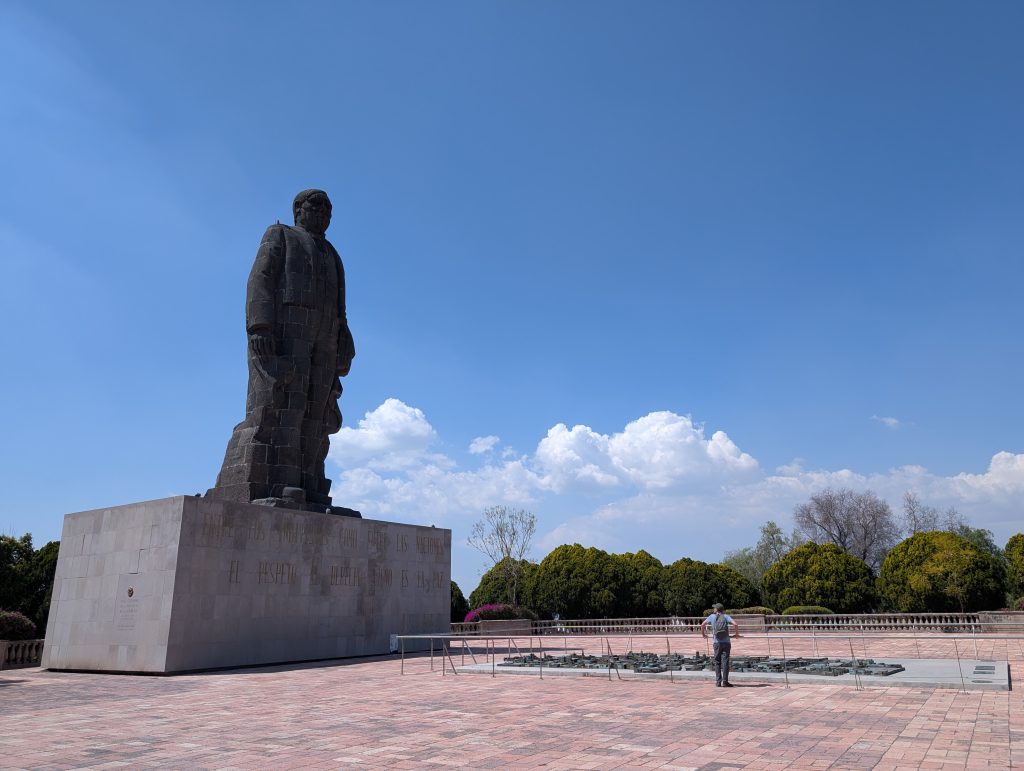
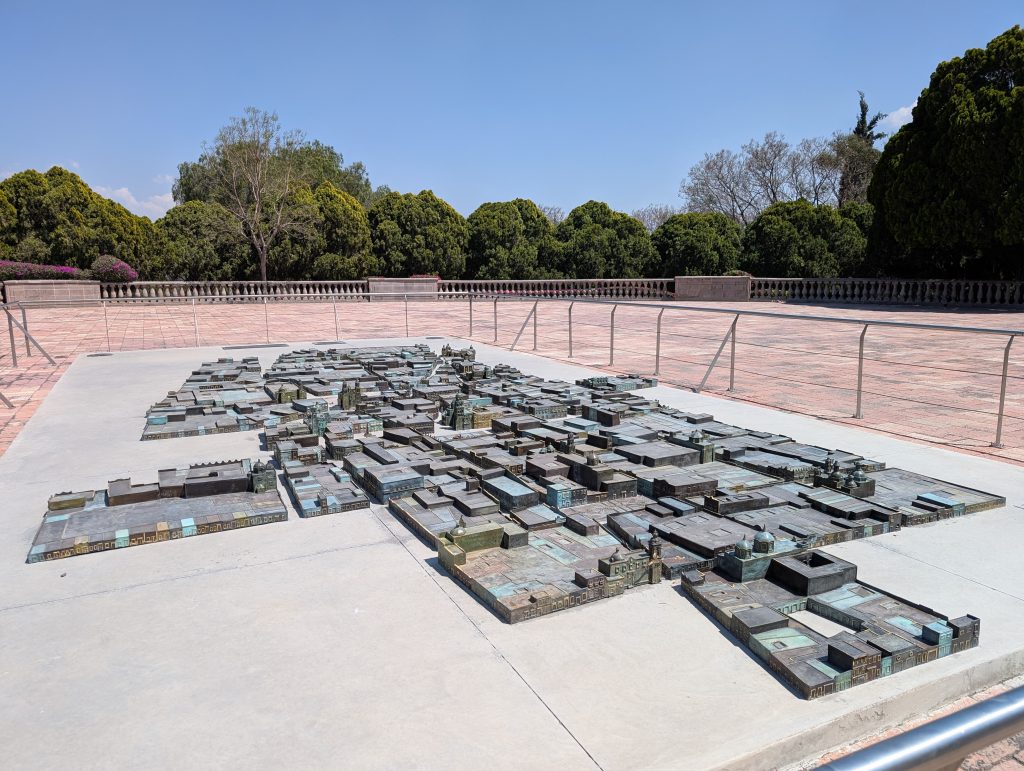
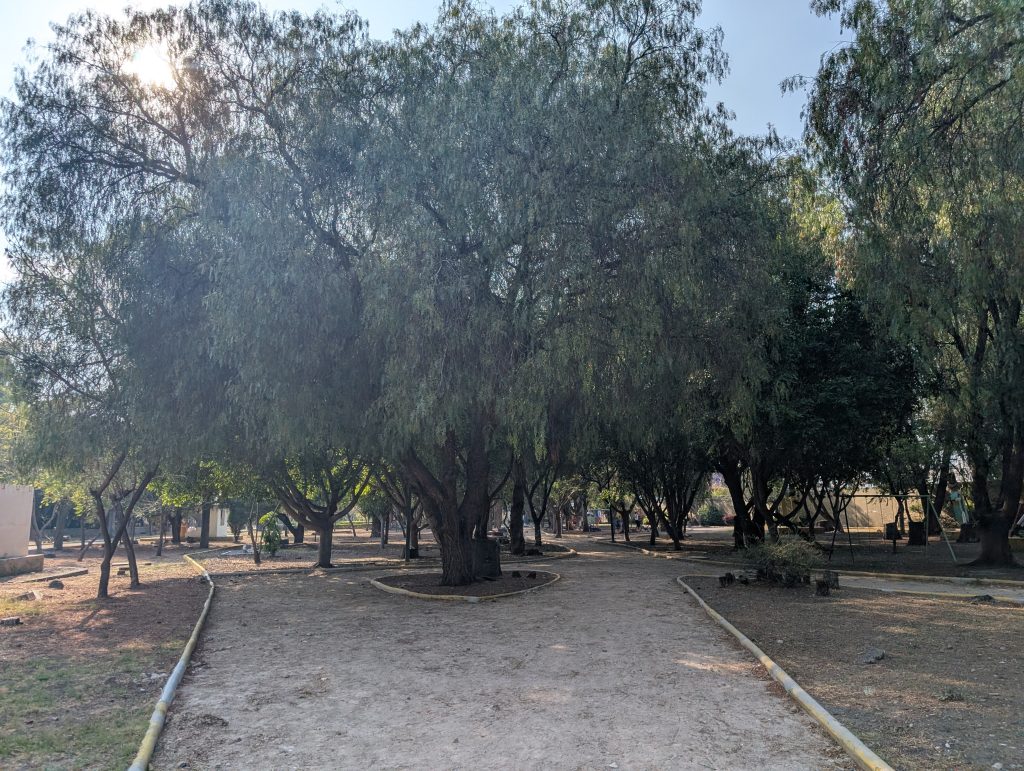
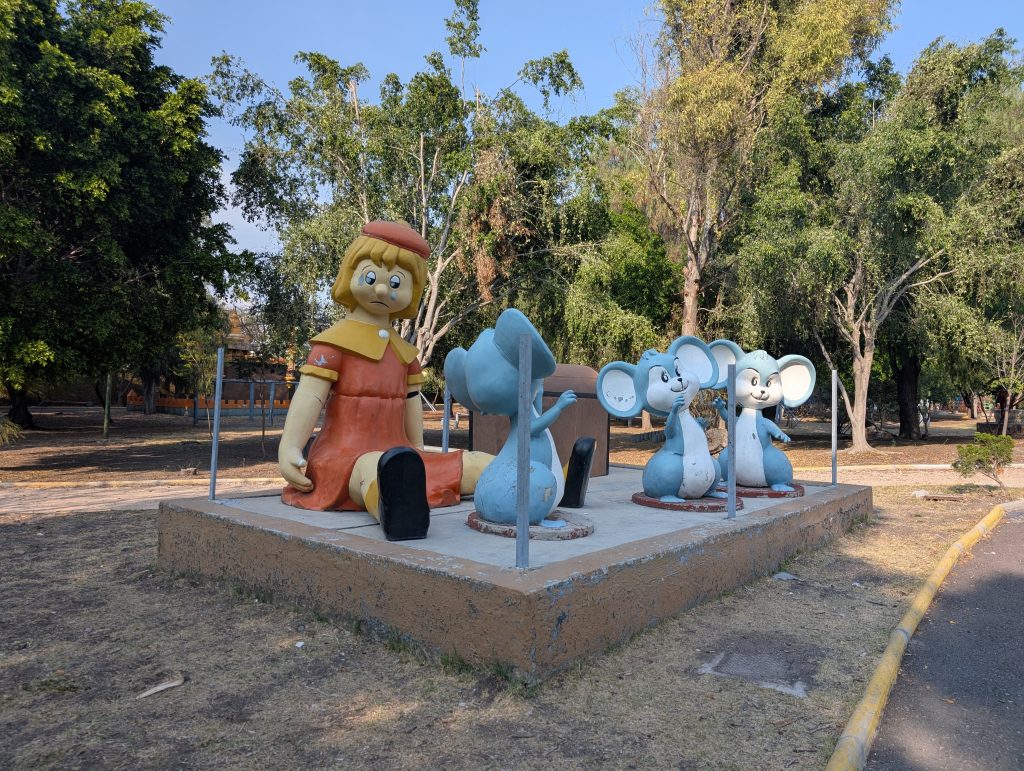
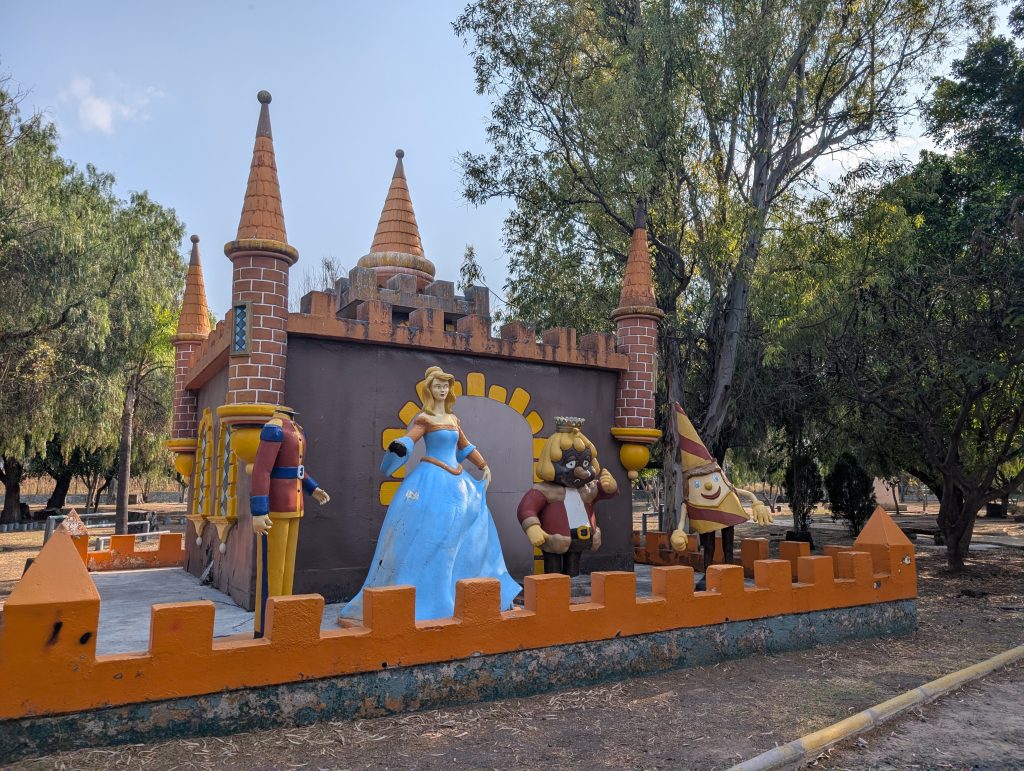
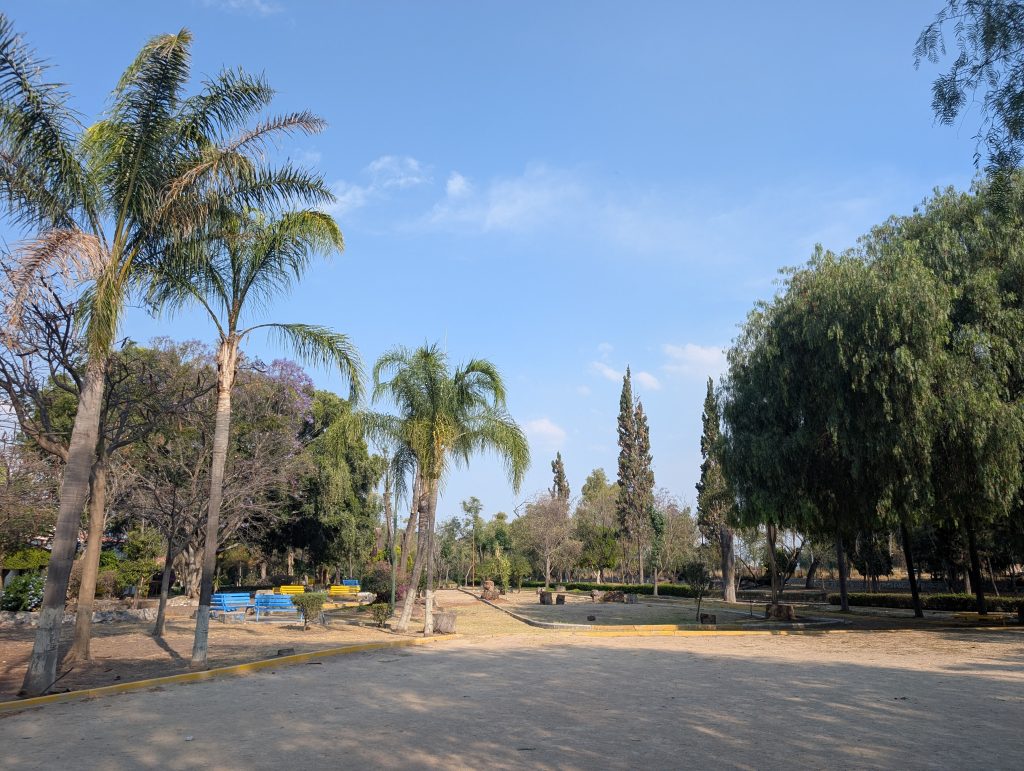
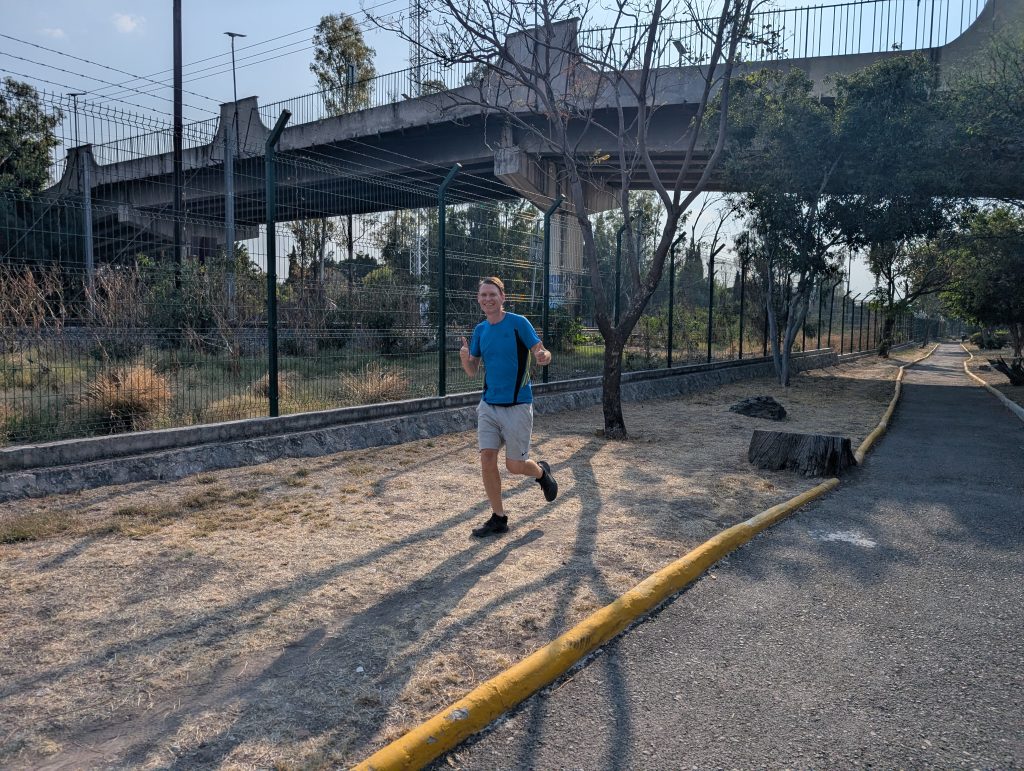
Chad was able to run at the Parque Alcanfores Norte, a long 20-minute walk from our Airbnb. I accompanied him once. The park had very nice paths but had definitely seen better days and had a ton of run-down nursery rhyme statues. Still, Chad really enjoyed the couple of runs he had there during our 10-day stay.
Two Evenings Out
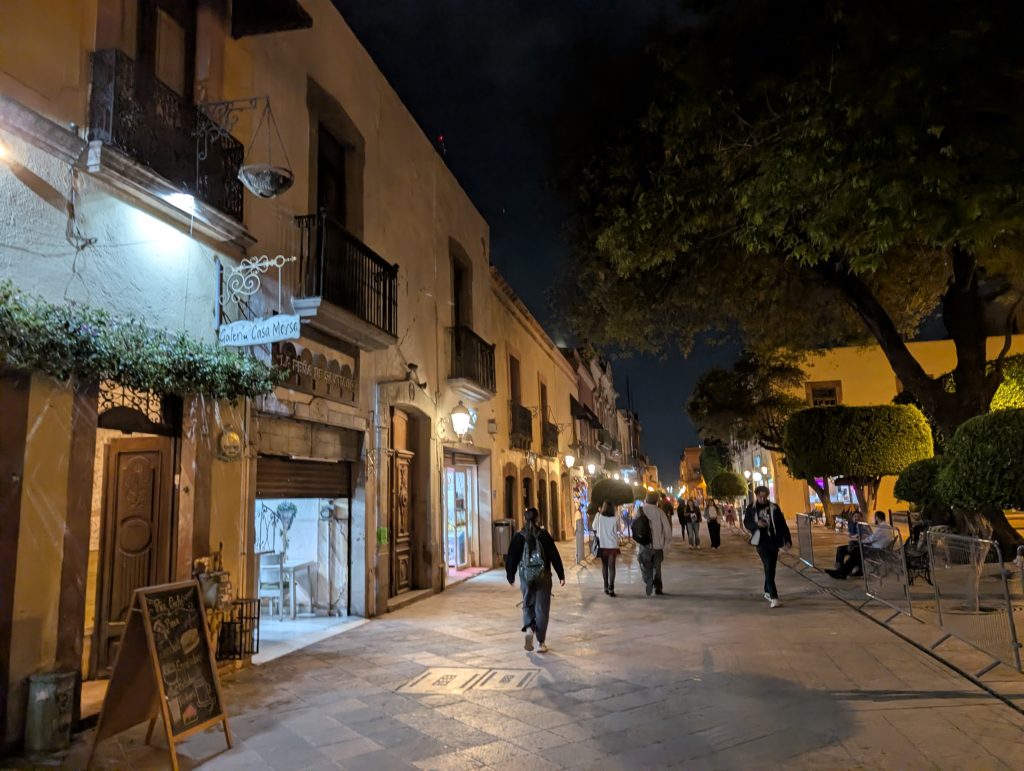
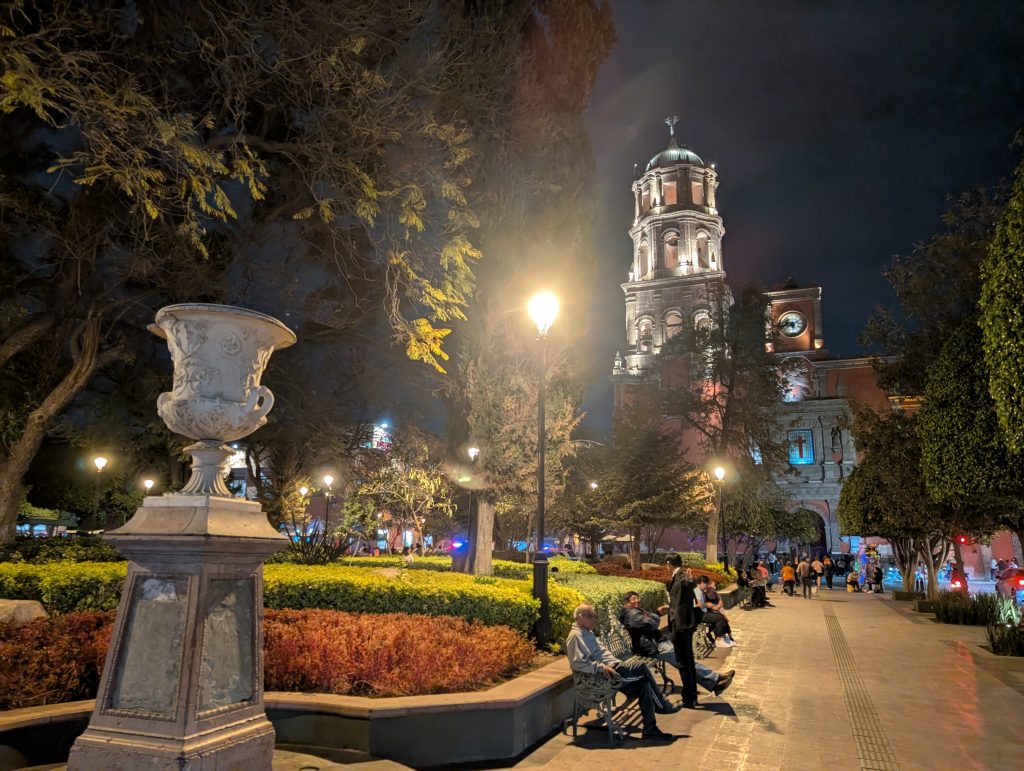
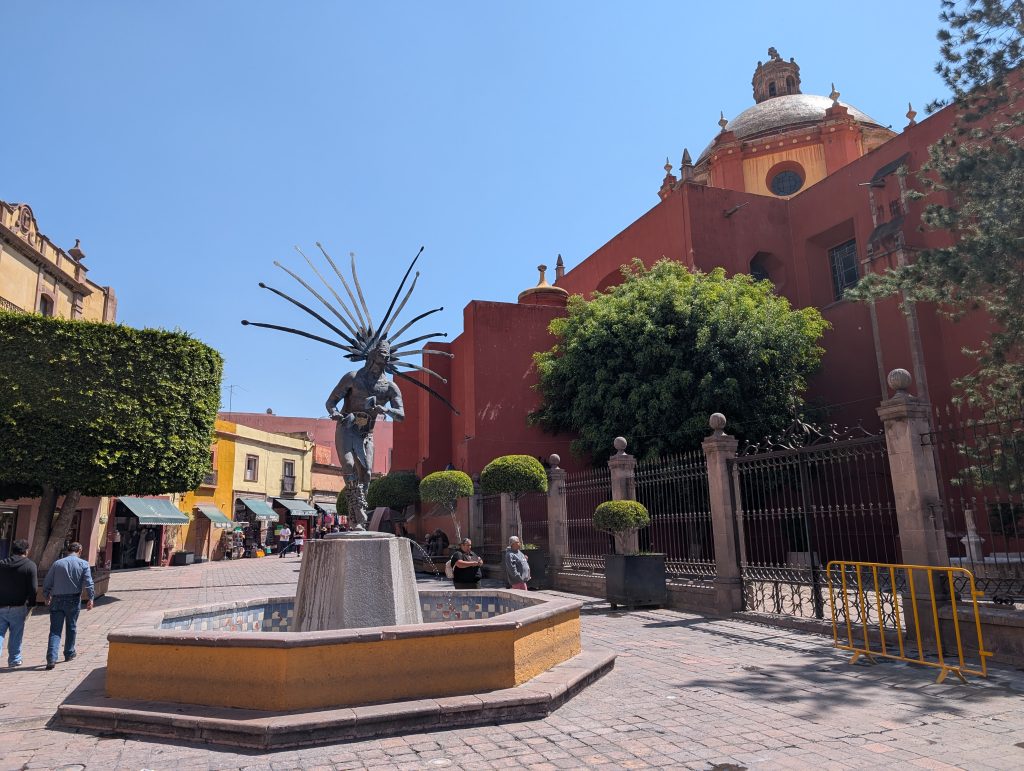
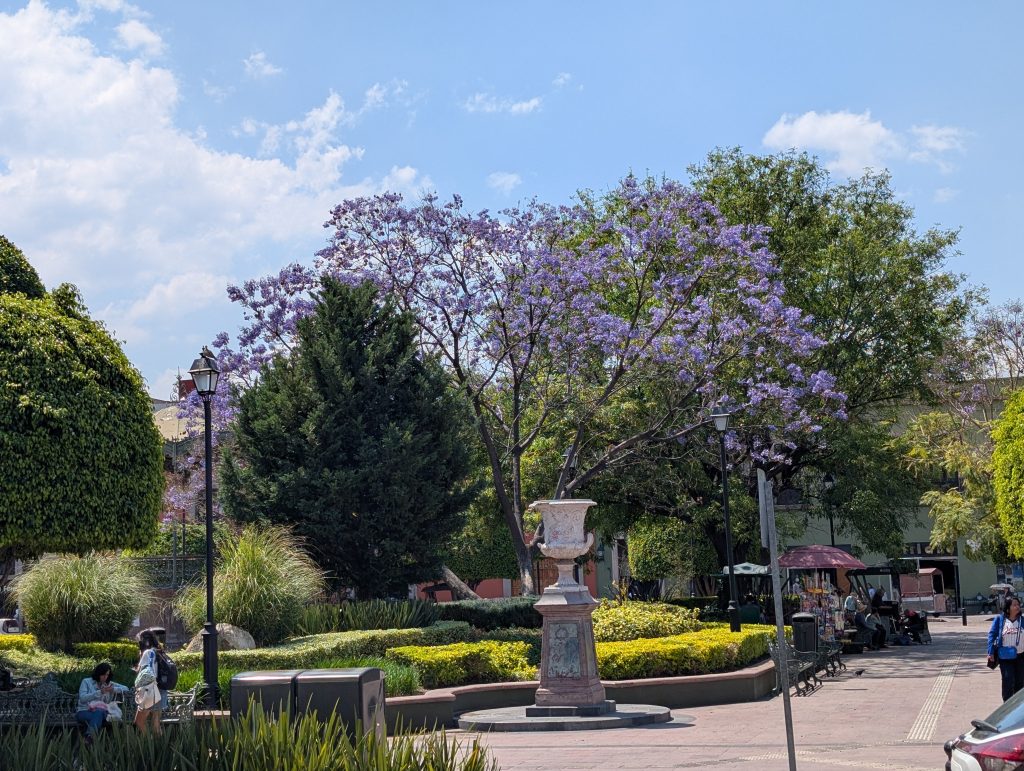
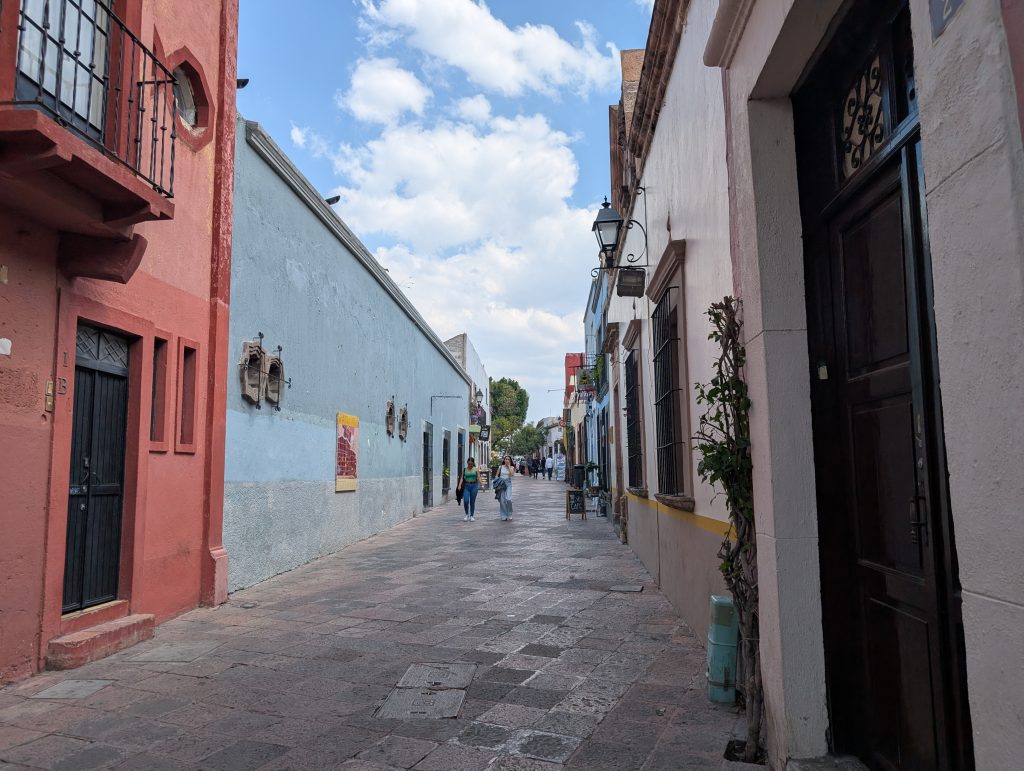
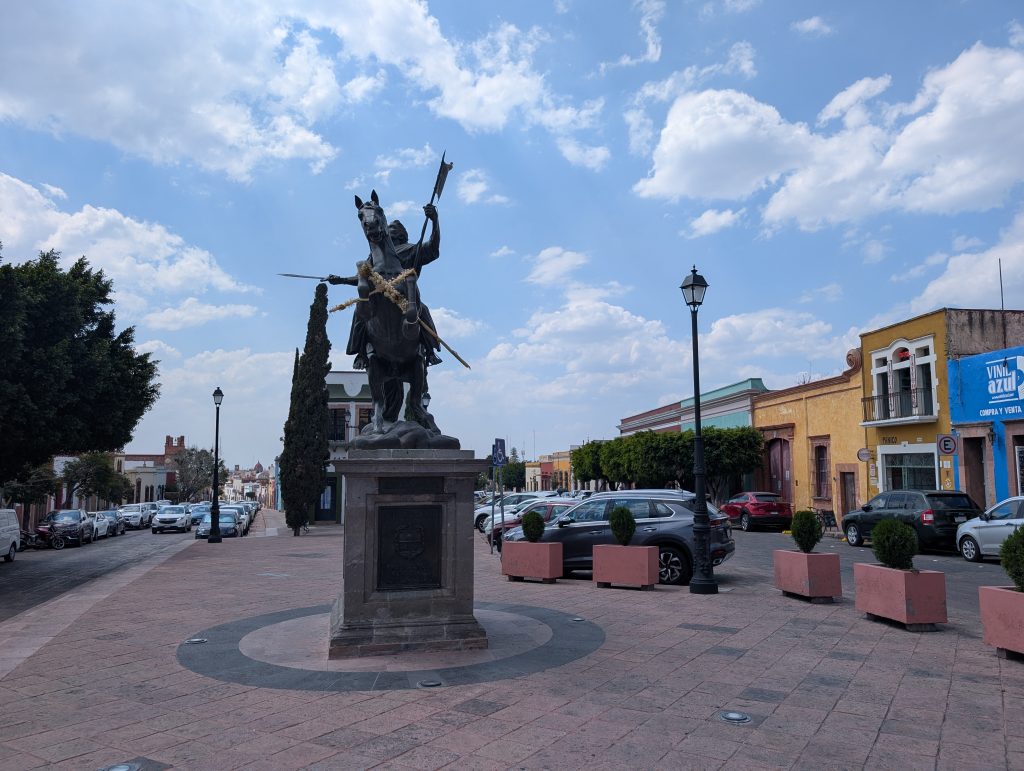
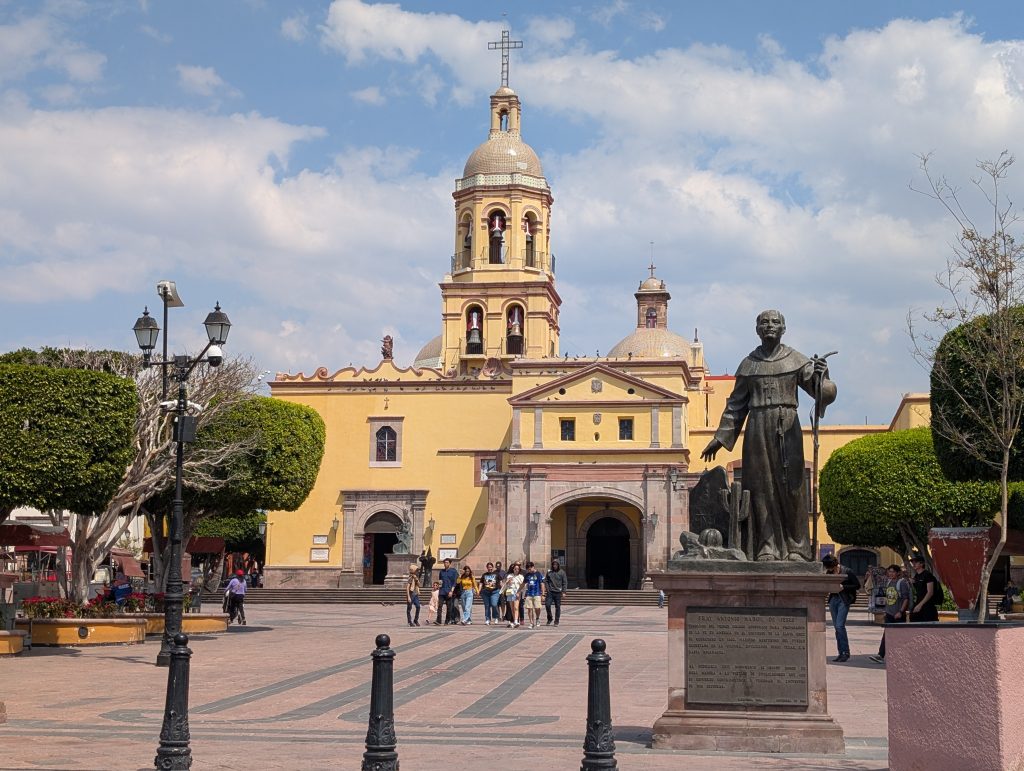
After arrival, we needed to spend a couple of days focused on work but managed to make it out to enjoy Querétaro each evening. The first we went out after dinner (chicken noodle soup made from the remaining roast chicken) to check out the historic center and its many gardens and plazas. We found Querétaro to be very beautiful in the evening. Our Airbnb was a 10-minute walk from the nearest plaza, Jardin Guerrero, and from there we traversed most of the centro historico.
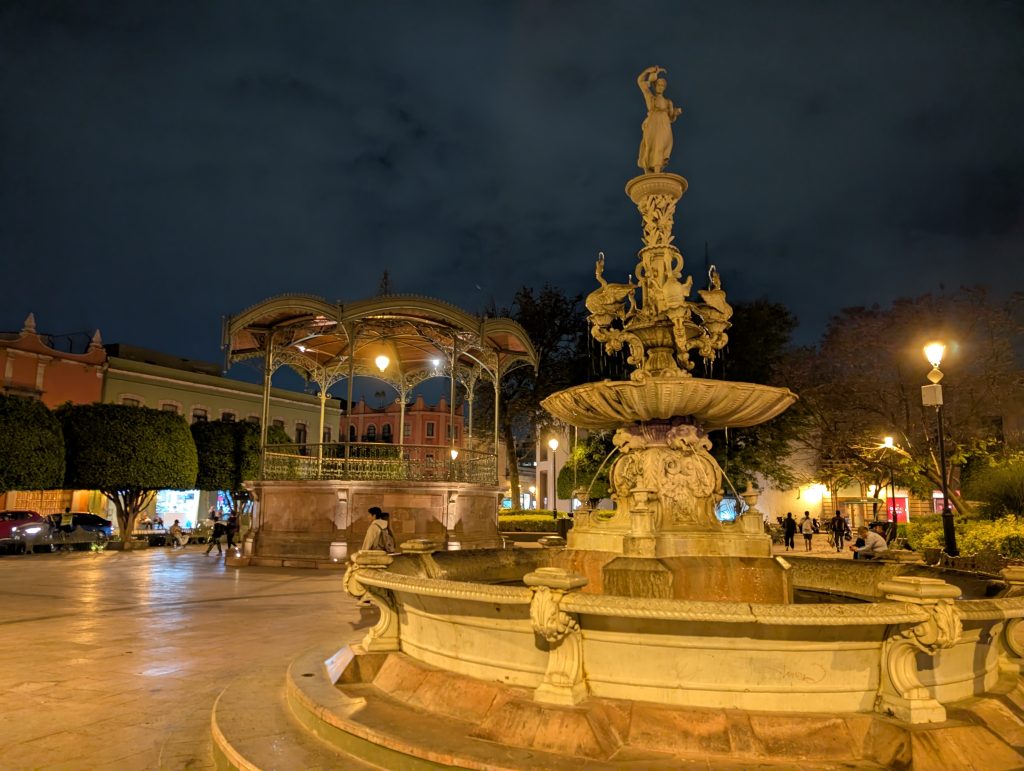
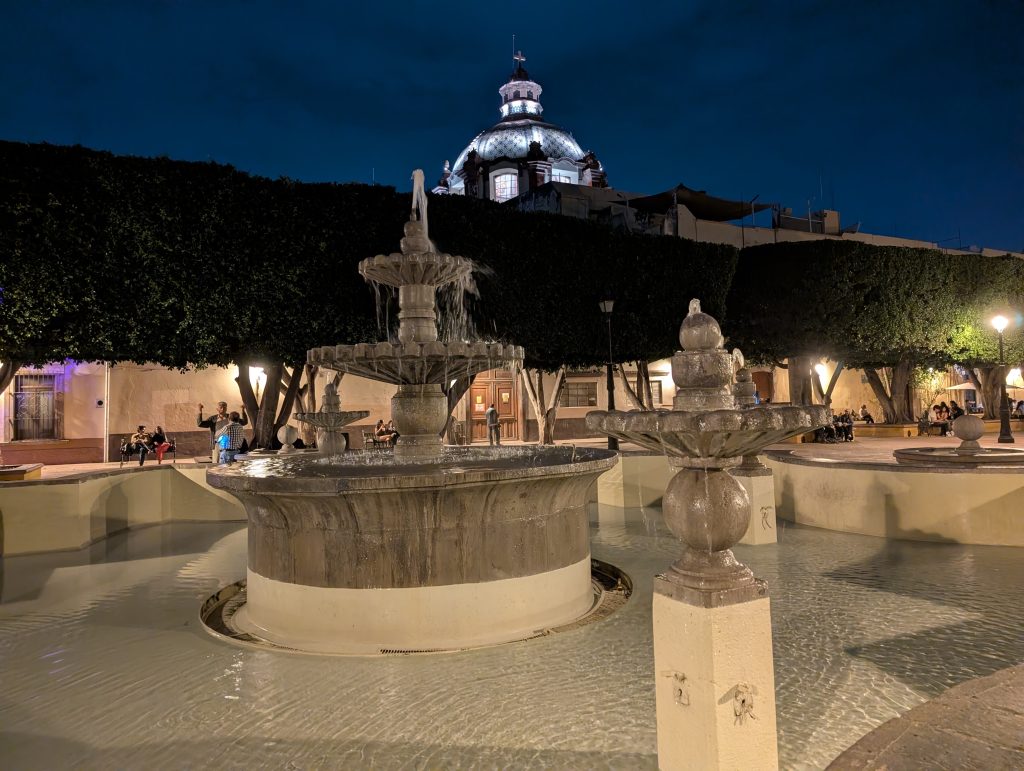

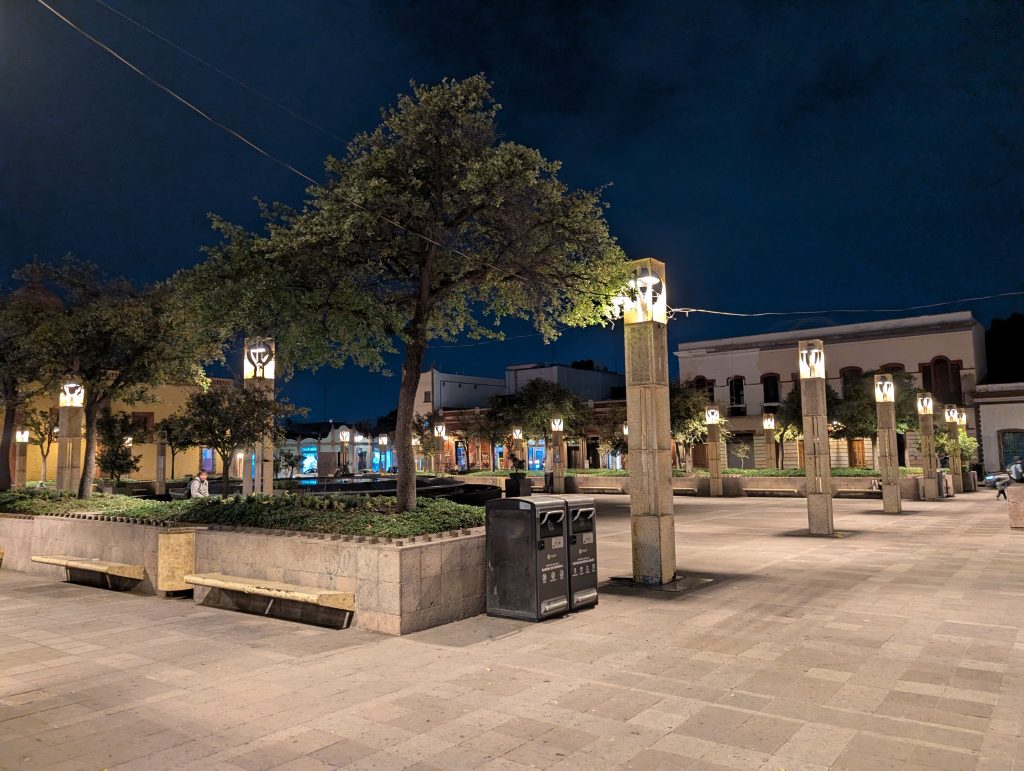
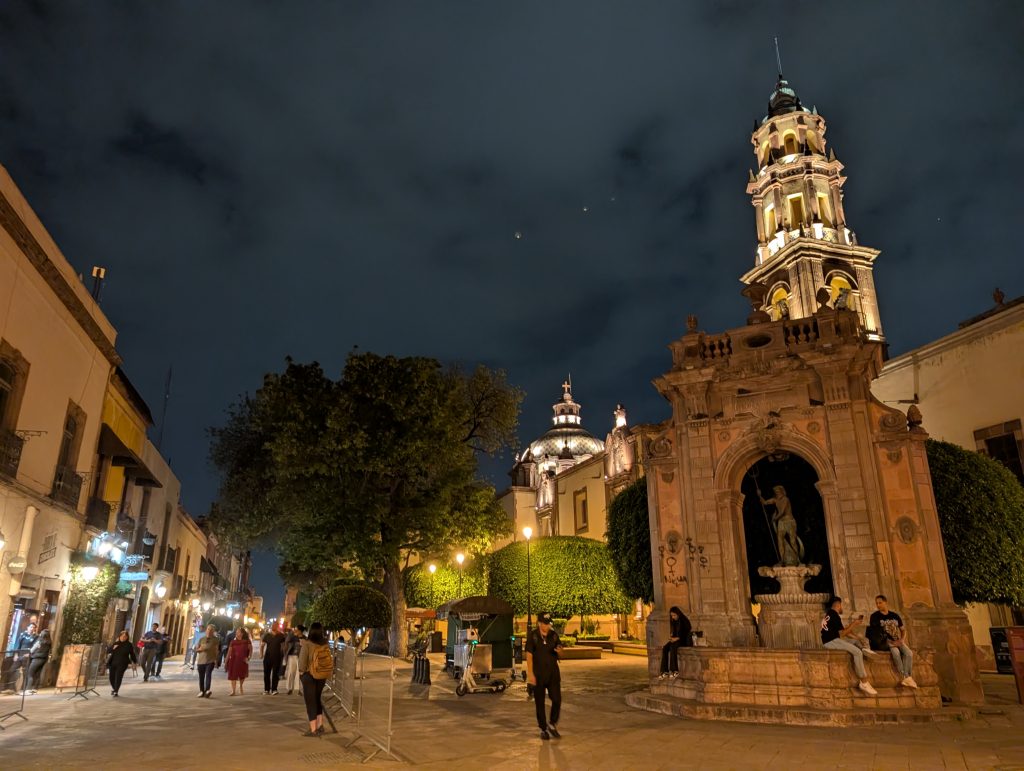
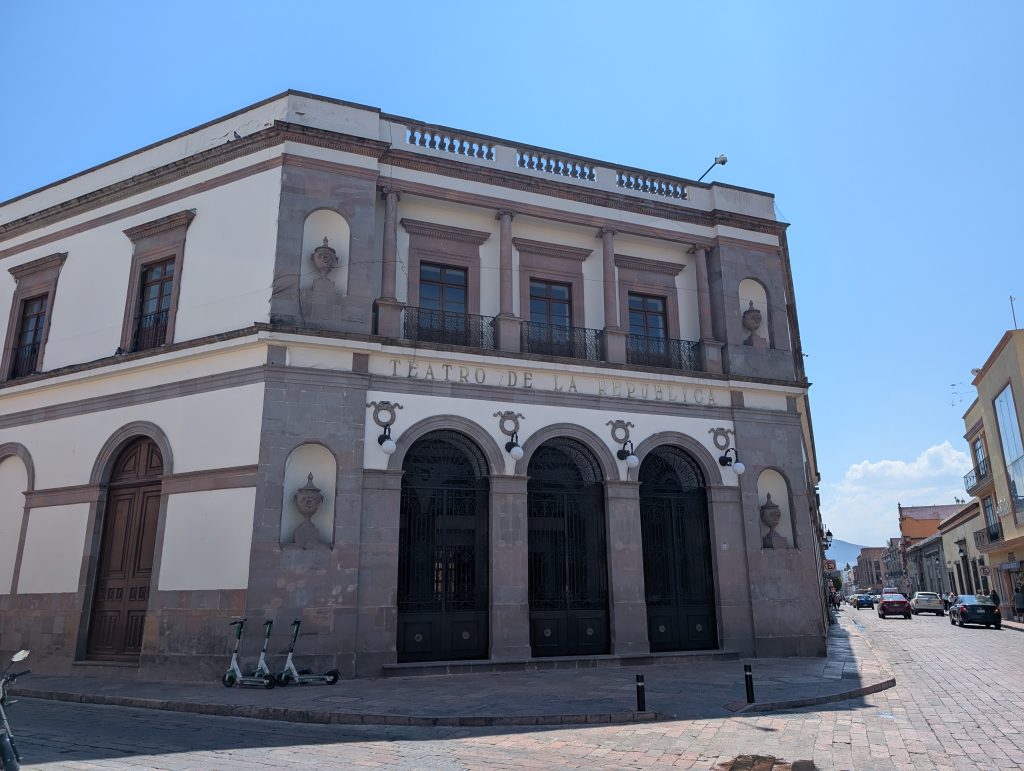
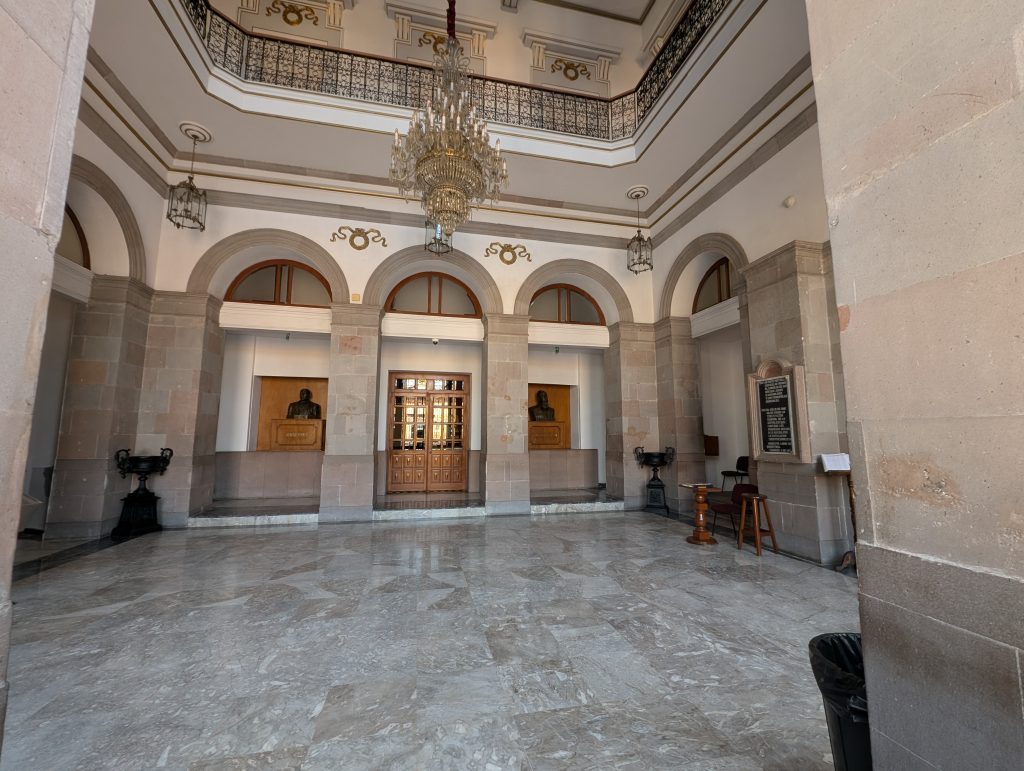
The next night, following our leftover soup, we had tickets to the Querétaro Philharmonic Orchestra playing at the Teatro Municipal. The theater shared space with a large modern convention center near the bus station. We took an Uber to get there for about 100 pesos and I offered the driver, Ivan, double in cash to return for us after the symphony. We exchanged WhatsApp numbers and he was waiting for us when we exited two hours later. He sent a kind follow up message later offering his services as a driver any time during our stay. We had a couple of opportunities to take him up on that.
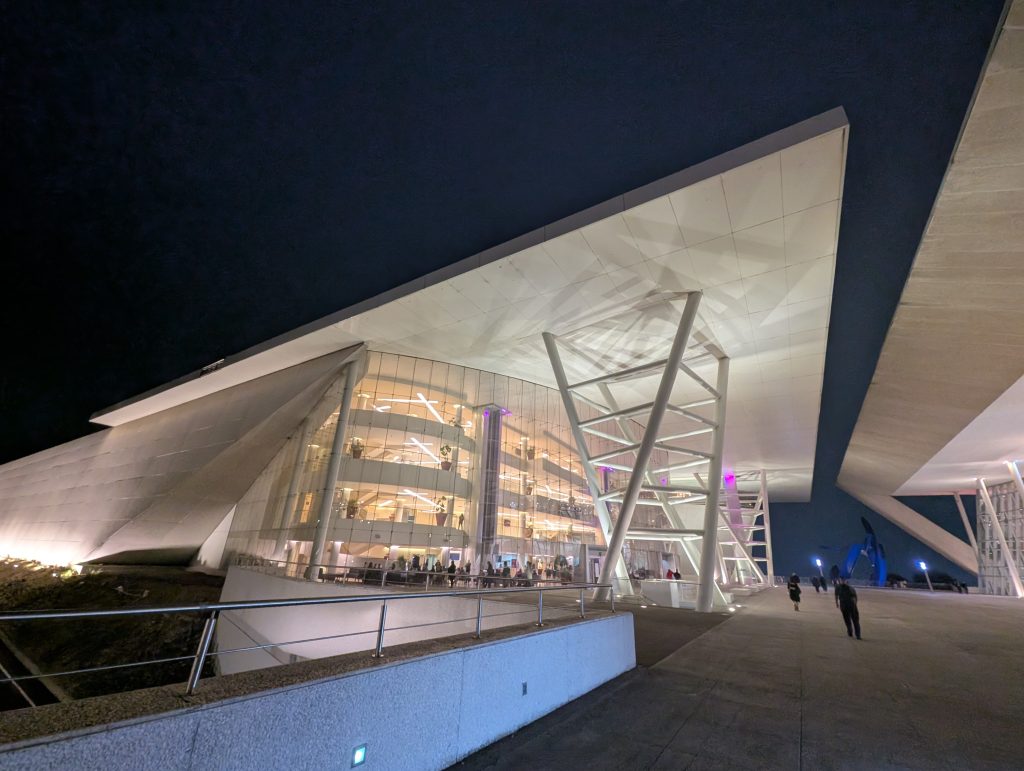
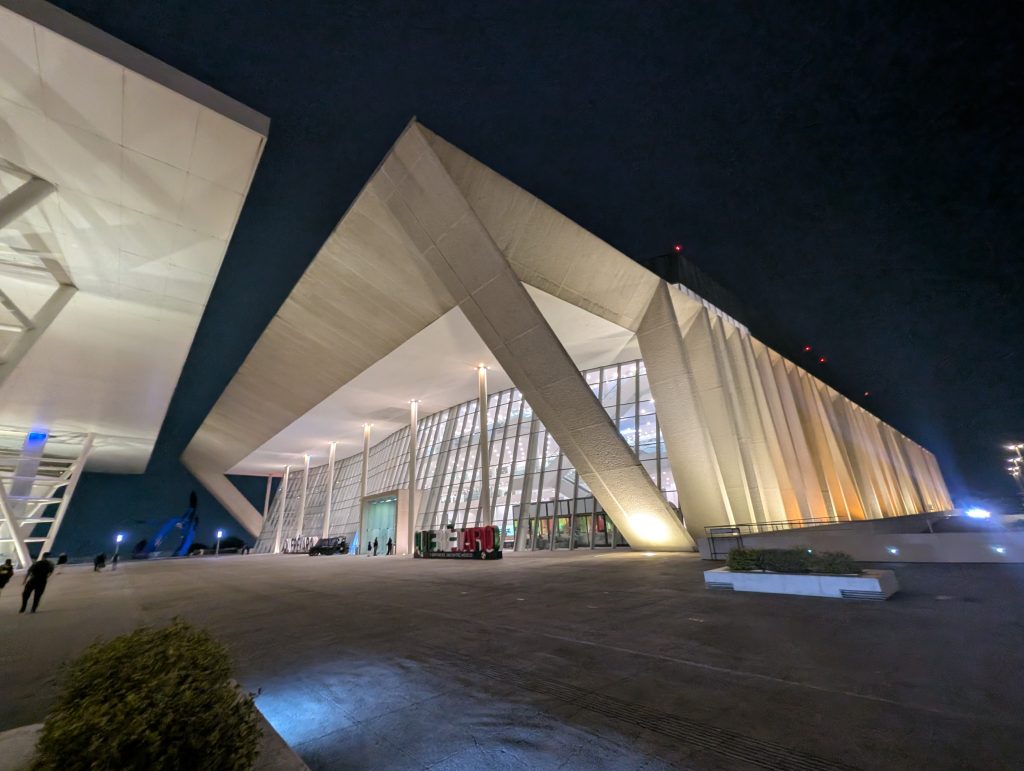
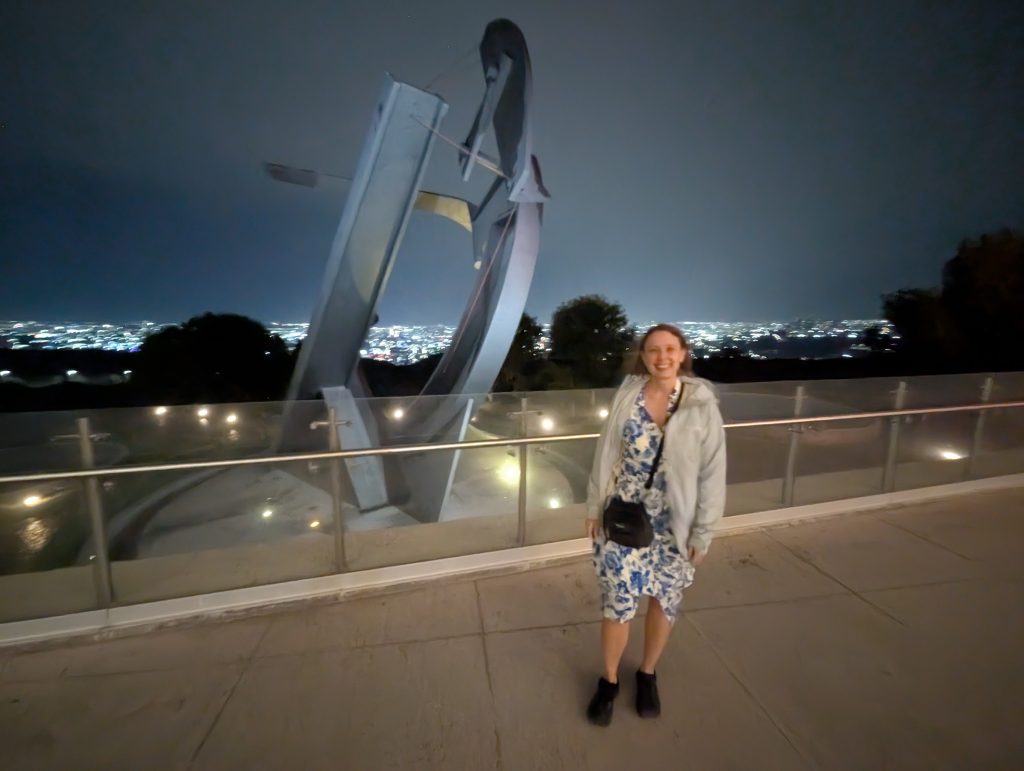
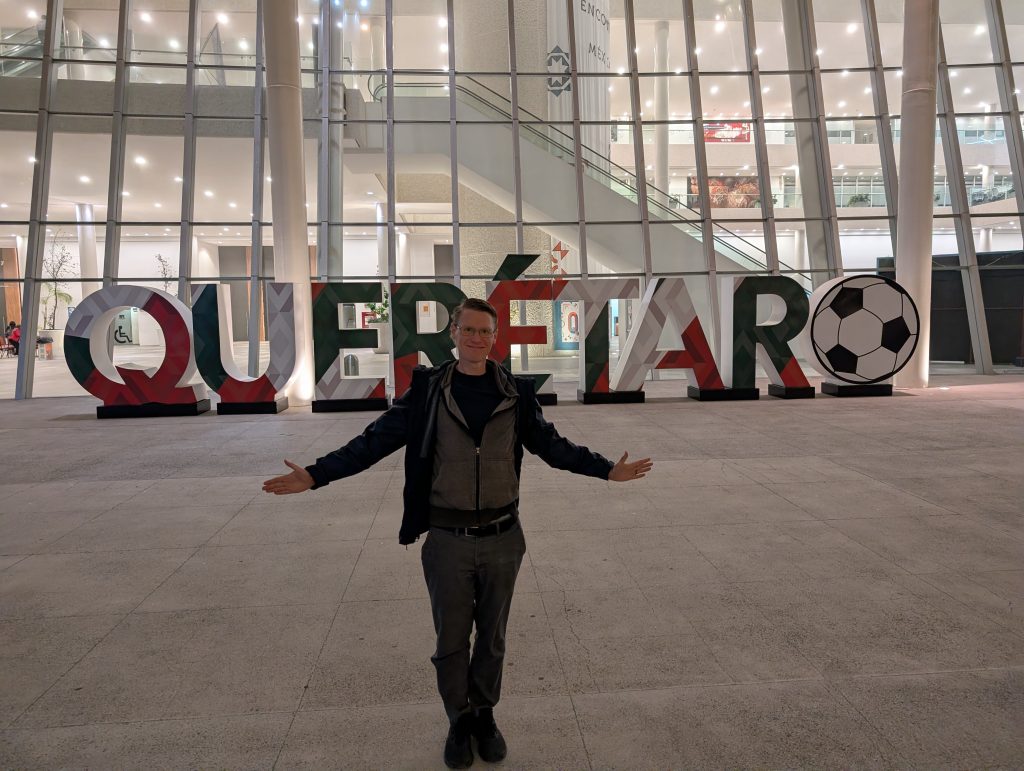
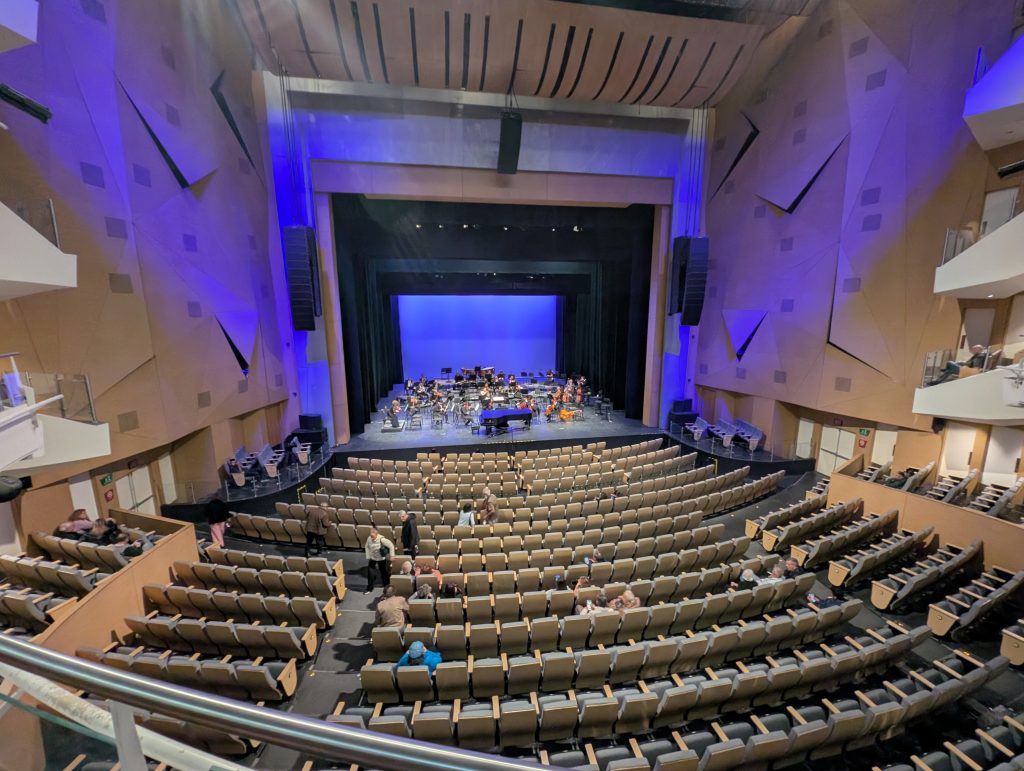
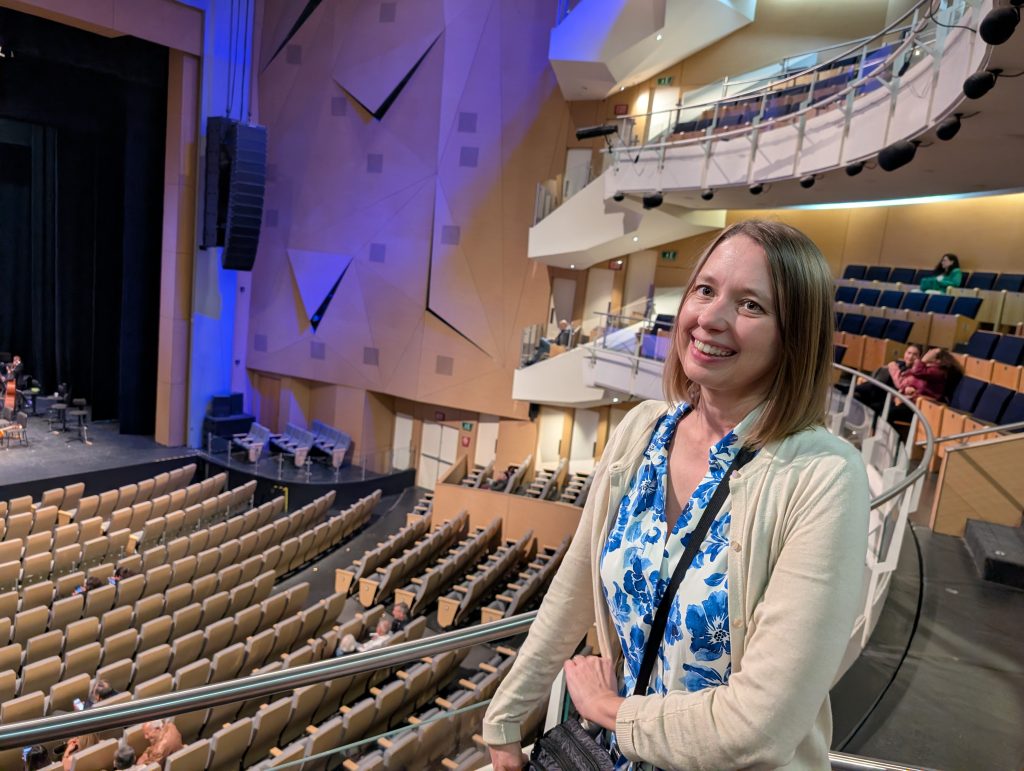
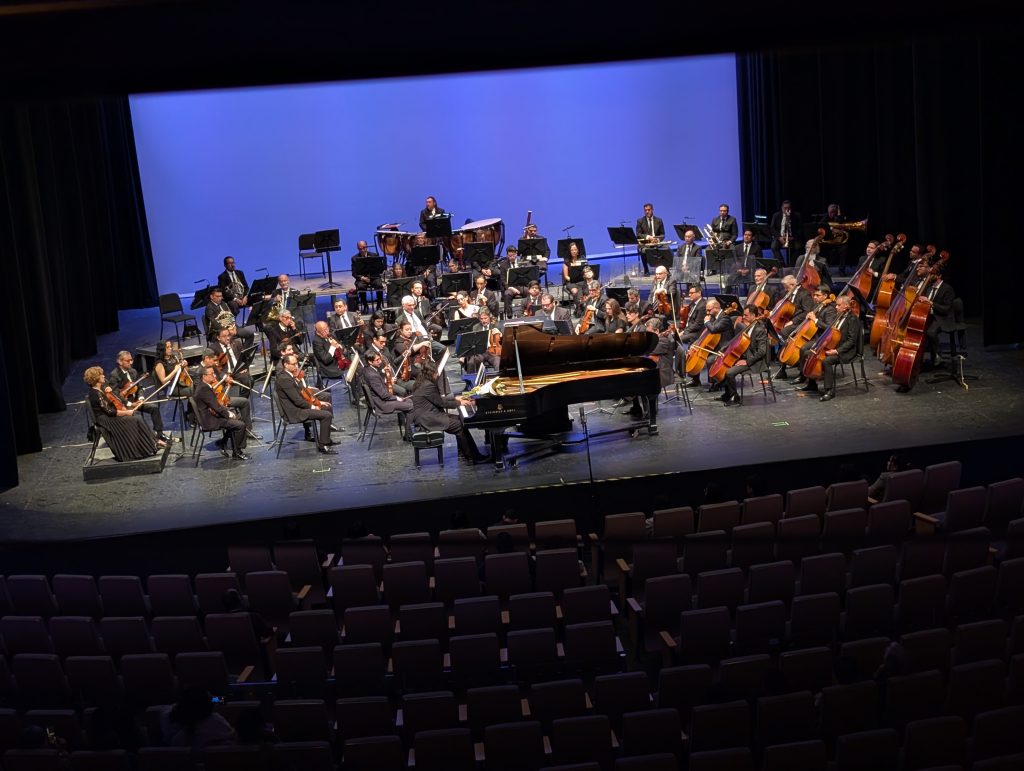
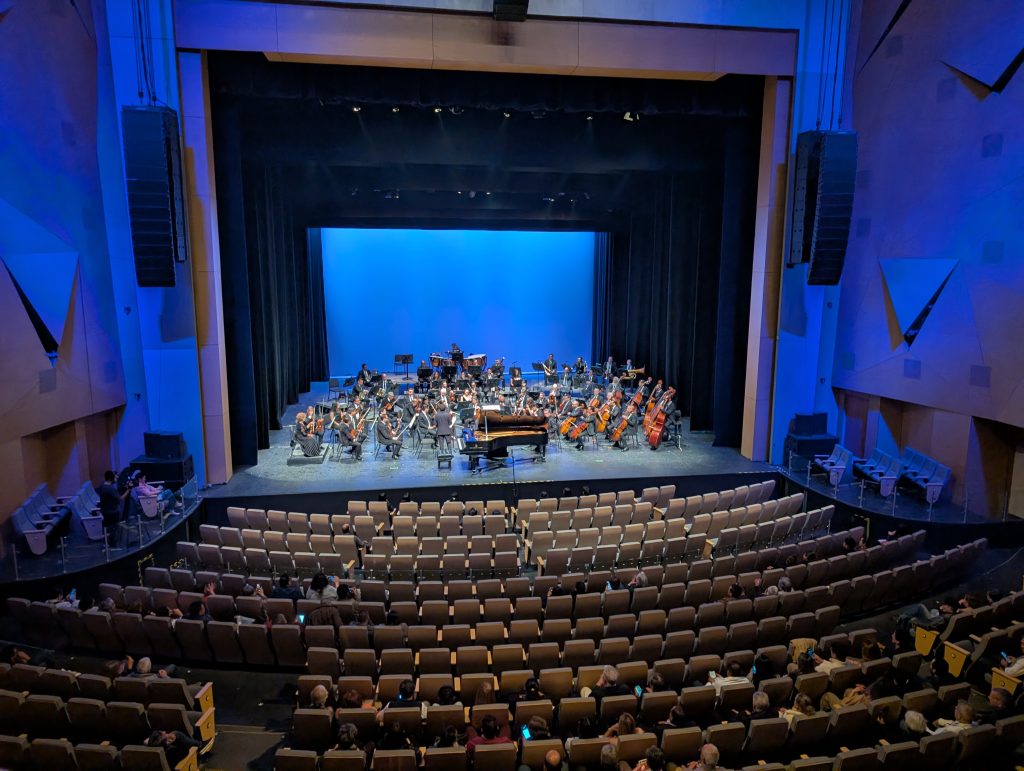
The symphony was excellent. The first piece was by by José F. Vásquez, a 20th century Mexican composer, and featured a very talented piano soloist. The second was Johannes Brahms’ symphony number 4, his last and a very interesting work. The teatro was very beautiful and modern. We really enjoyed attending the symphony.
Sightseeing Day
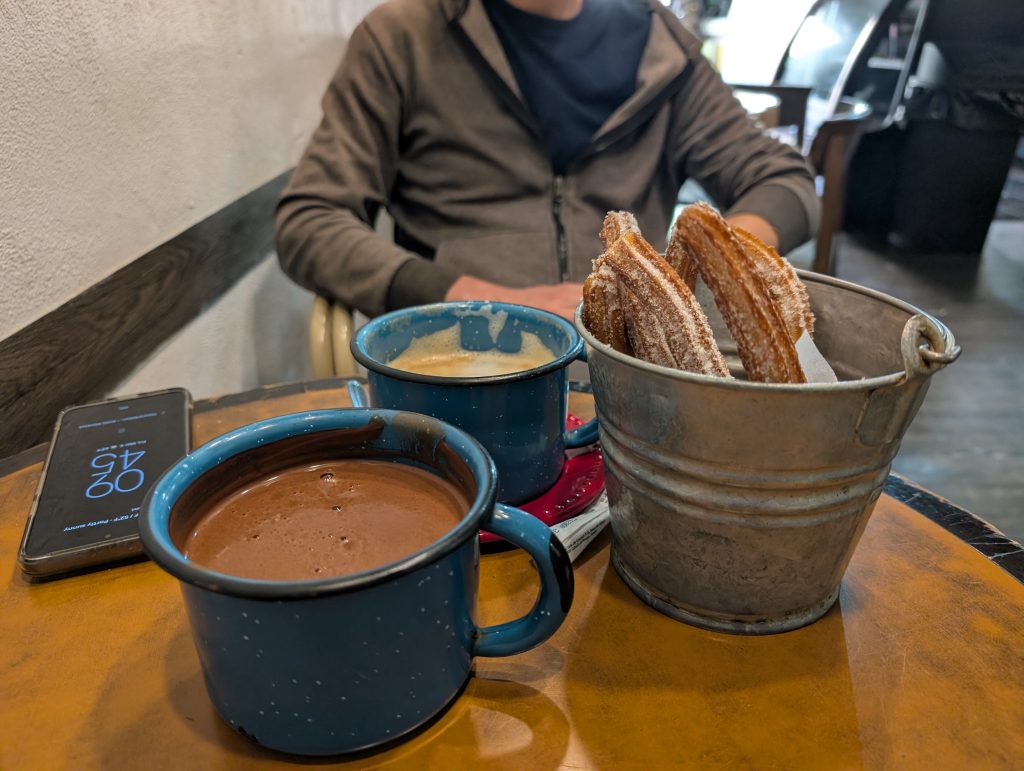
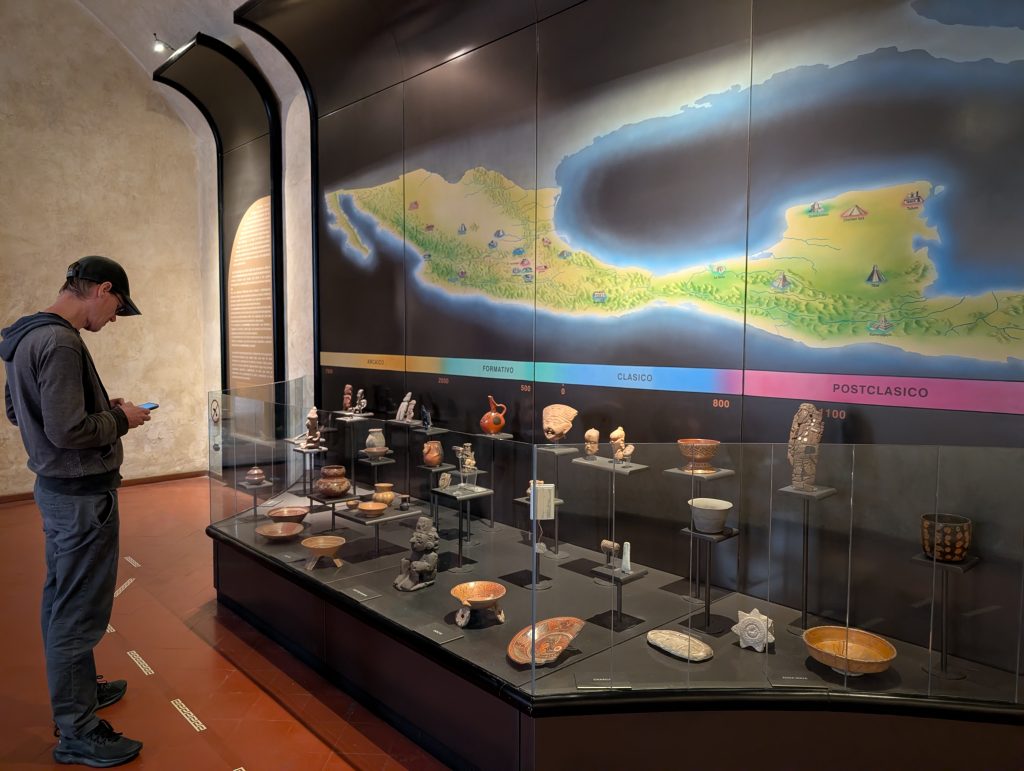
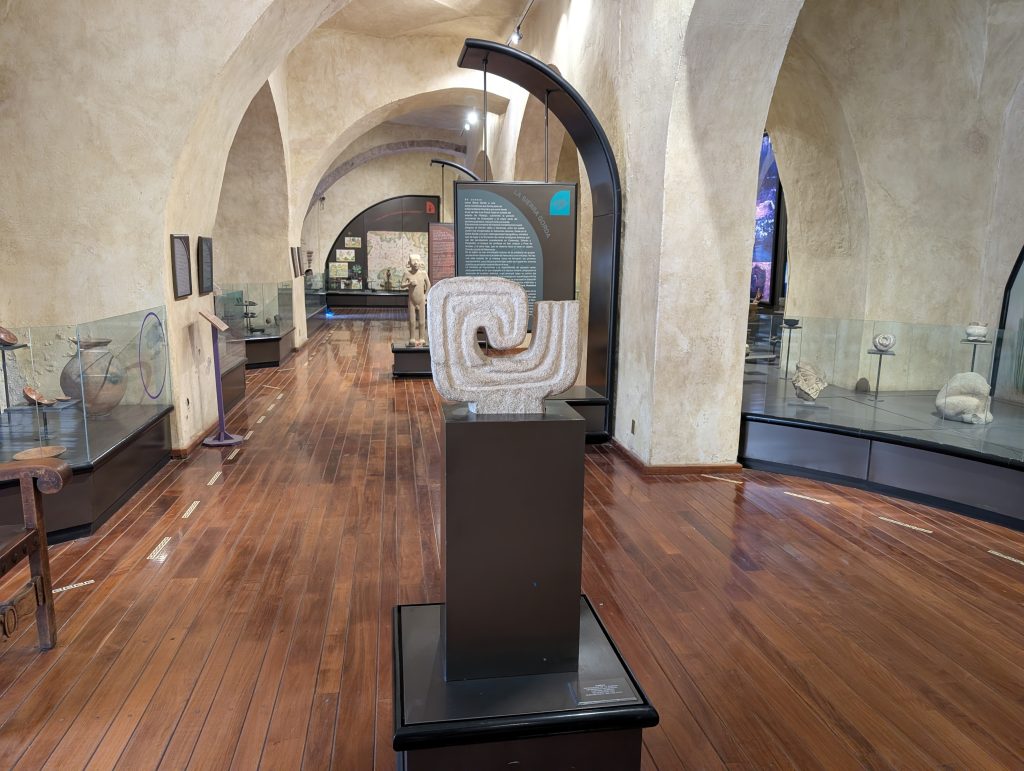
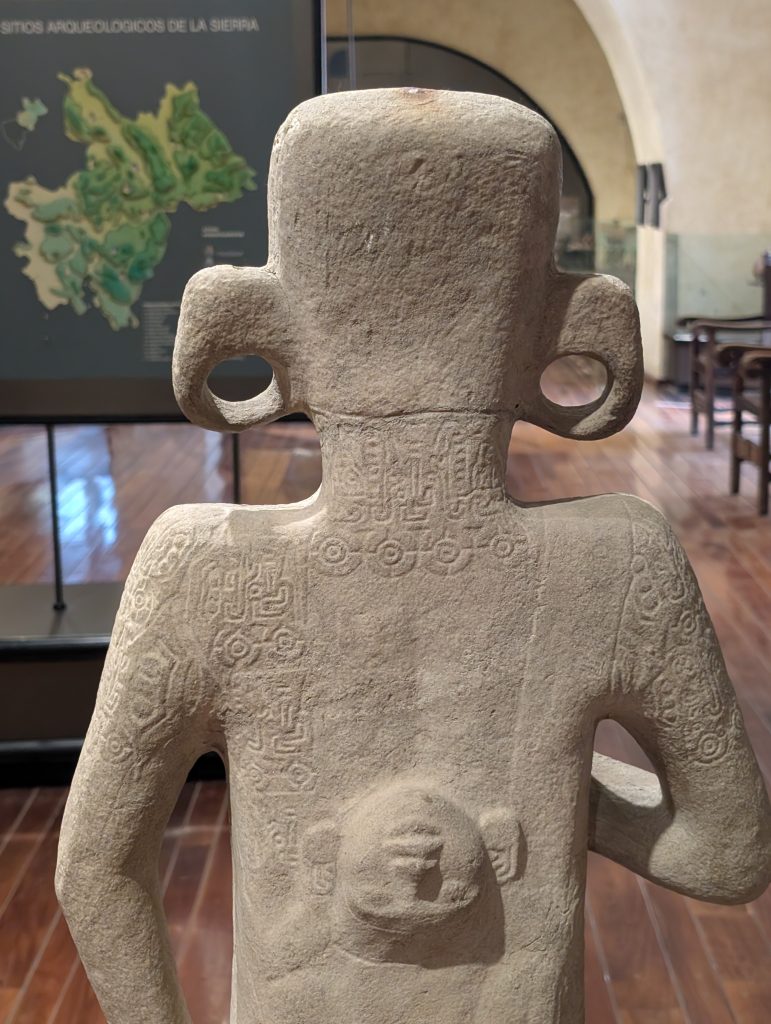
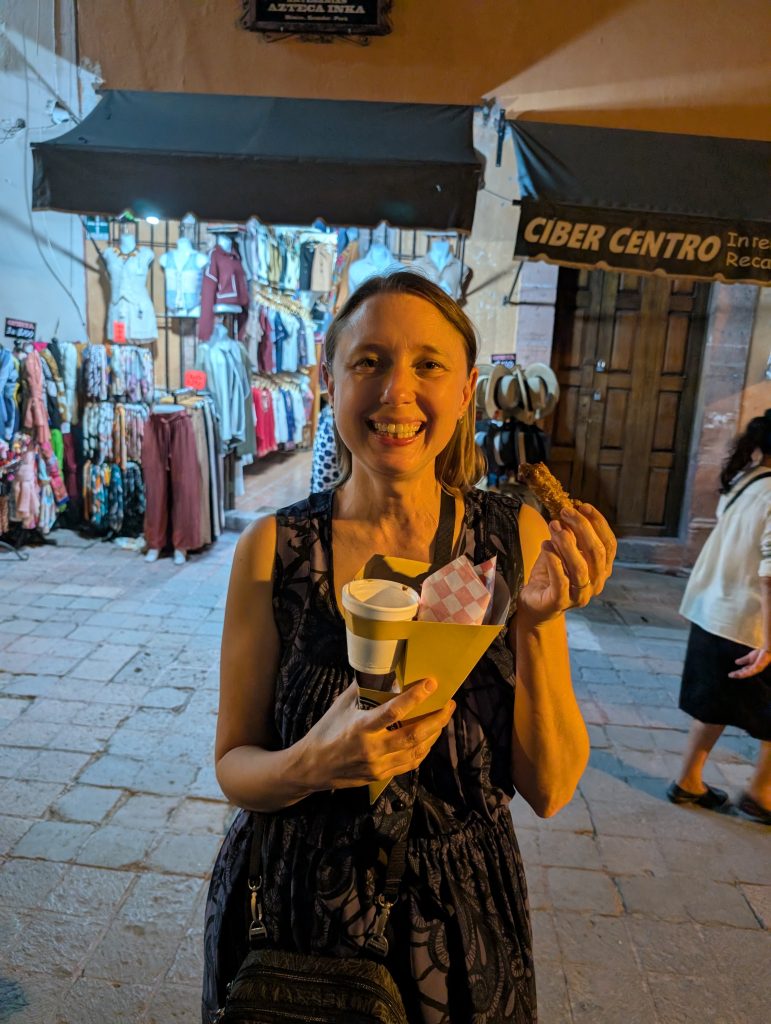
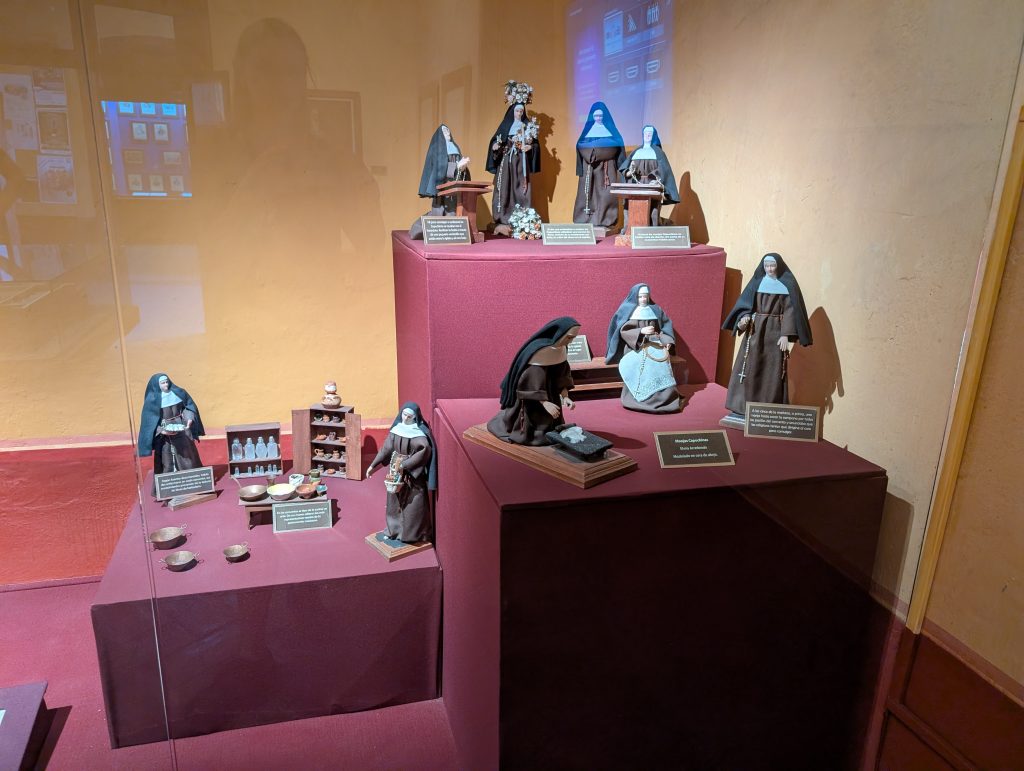
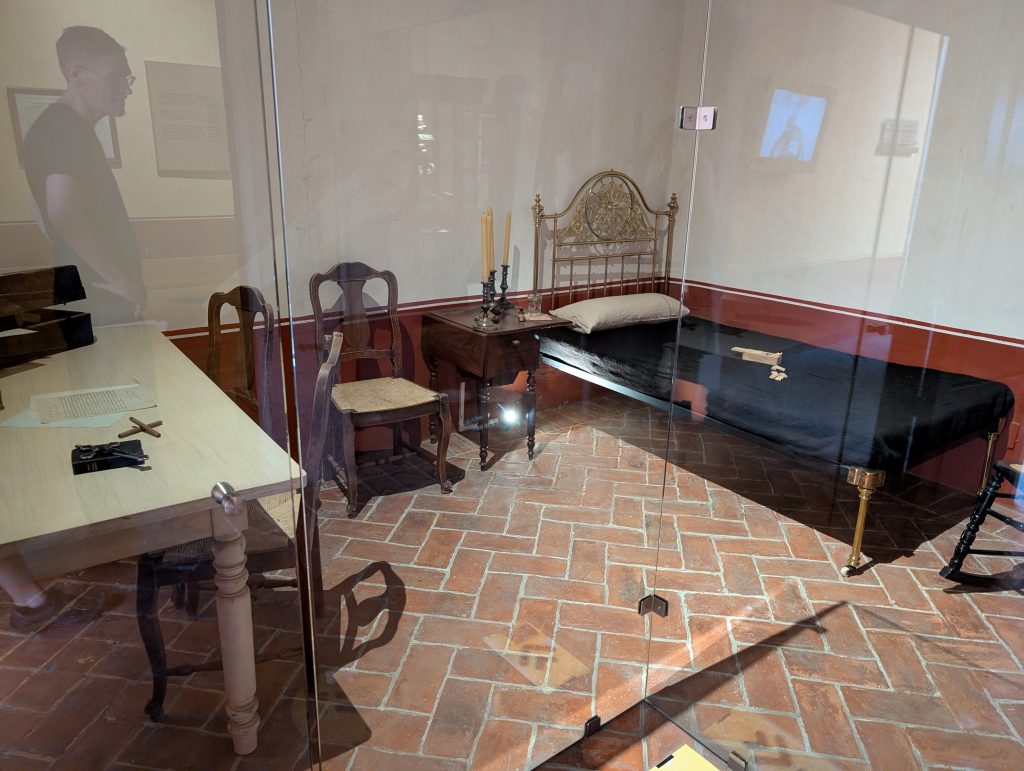
The next day, Friday, we were able to take a full day off to do some sightseeing in Querétaro. We started by going out for a quick breakfast of hot chocolate and churros (and cappuccino for Chad) then visited the Museo de la Region. Like many museums in Mexico, it is housed in a former convent, Convento Grande de San Francisco, which dates back to the mid-16th century. It was a little pricey at 145 pesos for foreigners but worth the cost and we spent nearly two hours there exploring its many rooms and exhibits and enjoying the colonial architecture of the convent.
The exhibits start with extensive information about the indigenous groups in the area over the years. Here we learned that there is a pyramid in Querétaro from the time of the Toltecs called El Cerrito. The rest of the rooms focused primarily on religious art and highlighted the convent’s history and there was an excellent exhibit about the formation of the role of Querétaro throughout Mexican history. It was where the conspirators first started planning independence from Spain in 1810, a key location in the overthrow of Emperor Maximillian and the French occupiers, and where Mexico’s constitution was written in 1916/1917 following the revolution. We also briefly went into the adjacent Templo de San Francisco church.

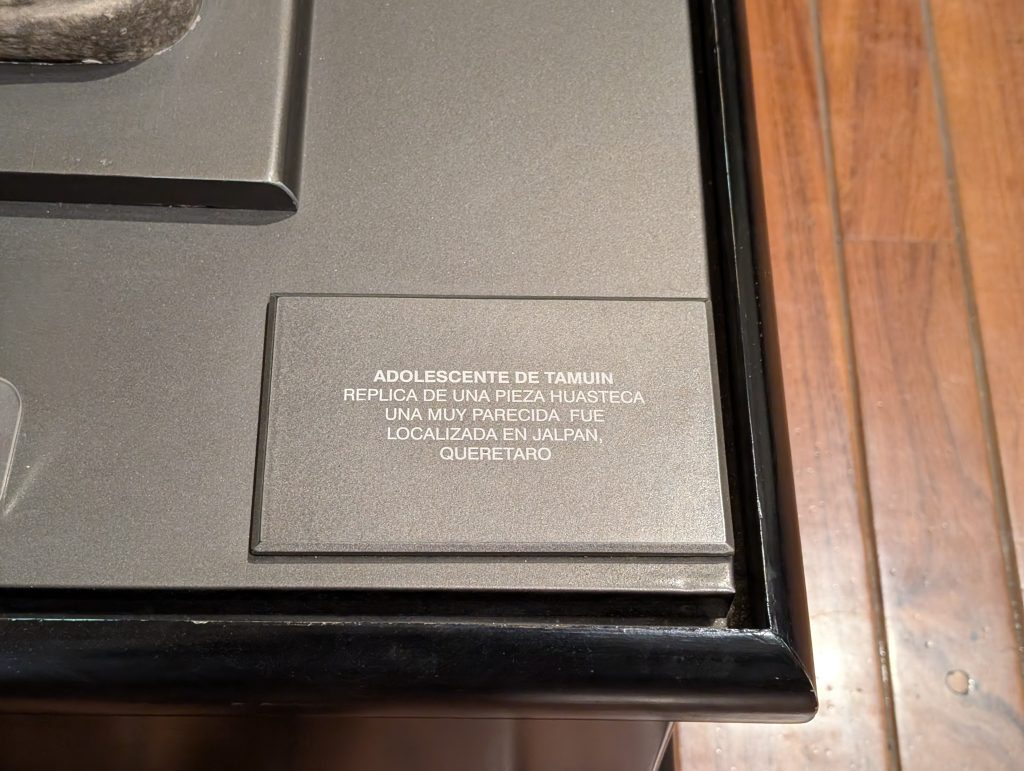
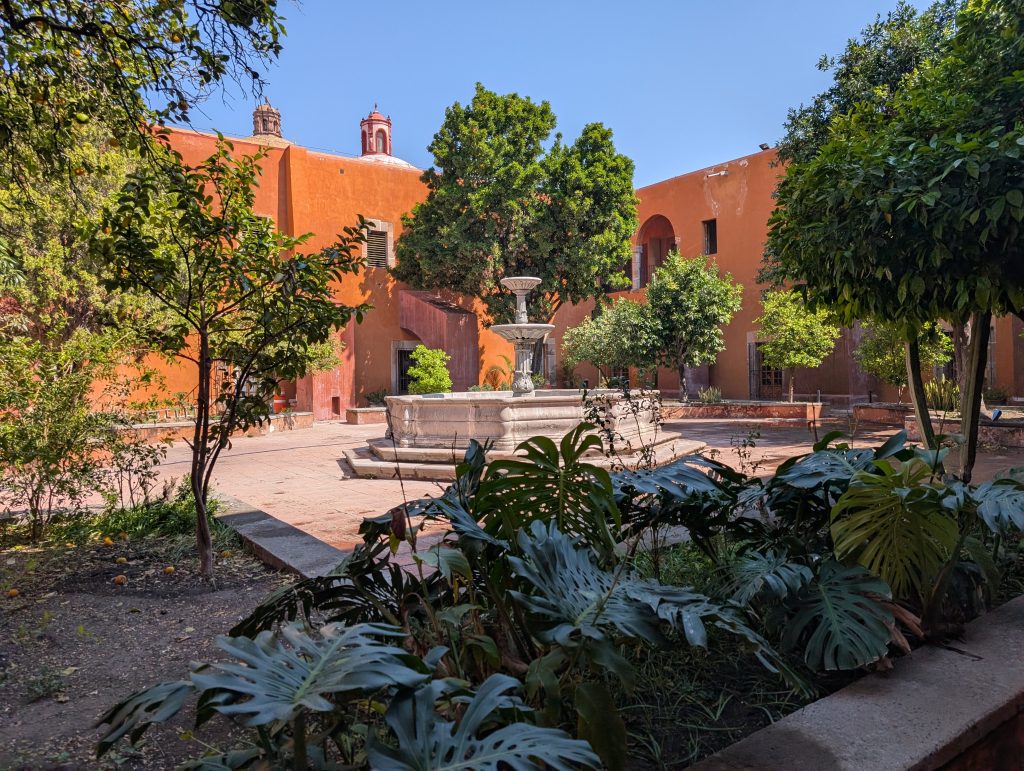
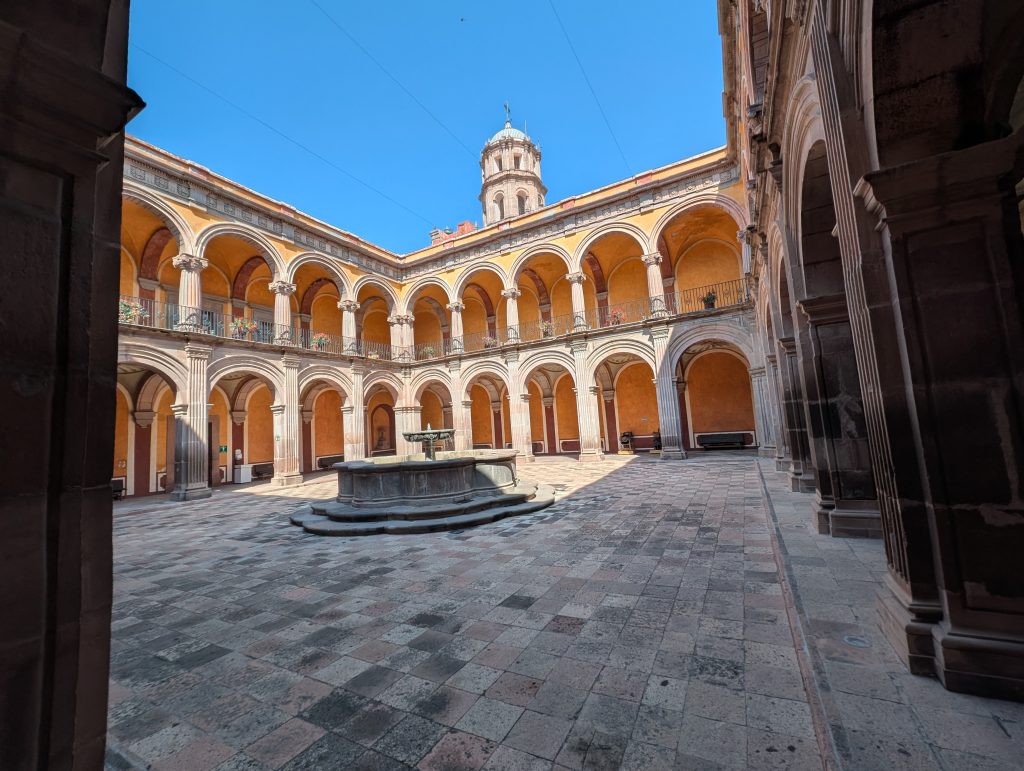
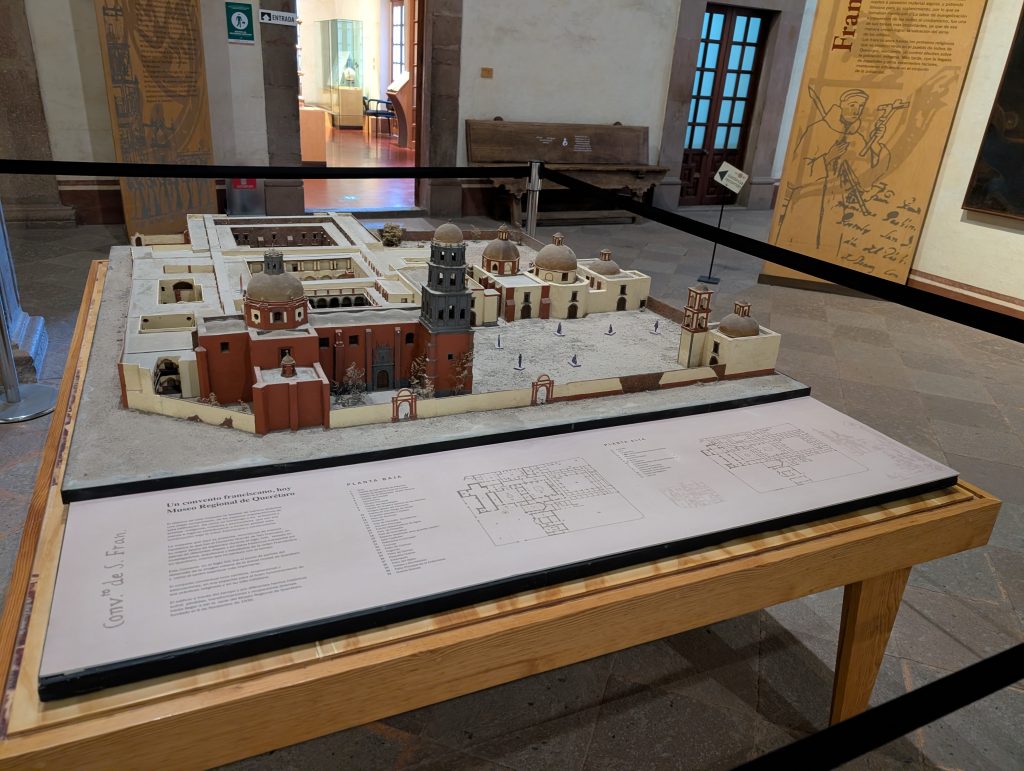


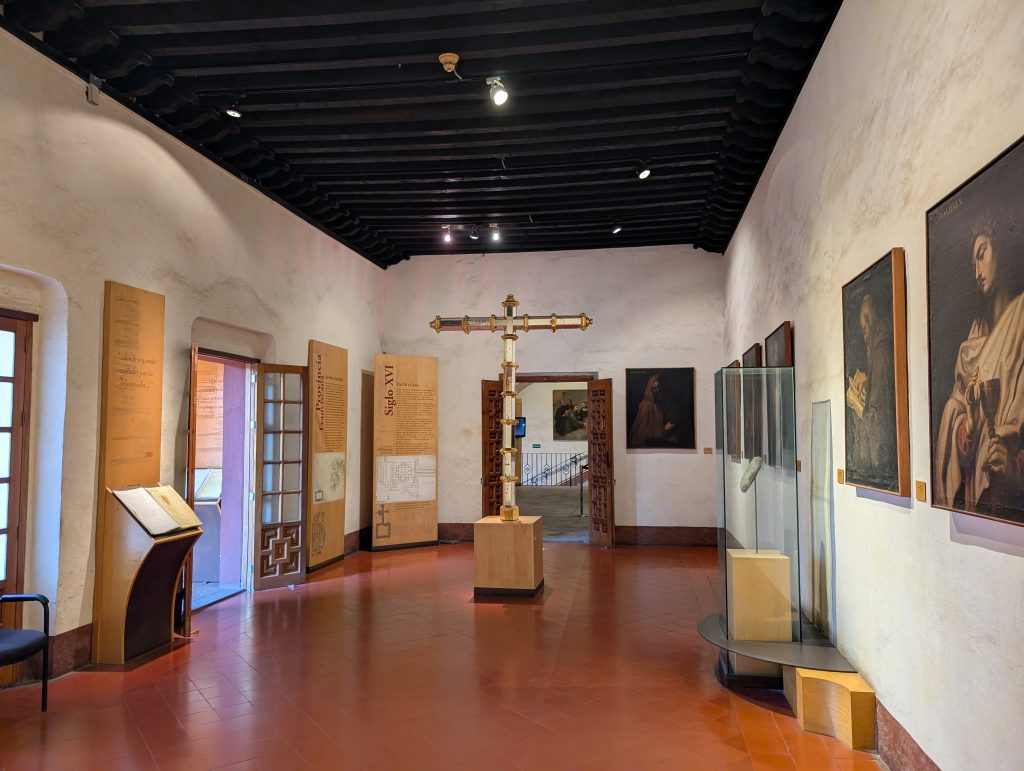

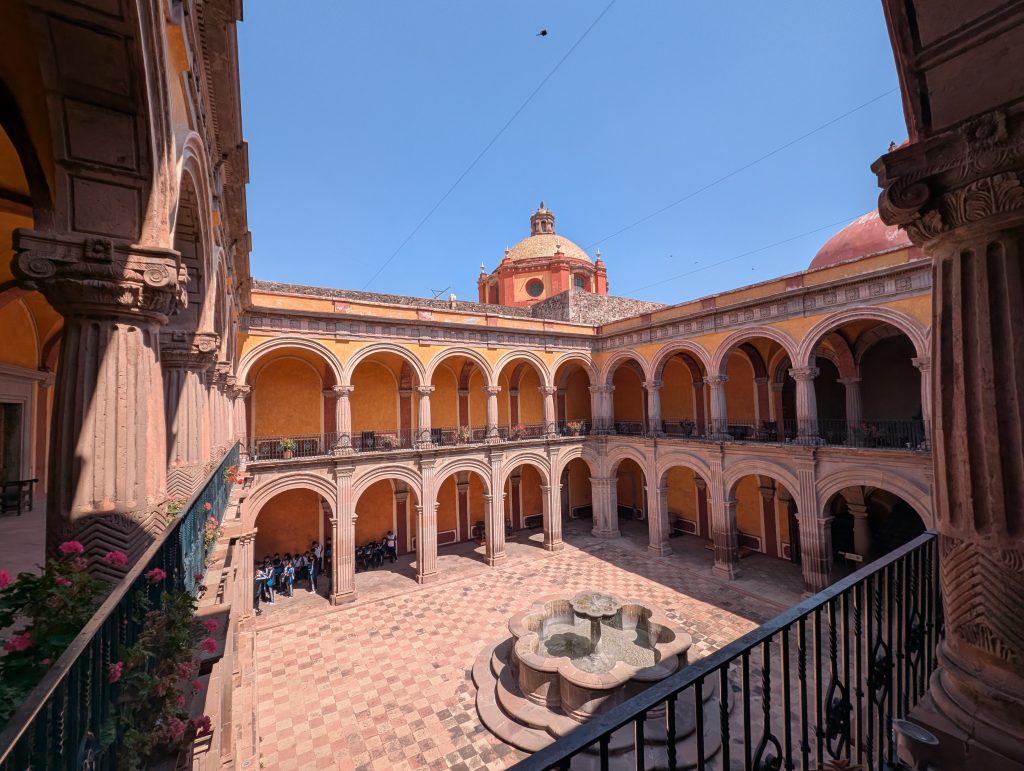
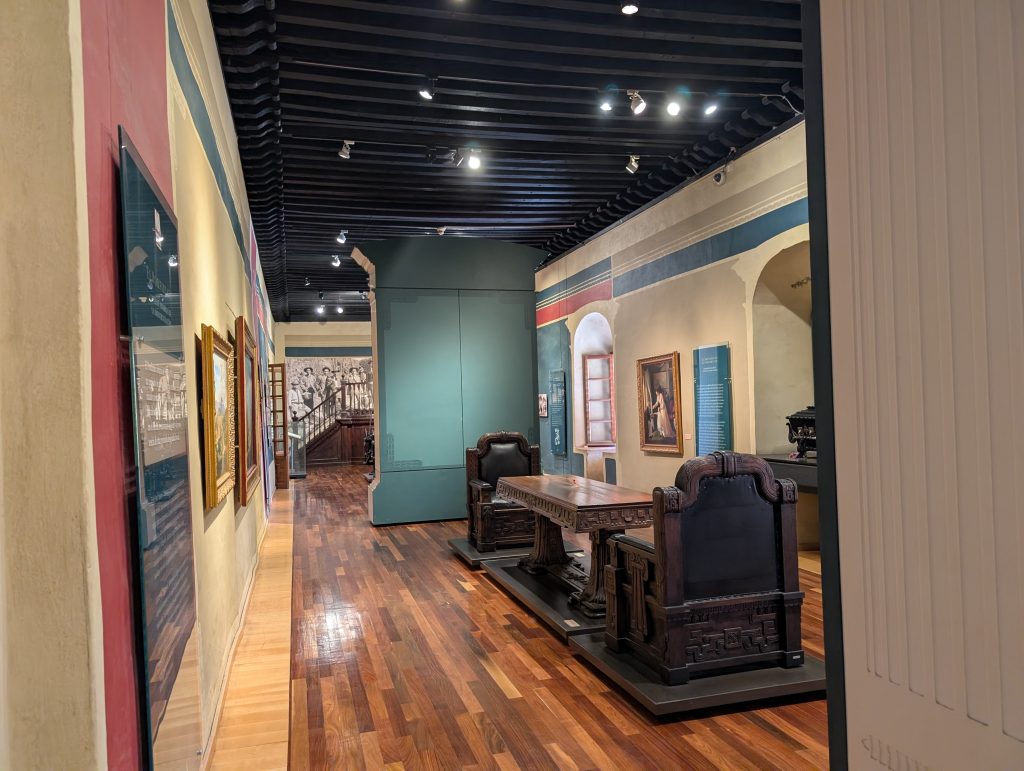
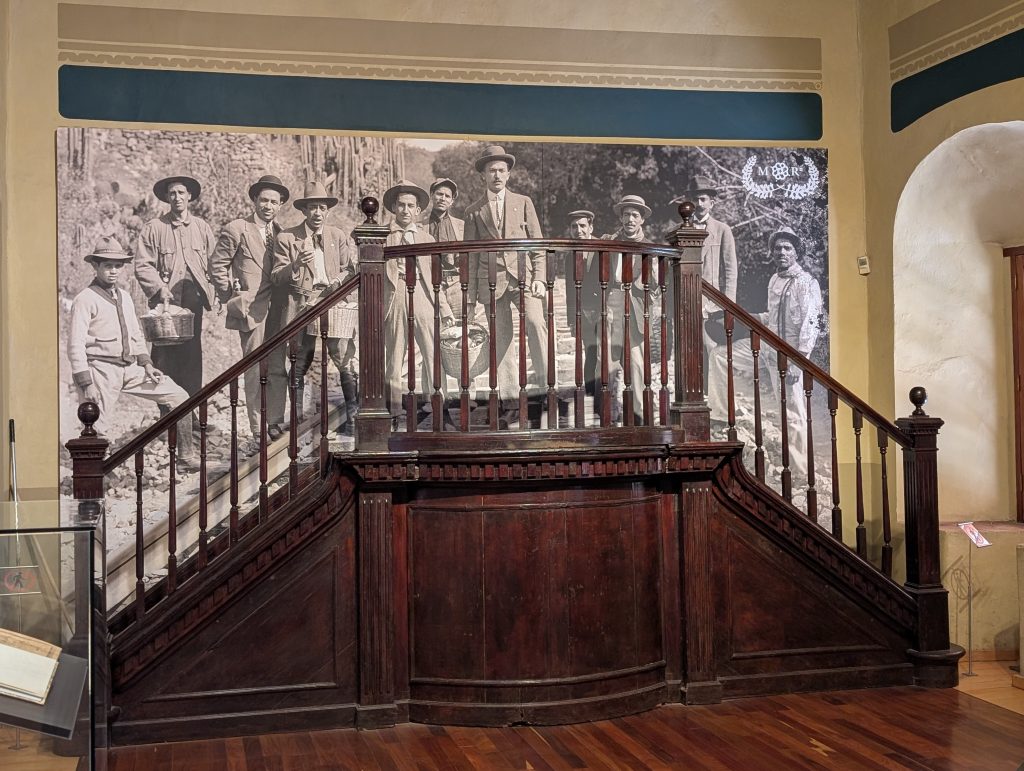
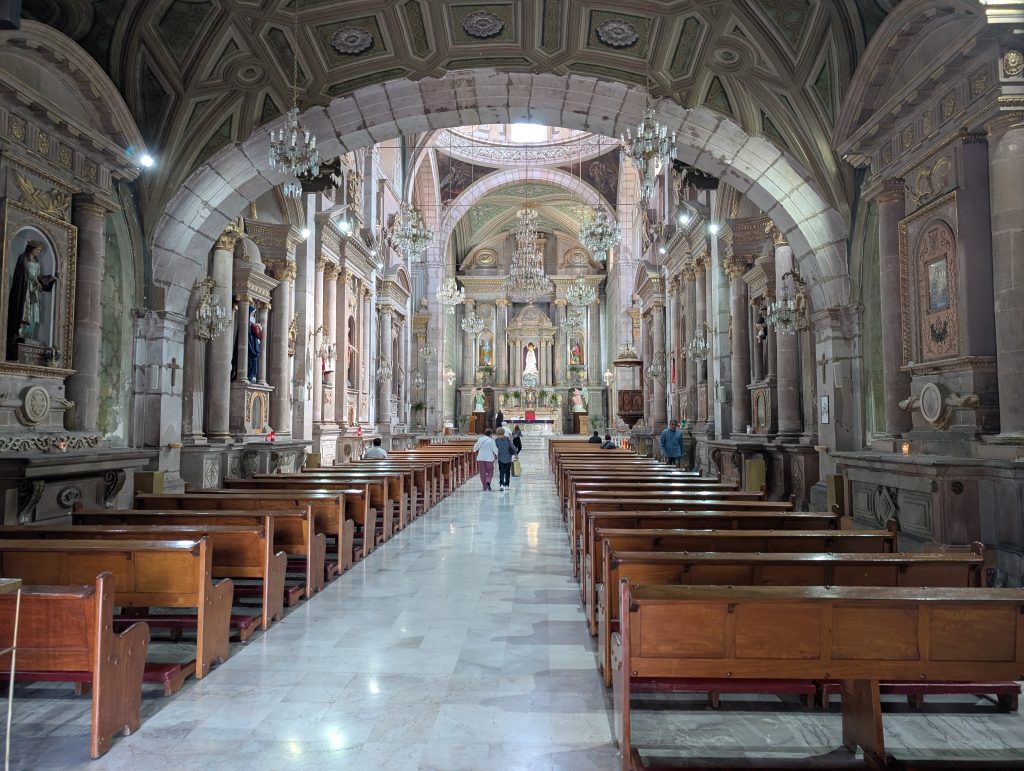
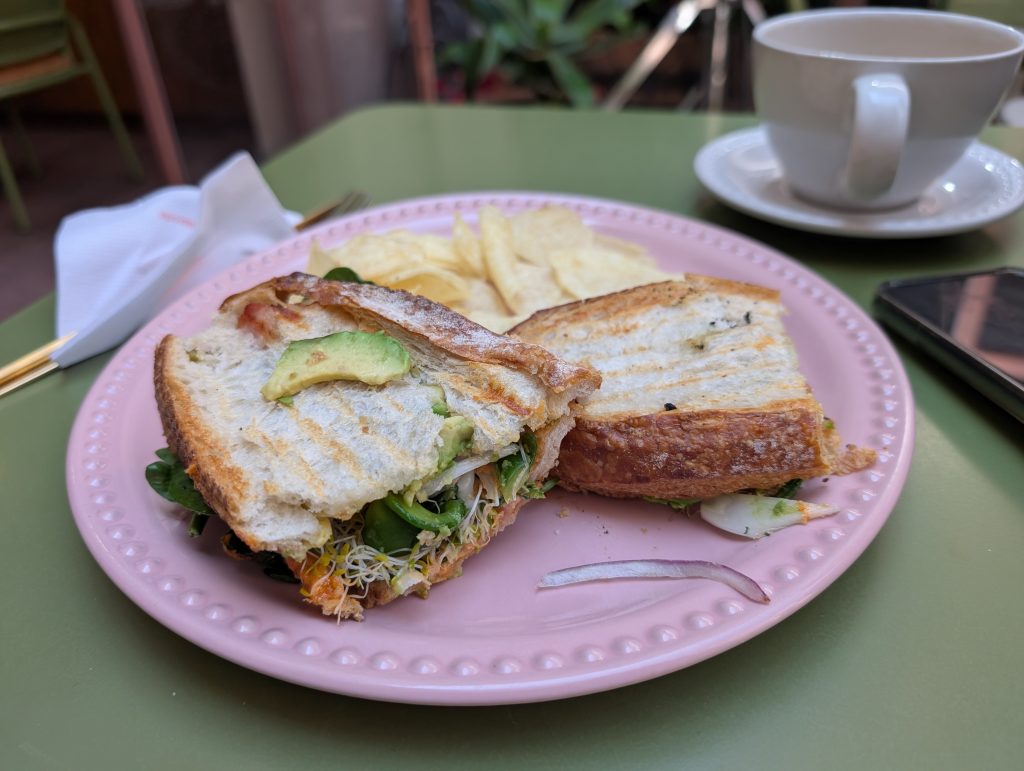
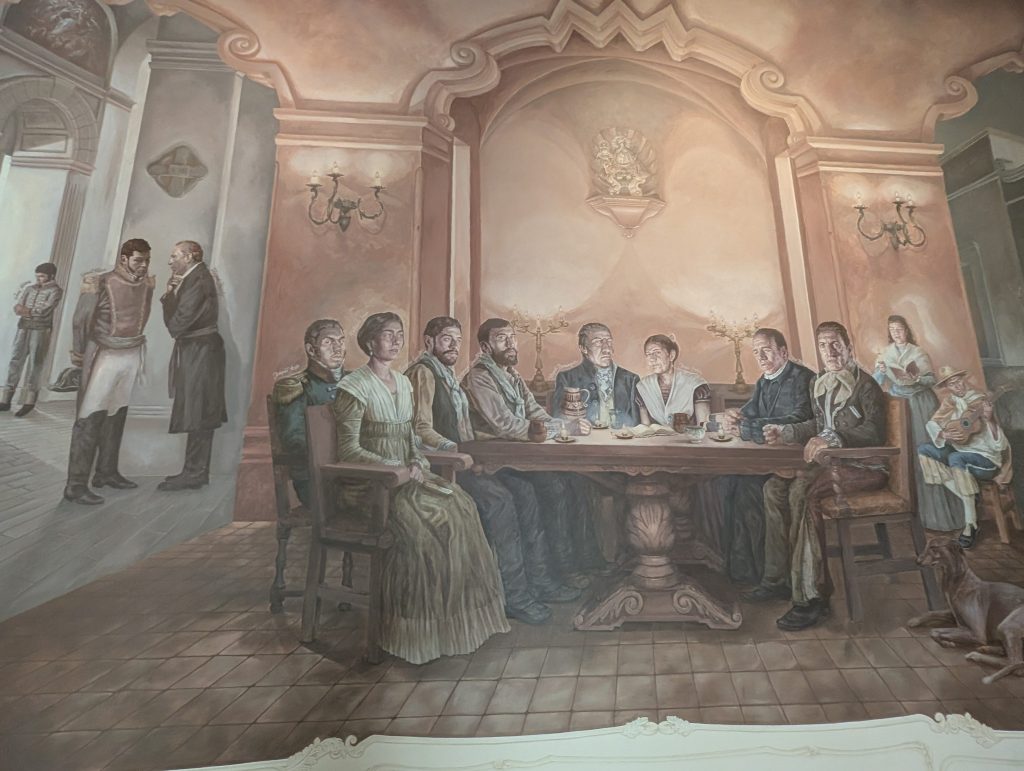
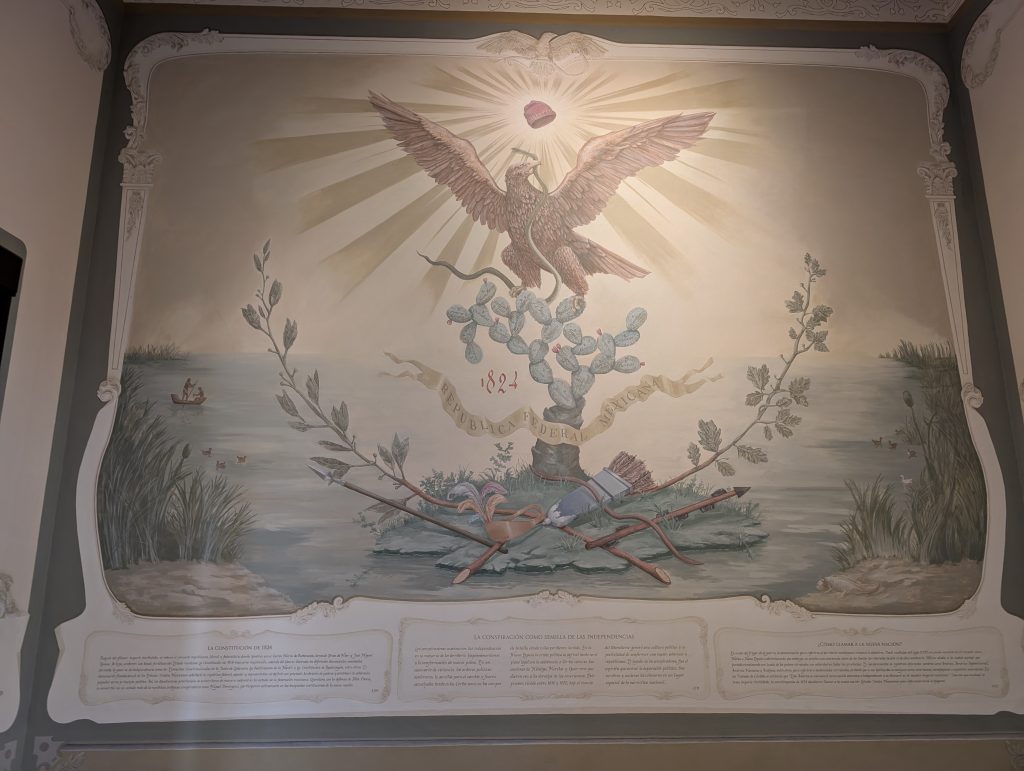
After the museum, we stopped for a light lunch, splitting a veggie sandwich. The we visited the Museo de los Conspiradores, a series of murals celebrating the meeting between Miguel Hidalgo and others to plan the war of independence. This museum was free, so worth the price of admission. But I don’t think we learned much more about this period than what we’d already gathered in Guanajuato and Dolores Hidalgo. Maybe a little more emphasis on the role and presence of Josefa Ortiz de Domínguez, the wife of the local Spain-appointed magistrate. She seems to be a very inspiring woman.

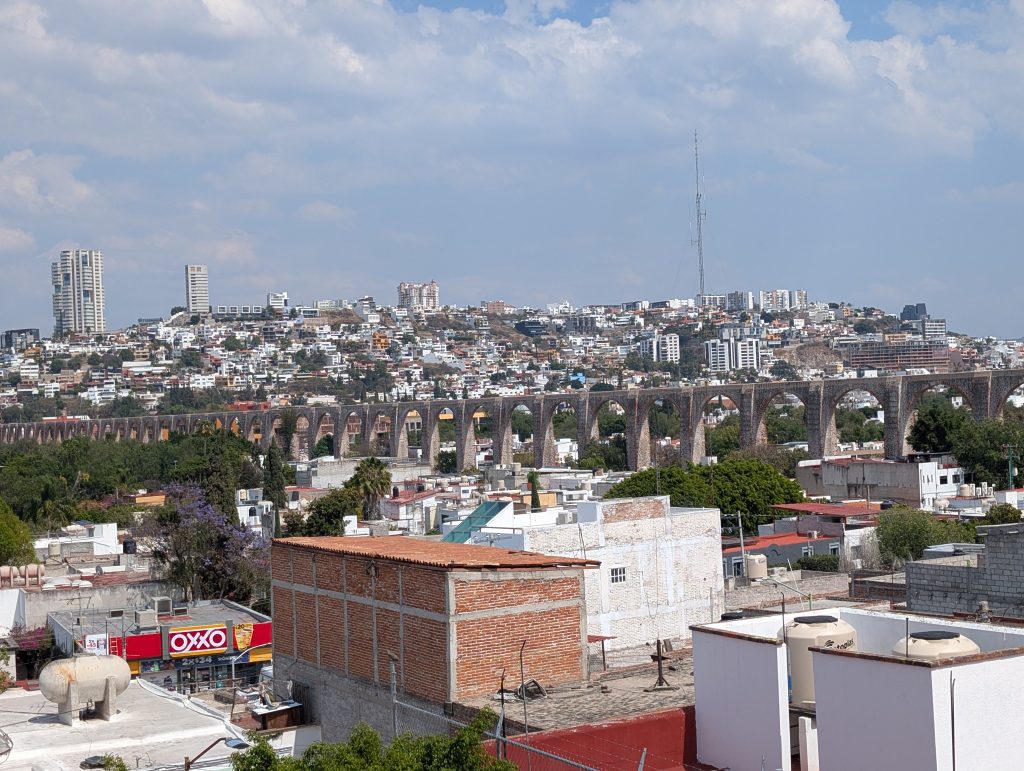
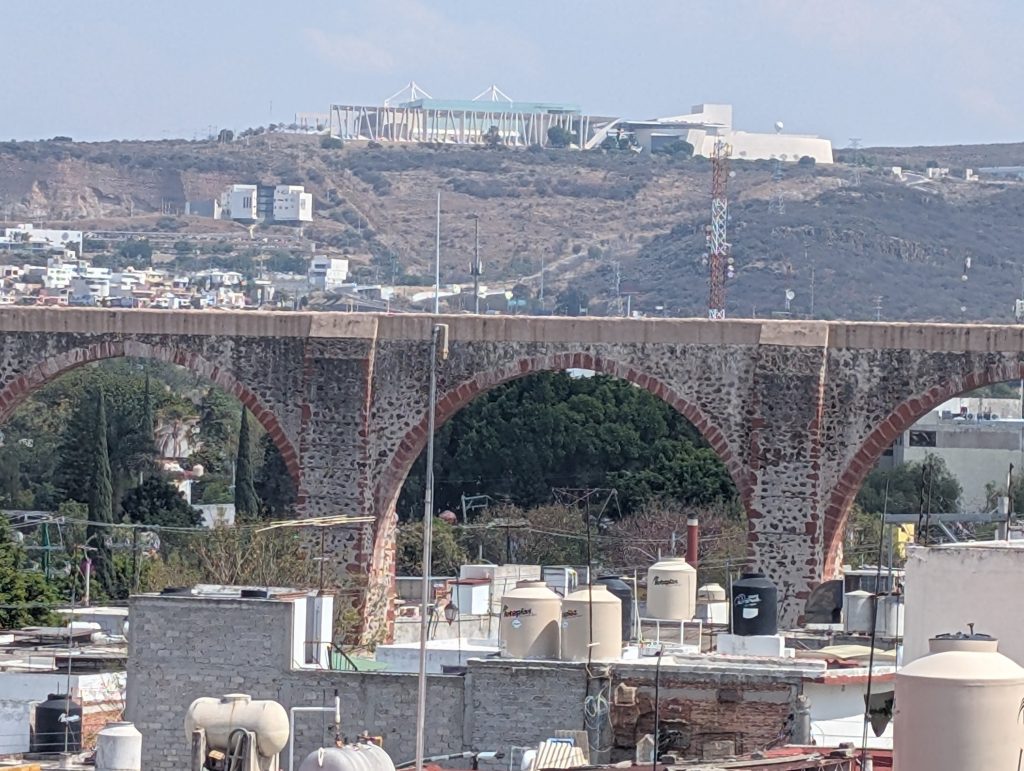
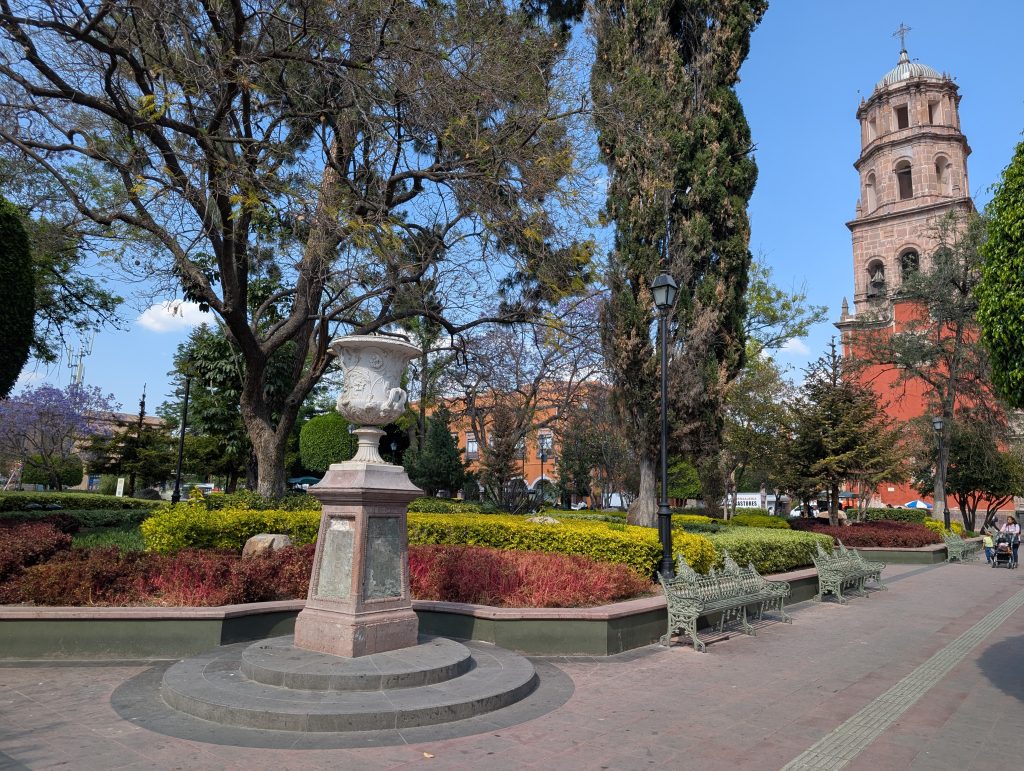
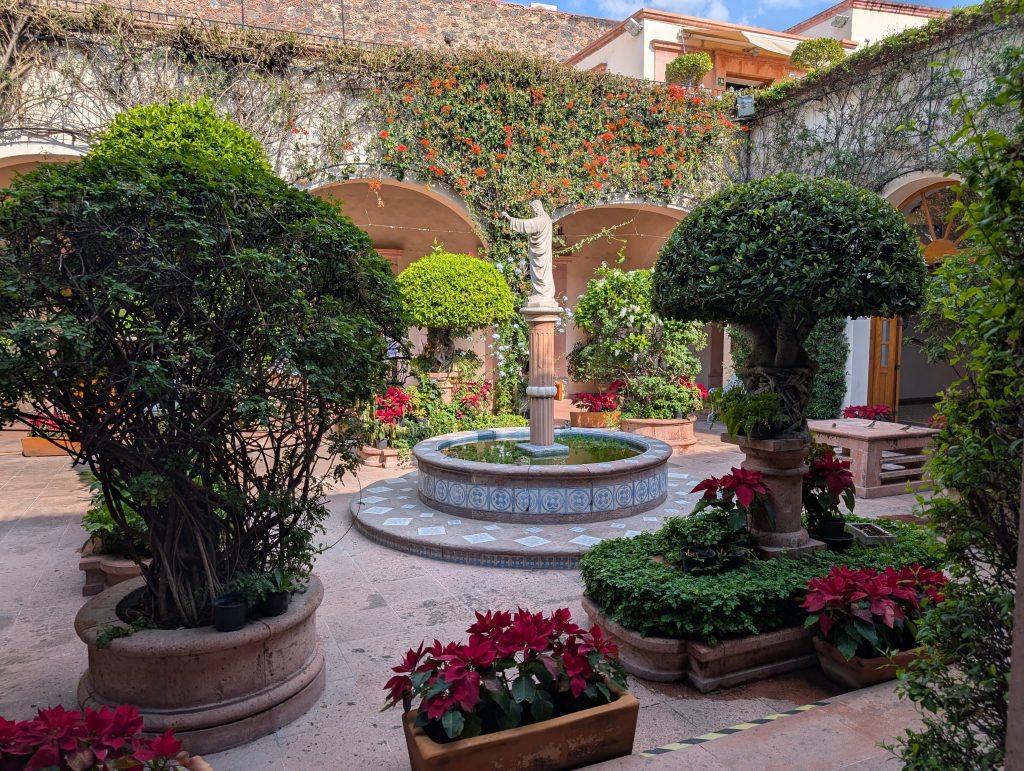
We spent the heart of the afternoon walking around Querétaro’s historic center and enjoying the many plazas in the daytime. We also walked out to a mirador to see the city’s historic aqueduct. We could see the Teatro Municipal where we’d attended the symphony in the distance.

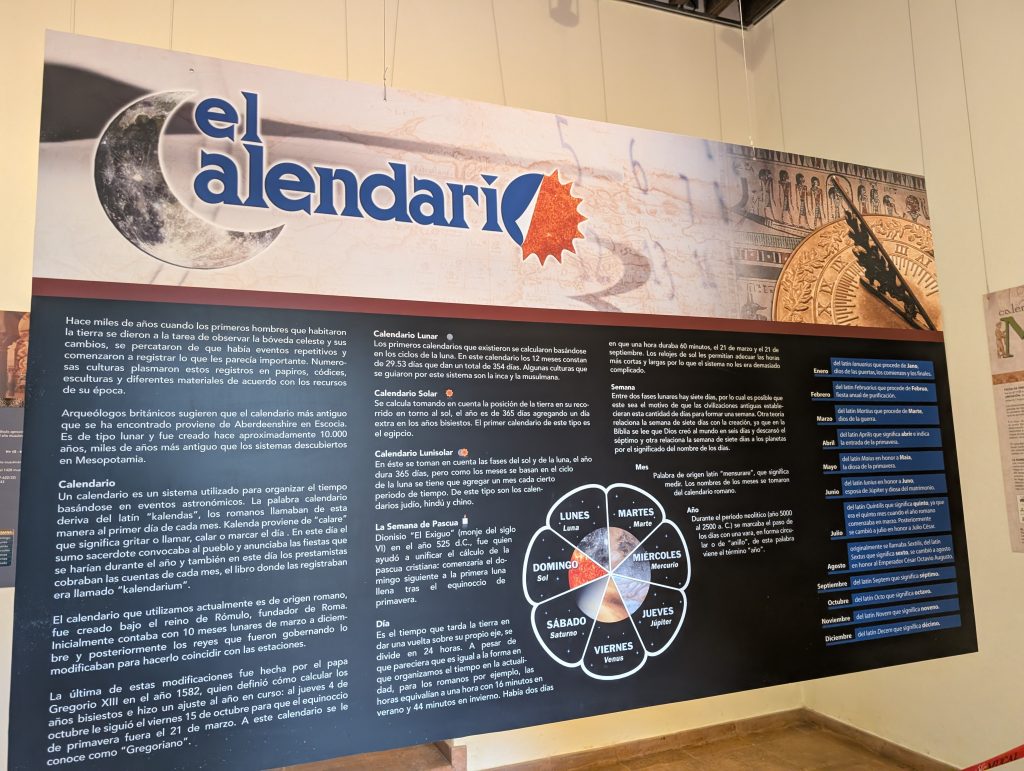
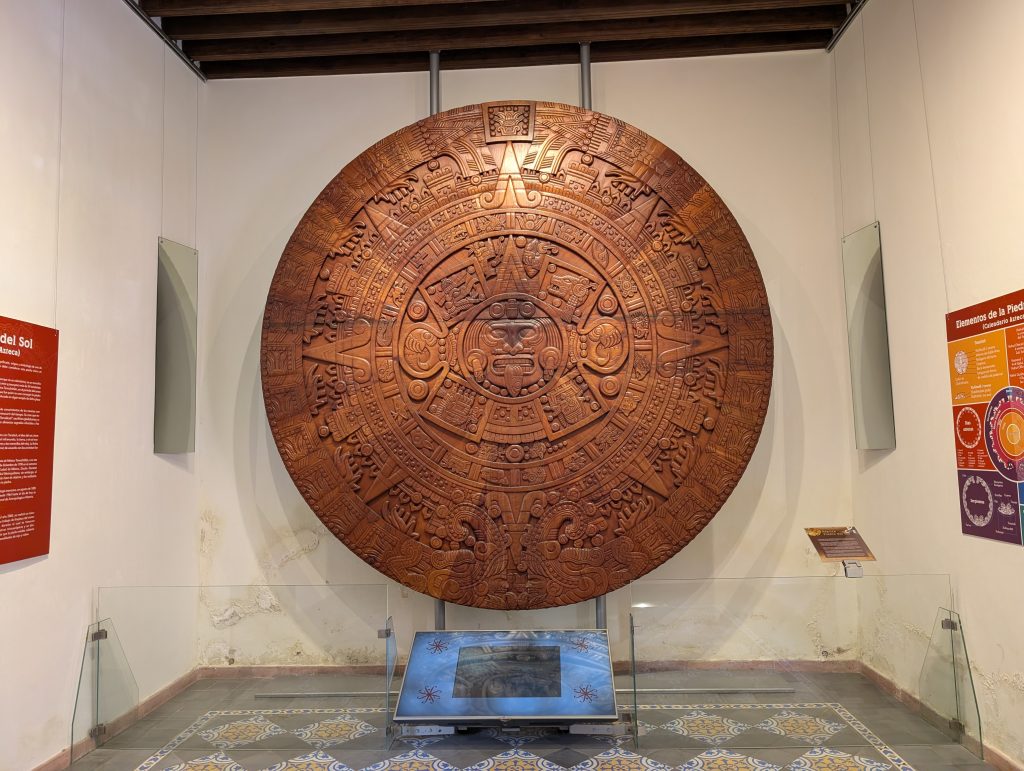
Our third and final museum of the day was the MUCAL, the Museo del Calendario, which is exactly what it sounds like, a museum about calendars. This was at the top of my list but it was quite different that we expected. There was a short beginning exhibit about the development of ancient calendars around the world, including the ones used by Mexican indigenous cultures, but most of the museum was about commercial calendar art that was popular in Mexico throughout the 20th century. This was quite fun to see and we especially enjoyed the displays of old calendars. The price was low, just 30 pesos each ($1.75), and it had a very nice rooftop area to enjoy as well.
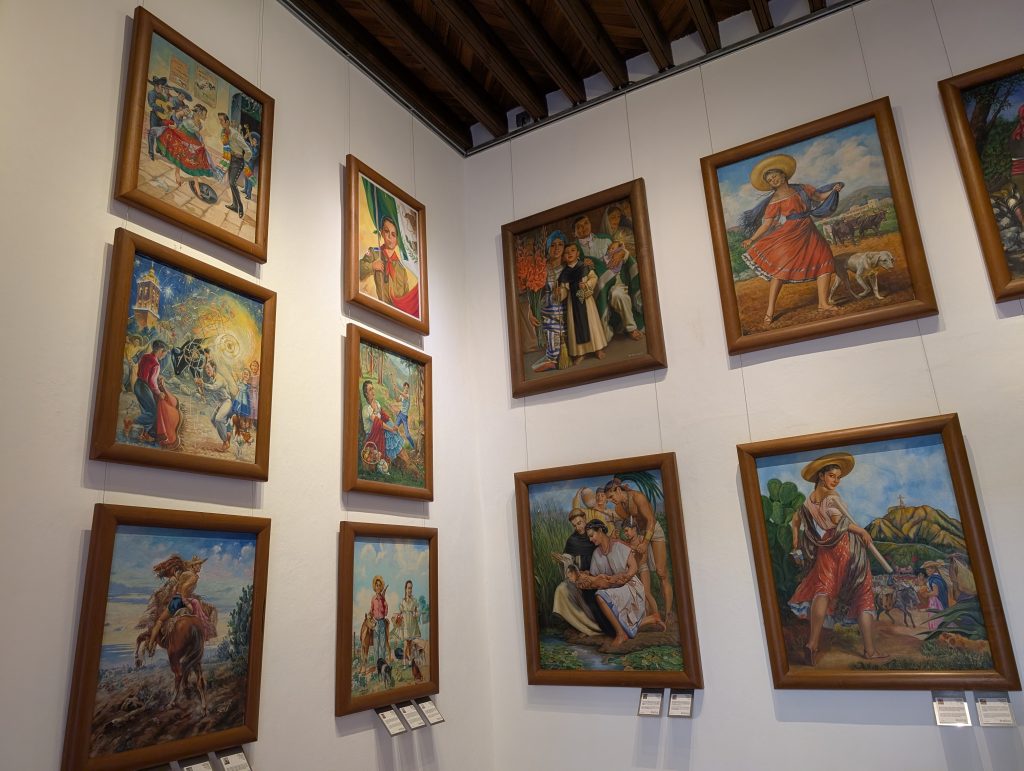
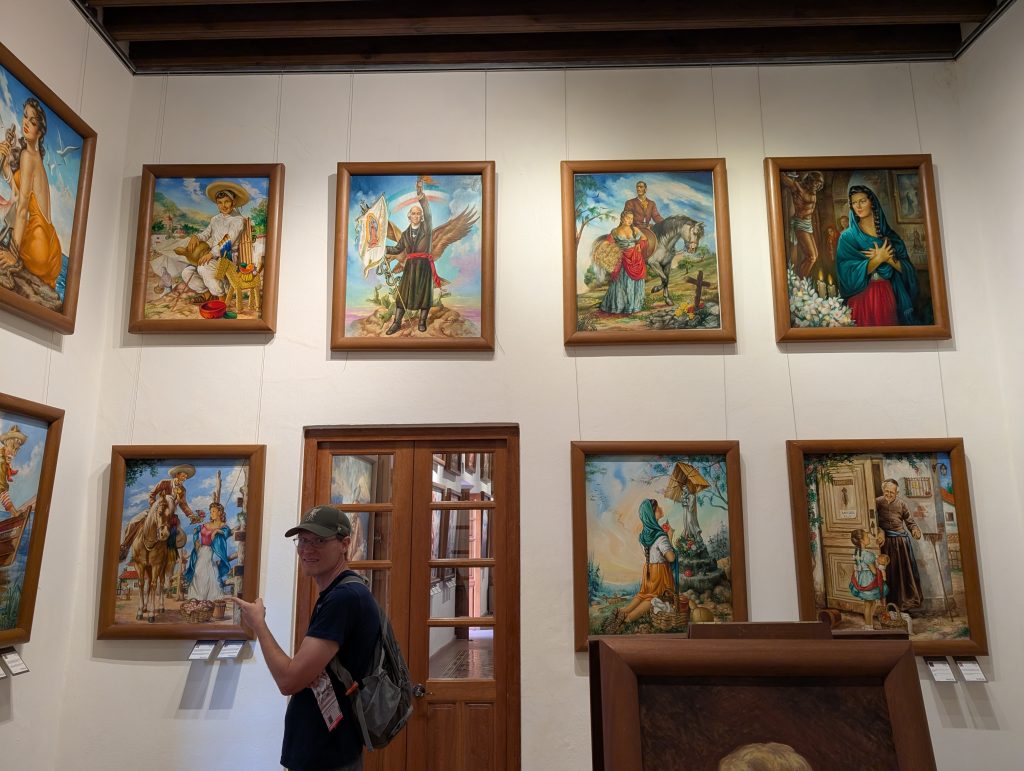
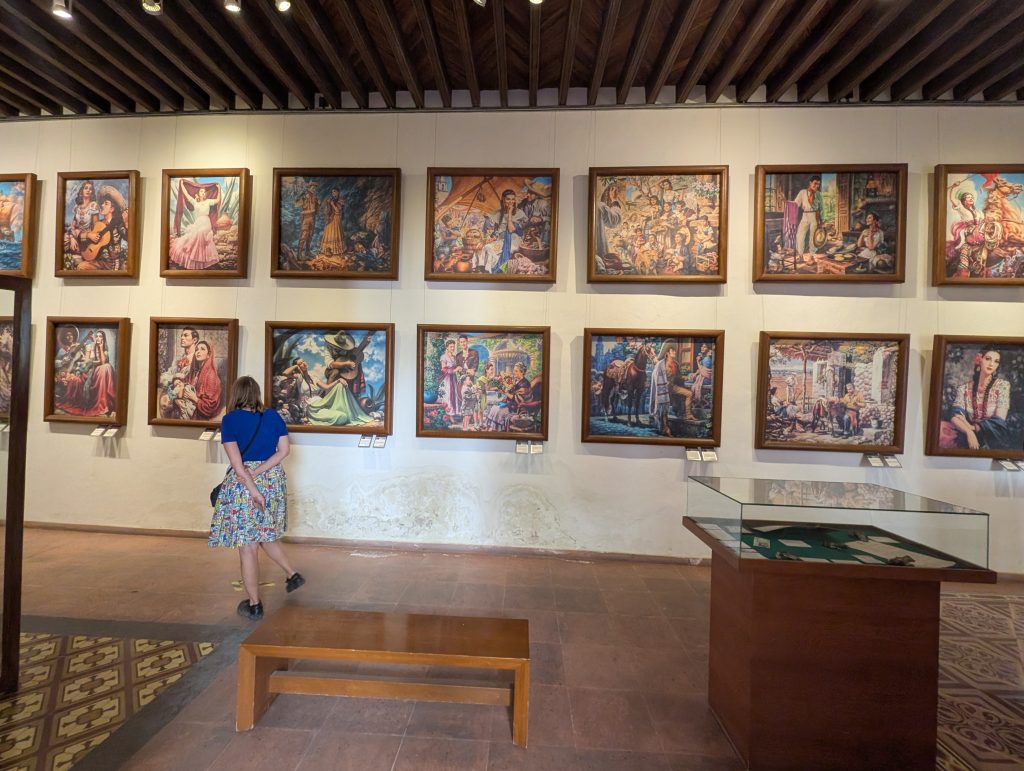
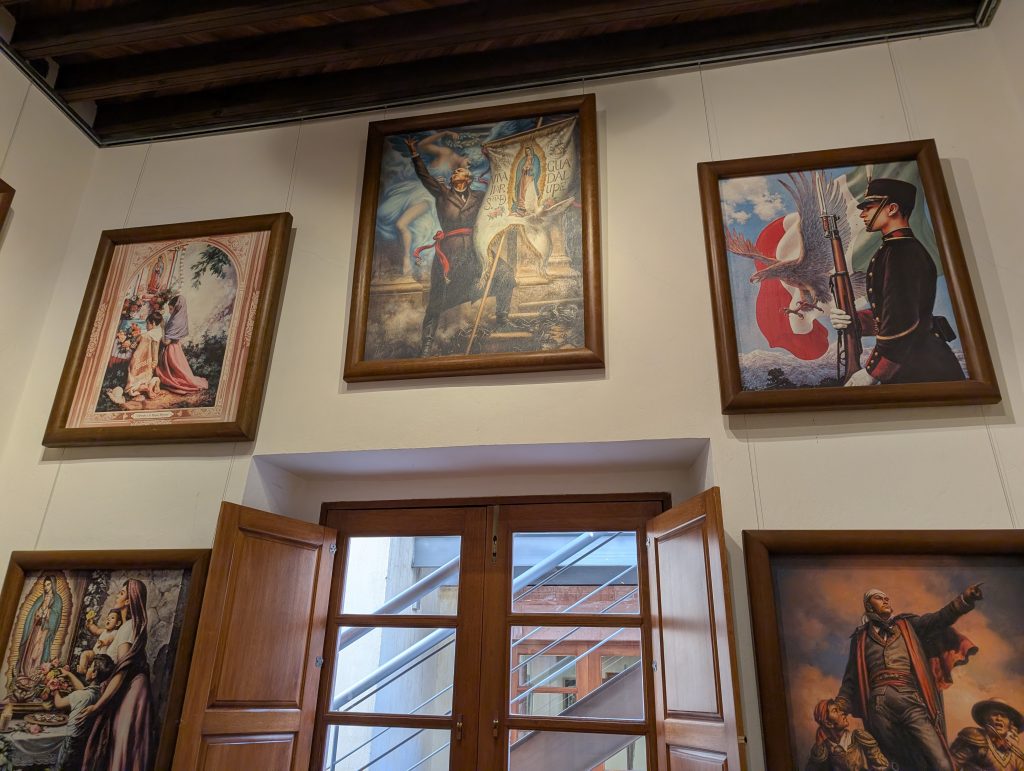
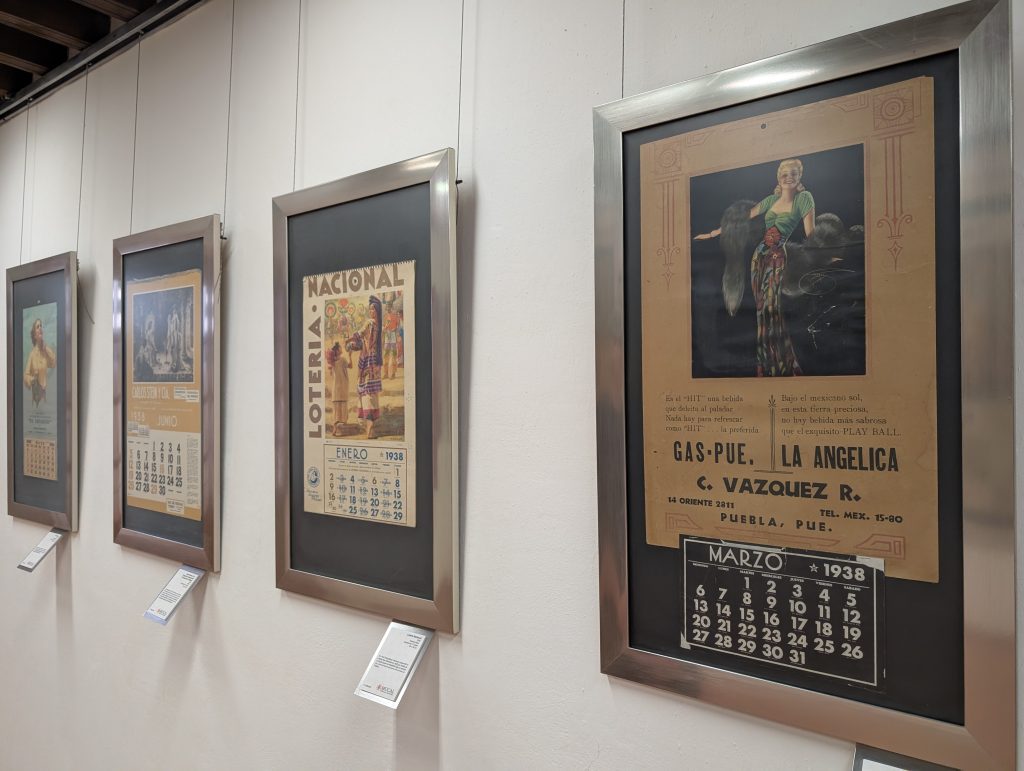
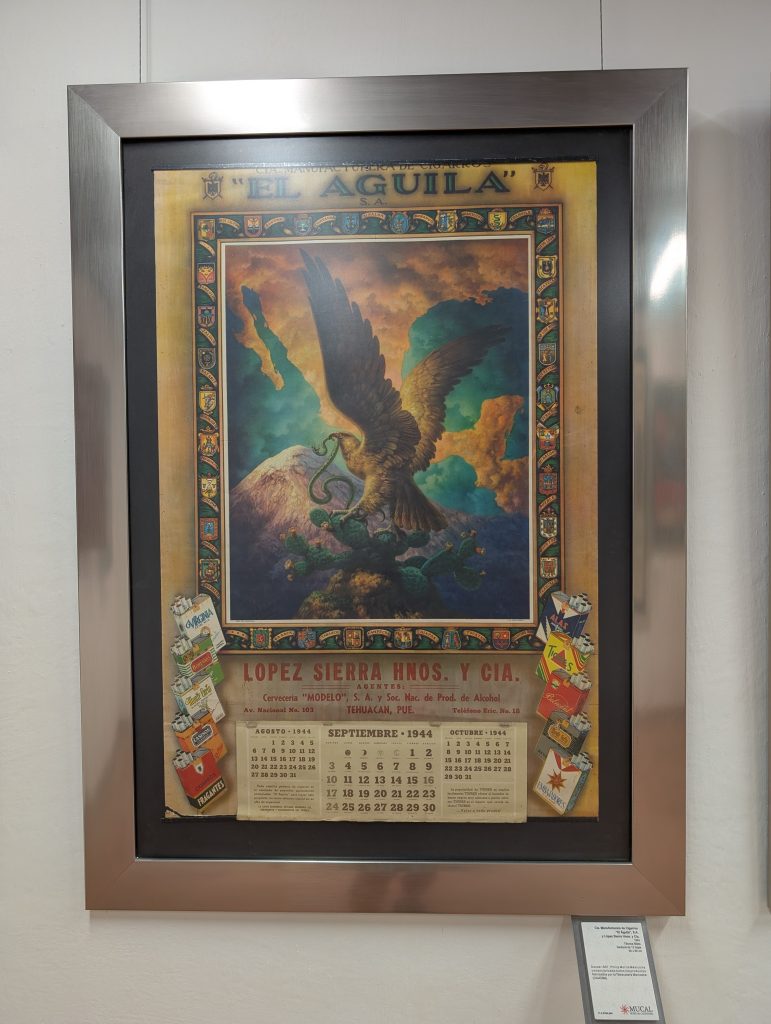
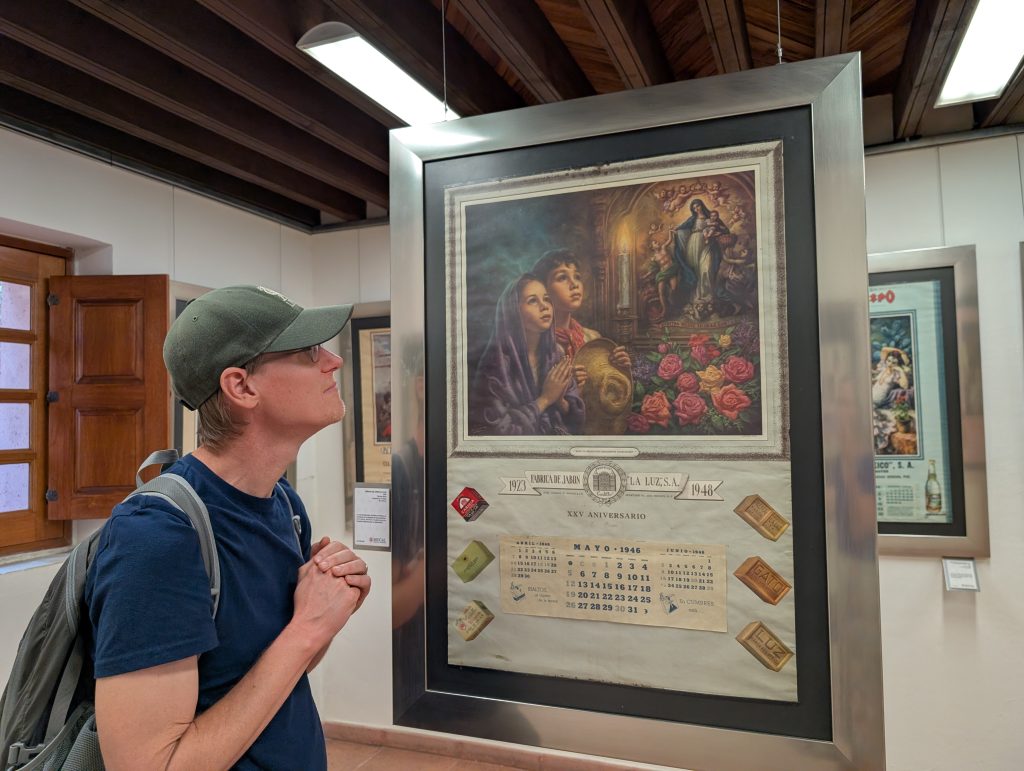
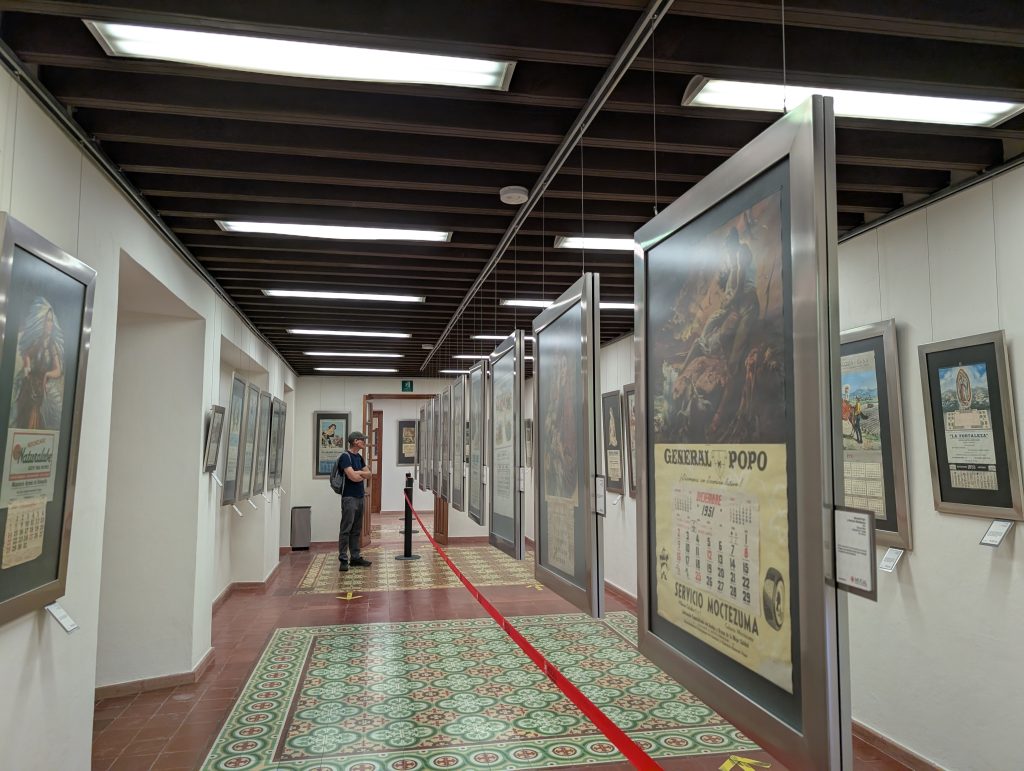
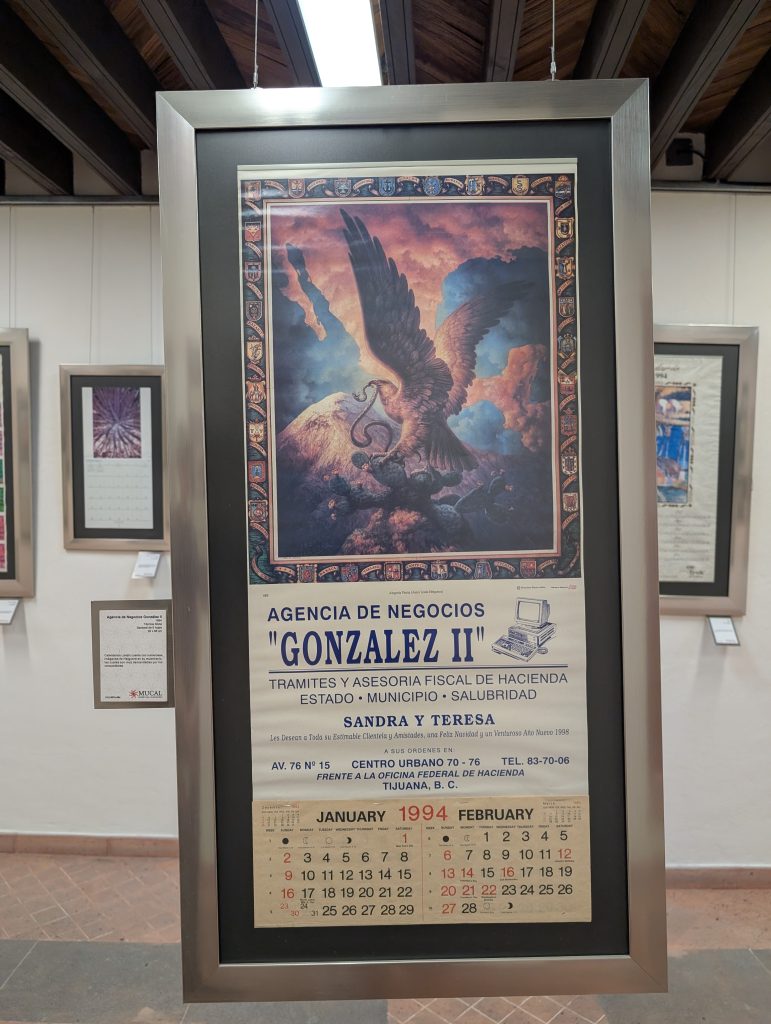
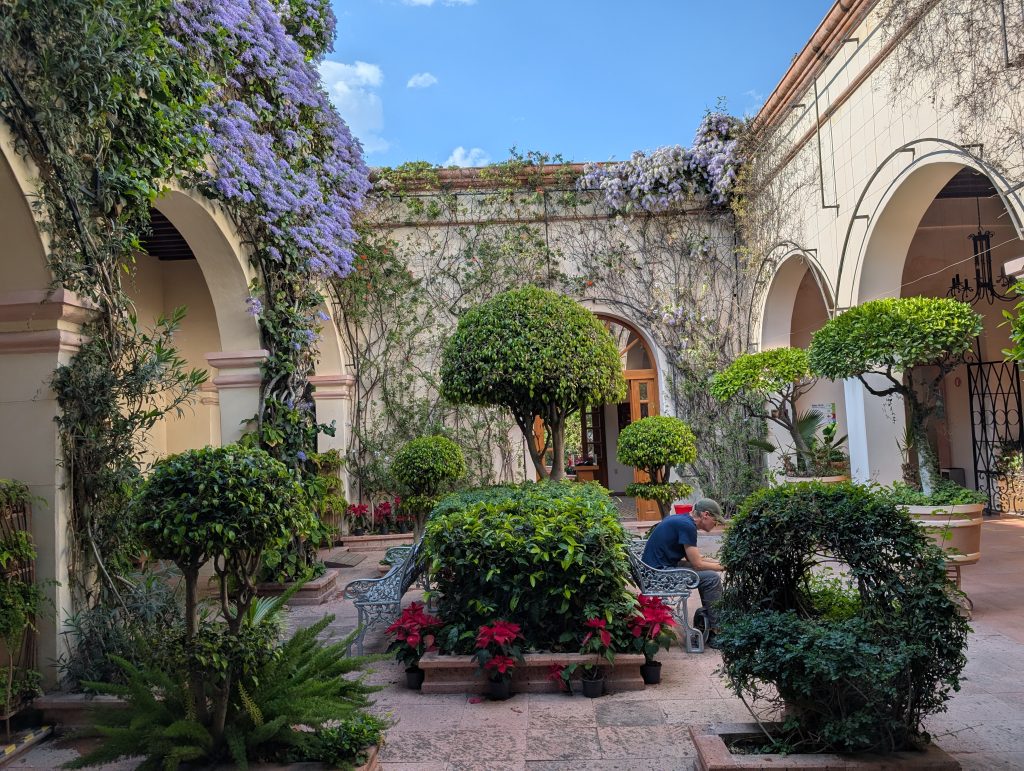

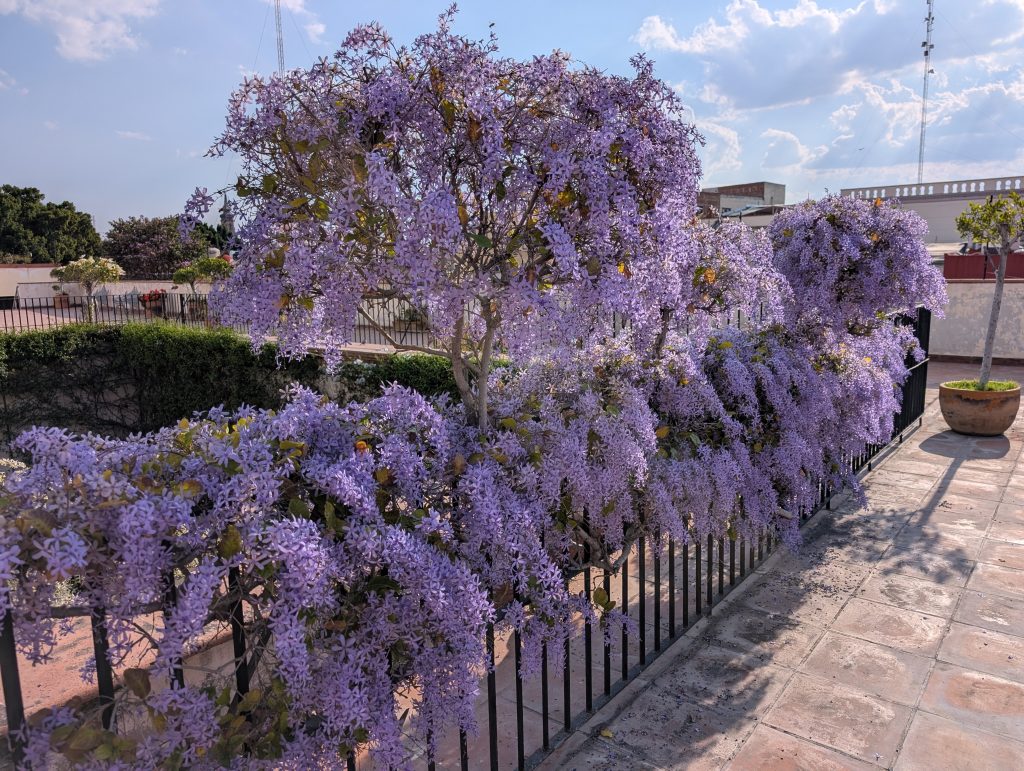
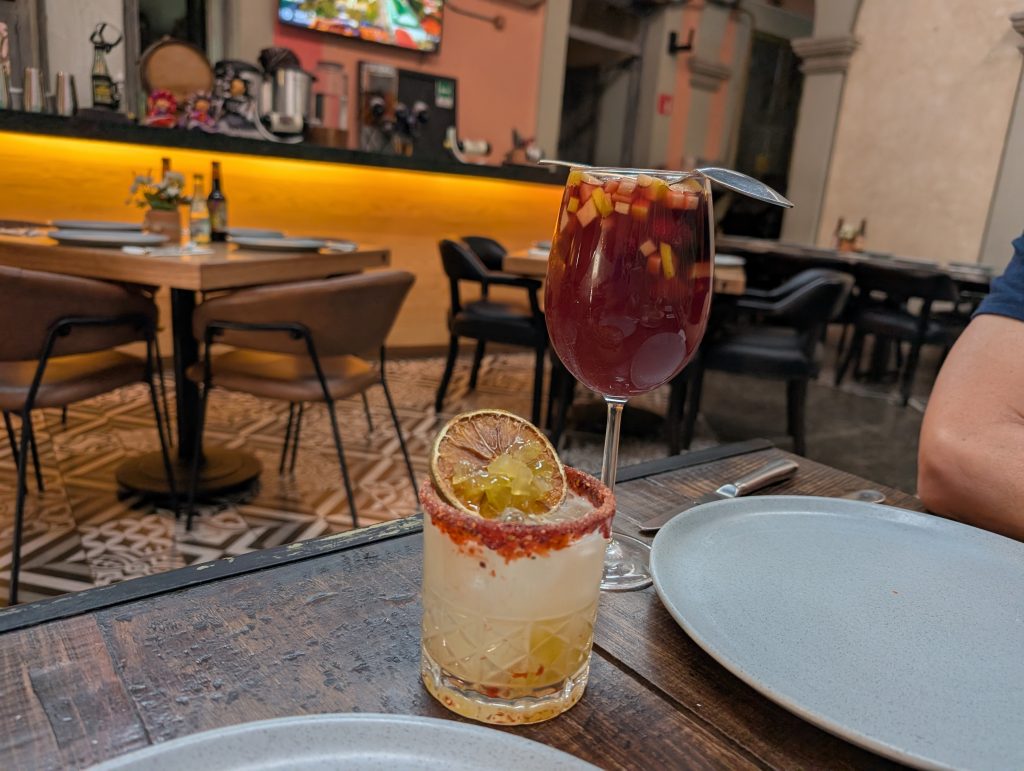
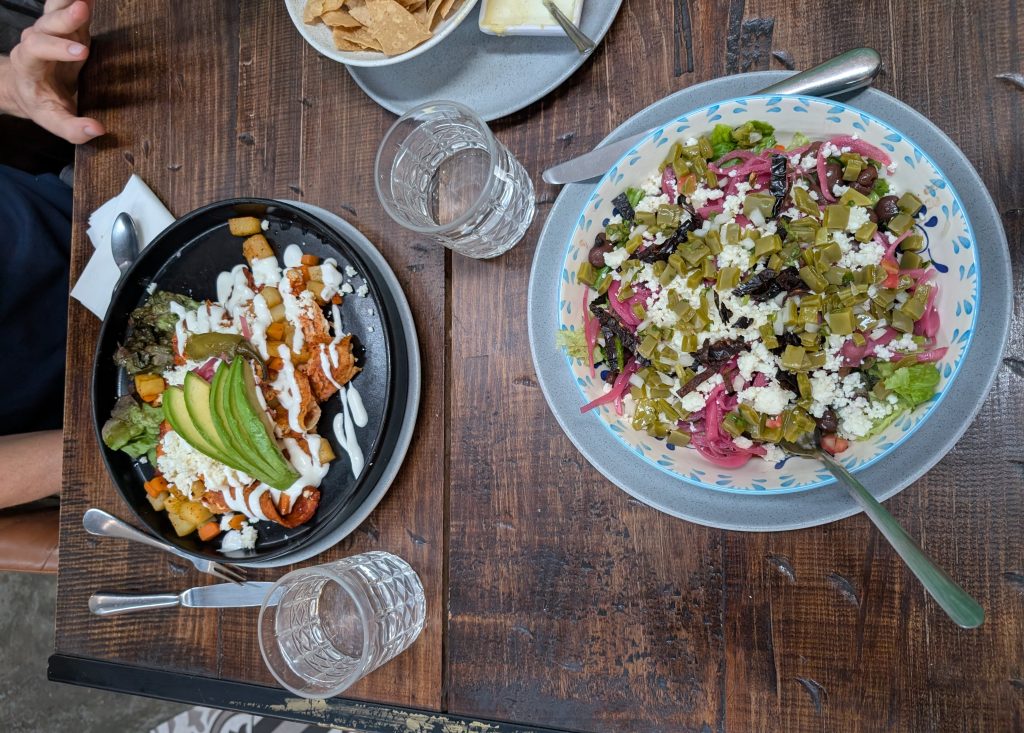
It was 5 p.m. when we finished the MUCAL so we decided to find a cocktail and then early dinner. After a little struggle to find either, we decided to combine them at a restaurant called Casa Concheros, an upscale restaurant featuring Queretano food. We got the local enchiladas queretanas and a regional salad, which were both good. We also ordered our first clericot, a popular Mexican wine cocktail, and a fancy mezcal cocktail. The meal was pretty good but not amazing.
Women’s March and More Museums
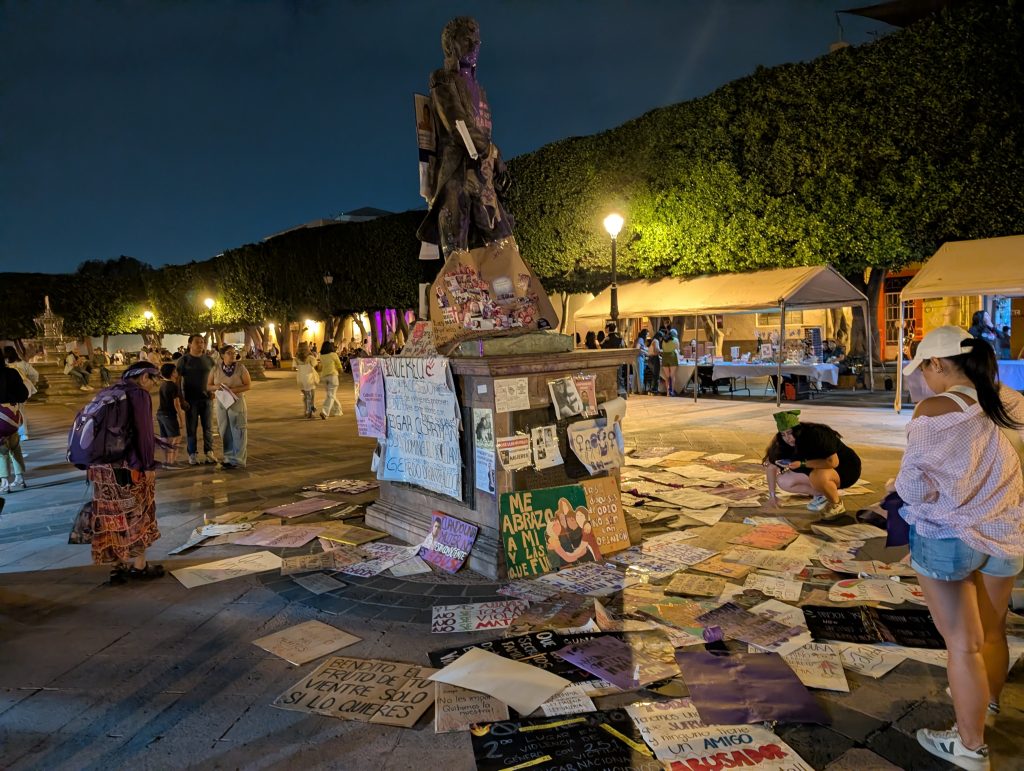
We’d planned our next sightseeing for late Sunday afternoon after spending a couple of days working. However, all the museums we wanted to see were unexpectedly closed, I believe due to the International Women’s Day March. So, we checked out the march instead, which was even more impressive than the one we saw several years ago in San Cristobal. The signs the women carried were just as sad and disturbing. Domestic and sexual violence continue to be big issues in Mexico (as in the United States, to be fair. The whole world has a long way to go). However, it was inspiring again to see so many women rallying and marching and standing up for their rights.
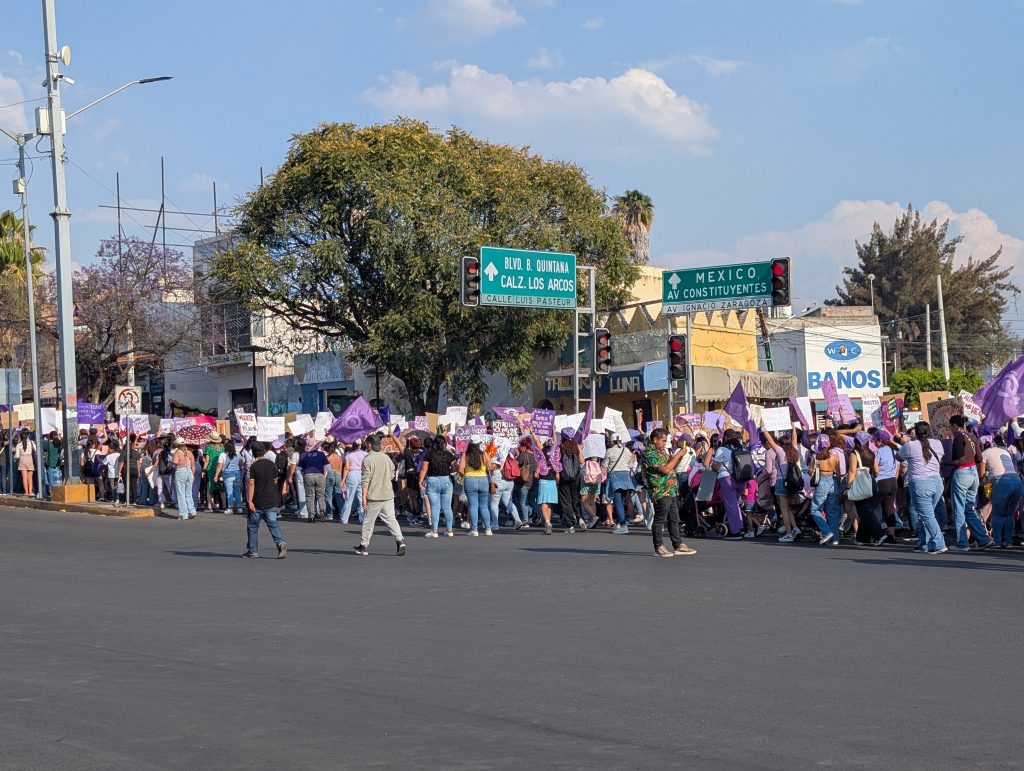
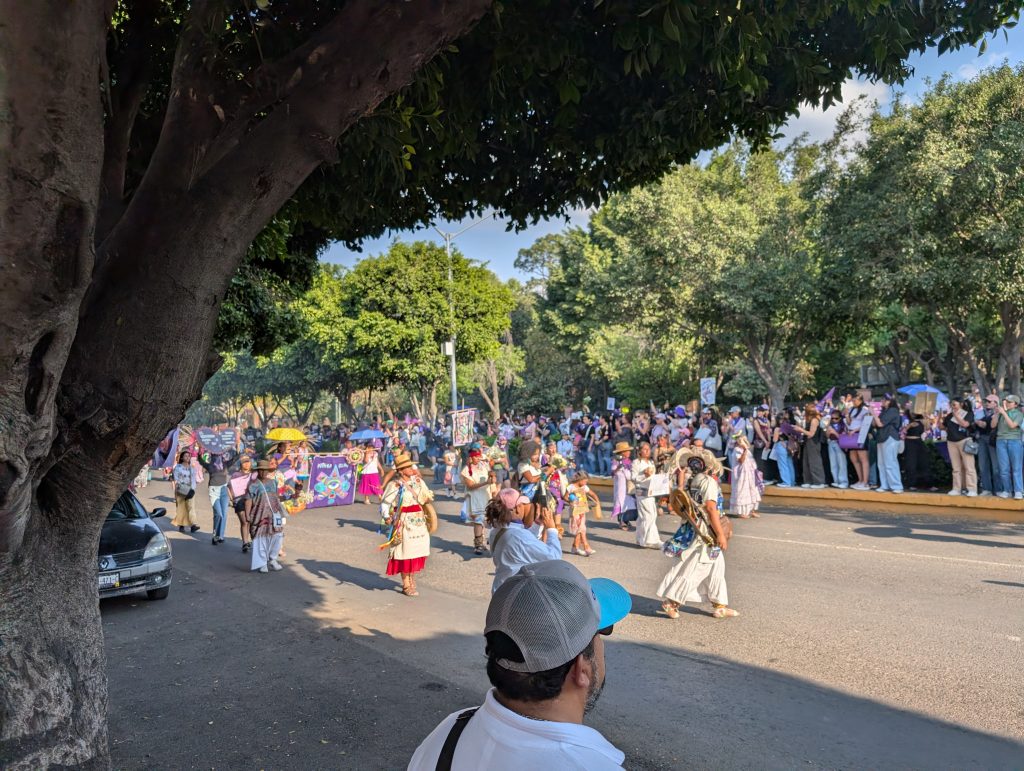
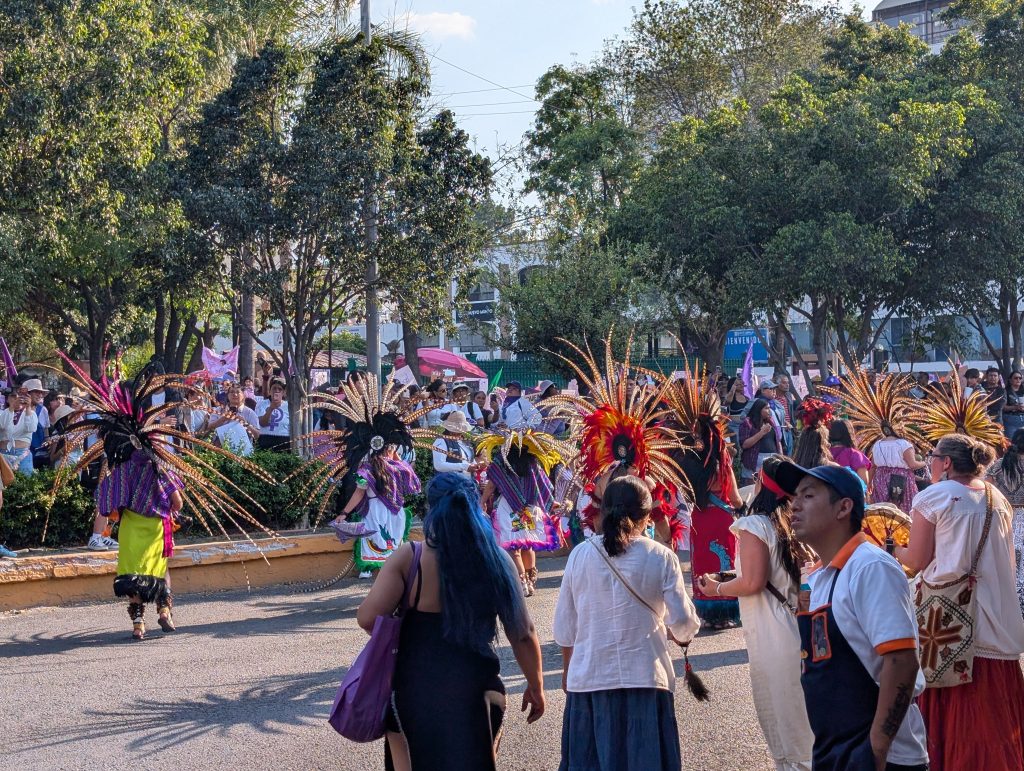
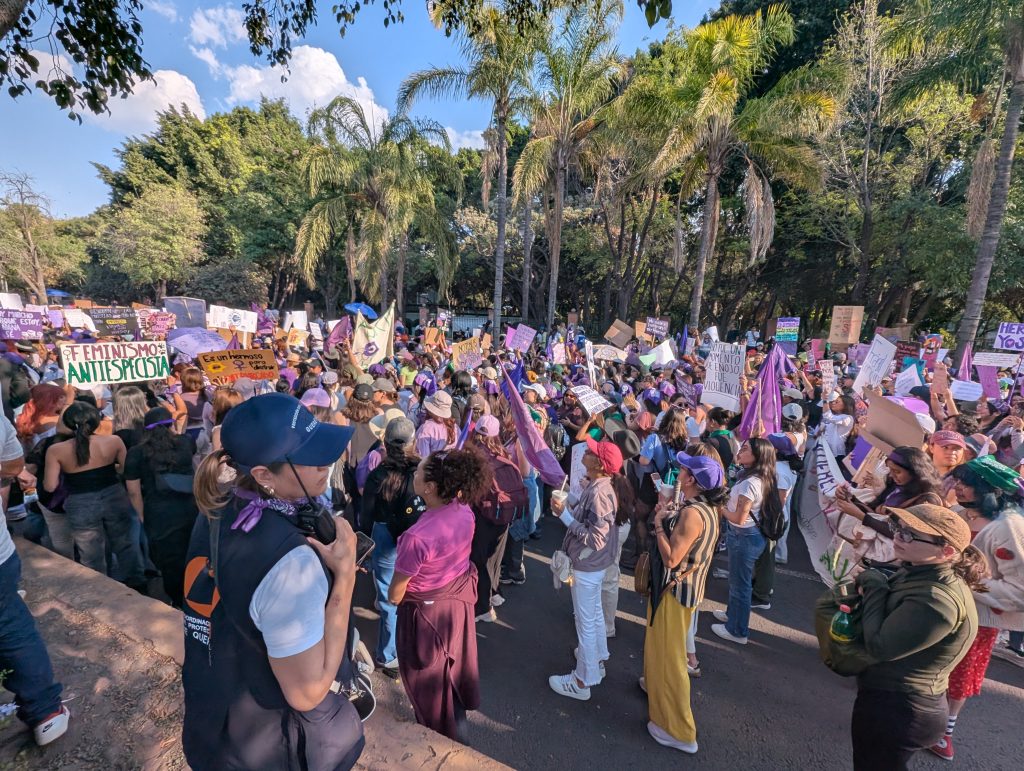

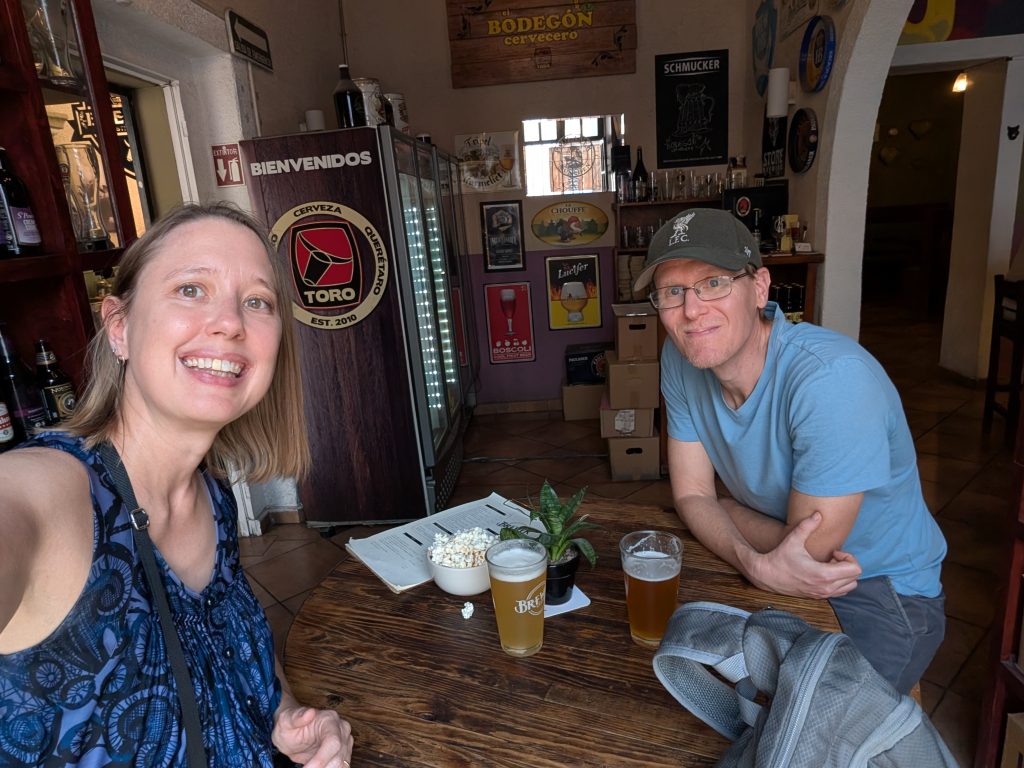
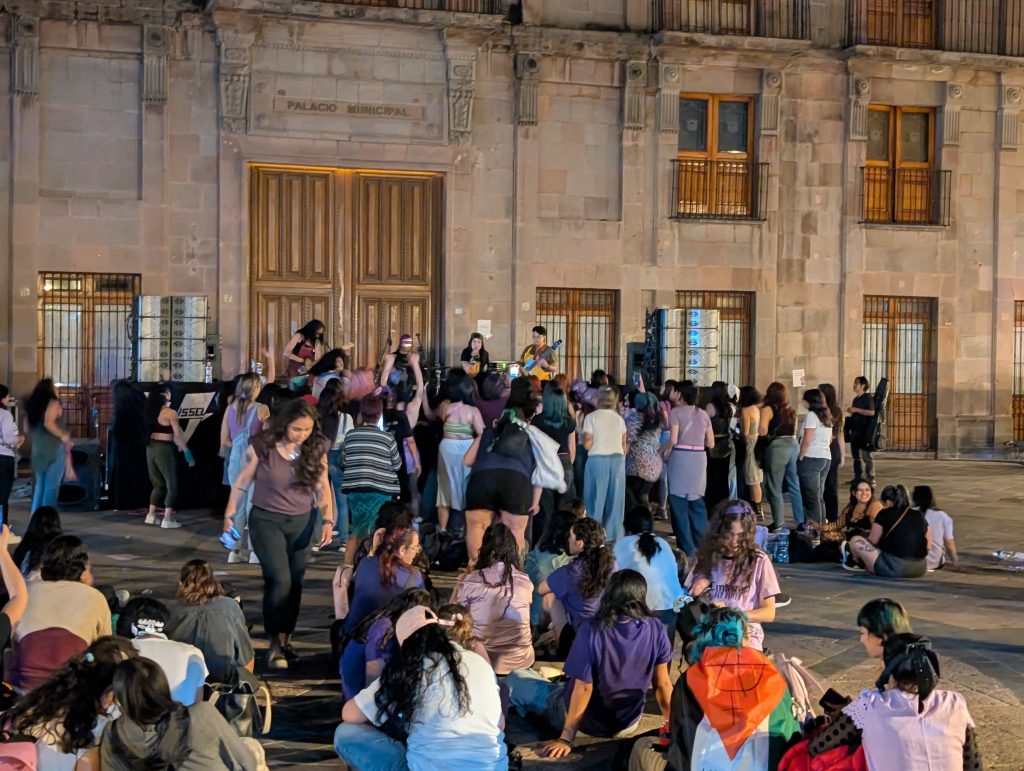
We followed up the march with a couple of local craft beers from a bar called Cervecería Toro and then tacos al pastor and a vegetarian huarache (a thick oblong masa bread with various toppings) from Restautante del 57. We followed that with an order of churros served with cajeta (goat milk caramel). Like the women’s march we saw in San Cristobal, the women left their signs on display in public spaces. There were also several women bands playing in the main plazas.

We made another run at visiting the museums late Wednesday afternoon, a couple days before our departure. First we visited the Museo de Arte Querétaro (called the MAQRO), which was excellent. It had primarily contemporary art staged in a series of temporary exhibits and the building’s architecture was particularly beautiful. Our favorite part was that it featured the beautiful beaded animal sculptures of an artist, Cesar Menchaca, whose work we had previously seen at a mall in Mexico City. The works are truly impressive and brought back good memories. We also really enjoyed a photography exhibit chronicling several indigenous festivals.
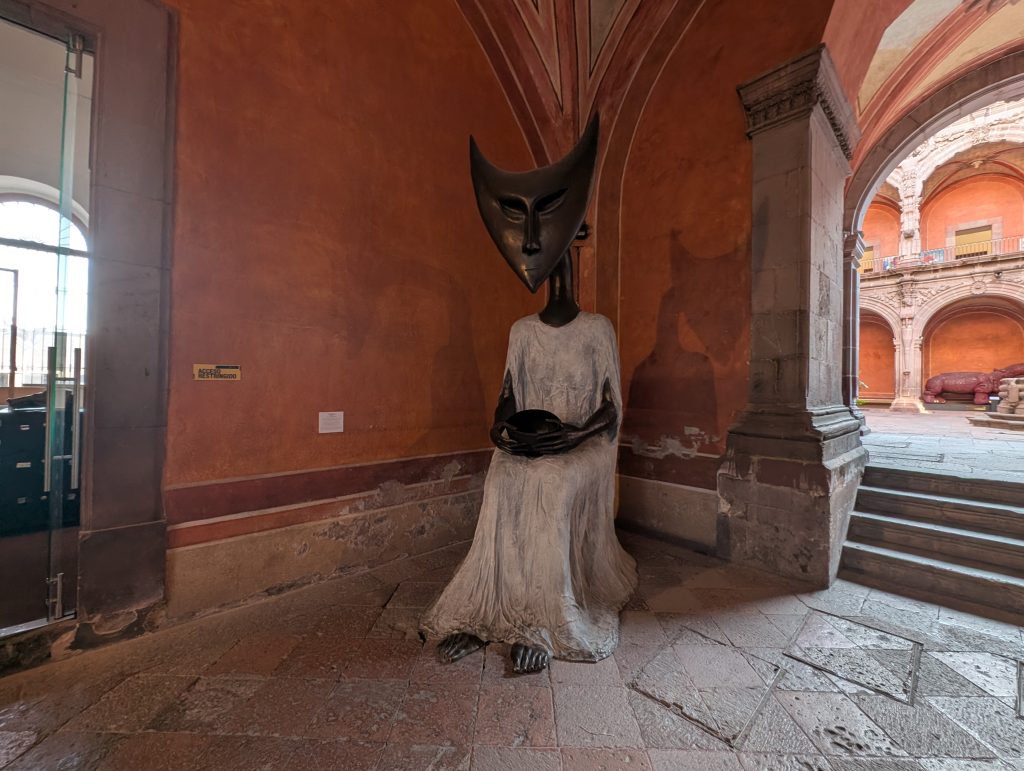
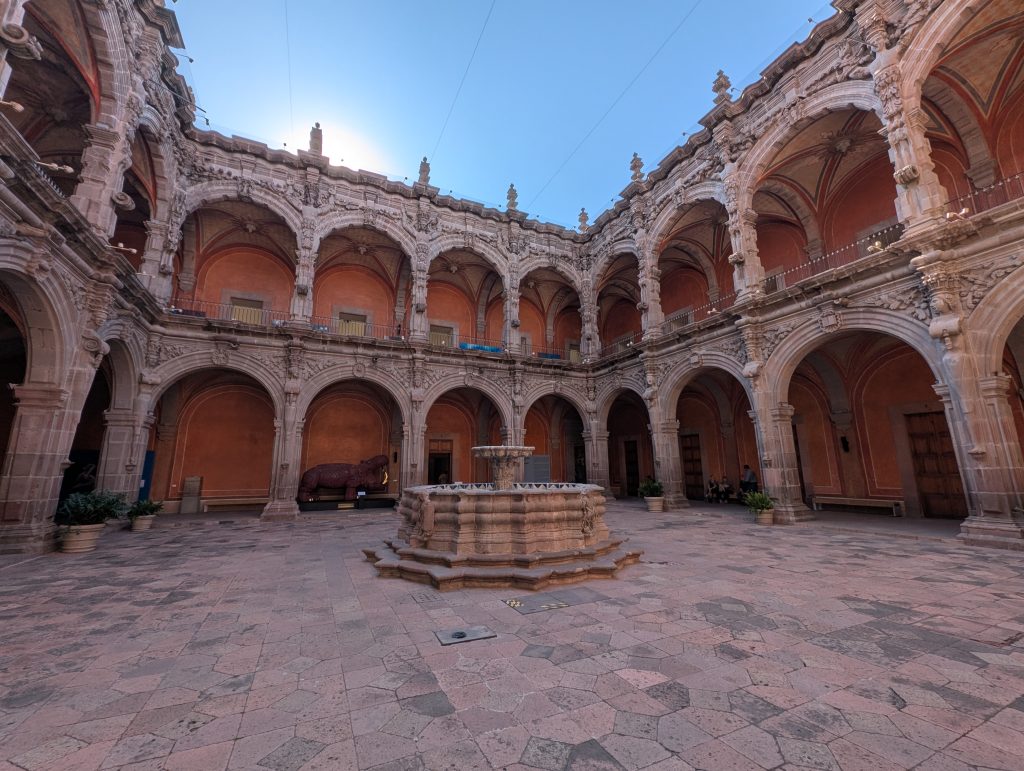
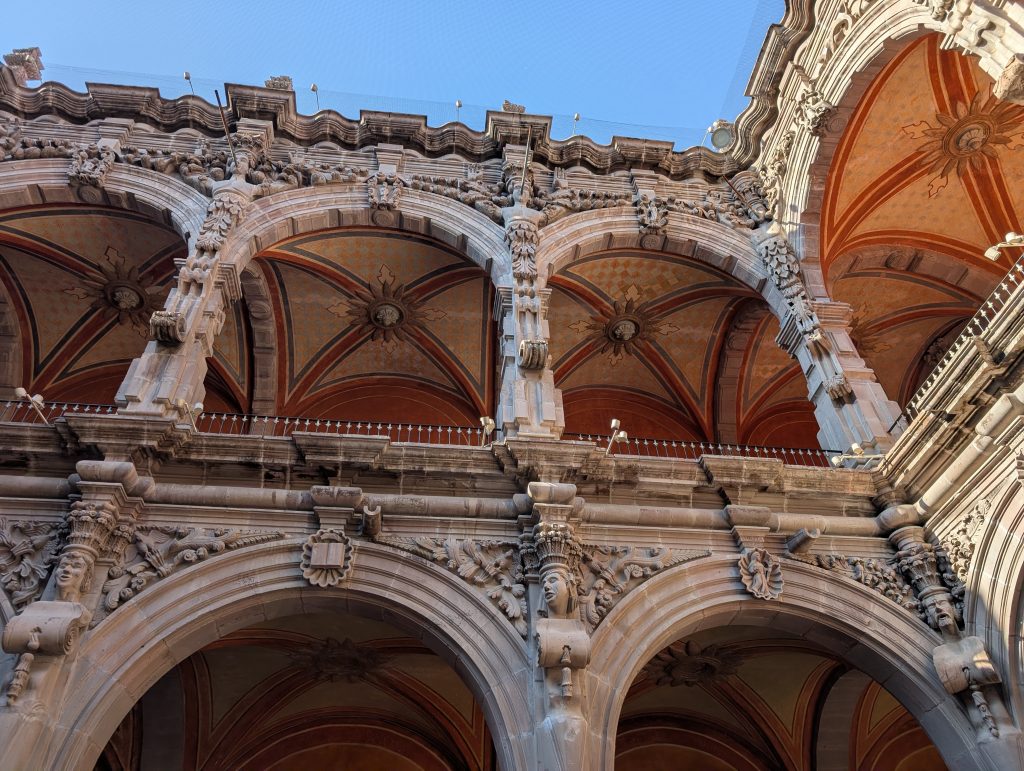
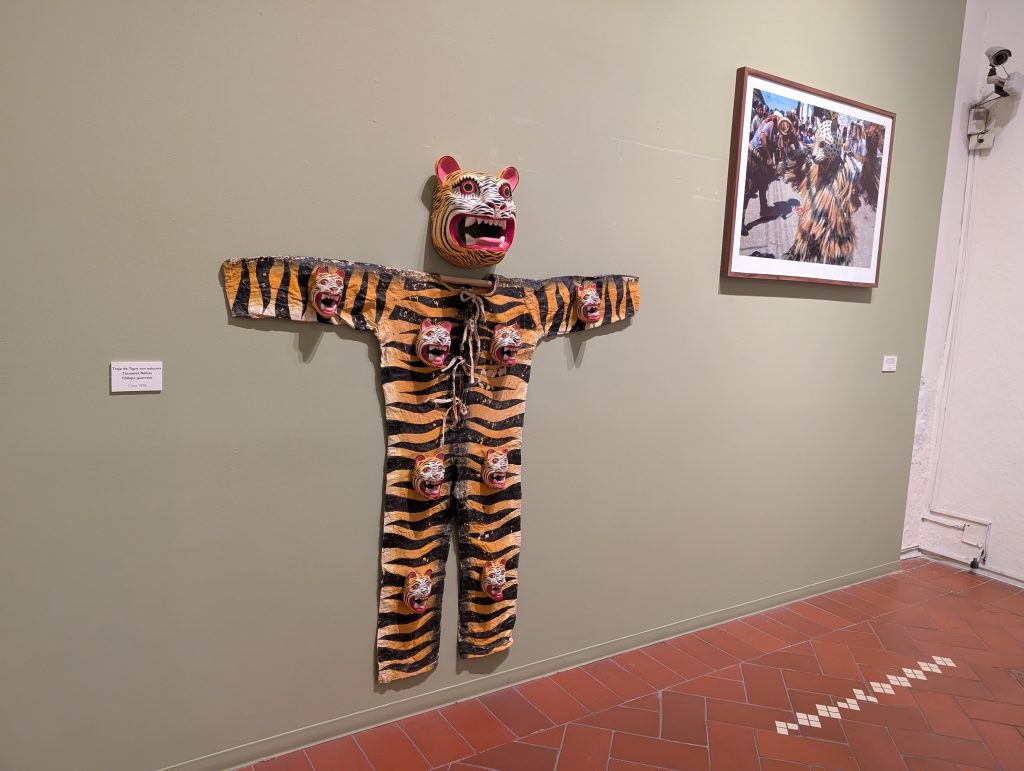
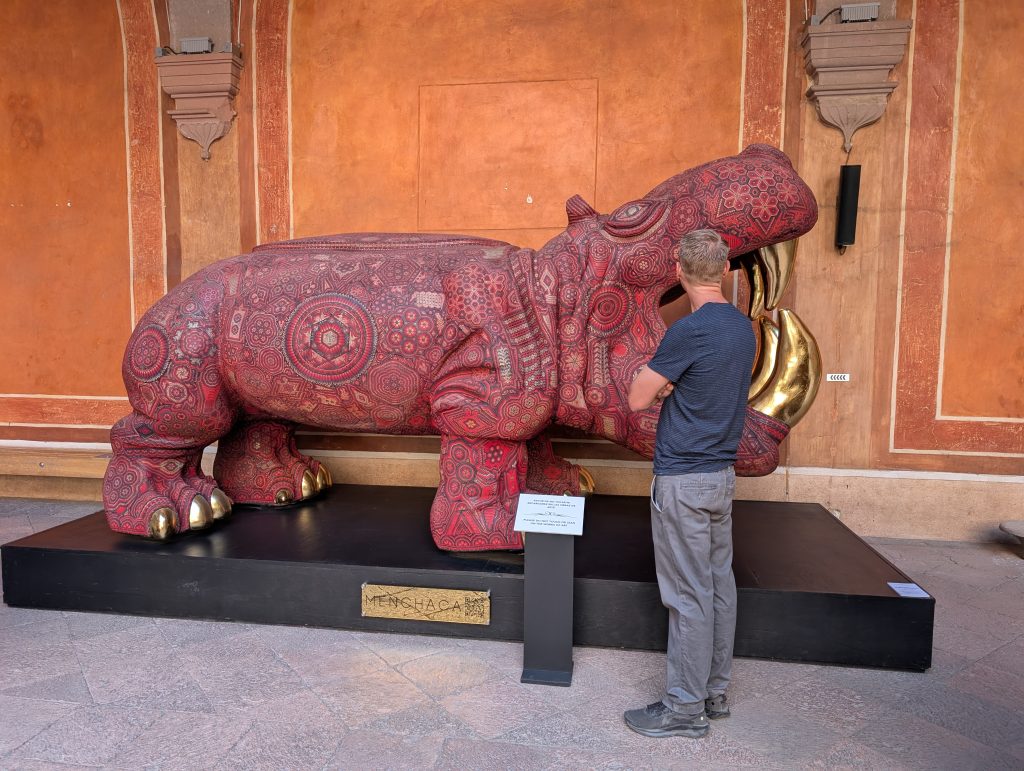
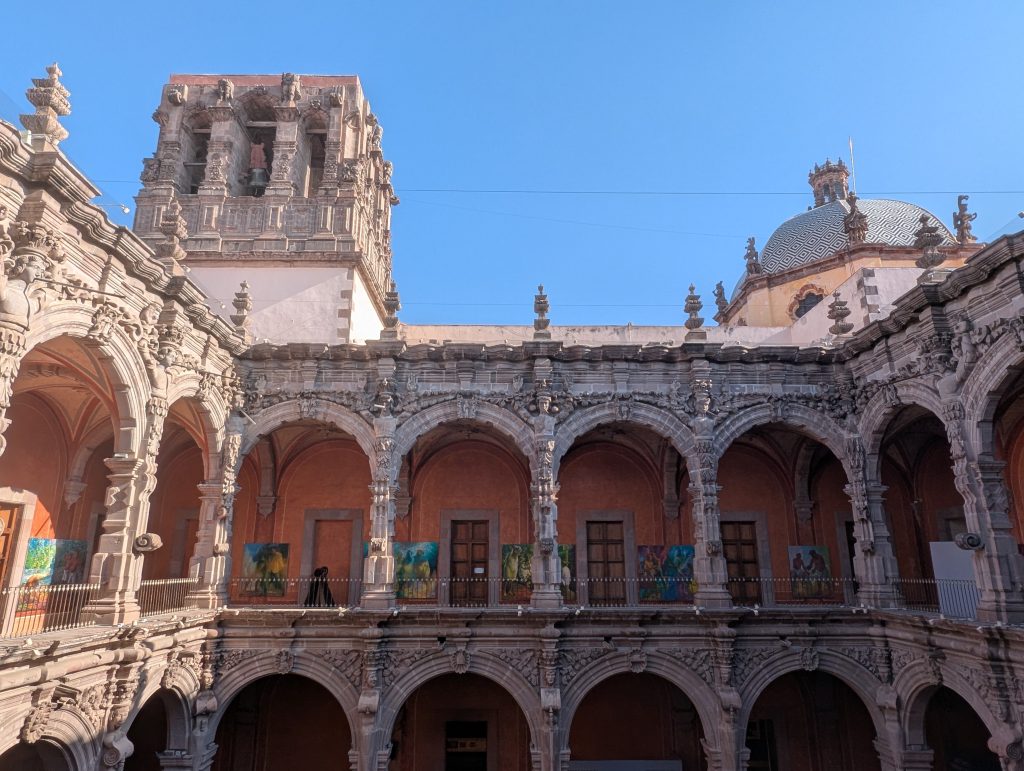
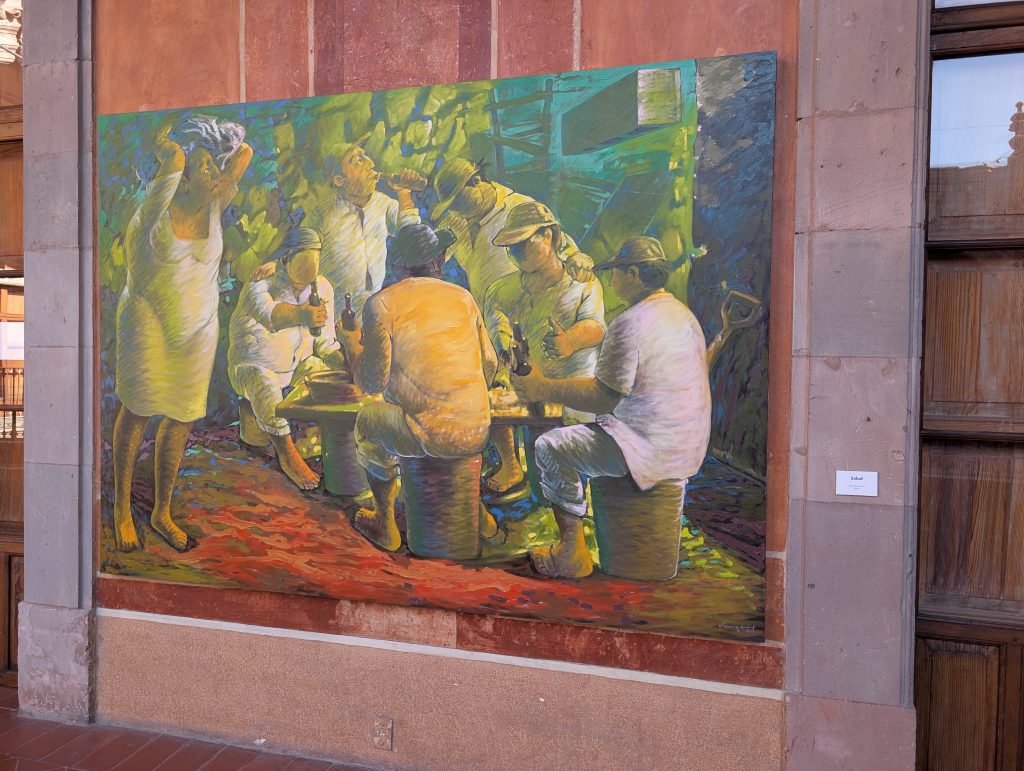
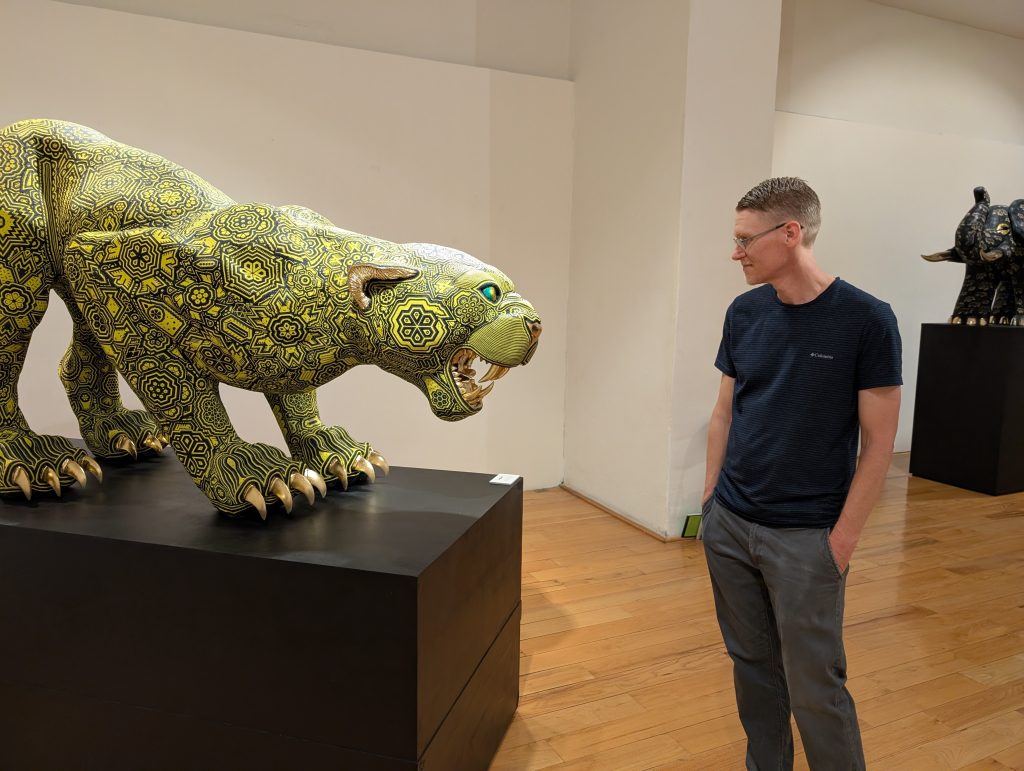

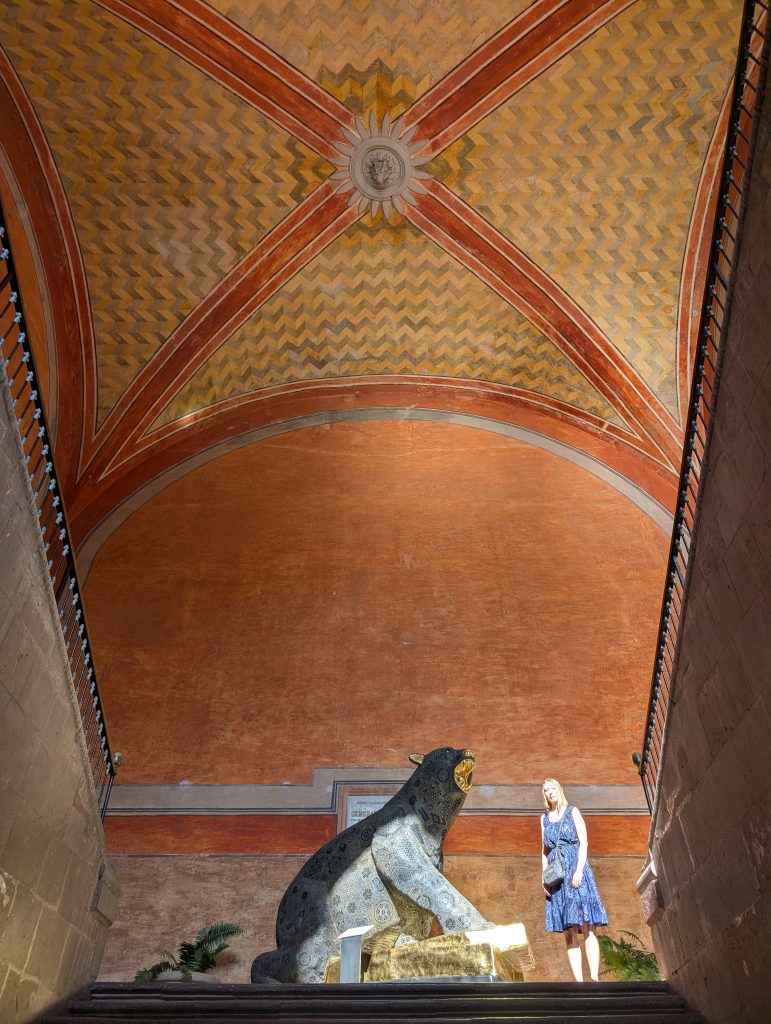

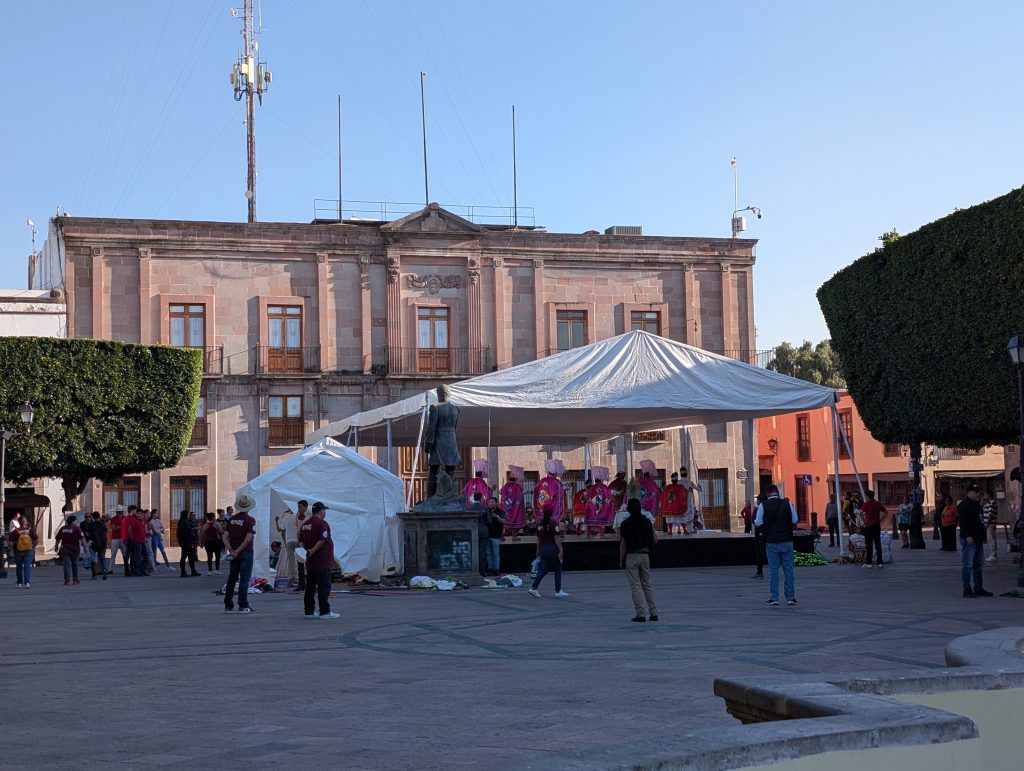
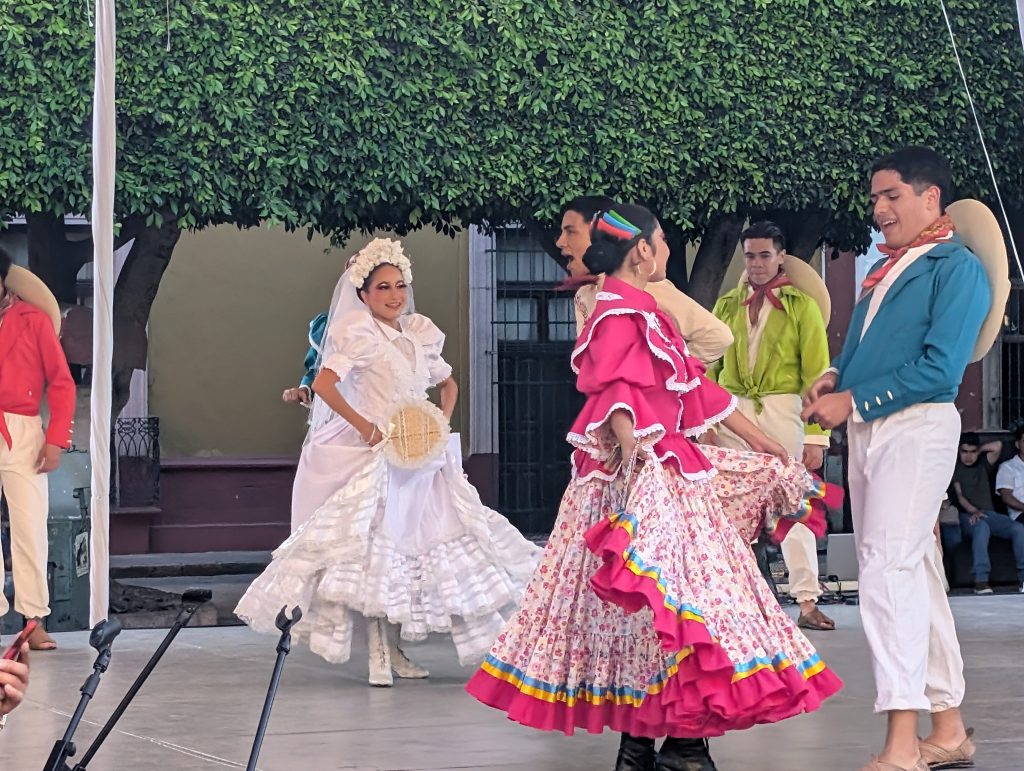
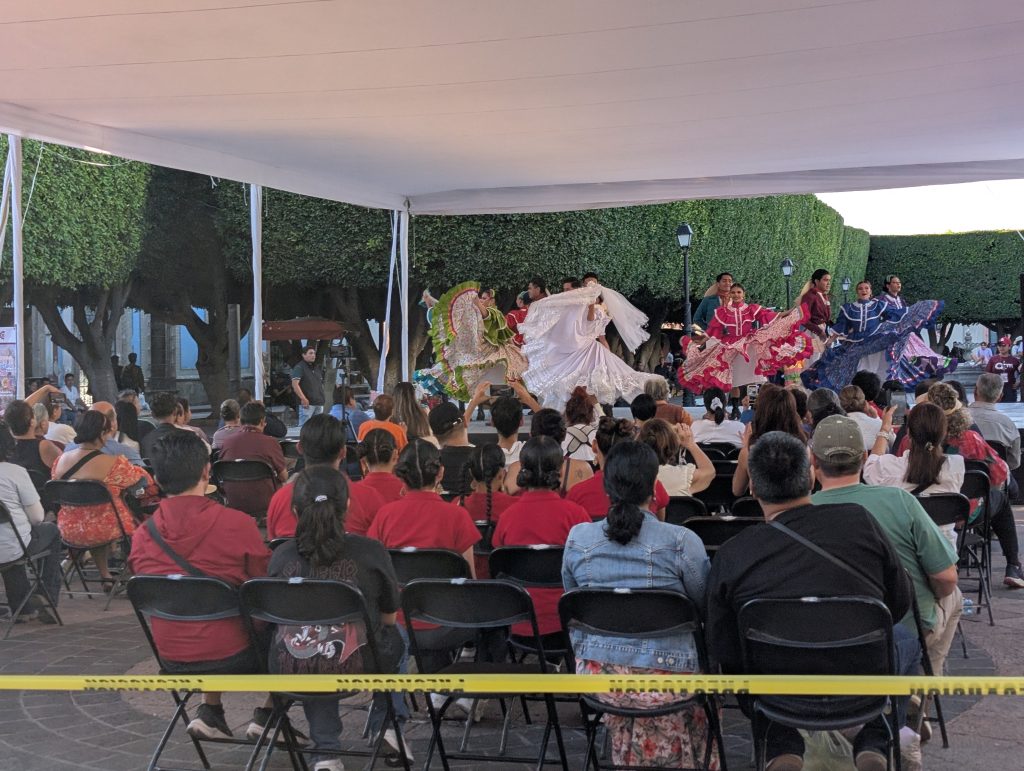
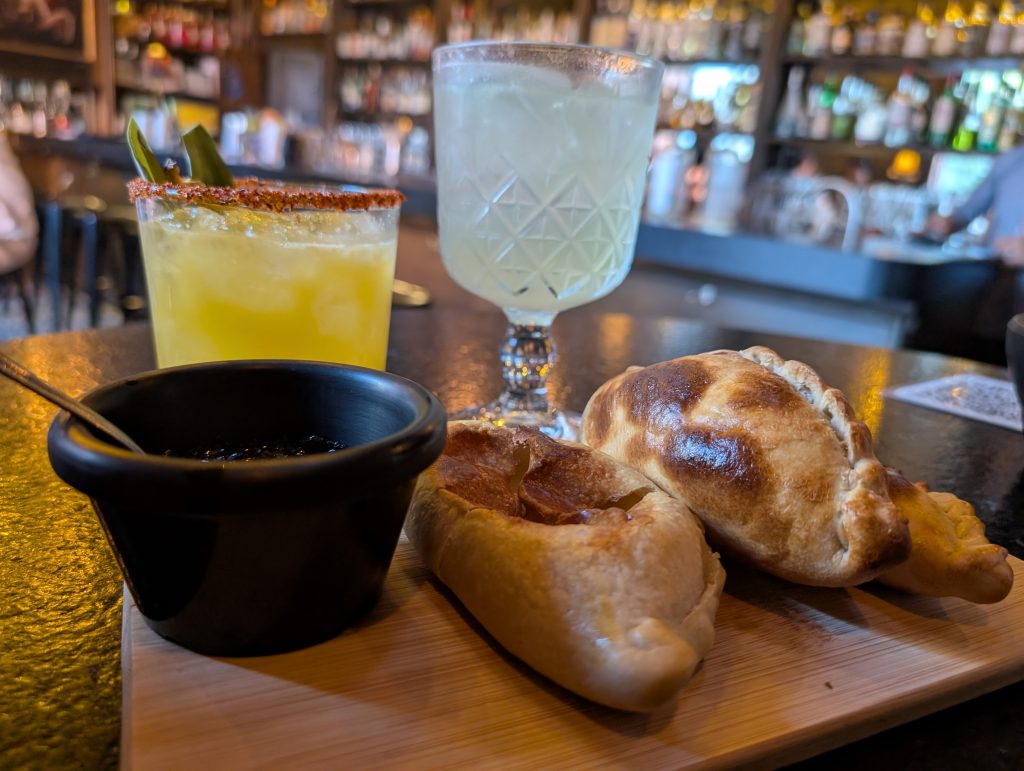
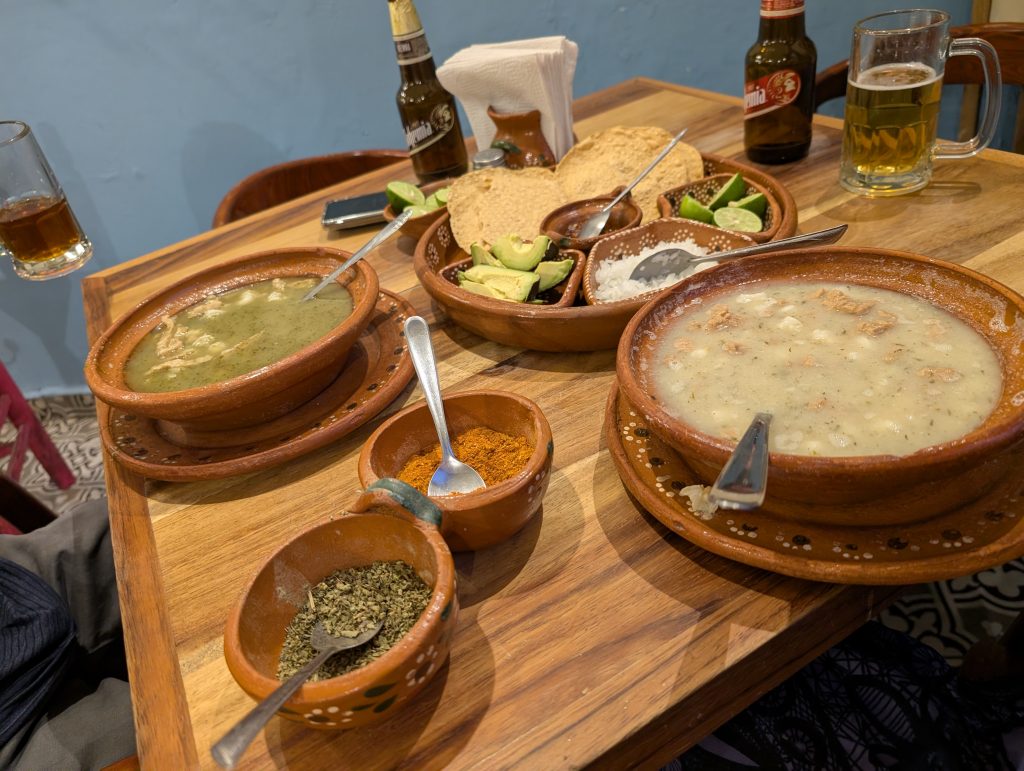
The second museum, the Museo de la Restoraccion, was not quite as good, though perhaps we’d become a little burnt out on Mexican history. It was about the period when emperor Maximillian was overthrown and executed. It was interesting but not as compelling as what we’d learned about the original independence from Spain. We followed the museums up with fancy cocktails and cheese and corn empanadas at Alquimia Bar then vegetarian pozole from Restaurante Caminos del Sur. On our way to the cocktails we caught a bit of a dance performance taking place in the Jardin Guerrero.

El Cerrito
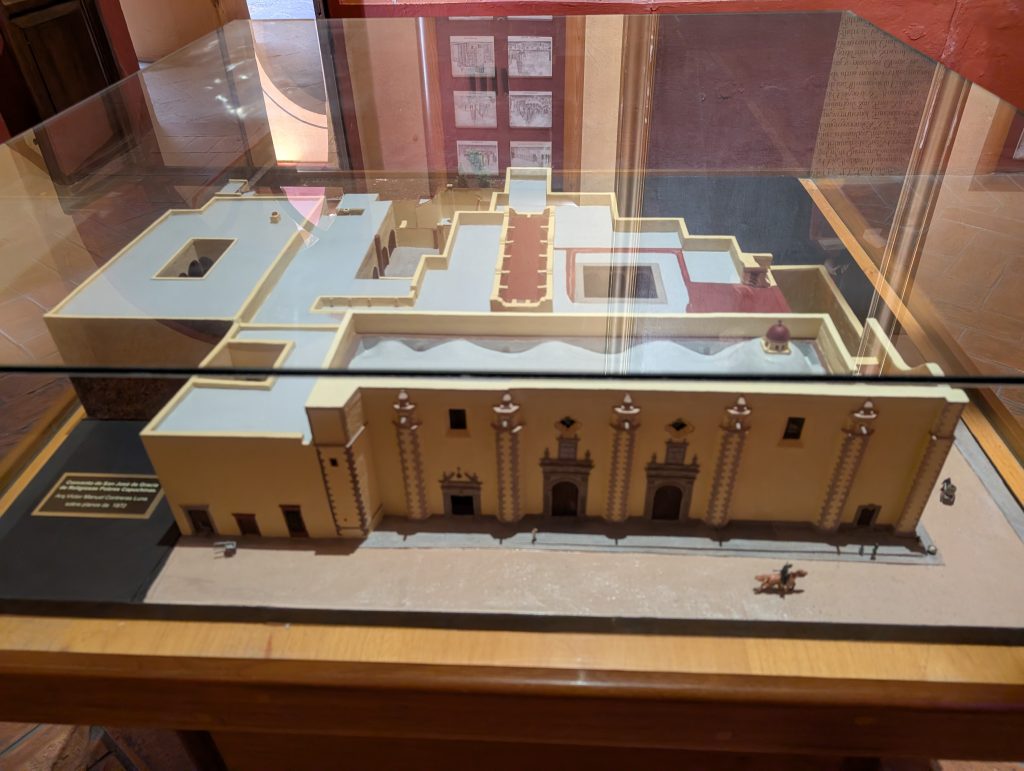
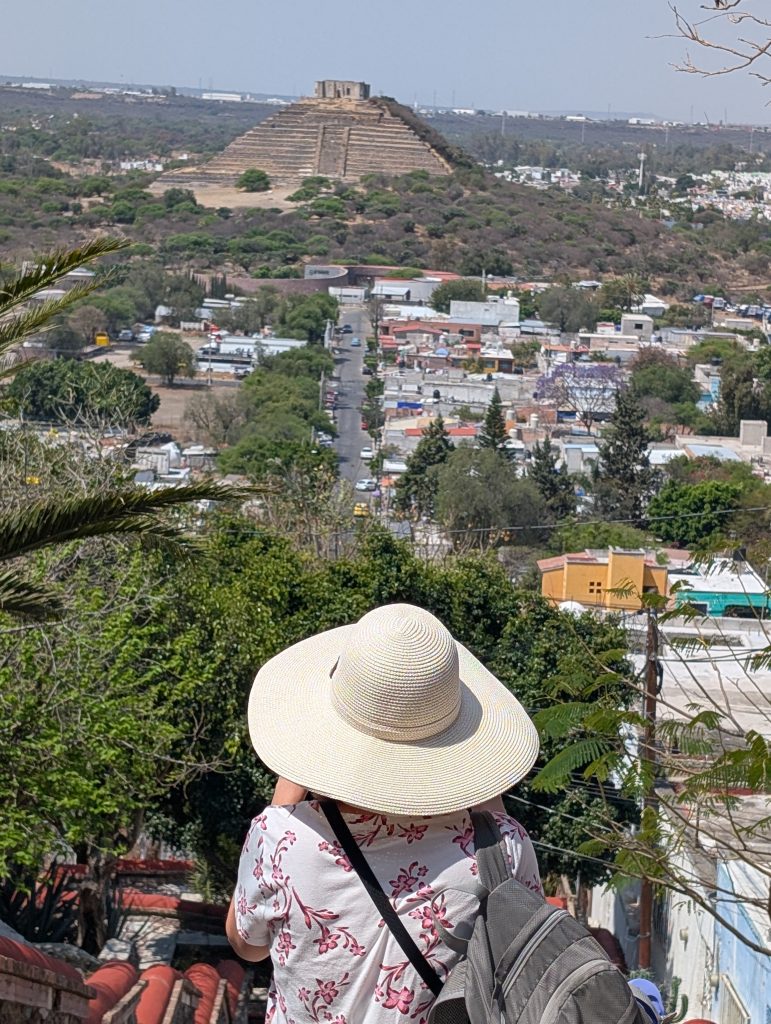
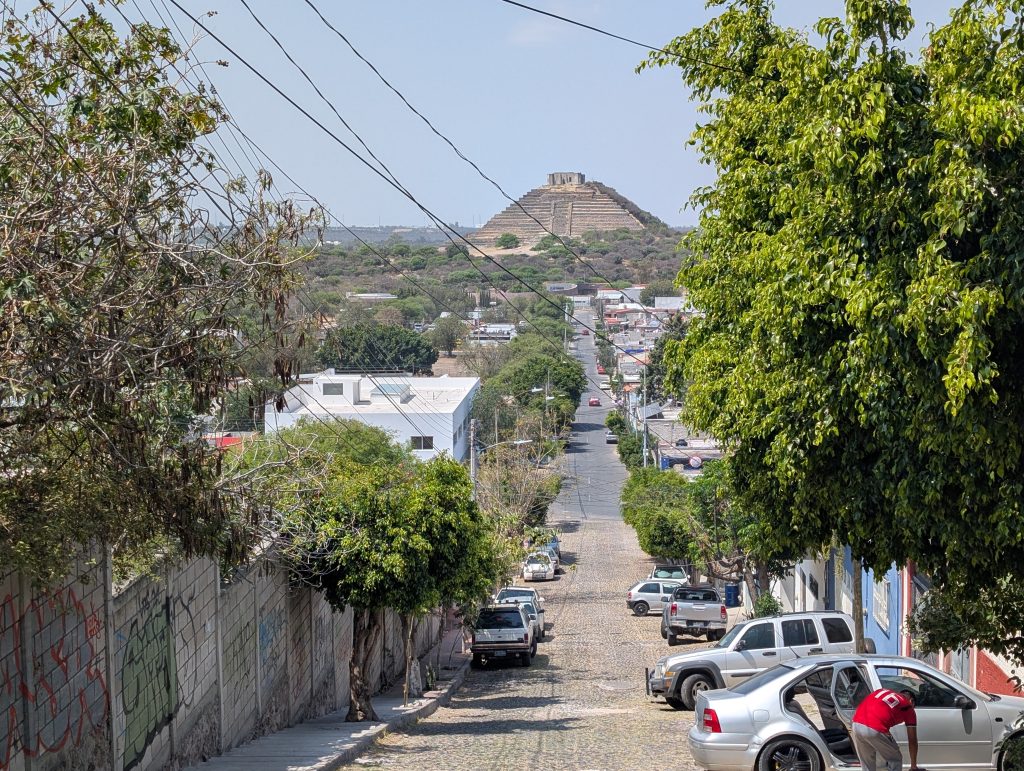
Our final activity the day before we left was to visit the Zona Arqueologica de El Cerrito. El Cerrito is a holy site and pyramid from the Toltecs (about 900 AD), also called the Pueblito Pyramid. It is in the midst of a Querétaro suburb called Corregidora (named, I assume, after Josefa). We were able to get an Uber each way for about 100 pesos plus tip.
Because Querétaro was a warm 80 degrees and very sunny each afternoon, we decided to go in the late morning, around 10:30 a.m. We bought our tickets (145 pesos each cash only) and went first to check out the pyramid. It was a very pleasant walk past many kinds of cacti and scrubby vegetation. The pyramid was definitely impressive! Unfortunately, someone had built a small fort on top of it in the late 1880s, which we thought looked kind of dumb. But otherwise, it was a cool site, especially being in an urban area. It reminded us of being in Giza.
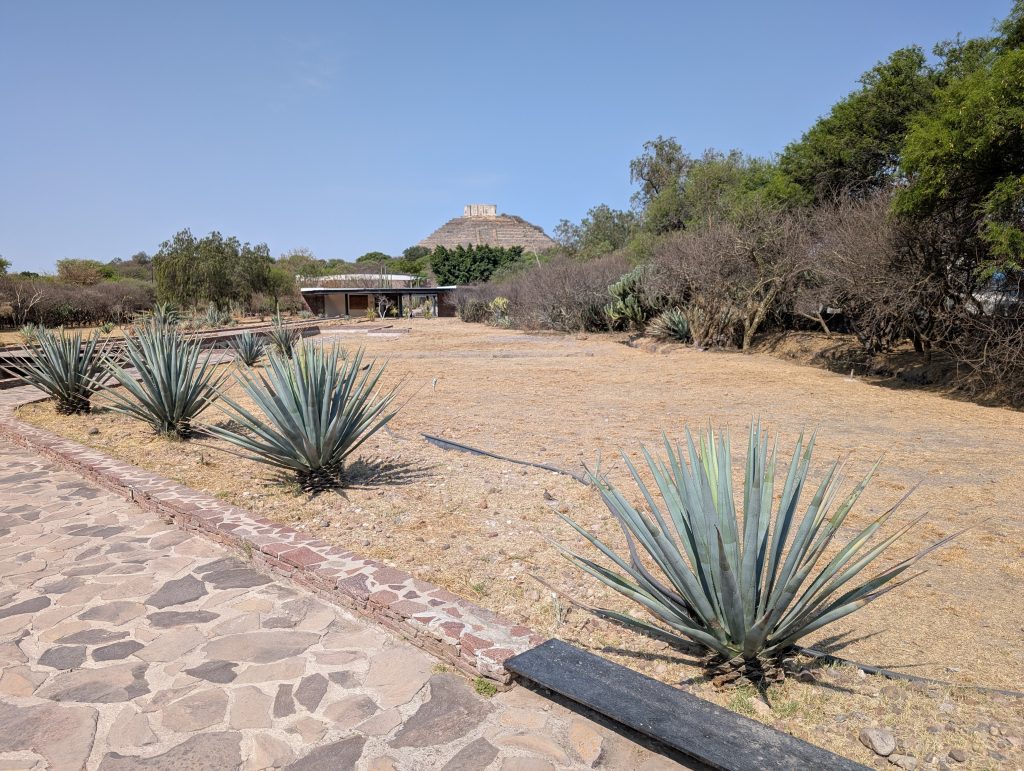
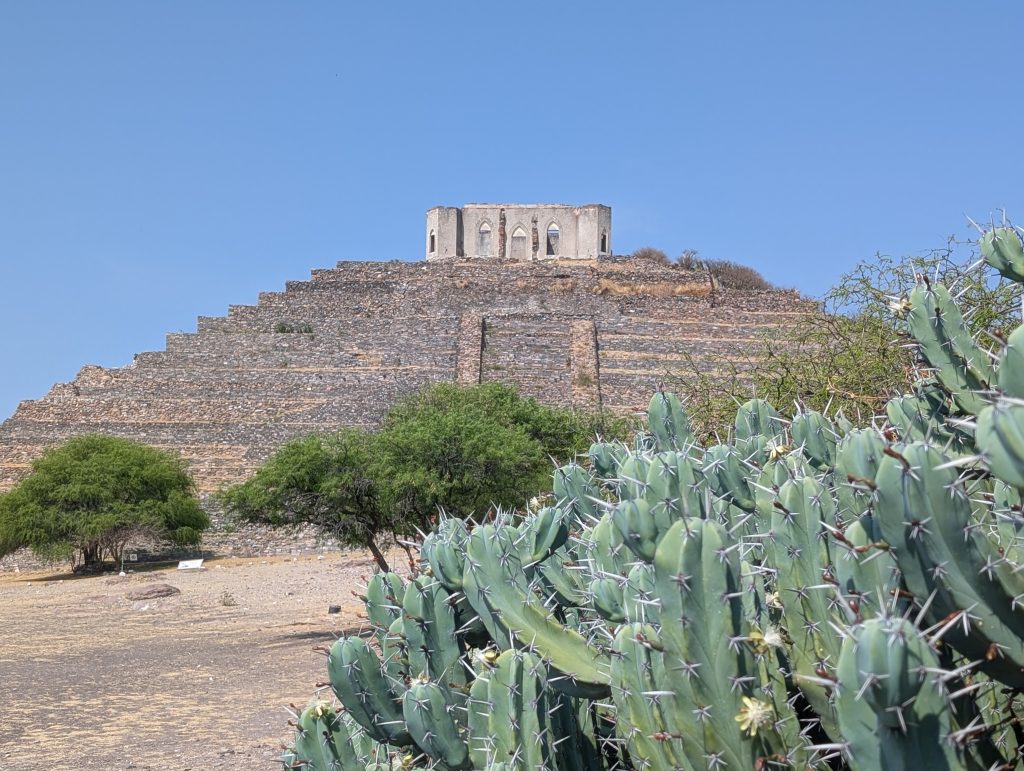
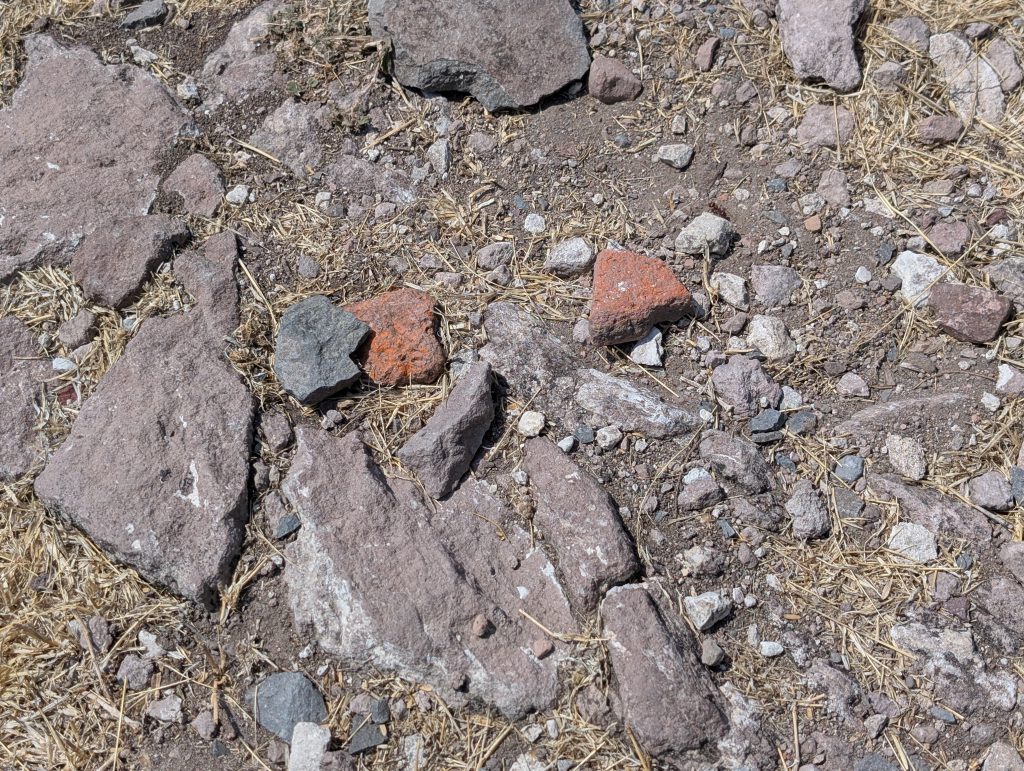

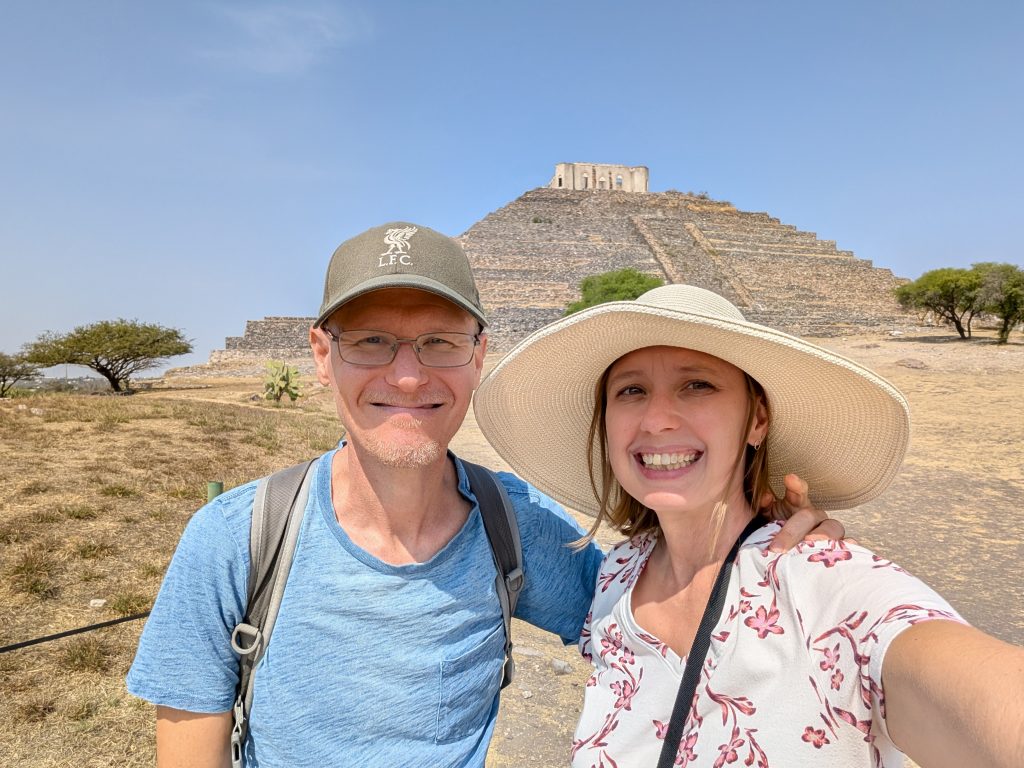
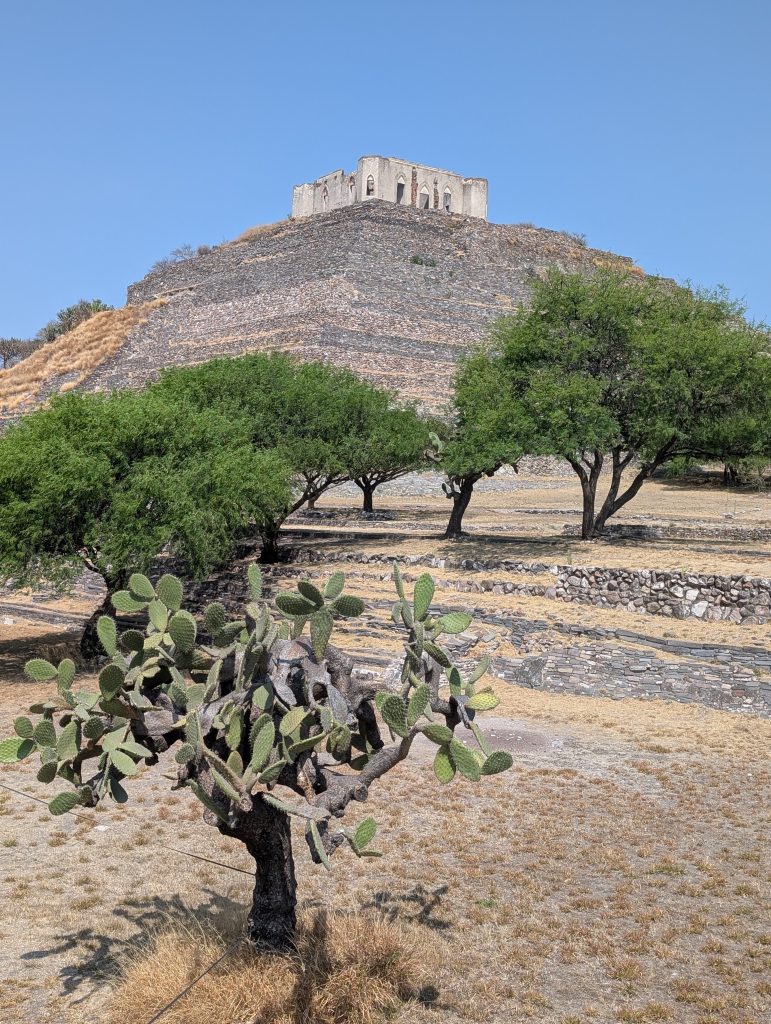
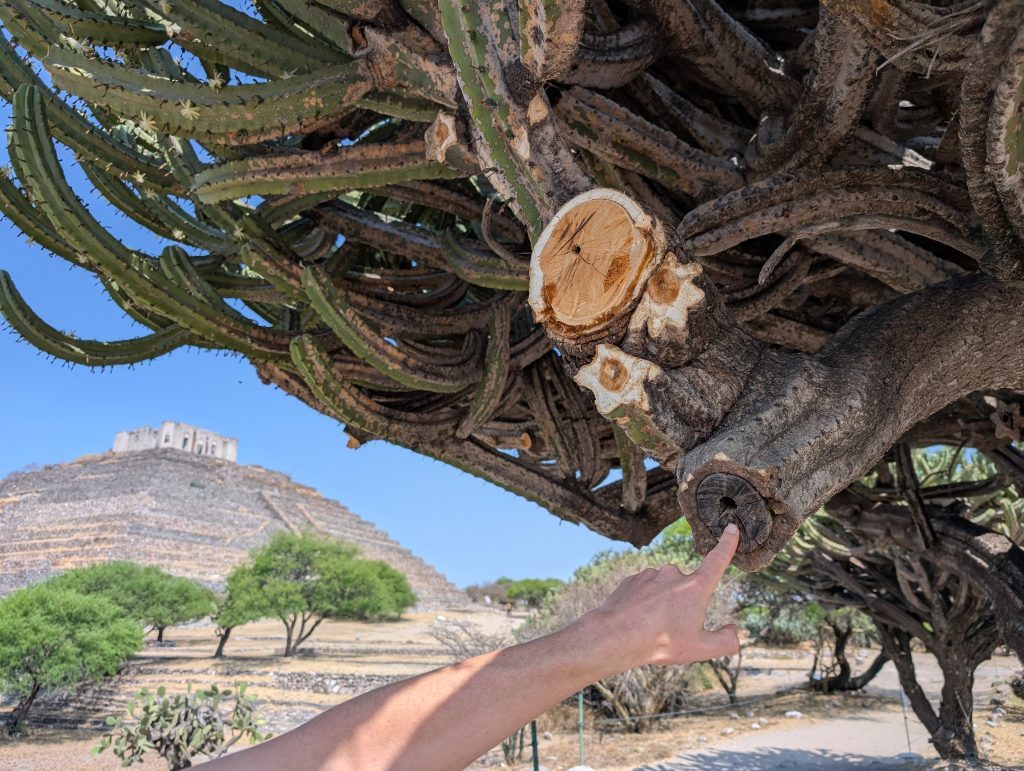
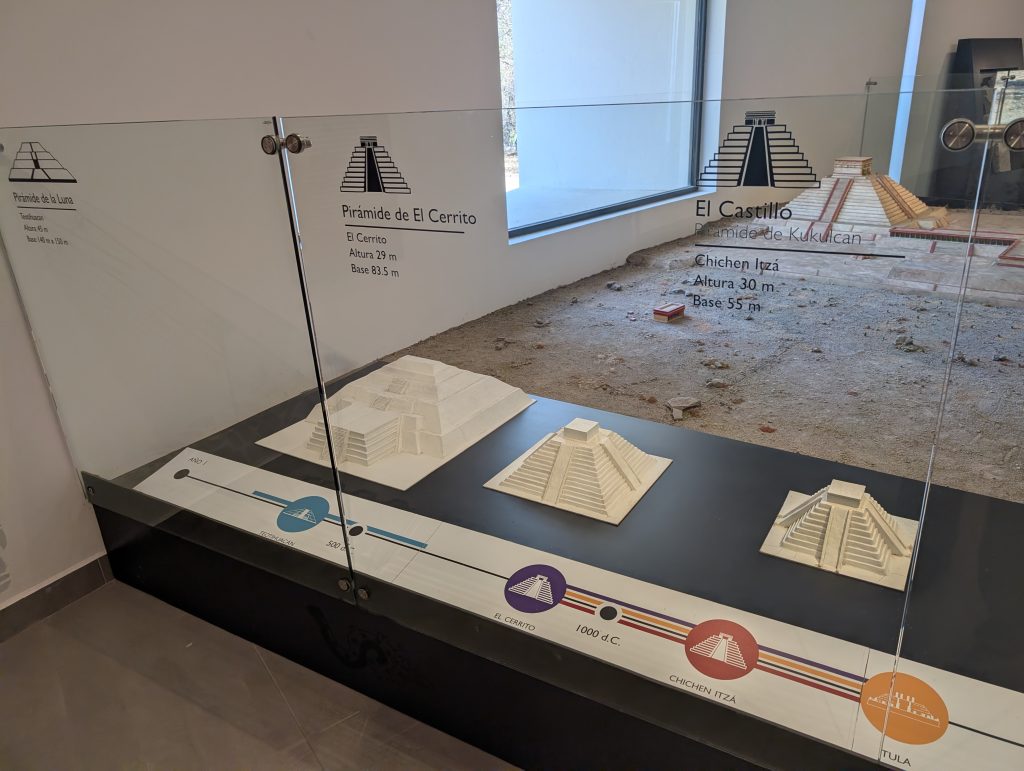
After wandering around the site and taking lots of photos, we visited the small site museum. The signs were all in Spanish and didn’t share a lot of detail, but we got the gist of some of the ceremonial features. After the Toltecs (I think around 1100), the Chichimeca also used the site.



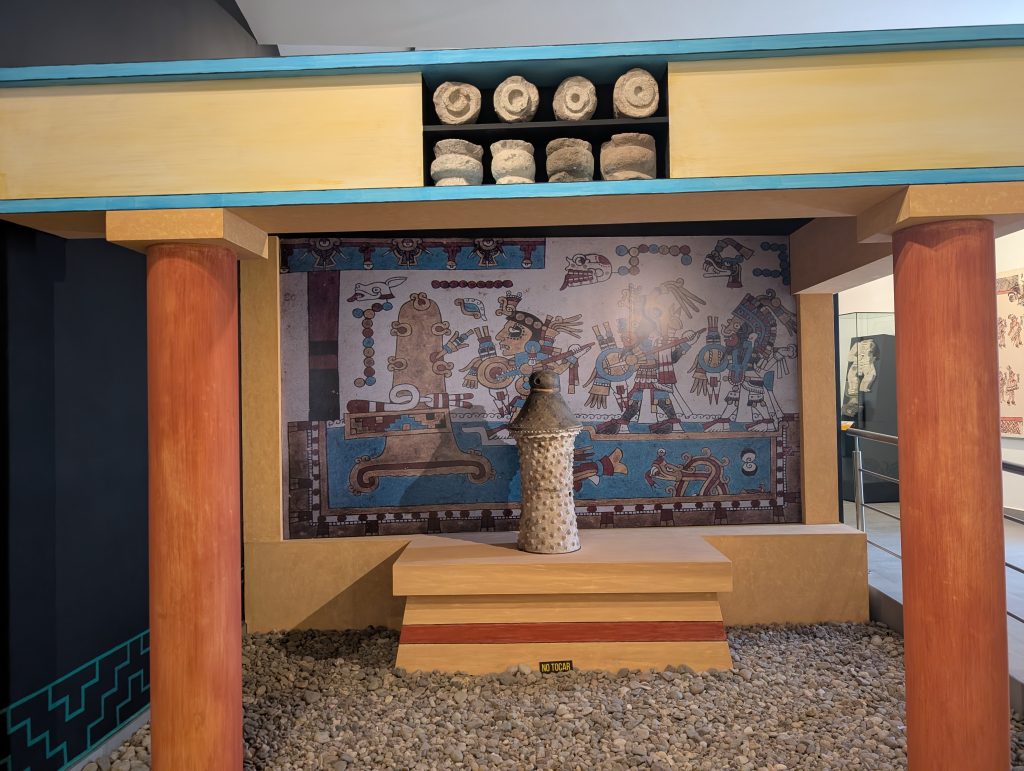

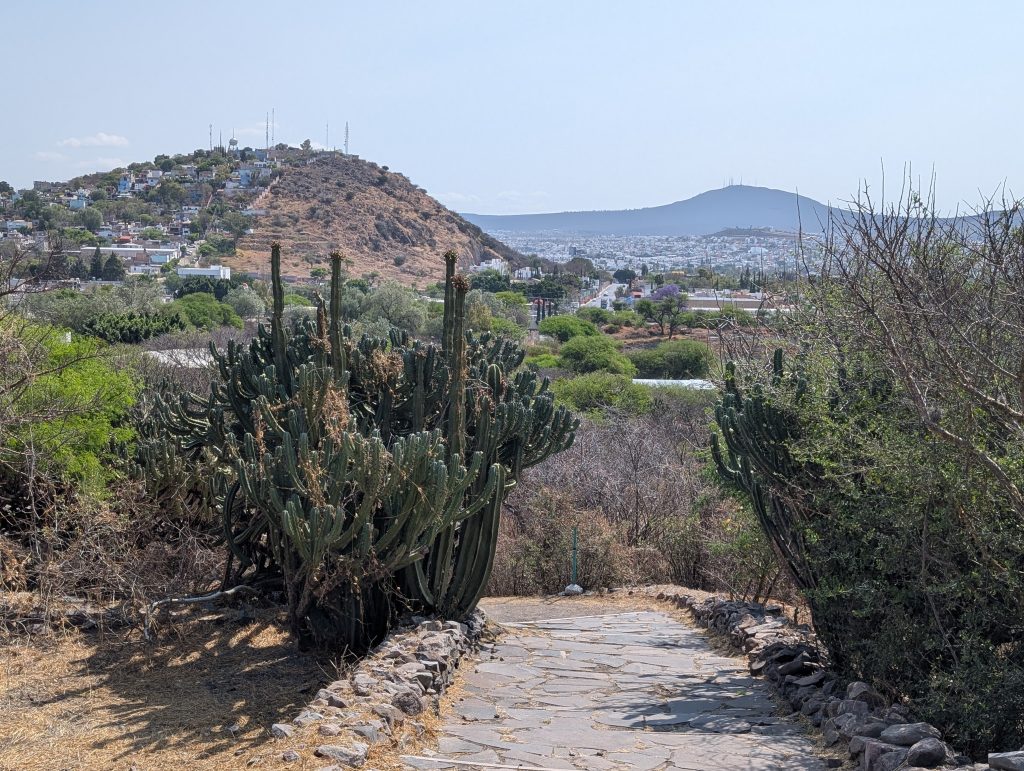
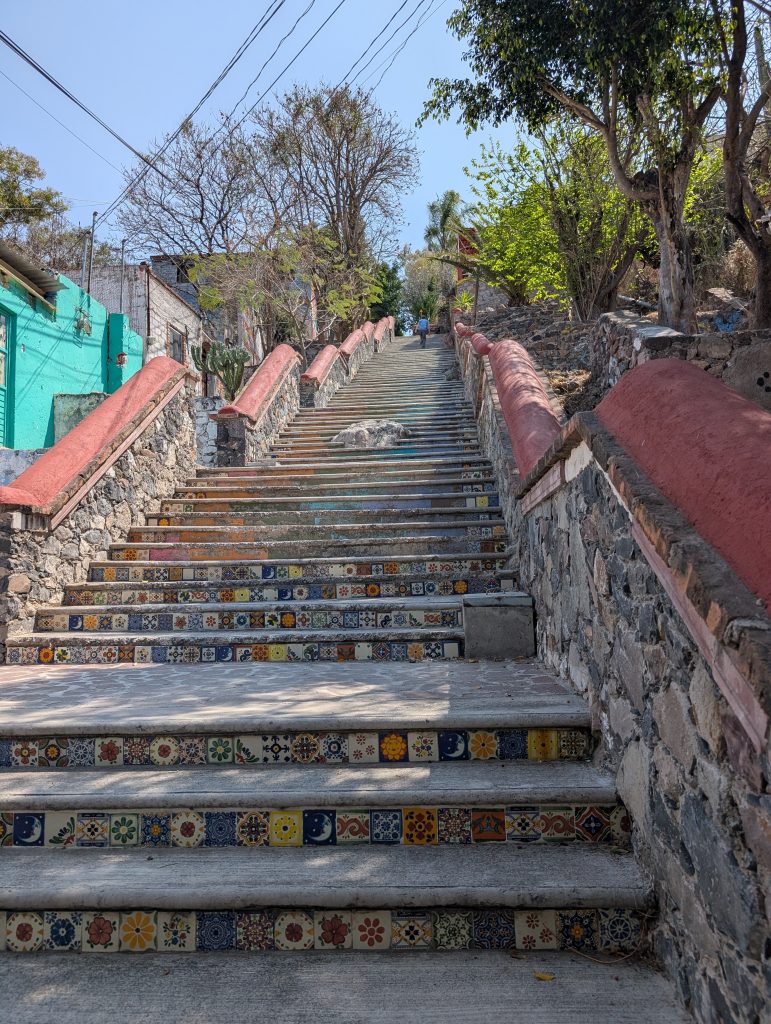
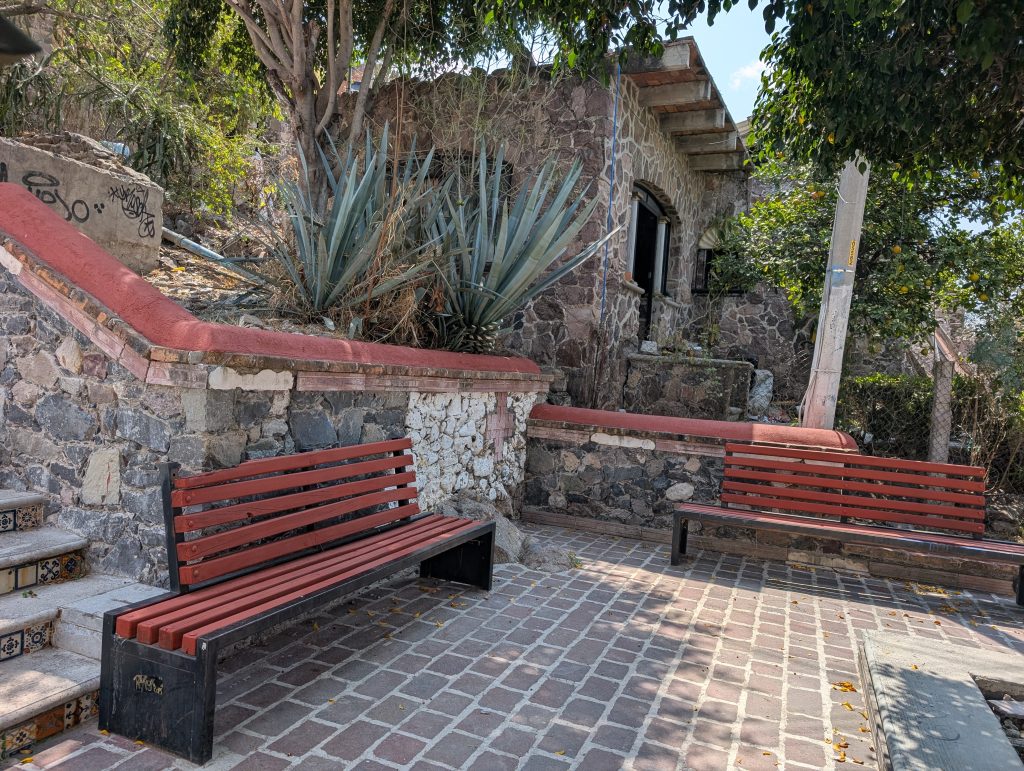
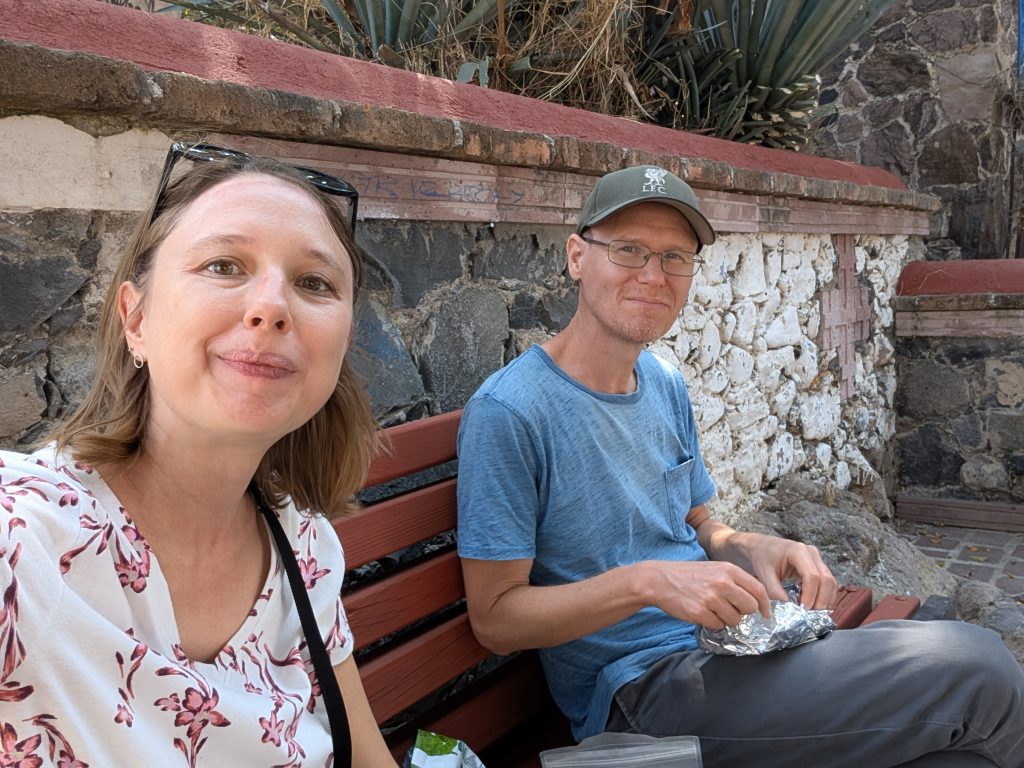
After enjoying the site, we walked about 10 minutes through the adjacent neighborhood with a big hill and some steps to get a wider view of the pyramid. I’d packed a PBJ picnic for us to enjoy before we got an Uber back to our Airbnb. It was definitely a worthwhile excursion.
Summary
We enjoyed our time in Queretaro very much. We had considered flipping the length with Guanajuato and making it our full month stay, and I think we would have been happy if we had but I don’t regret the way we did it. It is a much larger city, which created some challenges, with groceries and other supplies being farther away. However, it was a lovely place and I’m glad we got to experience it.
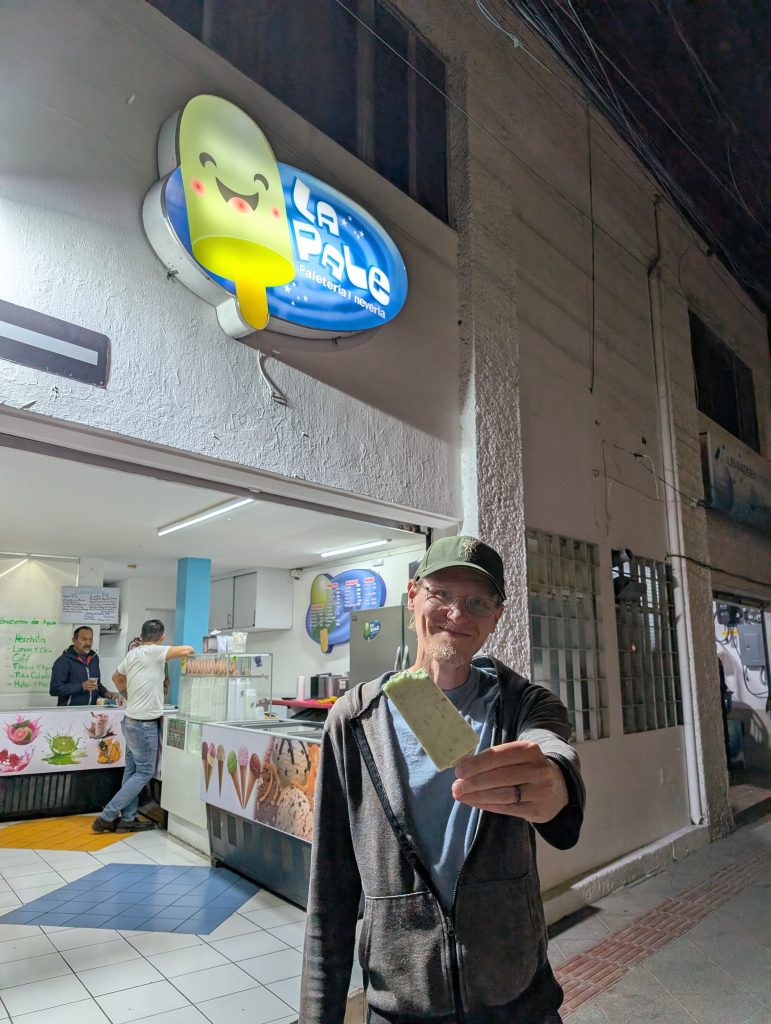
ABB Review – My husband and I had a wonderful 10-day stay in this home. Ricardo provided detailed instructions before we arrived for how to get the keys and what to expect during our stay. The address is a little confusing because there are two of the same number at different ends of the street, but Ricardo sent a map pin to clarify the location. There was a 20L bottle of water provided and a place on the corner to refill it for a low price. Having a convenience store so close was also nice and we loved the paleteria on the corner. We liked the location overall, an easy 10 to 12 minutes walk to the main museums and plazas, as well as a big supermarket. We chose to sleep in the smaller back bedroom because we saw the ear plugs provided and we found it very comfortable with no noise issues. The kitchen was functional, although the provided cookware and utensils were pretty old as is typical in many Airbnbs. The wifi worked very well throughout our stay.