Chad and I really enjoyed our time in Salta, Argentina. It’s a place we hadn’t really heard of before our prior leg in South America. We met a fellow American traveler in Peru and he told us he’d like Salta more than Buenos Aires. Since we’d just come from our incredible Buenos Aires experience, we figured Salta must be a pretty special place.
It is. It combines aspects of Andean culture with the LatAm-Italian mix we’d loved in Buenos Aires. The size with a population of 700,000 also suited us well. It was big enough to offer many cultural experiences and public transportation, but also very walkable and easy to navigate (particularly by bus). It is also the gateway to some incredible nature in the area, which I mentioned in my We’re Home post and we got a taste of in Jujuy, but that we experienced further on the road trip that followed our Salta stay. The main highlights of our last two weeks of in Salta were the musical performances we attended and engaging with the Andes through a hike and local museums.
Music
While we really enjoyed the four-piece ensemble we saw during our first two weeks in Salta, the three live music events we attended in the second half of our stay were even better. First was the Orquestra Sinfonica de Salta performing Carmina Burana in the beautiful Teatro Provincial. The performance was wonderful. We were also able to purchase the best tier of tickets and sit toward the center of the first galleria boxes in the most comfortable theater seats I’ve ever encountered. It was really a perfect evening because Carmina Burana is is relatively short (under 90 minutes) and includes the very recognizable piece, La Fortuna, that gets used in a lot of pop culture things.


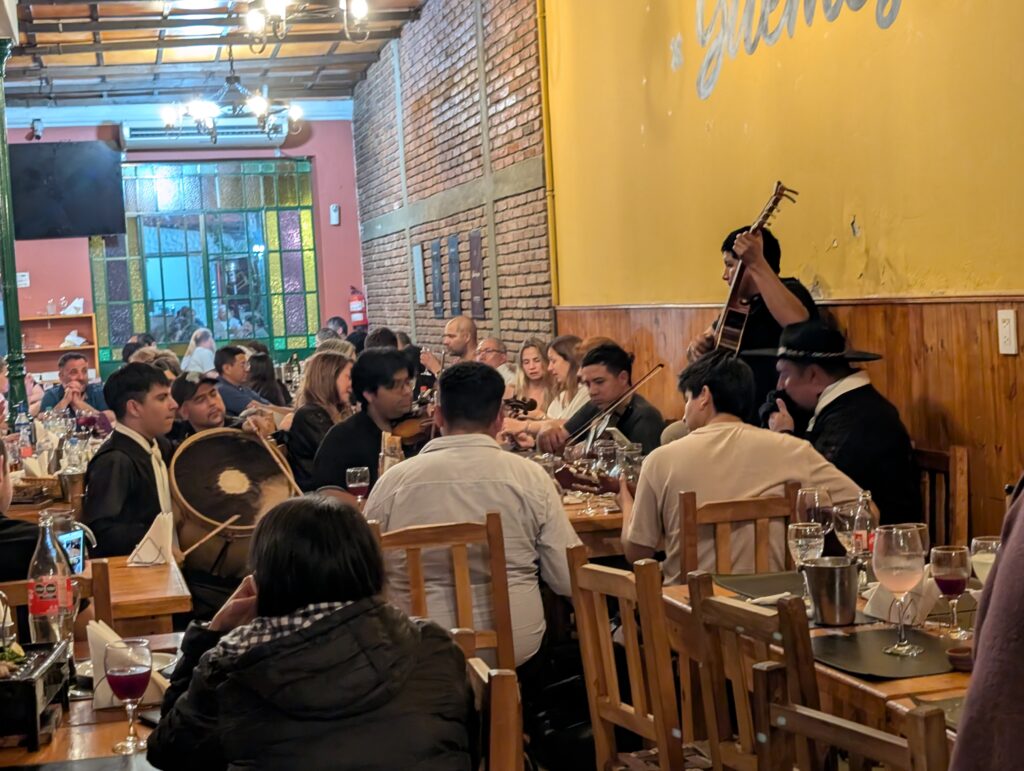
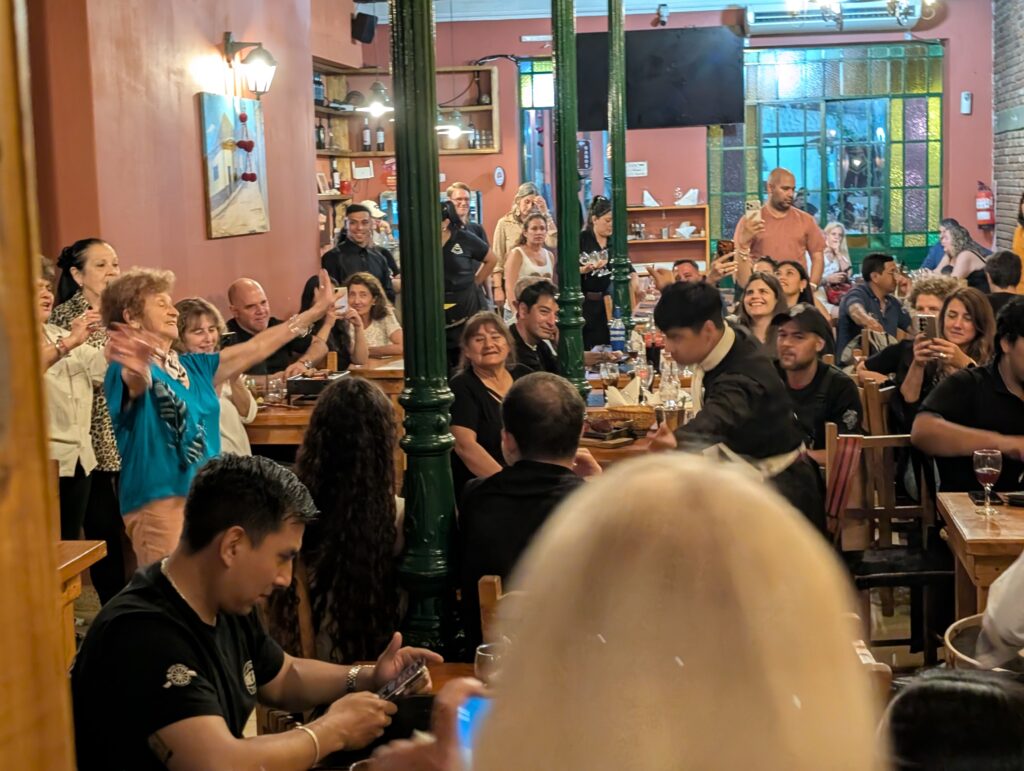
A few days later, we followed up dinner at a parilla (Argentine steakhouse) with our long awaited visit to a local peña, La Güemesiana, that had been recommended by Homero, the guide from our walking tour. A peña is a traditional restaurant/bar that features regional foods and includes live folk music by local musicians. They’re a big draw in Salta but Homero advised this one is slightly less touristy than the ones on Calle Balcarce, which is known for them. We ordered cocktails and dessert and really enjoyed the music and the crowd. In particular there were a couple of large tables of older Argentines who were clapping, singing along, and sometimes dancing. And this was at 11 p.m.! It was great fun and we felt lucky to experience it.


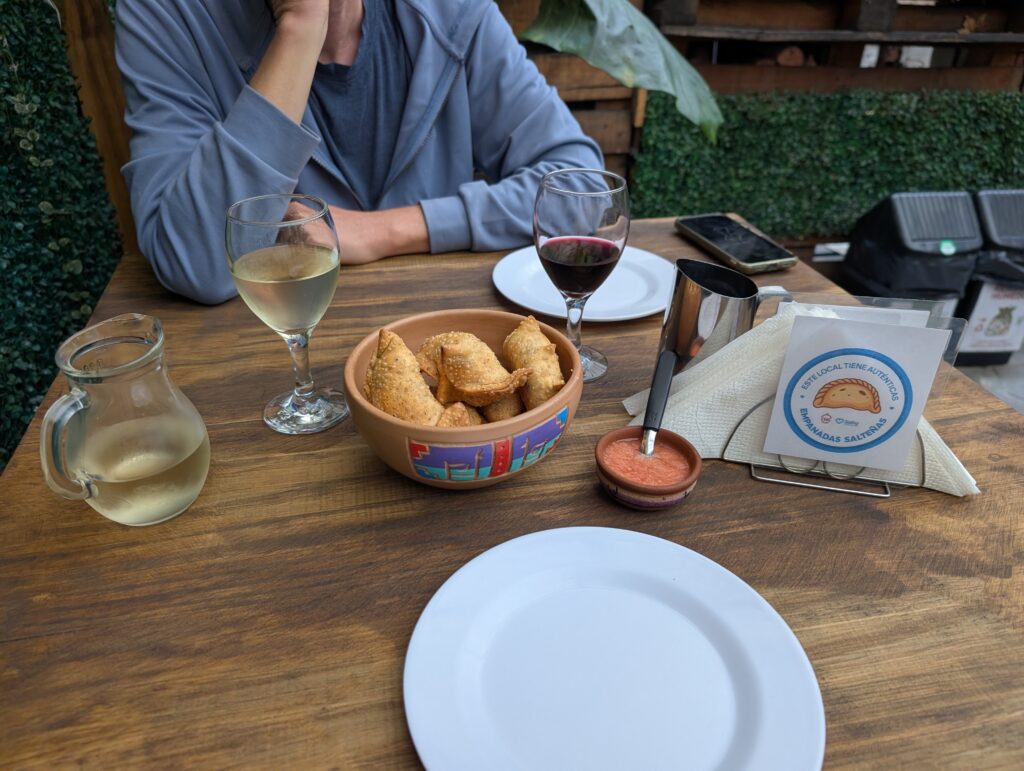
Finally, on another night out, Chad happened to notice a poster for a jazz show that would be happening that night. We weren’t able to find a lot of information about it so we just showed up at the theater it was being held in, Fundación Salta, a couple hours before the show and found a guy who sold us tickets. He also invited us to watch the band warm up, which we did for a while, but then went out for empanadas before returning for the performance. The event was pricey at $19 each, more than double our $9 Carmina Burana tickets, but the band was very talented and we had fun. But, we decided we much prefer jazz in a bar setting with table seating rather than the auditorium seating of a formal concert.

We also enjoyed some wonderful live music in Jujuy, which was also in the second half of our stay. Four great live music experiences in the course of two weeks might be a record for us outside of an event like Bansko Jazz Festival.
Mountains
Our best day of hiking occurred in the second half of our stay when we took the bus to the suburb of San Lorenzo. We’d planned to hike in the Quebrada de San Lorenzo (quebrada means ravine) but it was only allowed with a guide. So, we walked through the town and a strange back trail to the Municipal Reserve Yungas De San Lorenzo, a public trail system. A dog adopted us at the quebrada and tagged along for our entire hike. He was a good, chill dog and very protective of us, especially when passing other stray dogs. We named him Toucan Sam because as we were walking down the road away from the quebrada, we spotted a toucan on the electricity wire and more in the trees. We never expected to see toucans in town, or in this part of South America, so it was very exciting.
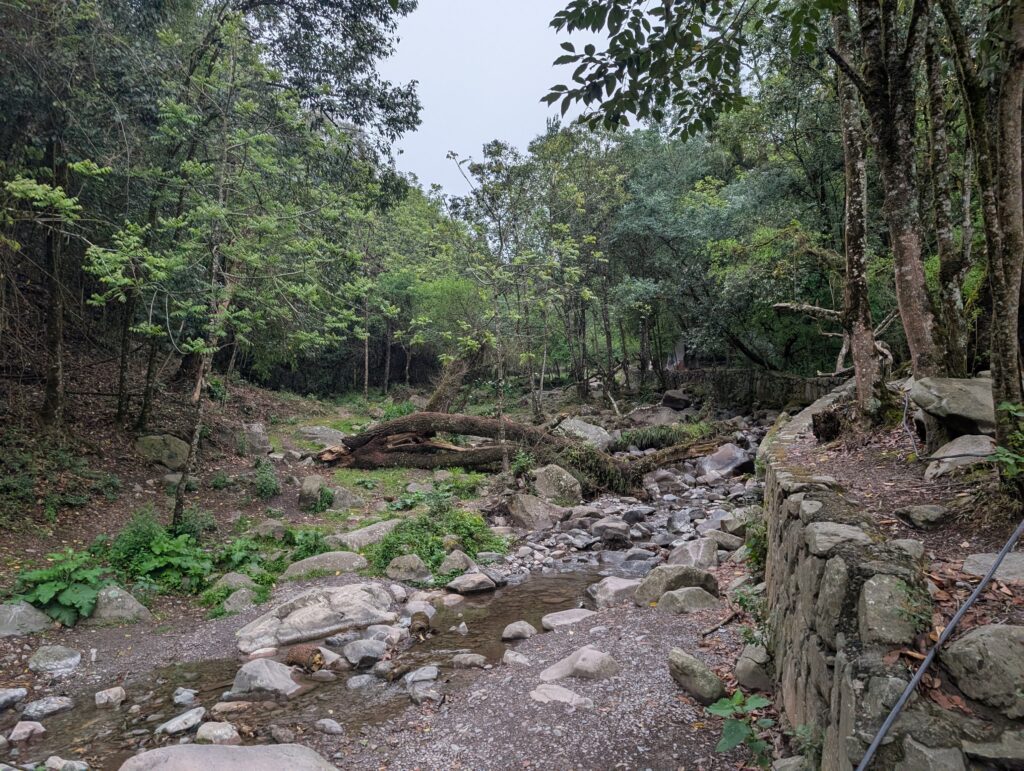

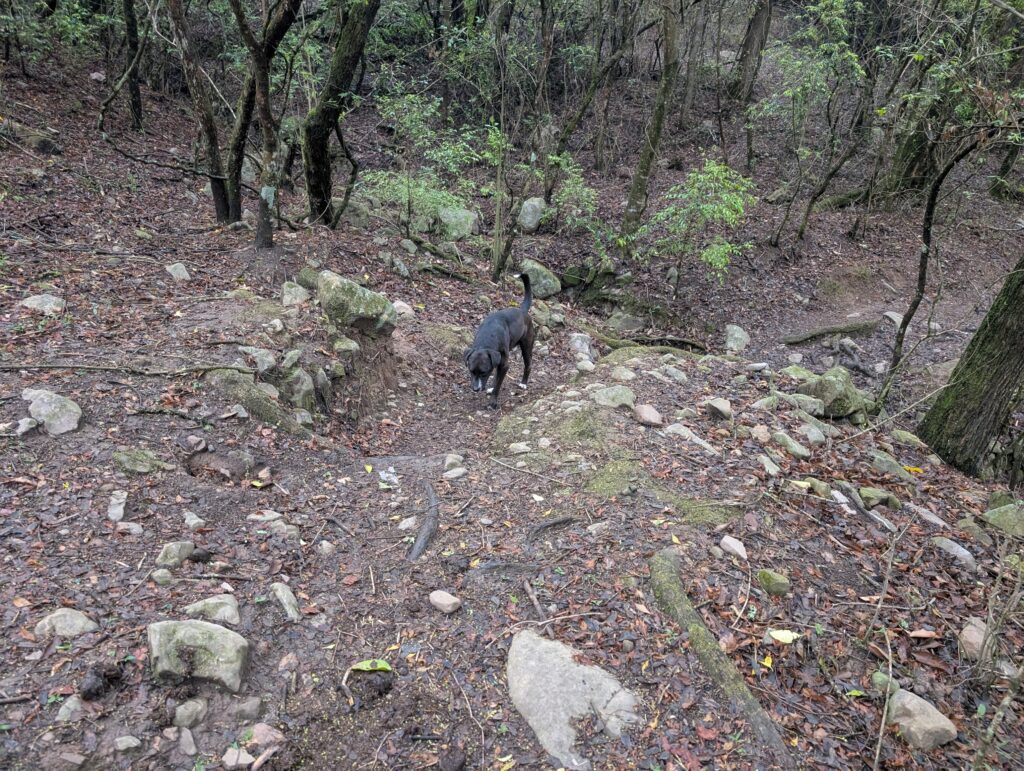
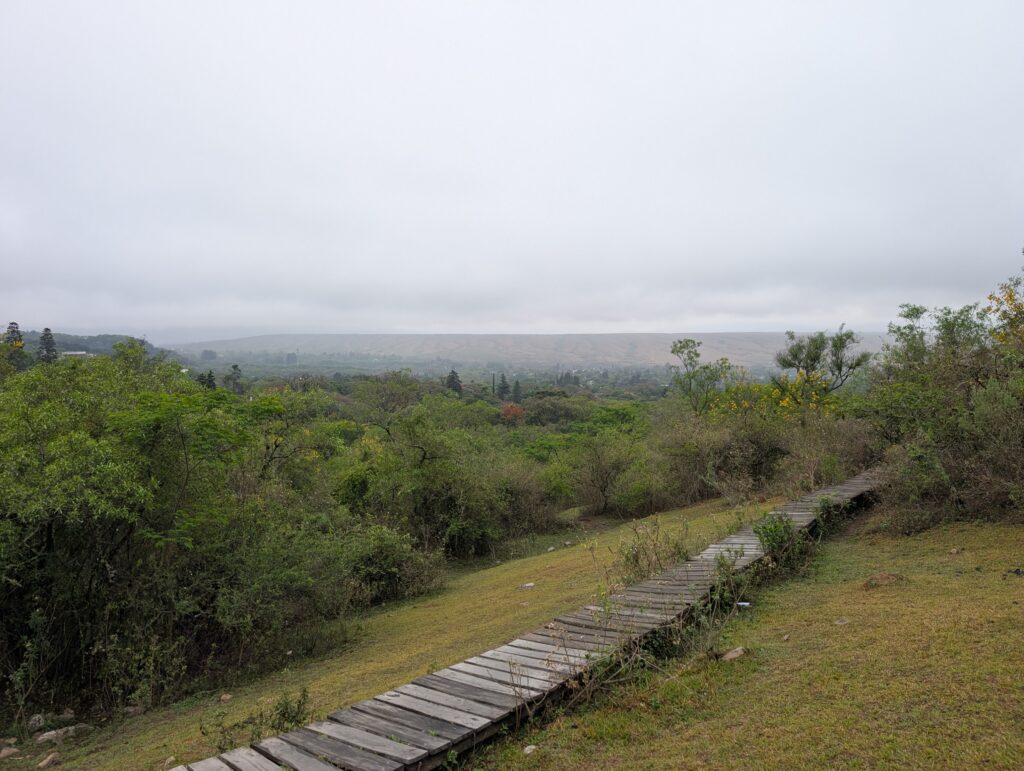
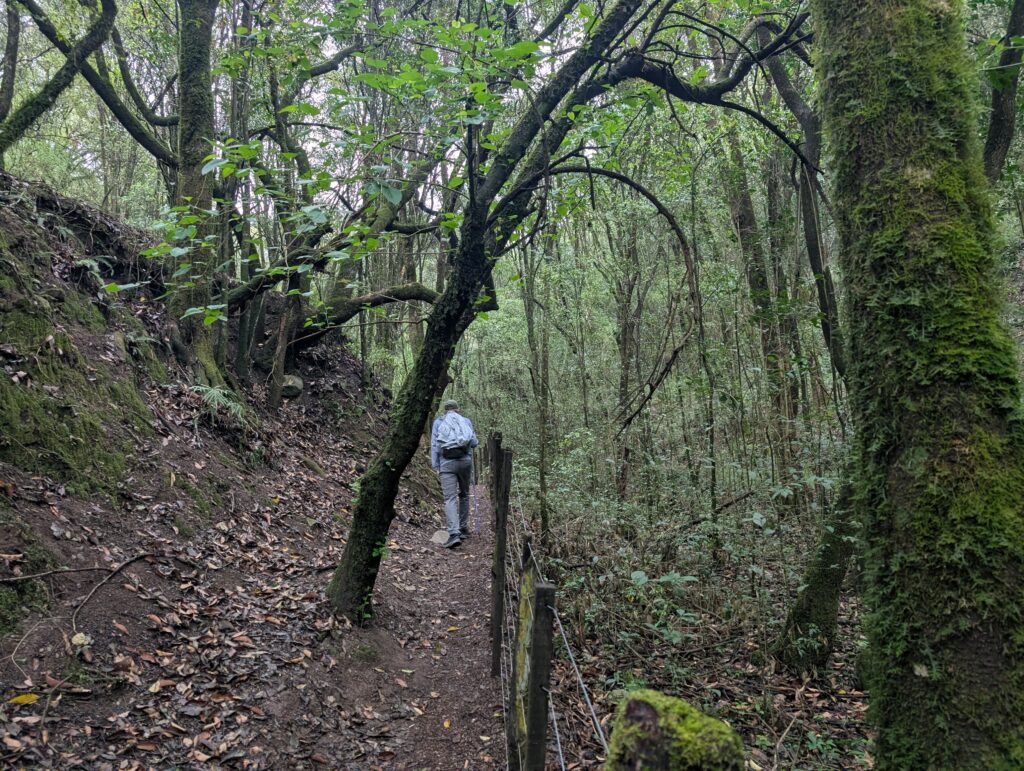
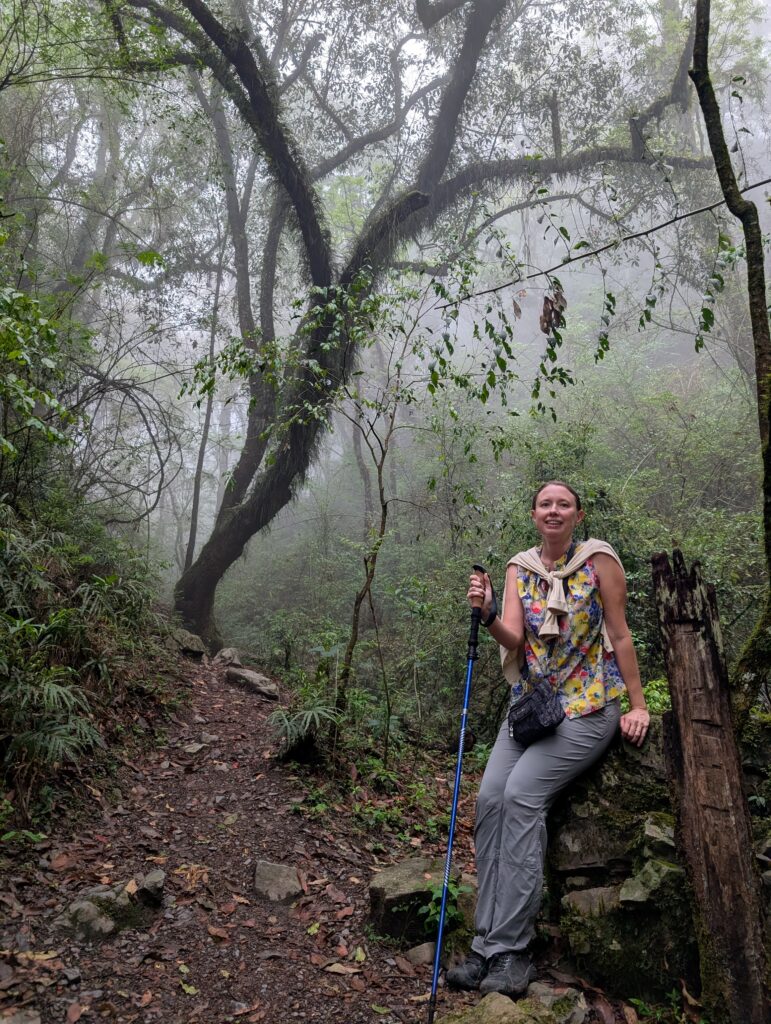
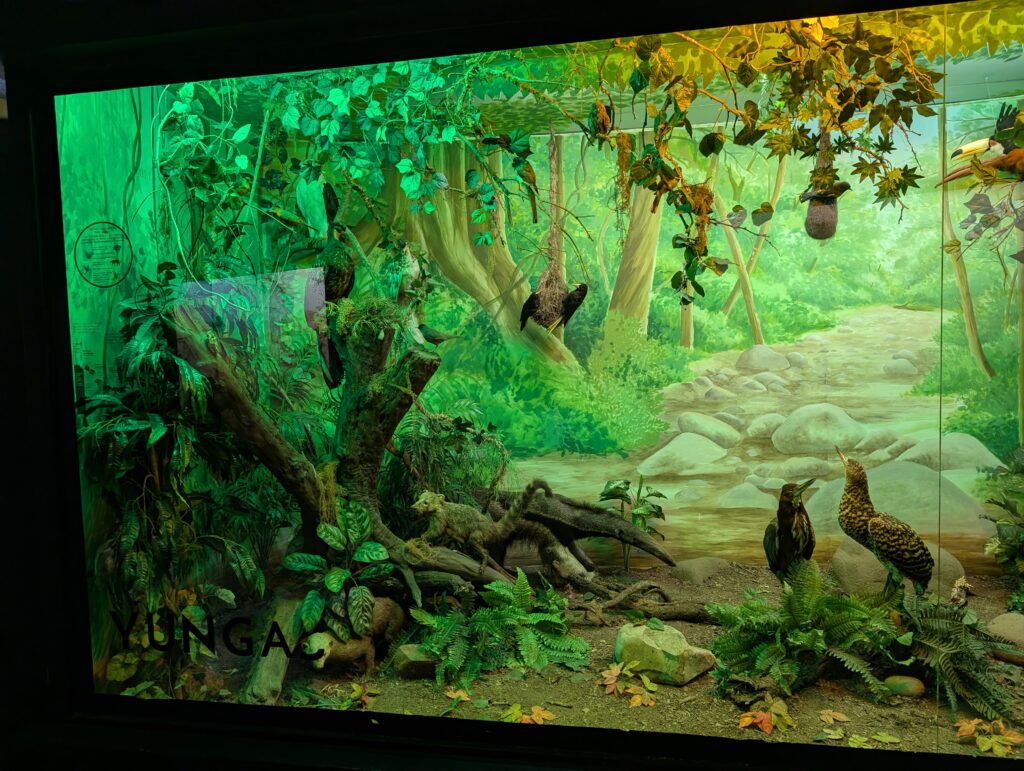
When we finally reached the entrance to the Municipal Reserve, a worker greeted us and sent Chad a WhatsApp message with a trail map, recommending we follow the north trail out and another specific trail back, saying it would take a couple hours. The trails were really great. Yungas is a type of ecosystem that is similar to rain forest, which was really surprising to find in this part of the country which also has a lot of high desert. But the barrier of the Andes mountains traps the moisture for more lush vegetation in spots. It felt very different from Salta and was really a great hike, though most of the views were obscured by clouds (very common in that climate).


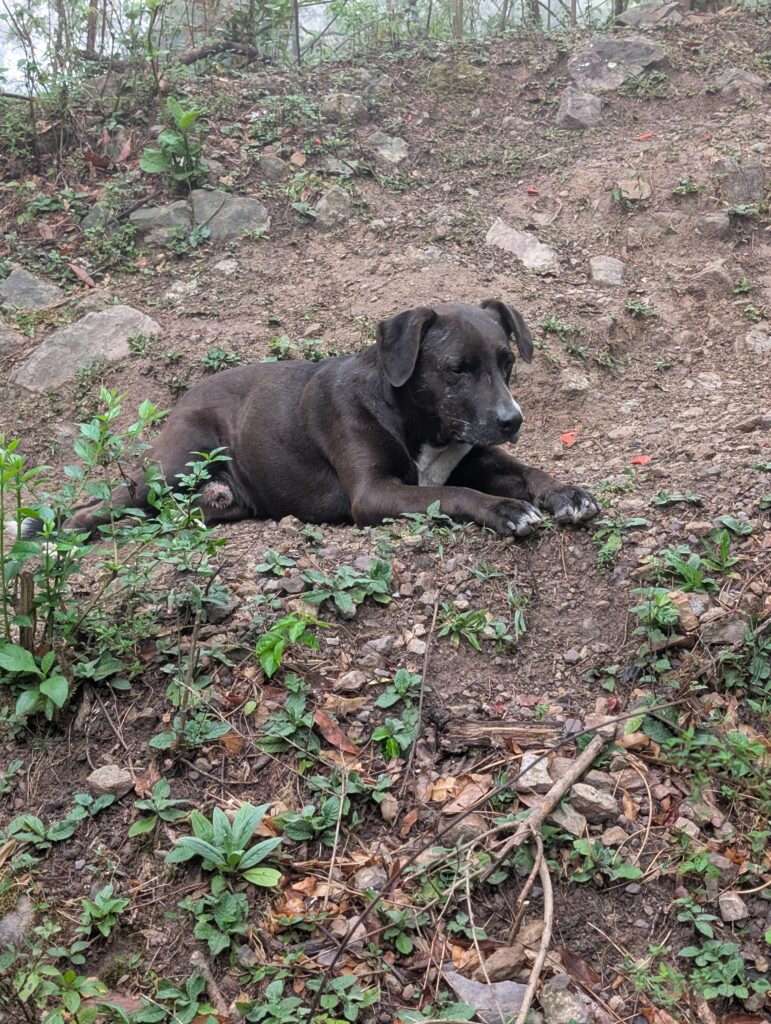


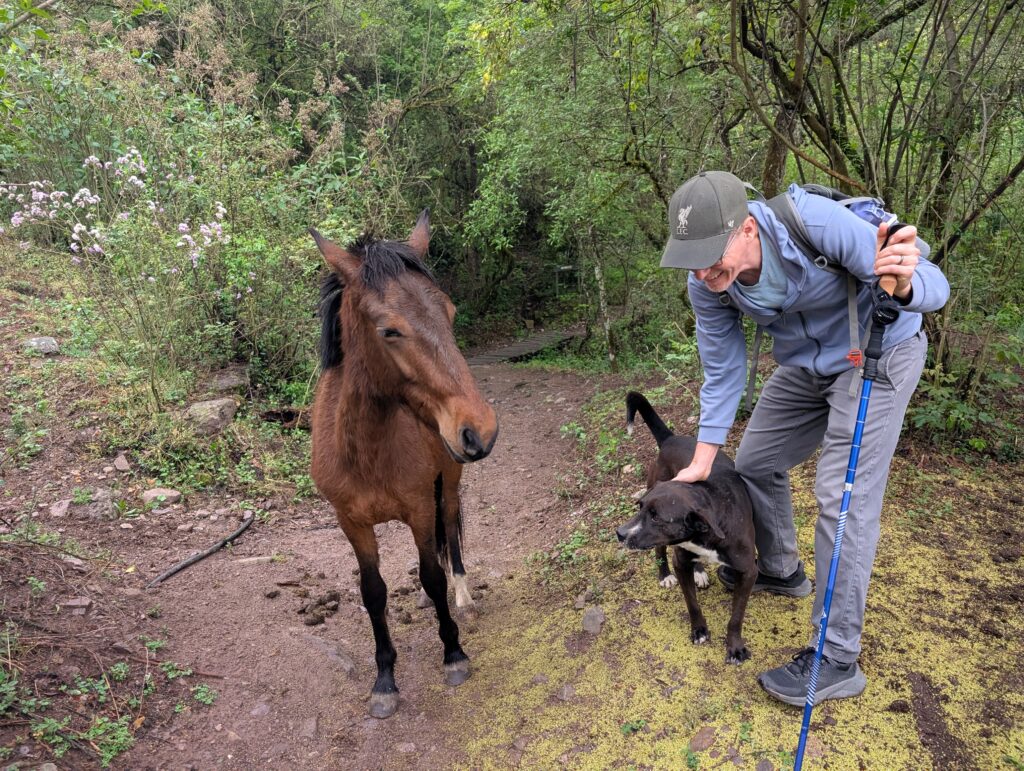
After the hike, we went to a wonderful Italian restaurant called Don Sanco and ordered extra empanadas to give a couple to Toucan Sam. Unfortunately, by the time they were served he’d already wandered off and we weren’t able to find him again. We ate the extra empanadas in his honor that night. He really didn’t seem food motivated or underfed as some other street dogs who’ve adopted us in the past have been. We talked to our host Fernando about it later when we were having more trouble with the water heater and he said it is a common experience and there’s a local myth that these dogs are the spirit of the mountain. He said he’d had similar experiences himself hiking in the area (and he does much longer treks than we do).
In addition to the empanadas, our lunch was delicious homemade pasta, one stuffed with smoked eggplant and the other with spinach and ricotta. Our San Lorenzo adventure was definitely a highlight of our time in Salta.


Museums
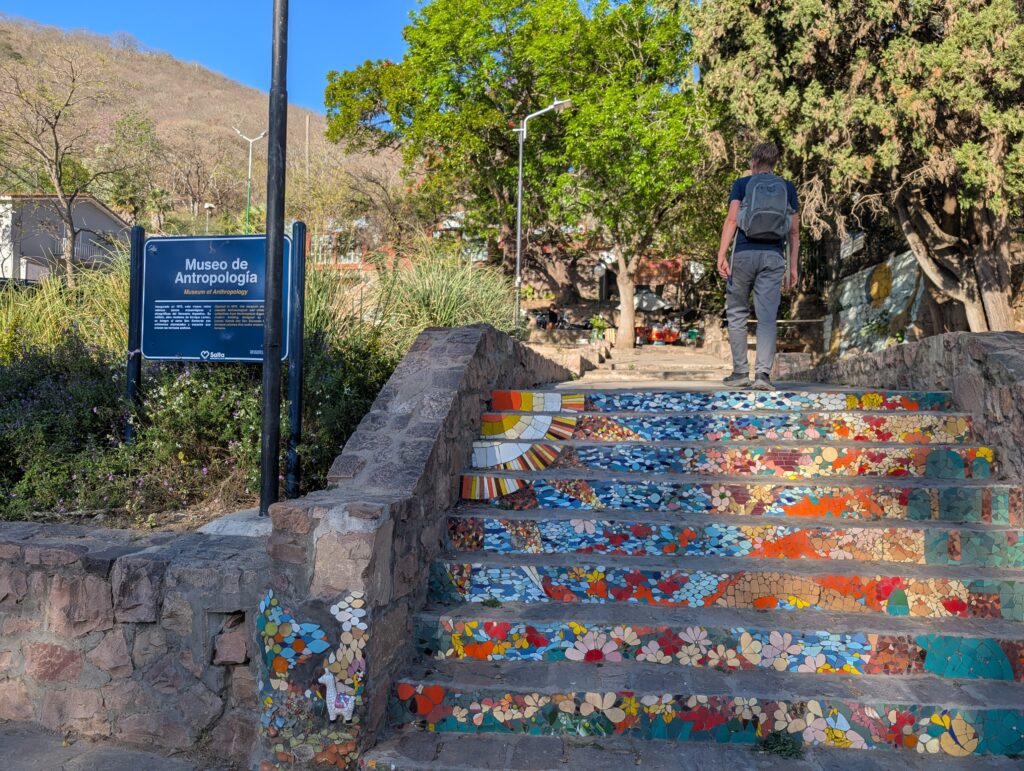
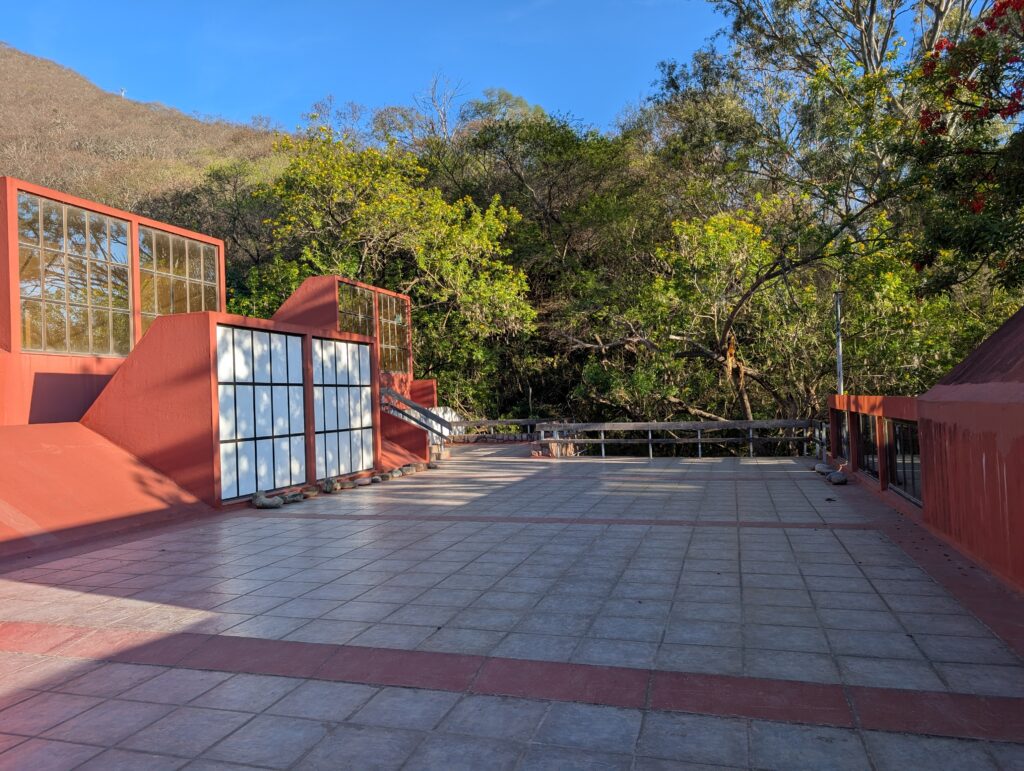
We visited several museums during our last two weeks in Salta. First was through a couple of museums. We visited the Museo de Antropología Juan Martín Leguizamón, named for a local archeologist, in the afternoon the same day we went to Carmina Burana. The museum is a bit of a climb up the hills we could view from our apartment. It covered the different indigenous cultures that had been present in the area. There were several cultures in the area before the Inca Empire came, then it was heavily influenced by the Inca, and then of course the Spanish arrived. It was very interesting to see the artifacts and how the culture evolved after the occupation by the Inca. Between the museum and the concert, we grabbed a beer at Patagonia Brewery (an Argentine chain) and then dinner at a Japanese restaurant near the square called El Nunchi.
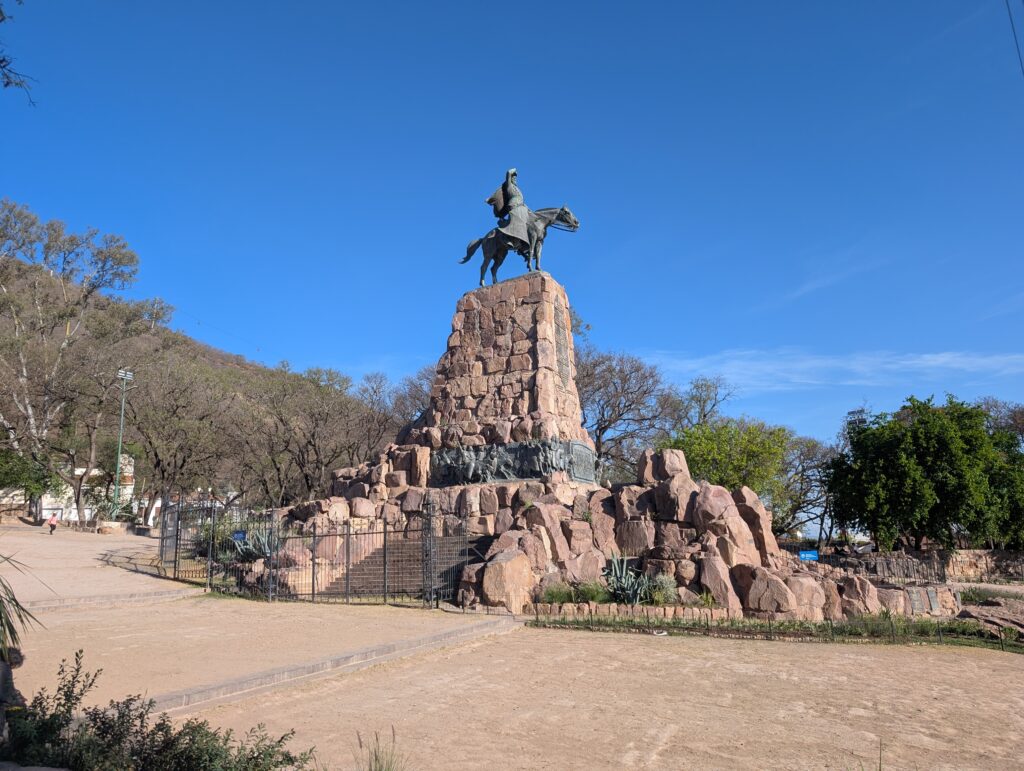

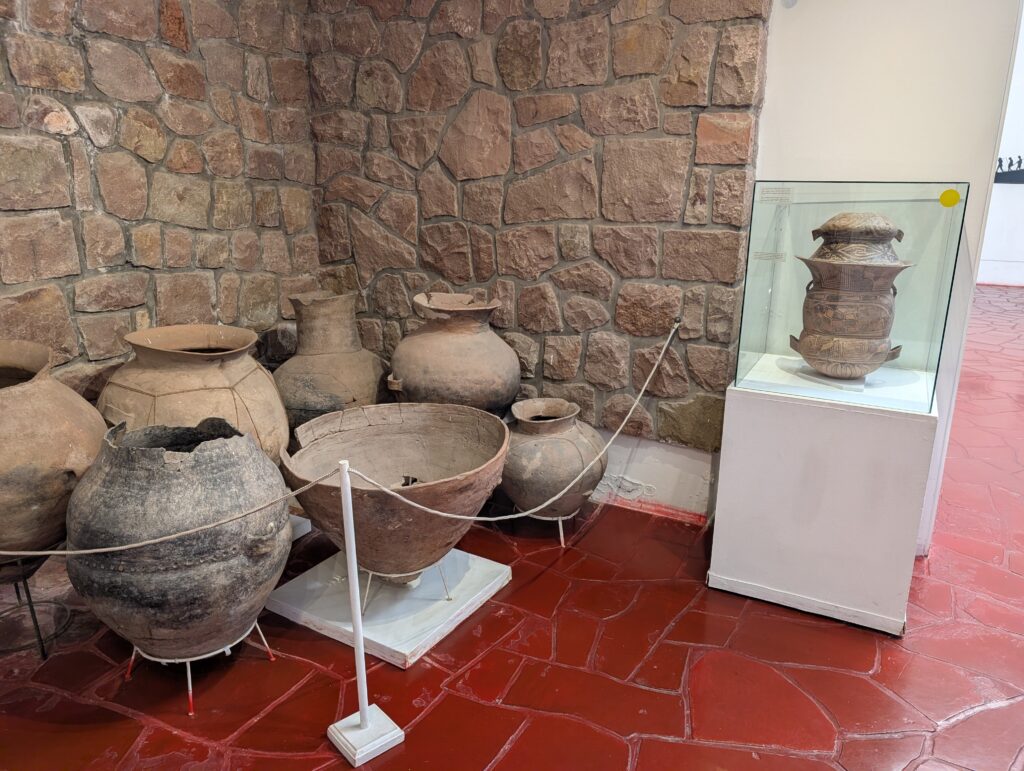

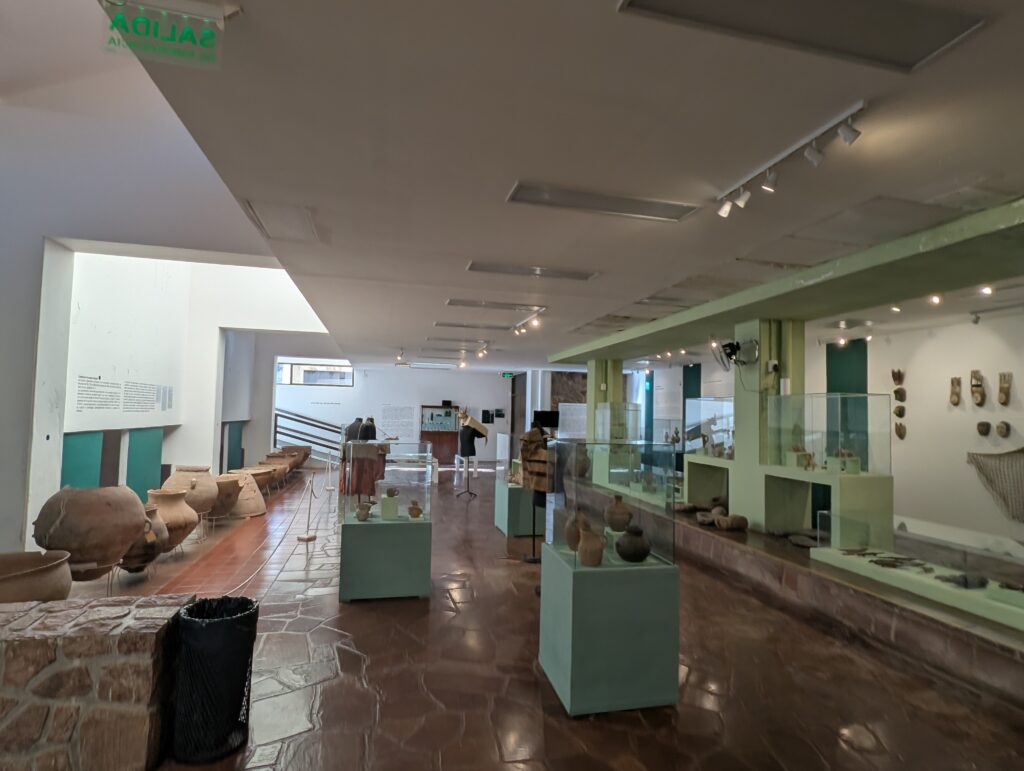
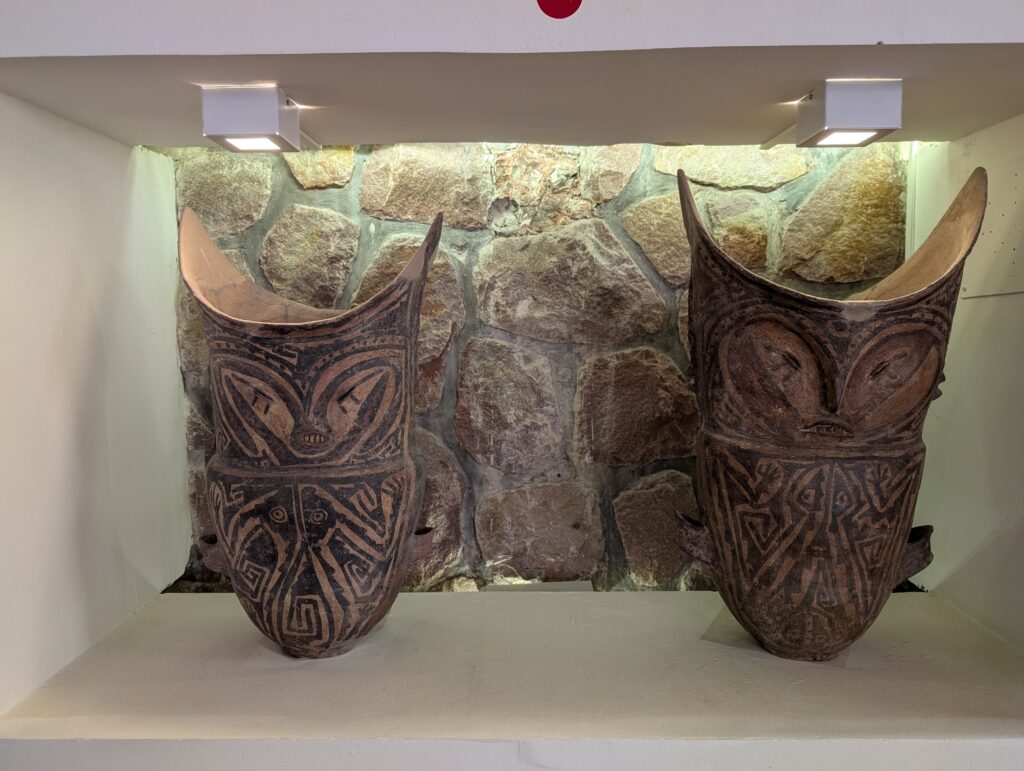


A couple days later, we visited what is considered to be the premier museum in the area, the Museum of High Altitude Archaeology. This museum is devoted to a specific archeological expedition high in the Andes mountains that uncovered several mummified bodies from human sacrifices during Incan times.
There are no photos allowed inside the museum, but it was incredibly interesting, first from the standpoint of managing the excavation in such difficult conditions on top of a very high mountain, then seeing all the beautifully preserved artifacts they found, and finally the mummies themselves and the Incan ritual that incorporated the deaths of the children. Only one mummy is displayed on a given day. On our day, the mummy was a 15-year-old girl. There was also a younger girl and younger boy. It is very sad but the museum handle it quite respectfully.


We were glad we had chosen to visit the anthropology museum first because it added a lot of helpful context to the cultures and the Inca influence that made the archeology museum more meaningful. That also reminds me of a funny interaction with the guy who sold us the entries to the anthropology museum (just $4 each). He wanted to make very clear to us before we paid that there were no mummies at that museum. They must have had issues in the past with people coming to the wrong museum. Just for reference, the Museum of High Altitude Archeology Museum had a much steeper price tag at $11 each for “extranjeros” (foreigners).
We also visited the General Güemes Museum the same day we went to San Lorenzo. It was presented as a self-guided multimedia group tour through an old building where the Güemes family had lived and was very informative but not truly fun. But we definitely learned a lot about the revolution, the general, and the gauchos he led. And as the only English speakers on the tour, the Argentines treated us kindly and always made sure we’d be in a good position to read the subtitles on all the video exhibits.


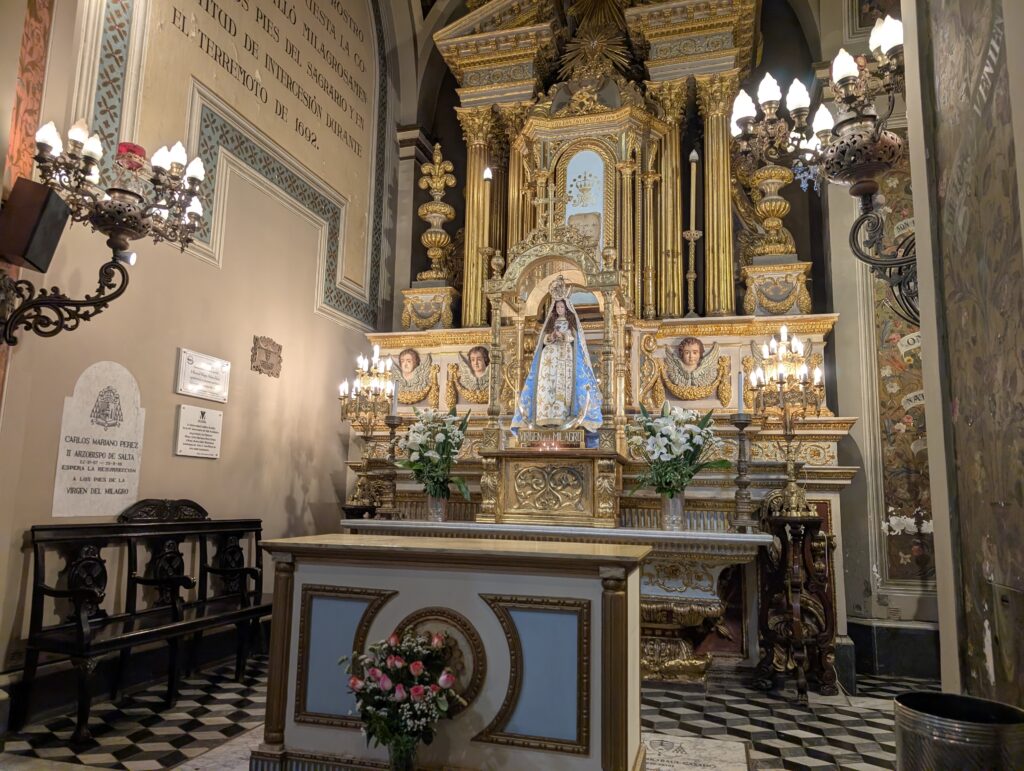
Thought not a museum, the cathedral on the main square was well worth a visit and very beautiful inside. We were able to see the famous Virgen of the Miracle statue I mentioned in my last post. It also holds the tomb for the Güemes family.




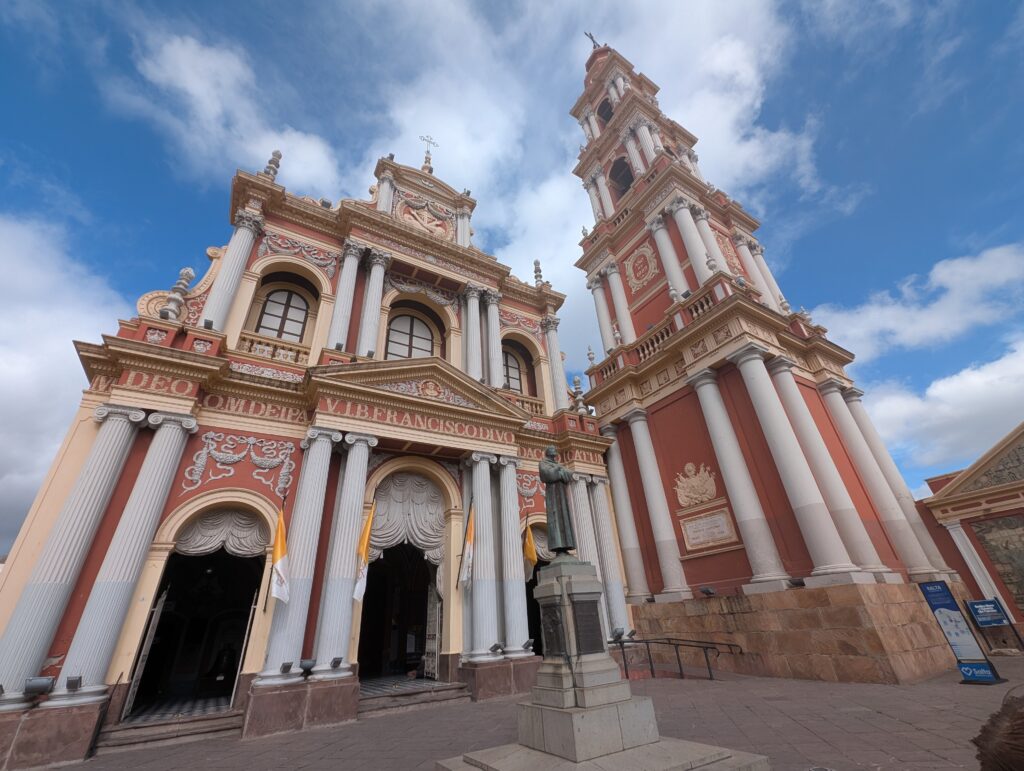
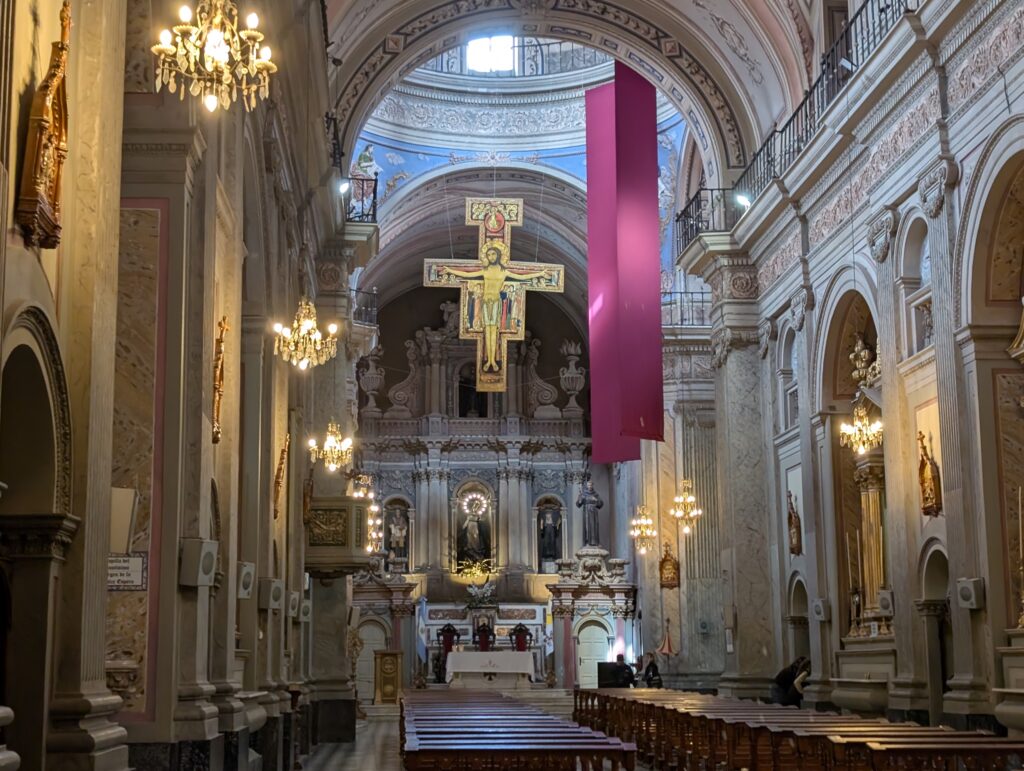
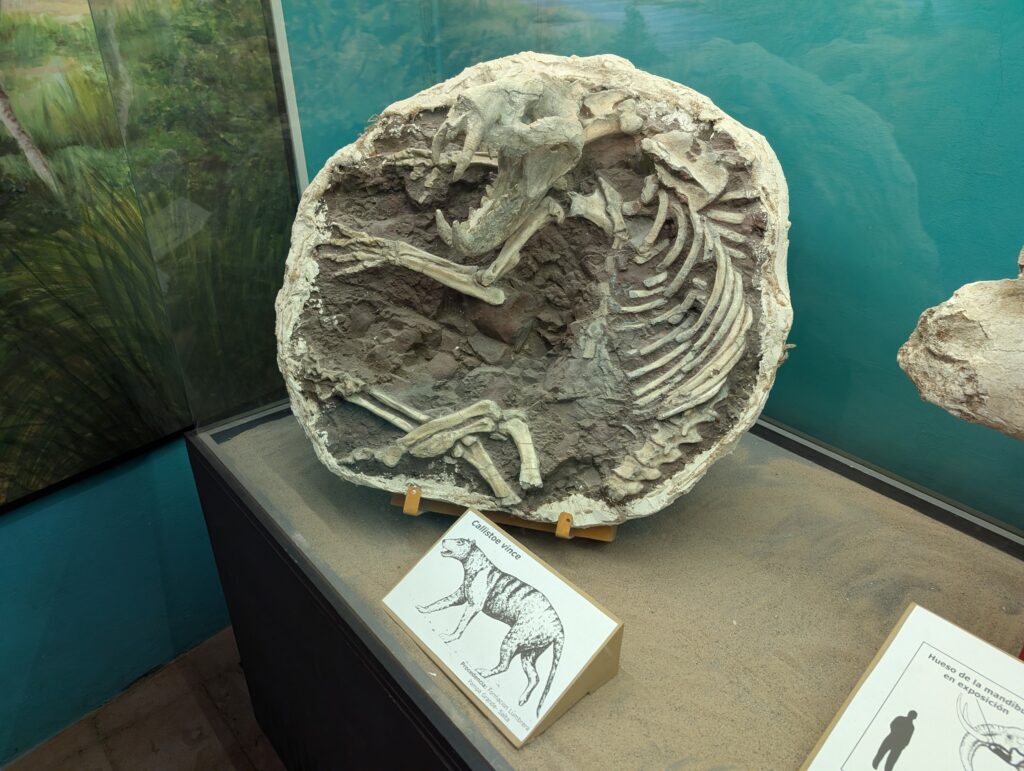
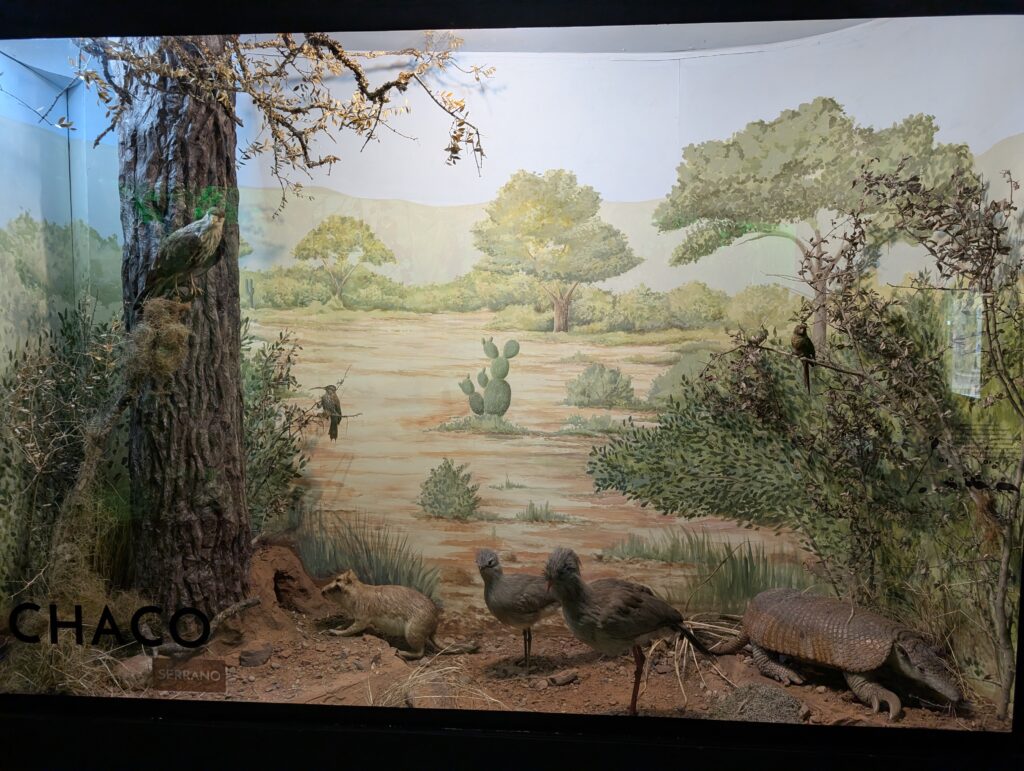
We’d planned to go to the sacred art museum in the Basilica San Francisco but it turned out to be only accessible by guided tour in Spanish. So we pivoted and went to the National University of Salta Museum of Natural Sciences in the Parque San Martin instead.We always love this kind of classic museum with lots of taxidermied specimens of local fauna. It helped us better understand the yungas forest we hiked in San Lorenzo as well as the other animals present in the various ecosystems of the area. There’s a lot of diversity because the rainfall varies so much from place to place.


Summary
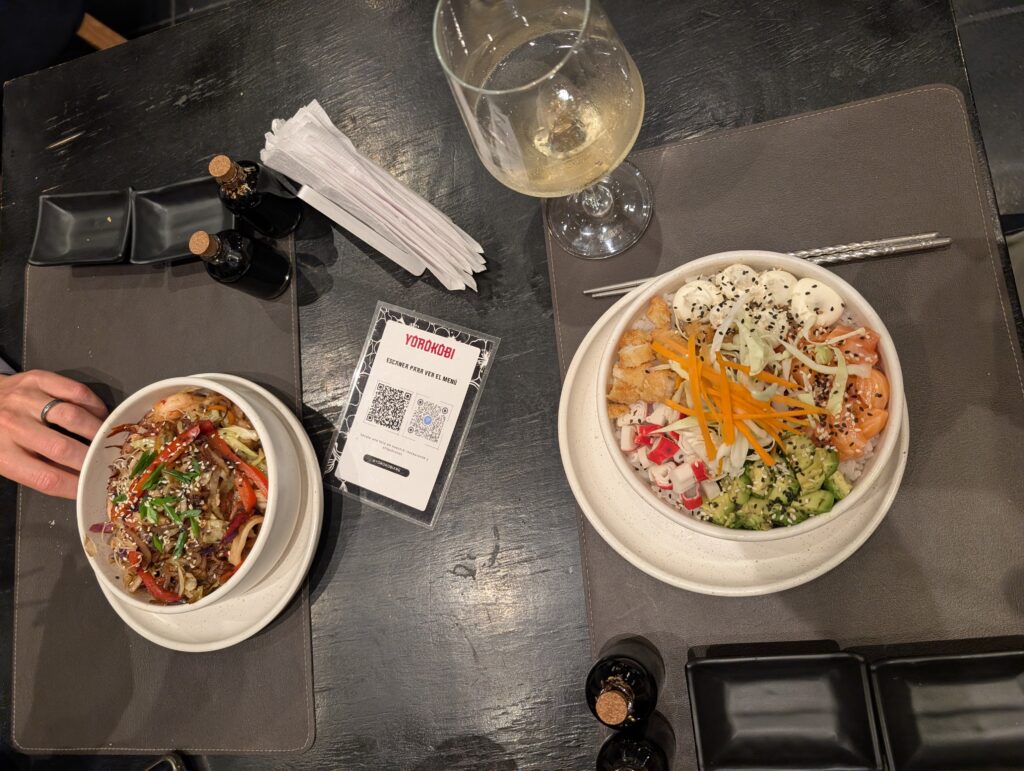
Of course the key m-word on our travels is “meals” and we continued to eat very well in Salta. We had more empanadas, as an appetizer in most dinners out and occasionally for lunch, and another cafe brunch, Japanese food at a restaurant called Yorokobi, and finally Middle Eastern at a place we frequently passed called Comidas Arabes Dubai. We really enjoyed a great quality of life in Salta and are very glad we chose to spend four weeks there.


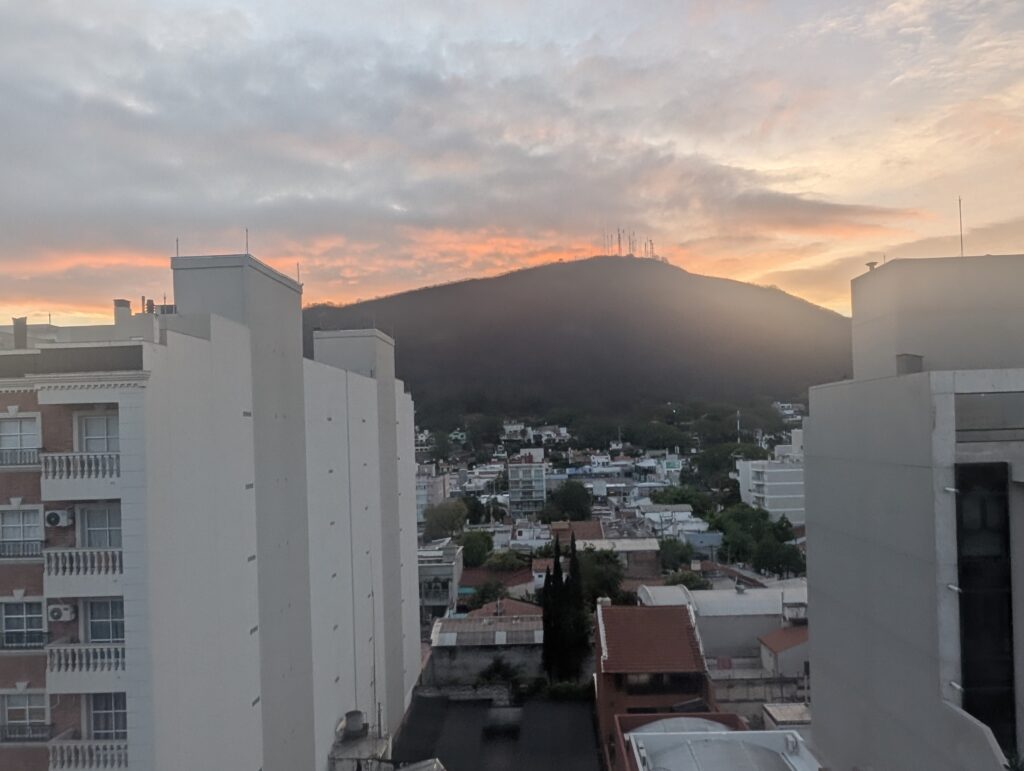
Airbnb review – My husband and I had a great 4-week stay in this apartment. It feels larger than it appears in the photos and the windows provide excellent light. The kitchen is well-equipped for making some light meals in and there are several good supermarkets nearby. The wifi was fast and consistent. We had excellent communication from Fernando before and during our stay. He was waiting for us in front of the building when we arrived from the airport to show us the apartment. When we had an issue with the water heater later in our stay, he was there to fix it in 10 minutes. He also provided helpful information for getting around the city and beyond. The location is perfect, an easy walk to the historic center but with all the residential amenities including great restaurants nearby and very close to Alto NOA Mall. There are also many bus stops nearby, including the bus for San Lorenzo where we had the best hiking. I definitely recommend this apartment.