The experience I was looking forward to the most coming into this leg was seeing Iguazu Falls, which we visited during Labor Day weekend. Everyone I’d spoken to who’d been there and all the blogs I read about it called the falls awe-inspiring. And, because it is on the border of Brazil and Argentina, it provided the perfect opportunity to shift countries.
Arrival in Foz do Iguaçu
Since we were already in Brazil, it made sense to do the Brazil side first. We took a domestic flight from Recife to Foz do Iguaçu airport with a short (almost too-short when our first flight arrived late) layover in Sao Paolo. Luckily there were airline employees waiting when we disembarked to direct passengers to their next gate and ours was just a few gates down. It had just started boarding so we made it just fine.
I had arranged with our hotel in Foz do Iguaçu to arrange private airport transportation for 50 reais (around $10), though Uber probably would have been fine since it was a small airport. But it was nice to have a driver waiting for us with a sign and it was a short ride to our eco-hostel (review below).
We chose the hotel solely because it is the only one within walking distance to the national park where you view the waterfalls on the Brazil side. I’d planned for us to go right at the opening time, as is our usual strategy, and didn’t want to have to deal with Ubers or traffic. However, when I went to book the tickets about 10 days before our trip, the advanced booking for the opening time (8:30) was sold out and the earliest tickets available were for 11 a.m. We decided to embrace this error on my part and use the morning time to visit the bird park that is close to the entrance as well. It is a must-visit attraction on the Brazil side and the reviews mentioned the birds being most active in the morning and the chance to see a feeding.
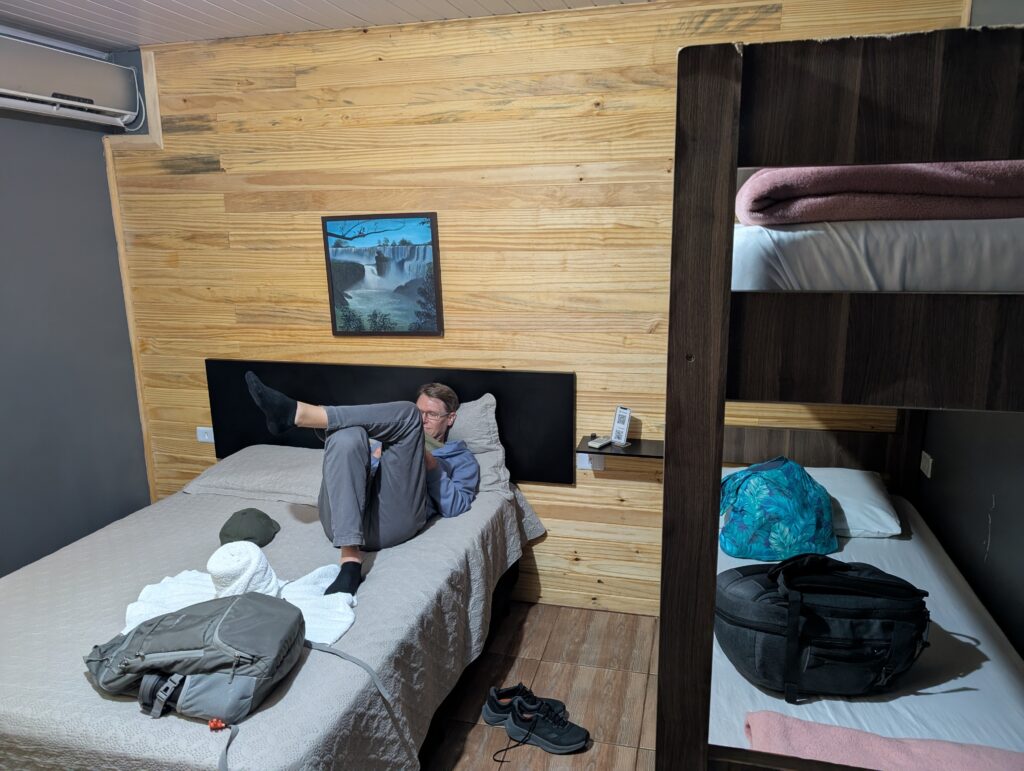
Our accommodation called itself an eco-hostel and it was certainly rustic-feeling, though we had our own room with private bathroom. We arrived in the late afternoon and after depositing our stuff in the room, got an Uber to take us to the Catuaí Palladium mall. I was very worried about being able to obtain Argentine pesos, which I hadn’t come prepared for, so I wanted to visit the cambio there. It also gave us the chance to pick up some water, snacks, and beer for night.
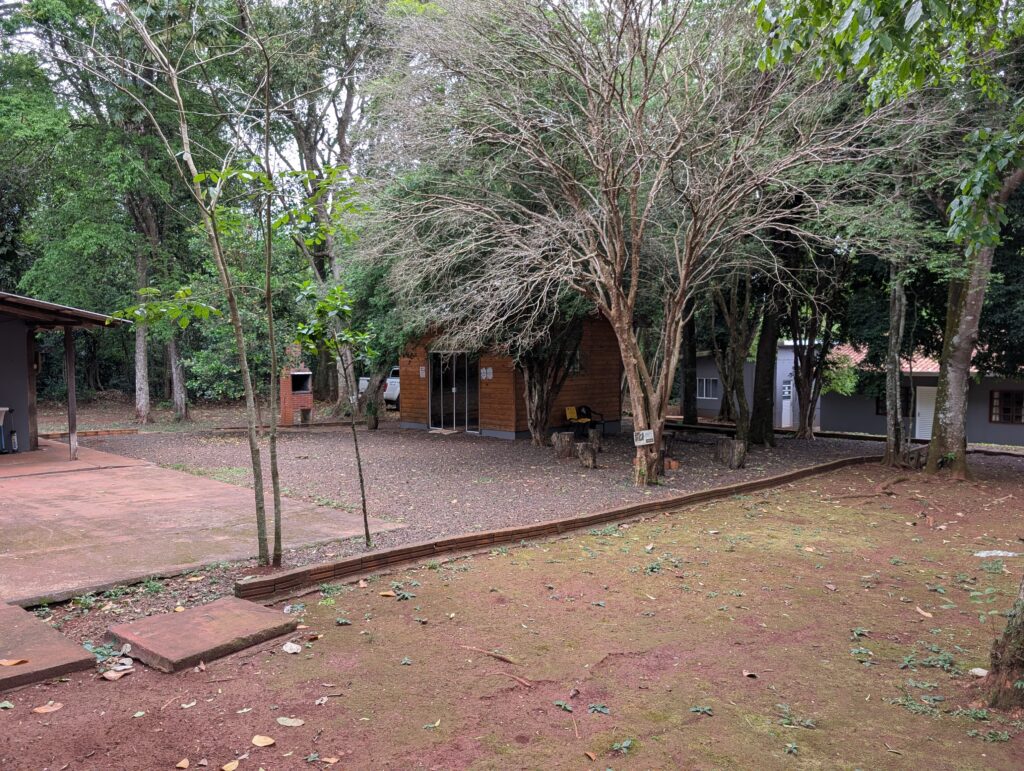
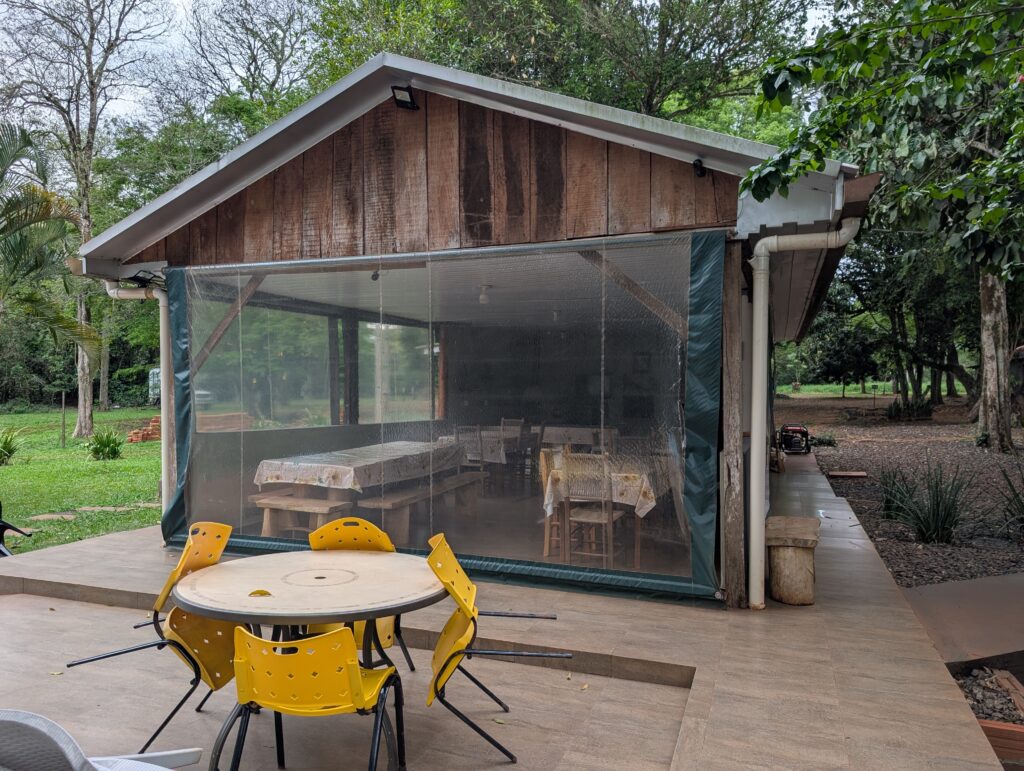
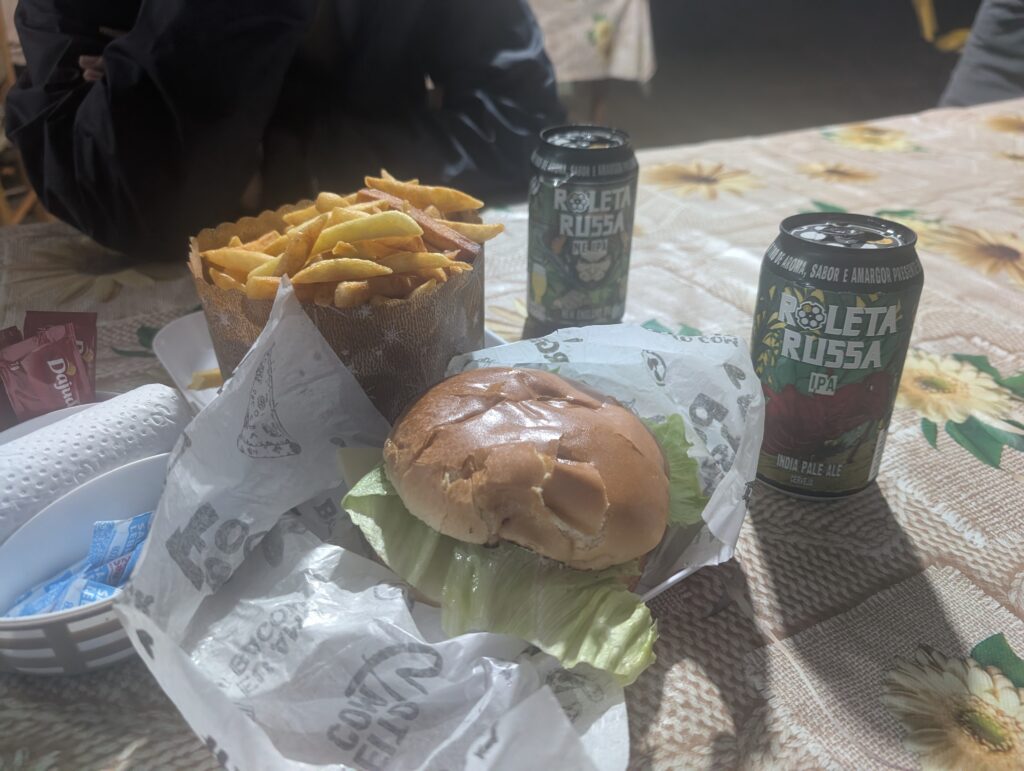
Back at the eco-hostel, we relaxed until their burger food truck opened at 6. We didn’t get out to it right away not realizing that by waiting until 6:30 we’d have to wait a full hour for them to get to our order, but it worked out pretty well. Chad got a grilled chicken sandwich and I got the veggie burger and both were good (we shared), as were the fries. The German man we met while finishing our food was jealous of our IPAs we’d picked up at the mall’s duty-free store (he was stuck with the regular beer they sold at the hostel; I think it was Amstel). We were not sad to be leaving Brazil’s domestic beers behind. We enjoyed chatting with him about football and travel. There were a surprising number of Germans at our hotel and at the falls. It seems to be a popular destination for them.
Parque de Aves
The next morning, after a decent hotel breakfast, we checked out of our room and stored our luggage with the front desk. It was about a 10-minute walk to the bird park and we arrived a little before its opening time. There was already a long line of people waiting at the entry line. I’d bought our tickets online the night before (around $20 per person) so we joined the queue, which moved pretty quickly once the park opened at 8:30.
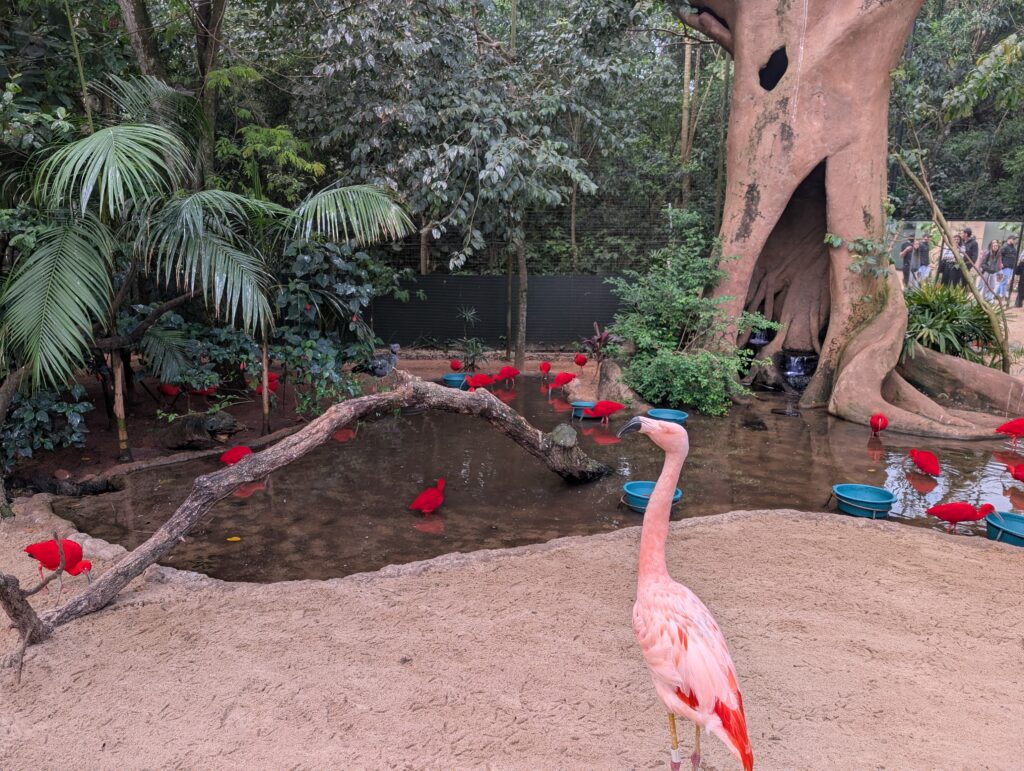
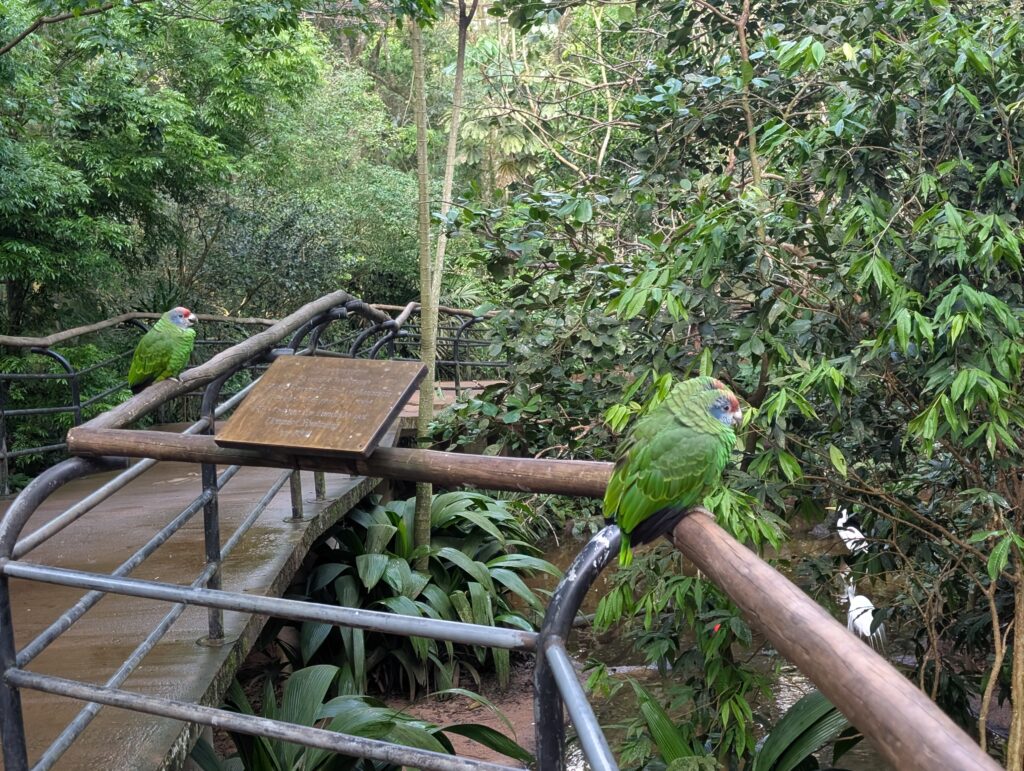
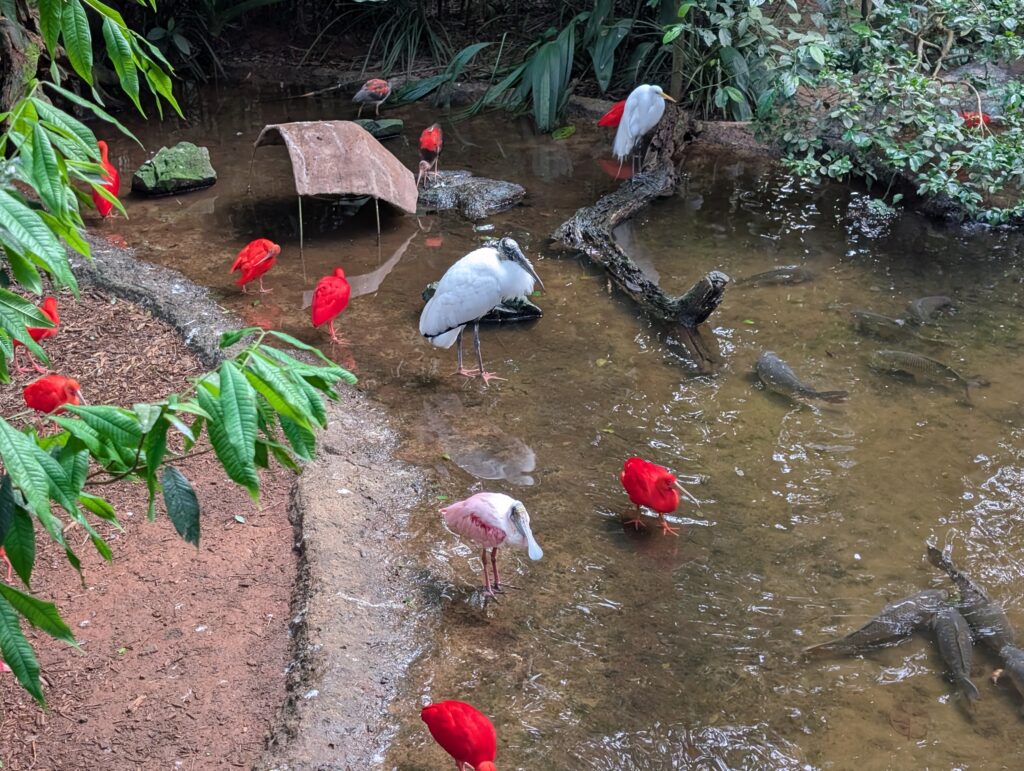
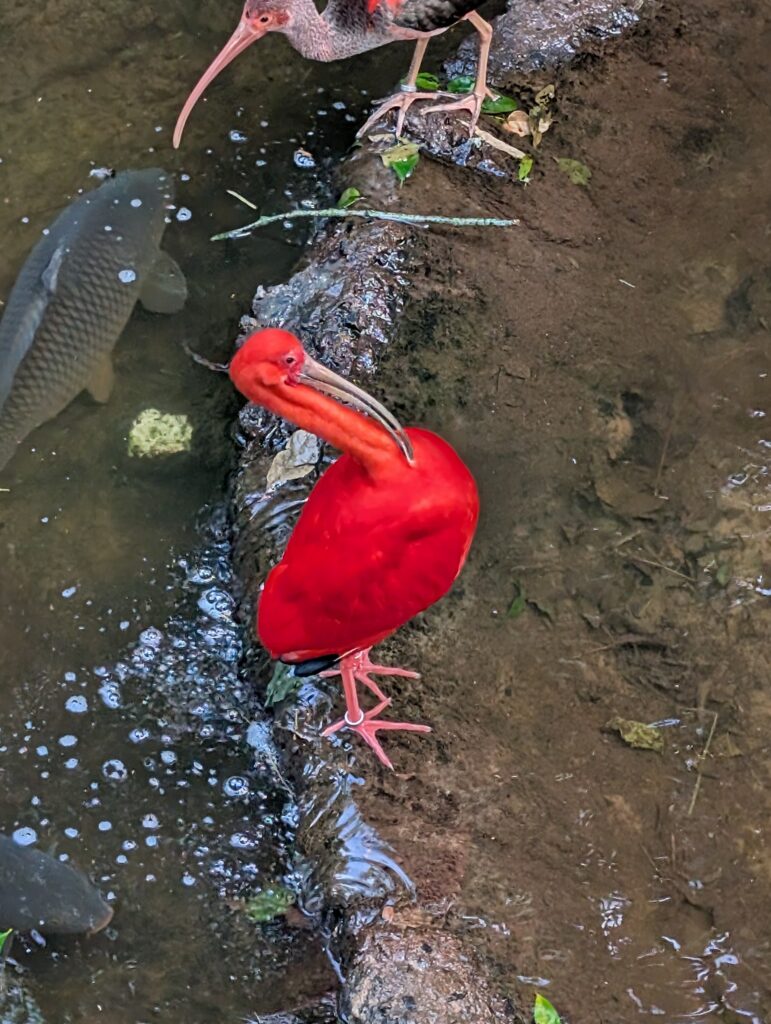
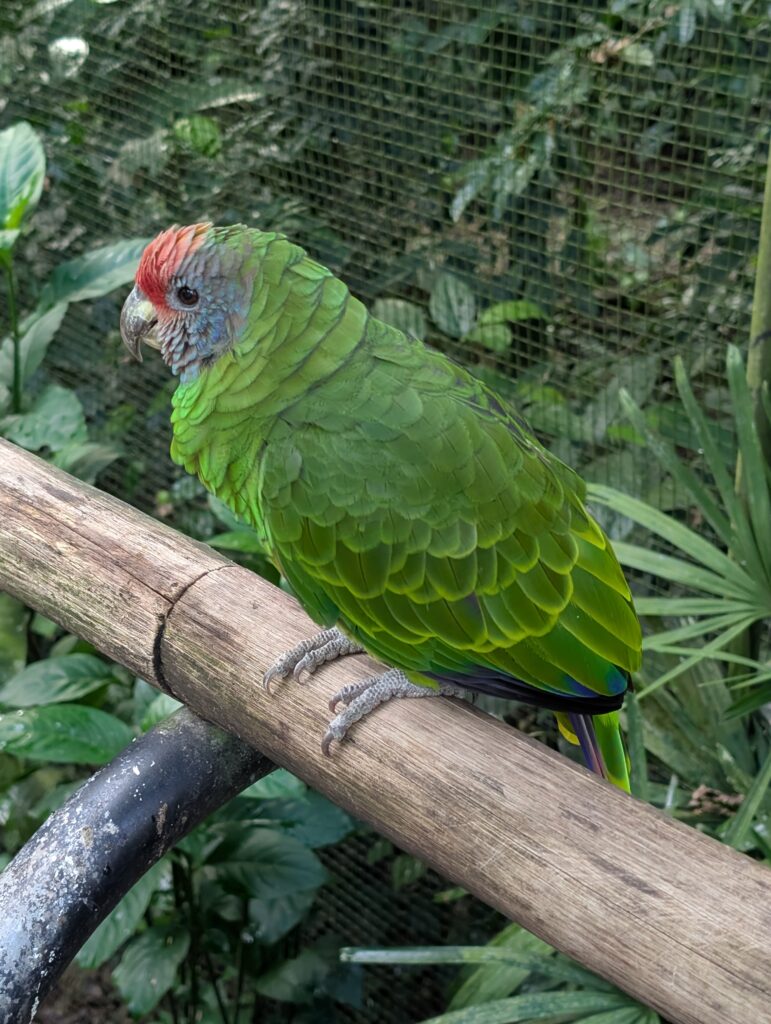
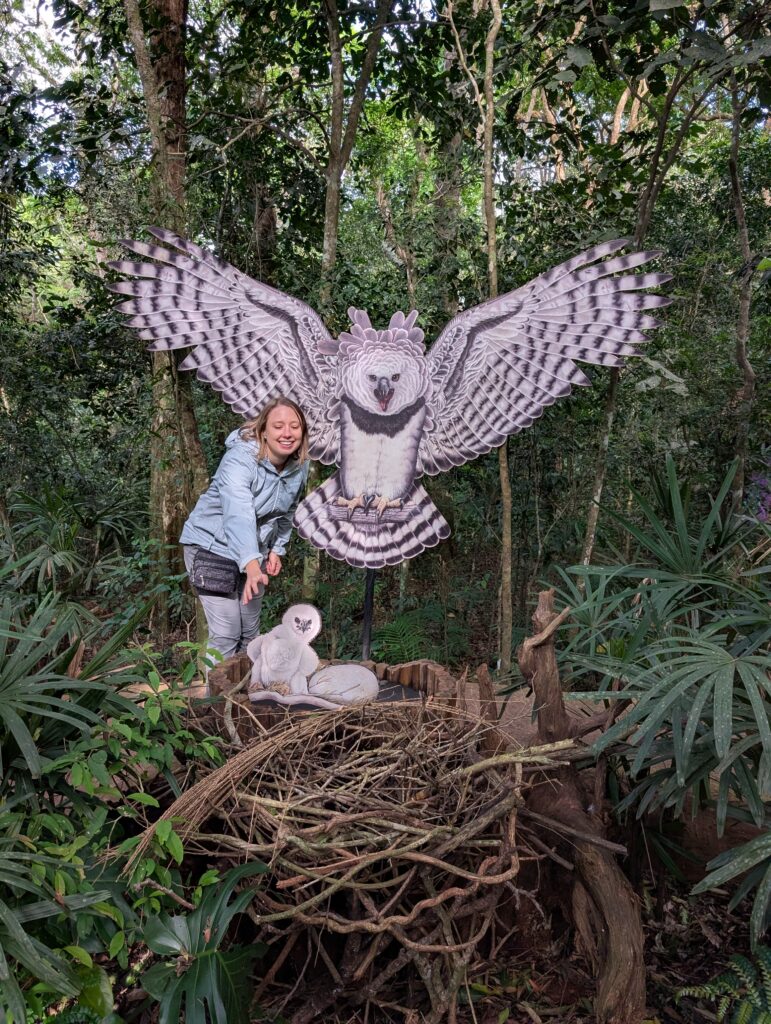
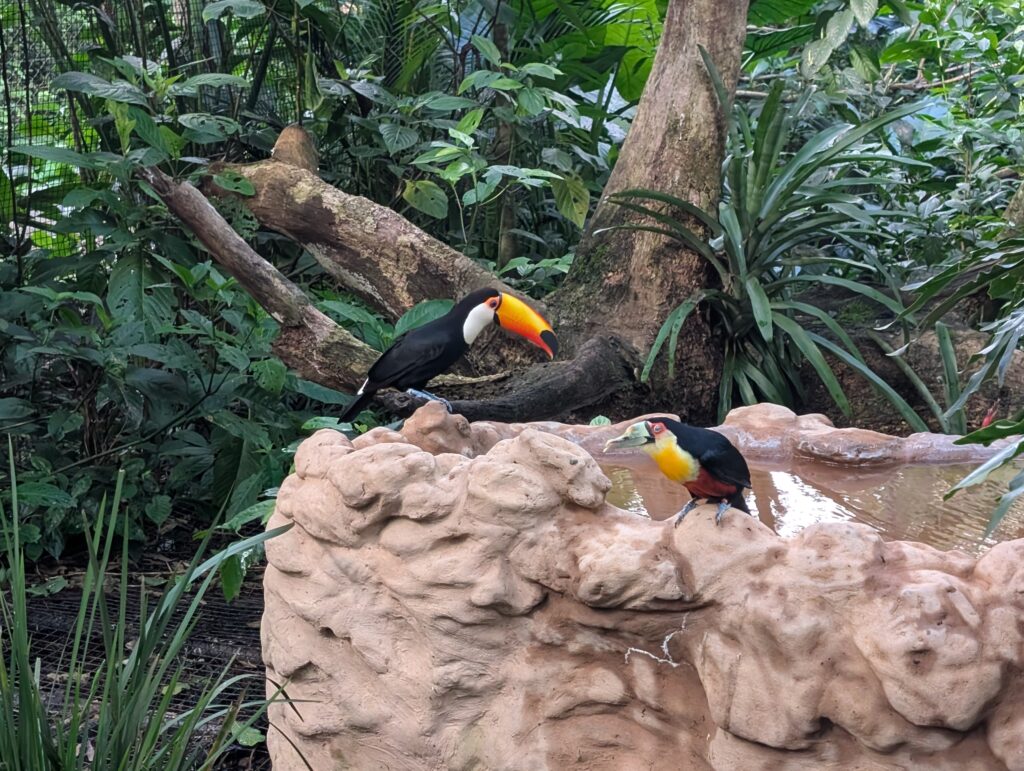
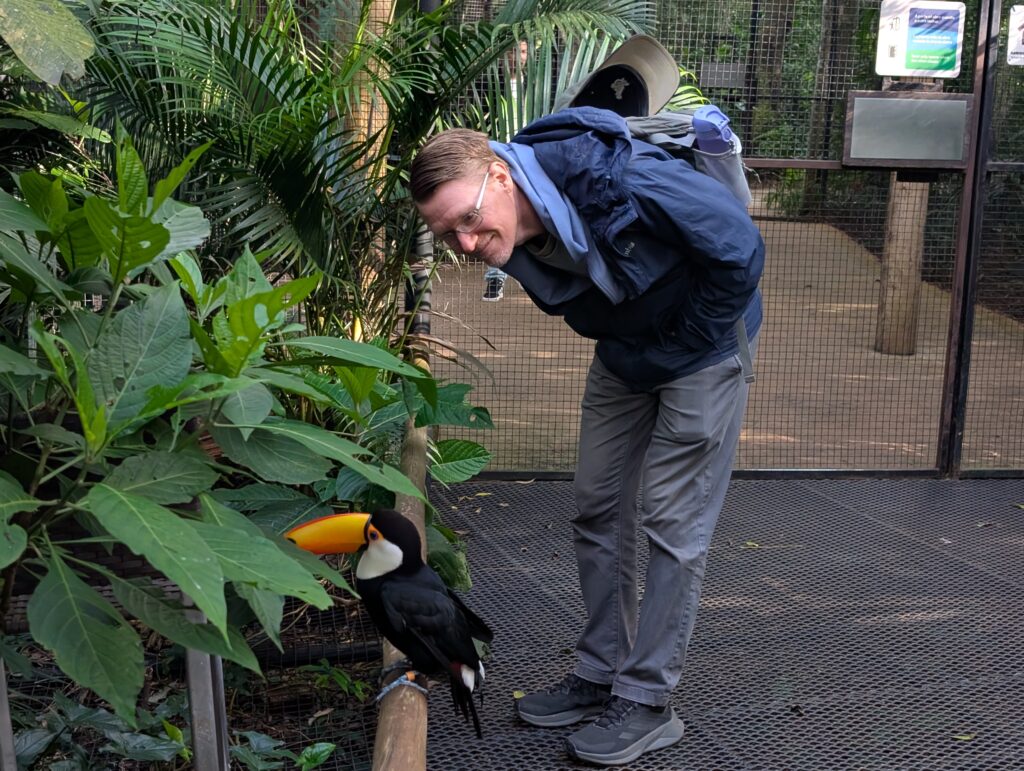
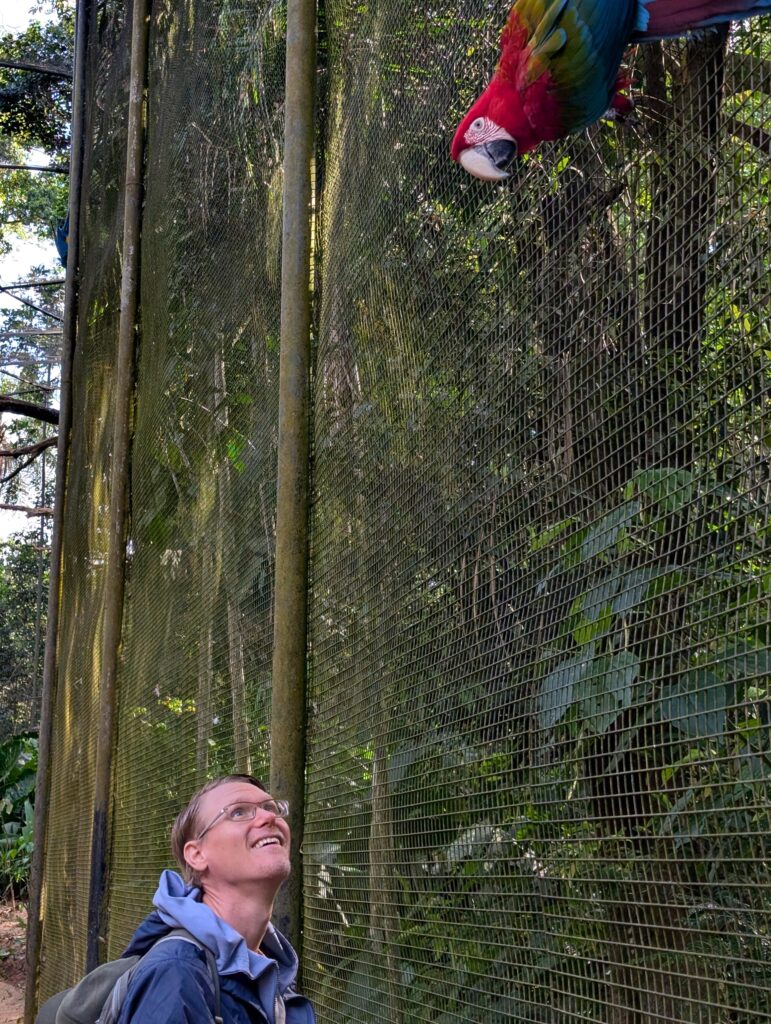
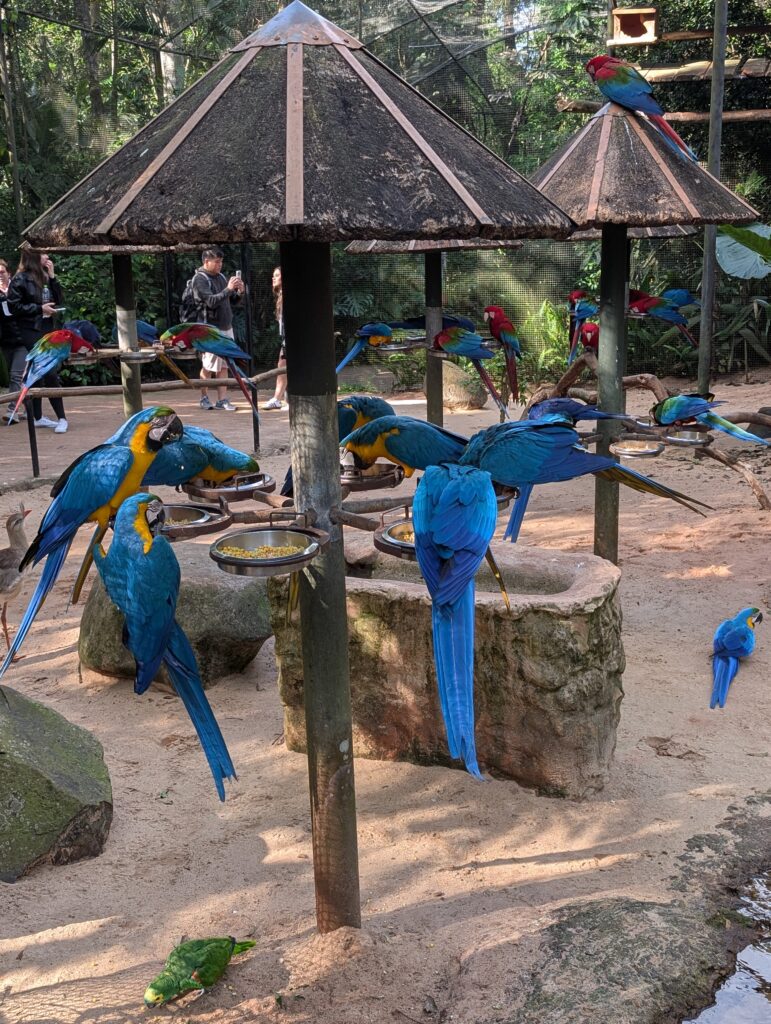
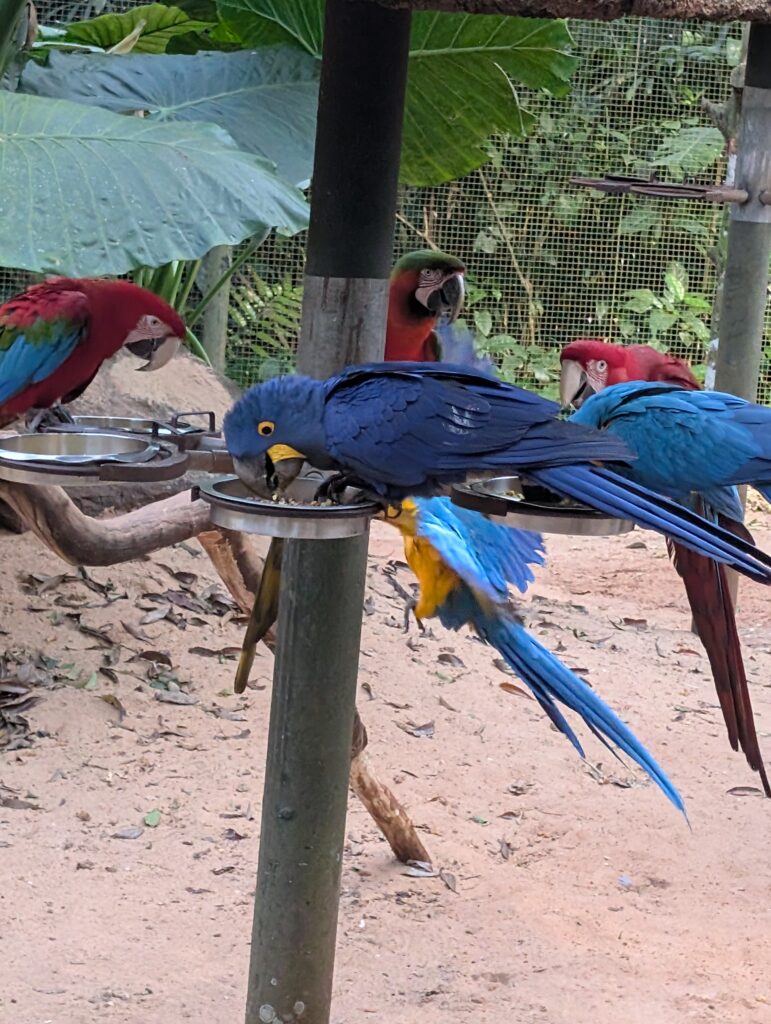
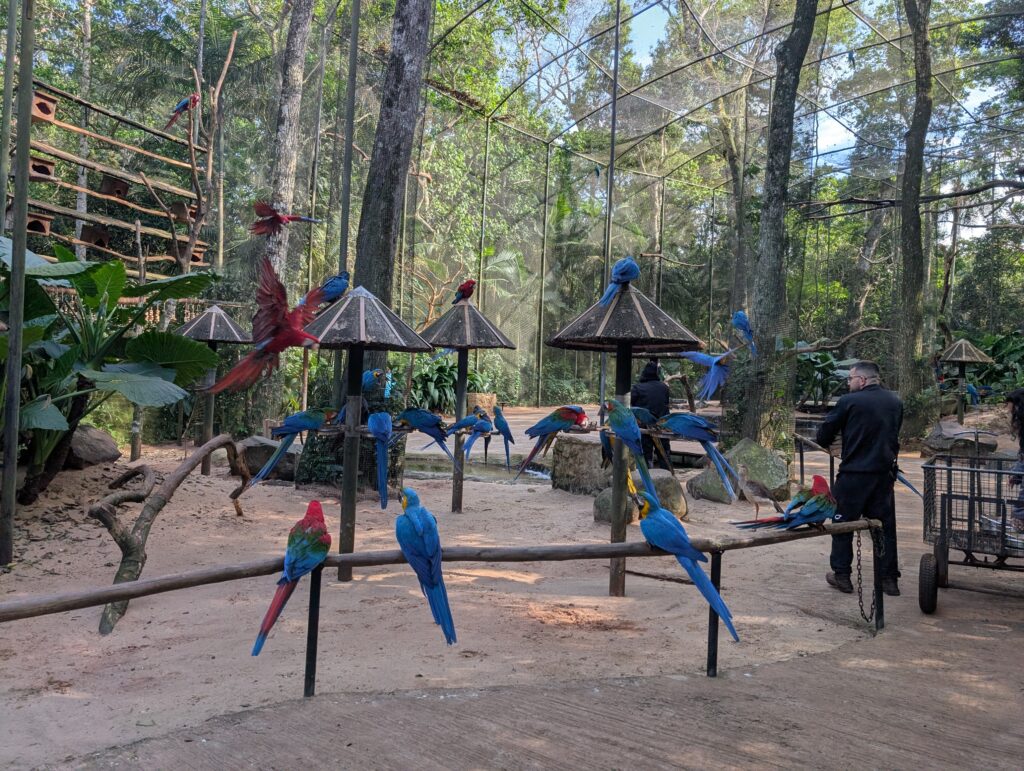
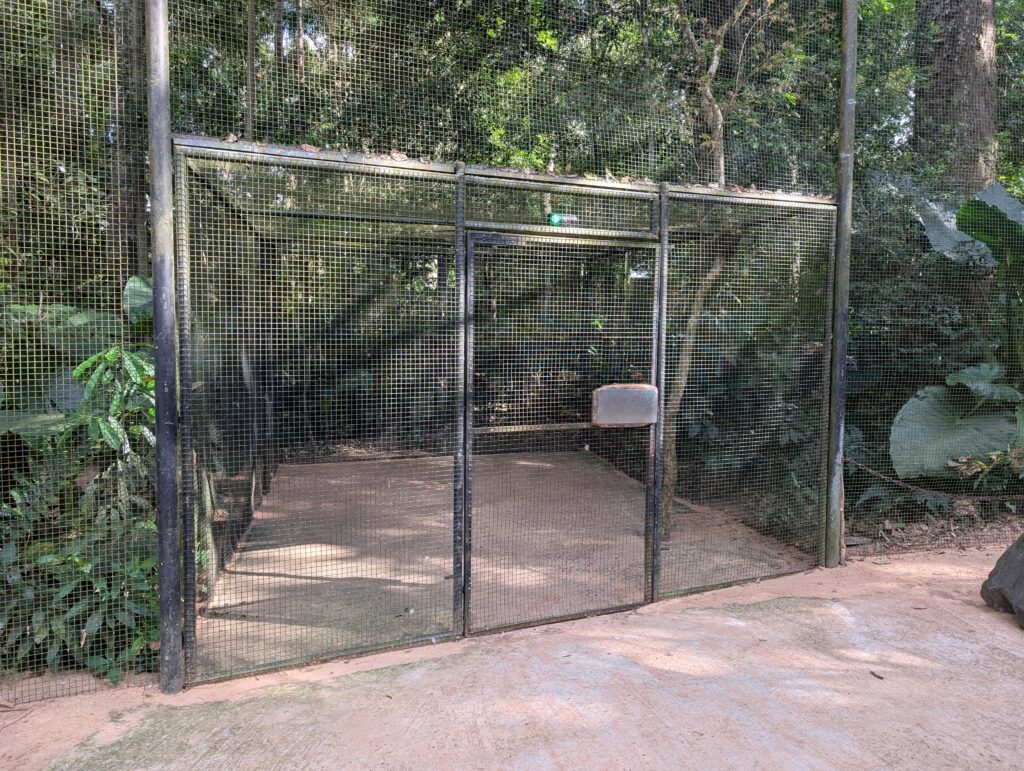
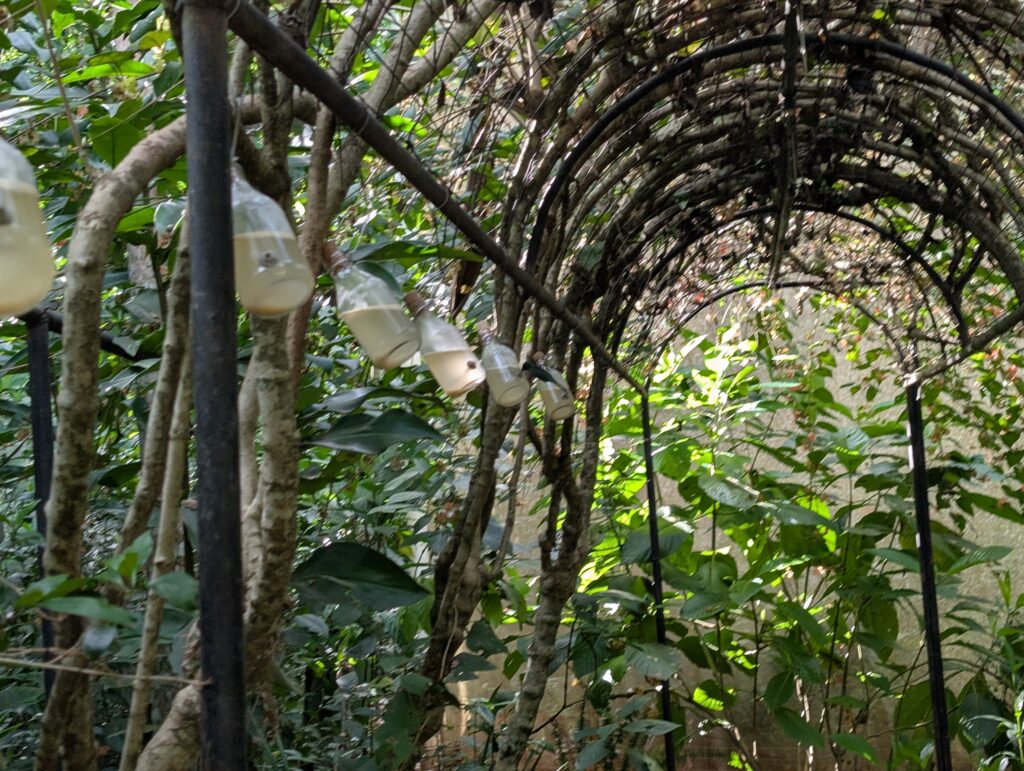
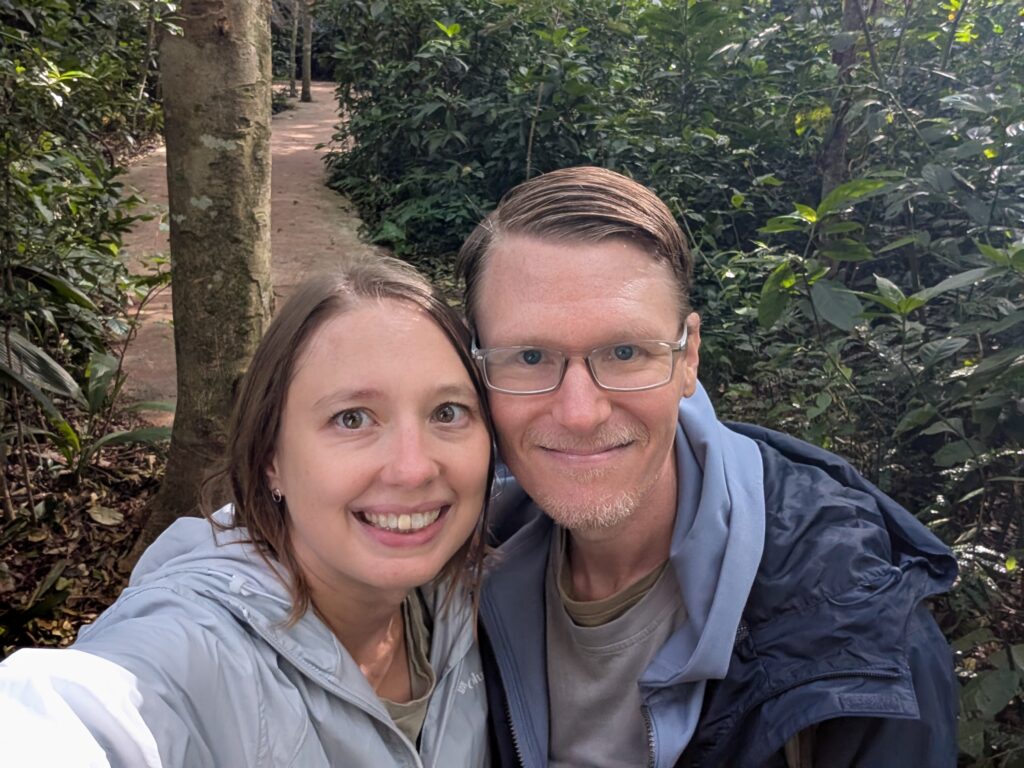
The bark park exceeded our expectations. It is a one-way path through various enclosures. We decided not to linger at the entry but walk ahead to some of the more interesting birds, which allowed us to get out ahead of the crowds. Our favorites were the parrots, toucans, and macaws, which each had their own enclosures. The entry was through a double gate system where you enter through one gate that then locks behind you before you can go the rest of the way in or out of the enclosure, to prevent any jail breaks. The birds seemed healthy and well-cared for and it was fun being able to get up close to them. We arrived at the macaw enclosure right at the beginning of feeding time, which was great. At a certain point, they’d finished eating and all took off in flight right at us. Everyone had to duck to avoid being flown into and then laughed as we all stood. I won’t need photos to remember that part.
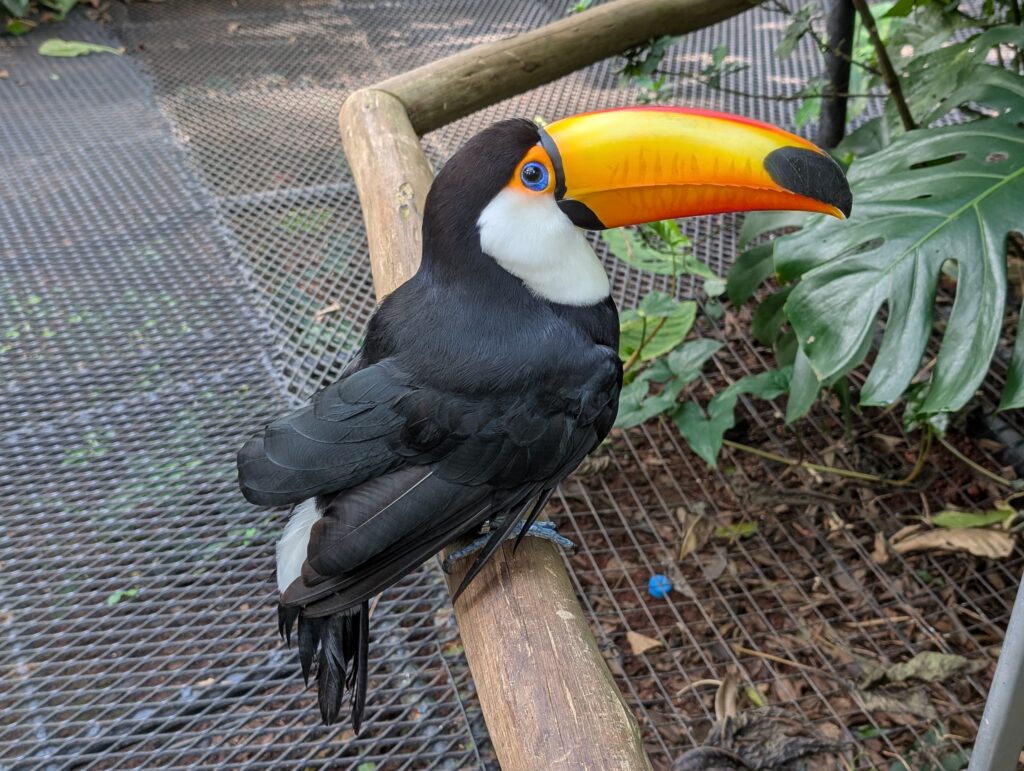
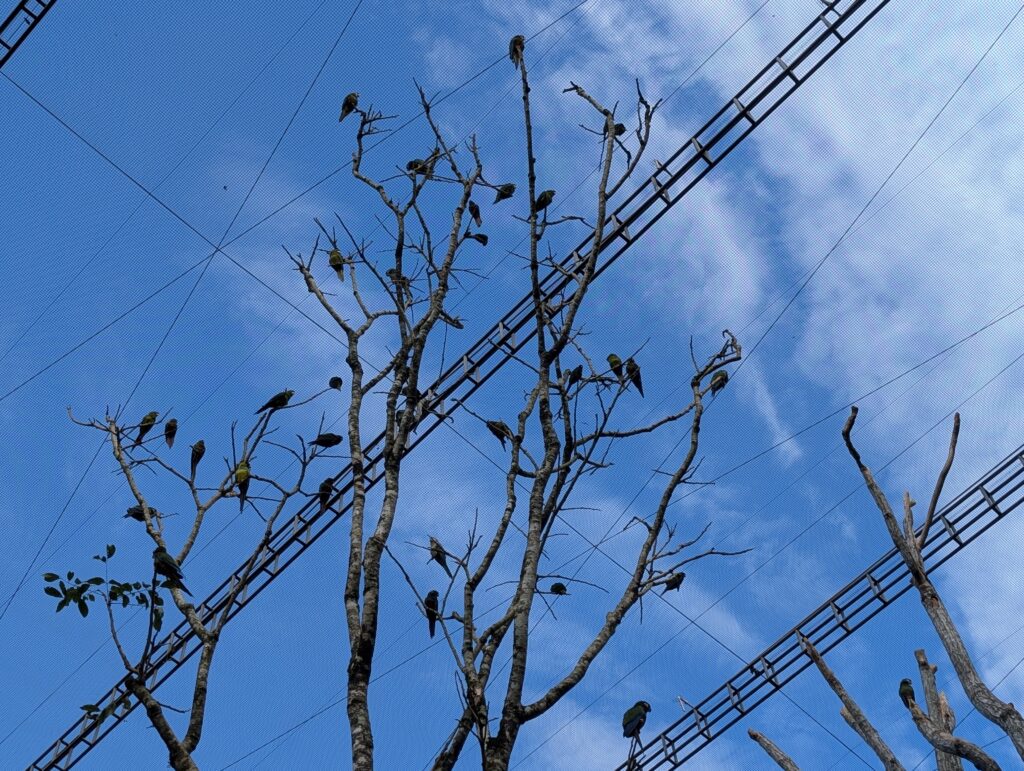
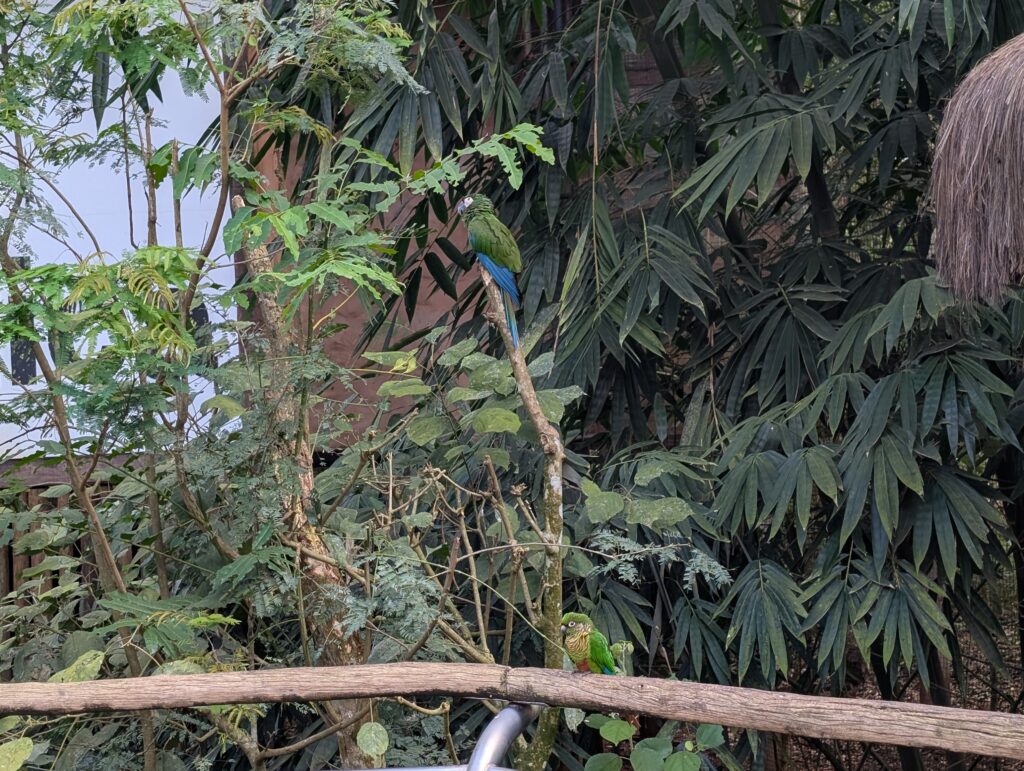
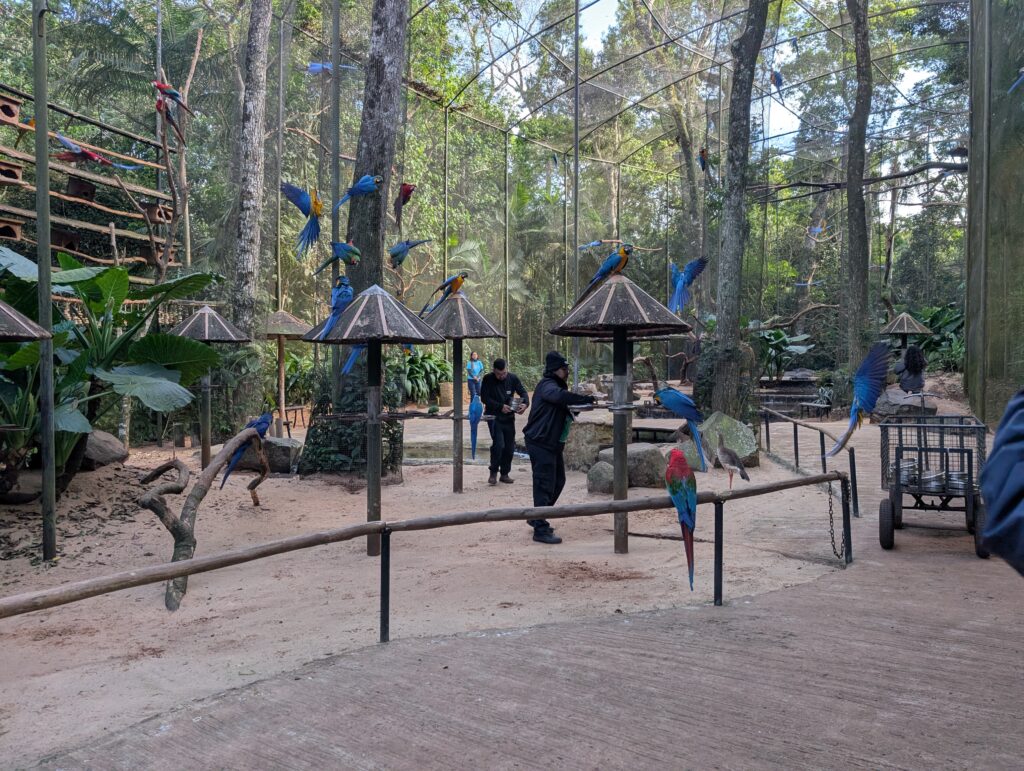
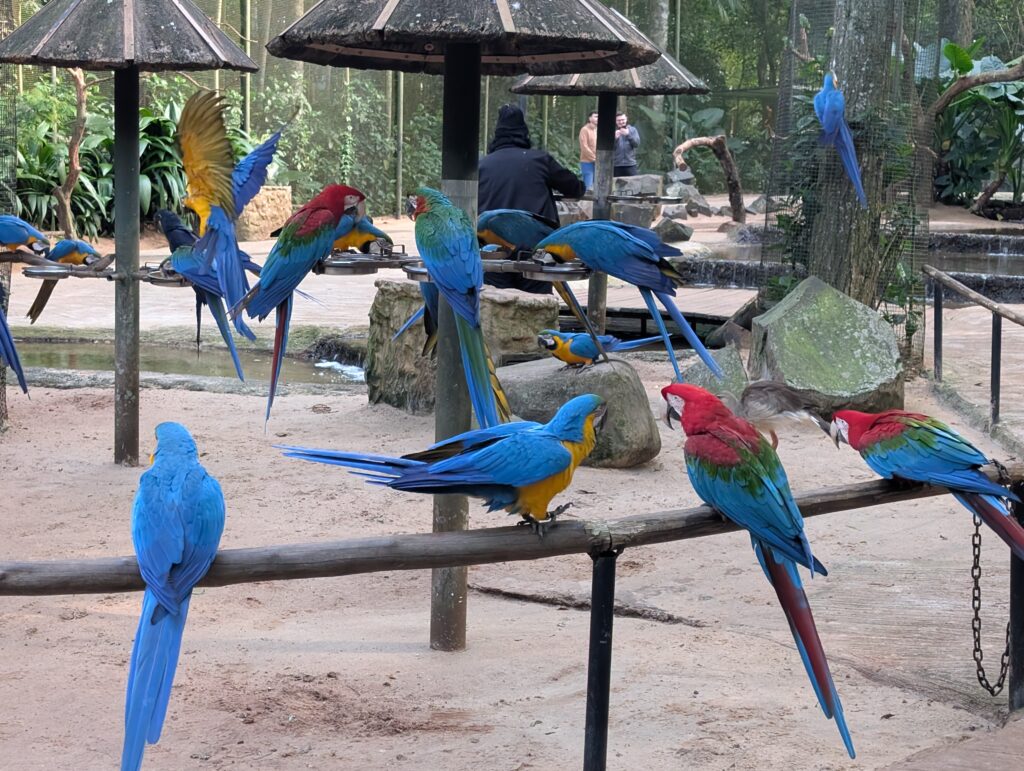
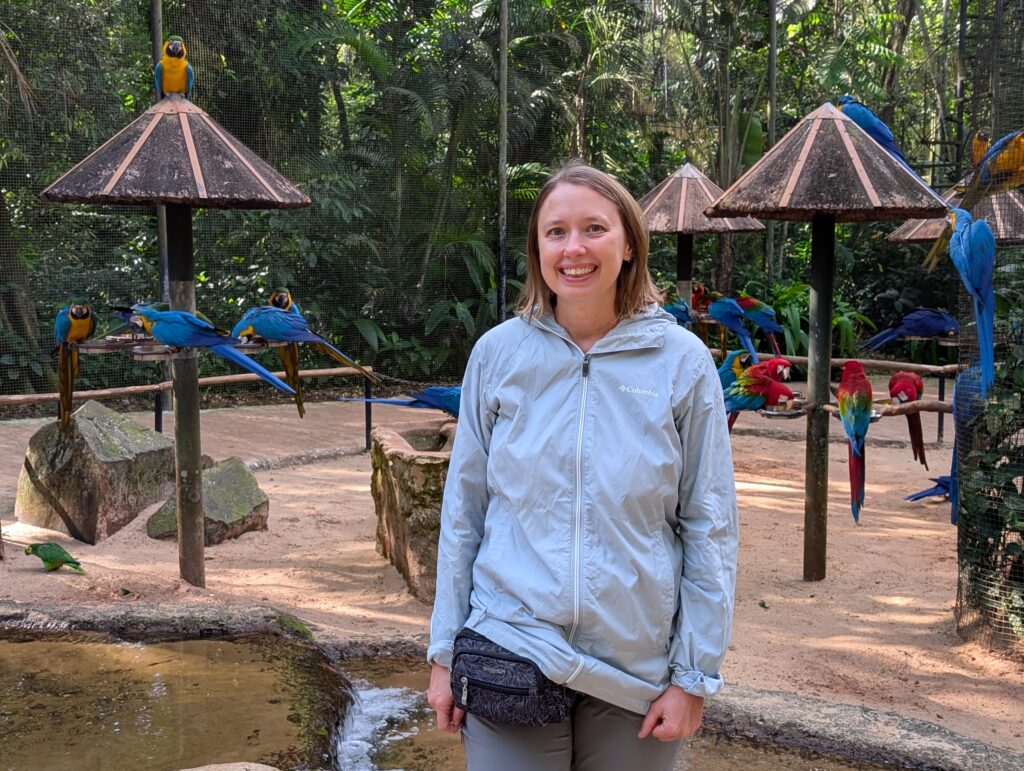
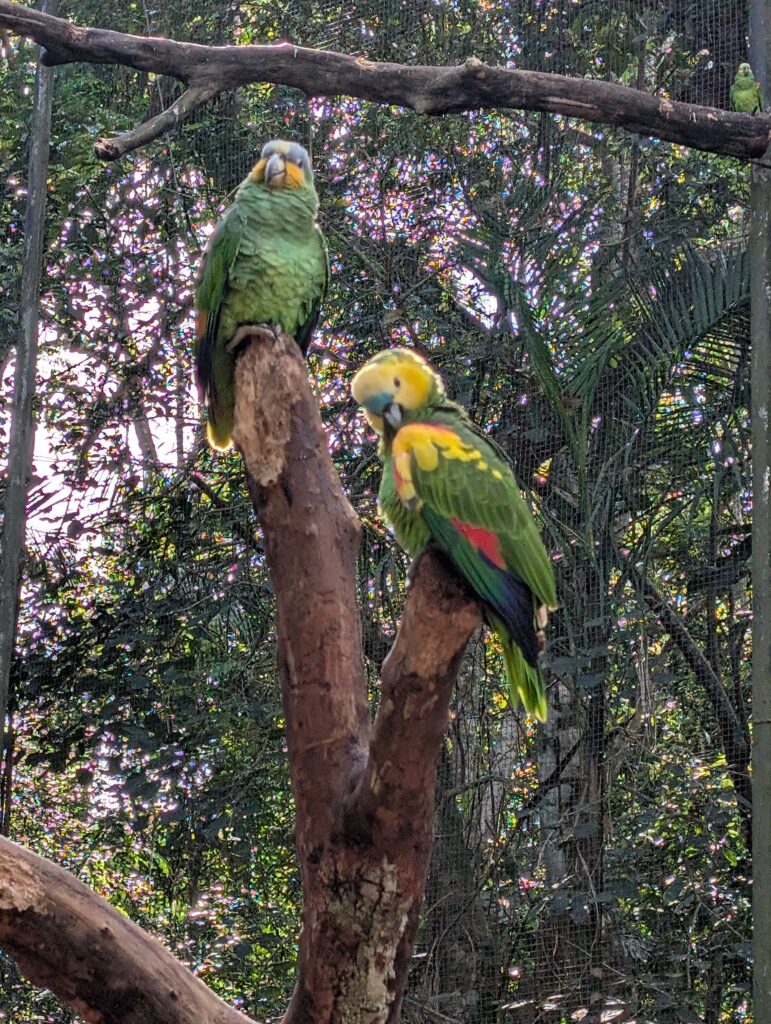
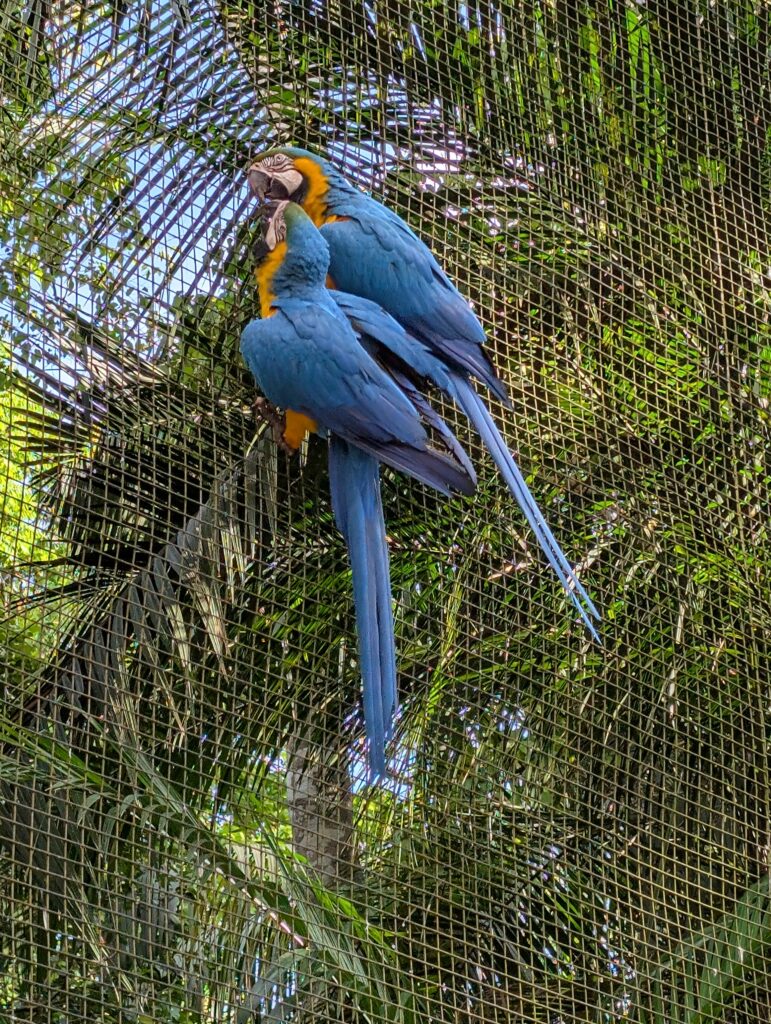
After viewing all the enclosures, we stopped for a coffee for Chad. The timing worked out perfectly with being ready to walk another 10 minutes to the entrance of the national park to arrive a little a half hour before our 11 a.m. entry time.
Parque Nacional do Iguaçu
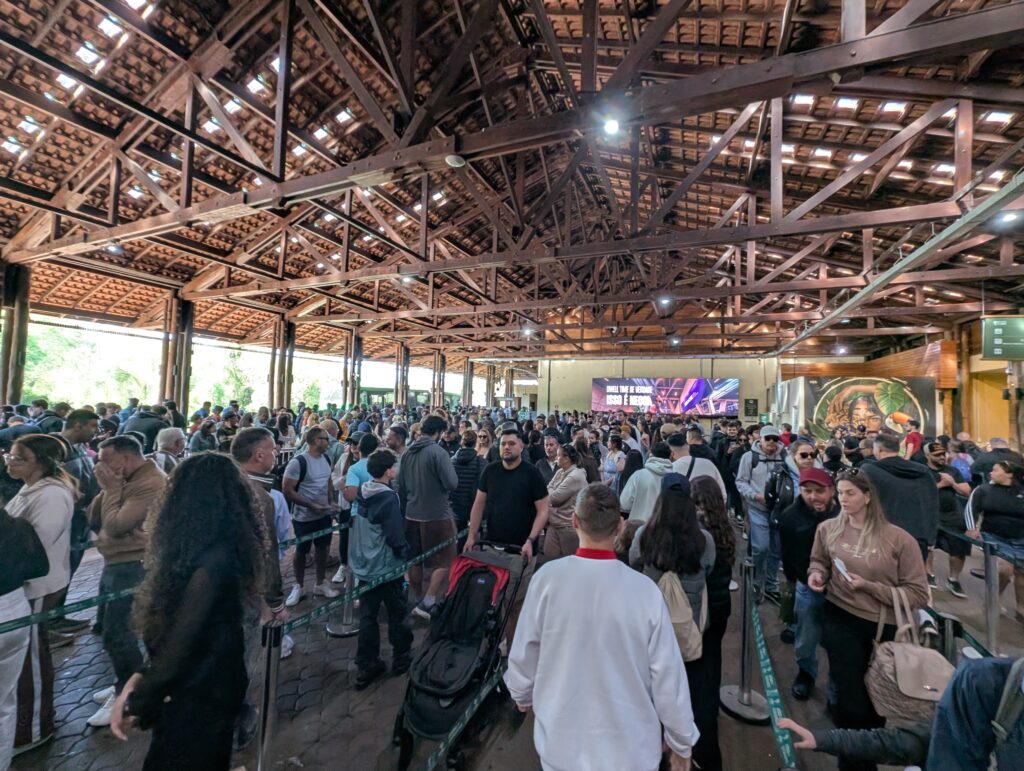
I was glad we got there a little early because the queue to enter the park was very long, though much, much shorter than the entry queue we saw as we were leaving four hours later. But, the line moved reasonably fast and within about 15 minutes we’d had our tickets scanned to board the bus to take us to the path for viewing the falls, about a 20-minute journey. The national park was very efficiently run with good facilities (restrooms, food stands, etc.), so felt like a great value for the admission cost (about $25 per person).
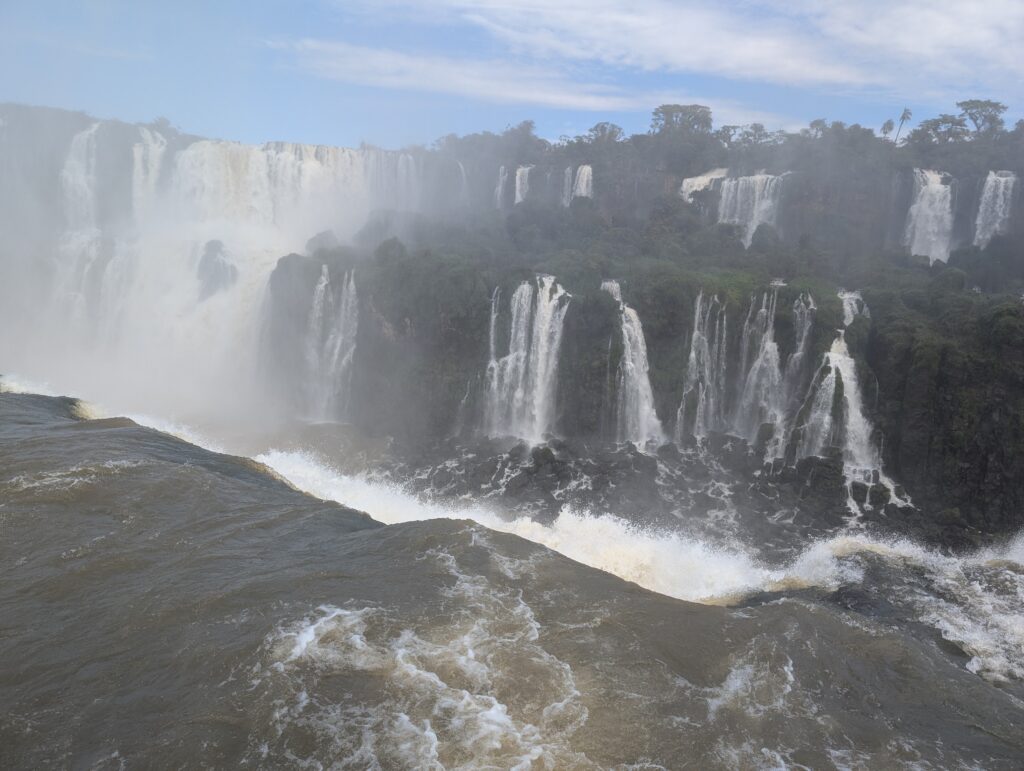
Once we arrived at the stop for the main trail and observation deck, we just followed the signs and the crowds. Almost right away we got an impressive view of the falls in the distance. Then we came up to another observation deck crowded with both people and coatis, a raccoon-like animal that is very common in that part of South America. Though I still have a pretty intense fear of raccoons, I’d mentally prepared myself for all the coatis walking around and was fine with them.
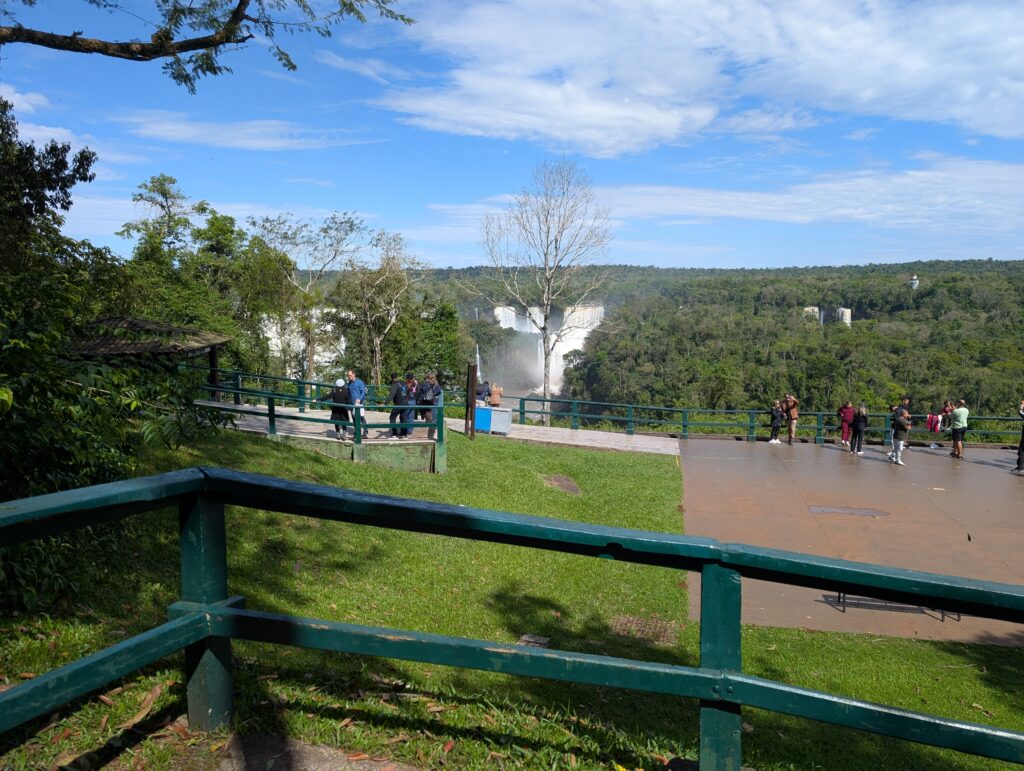
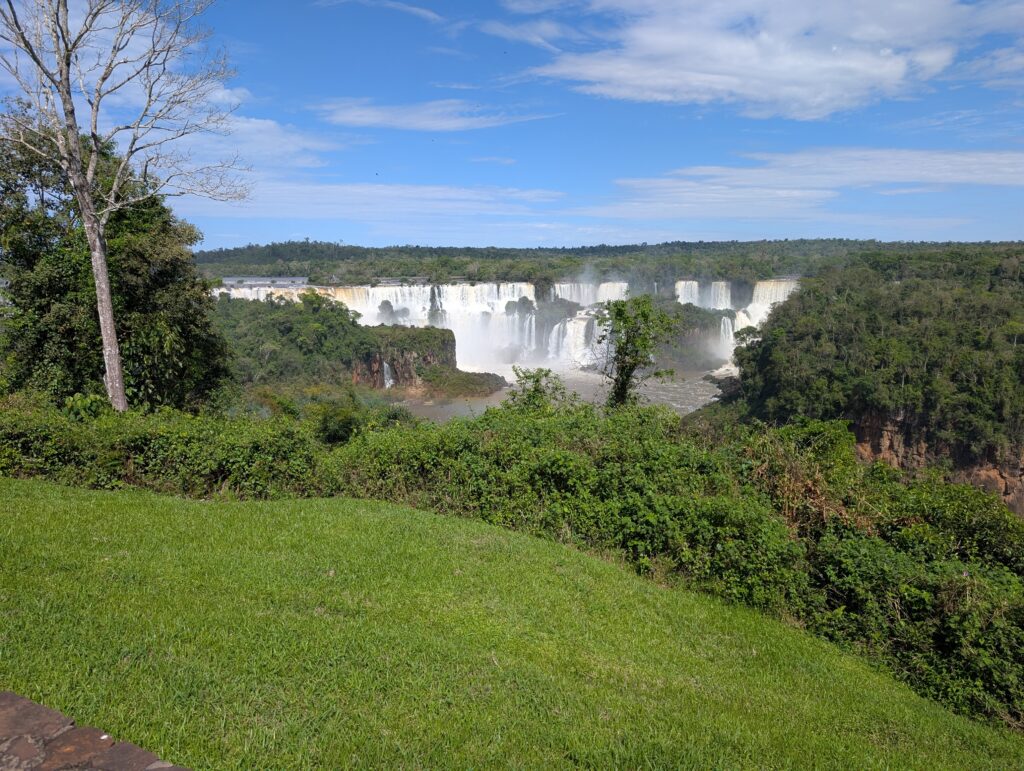
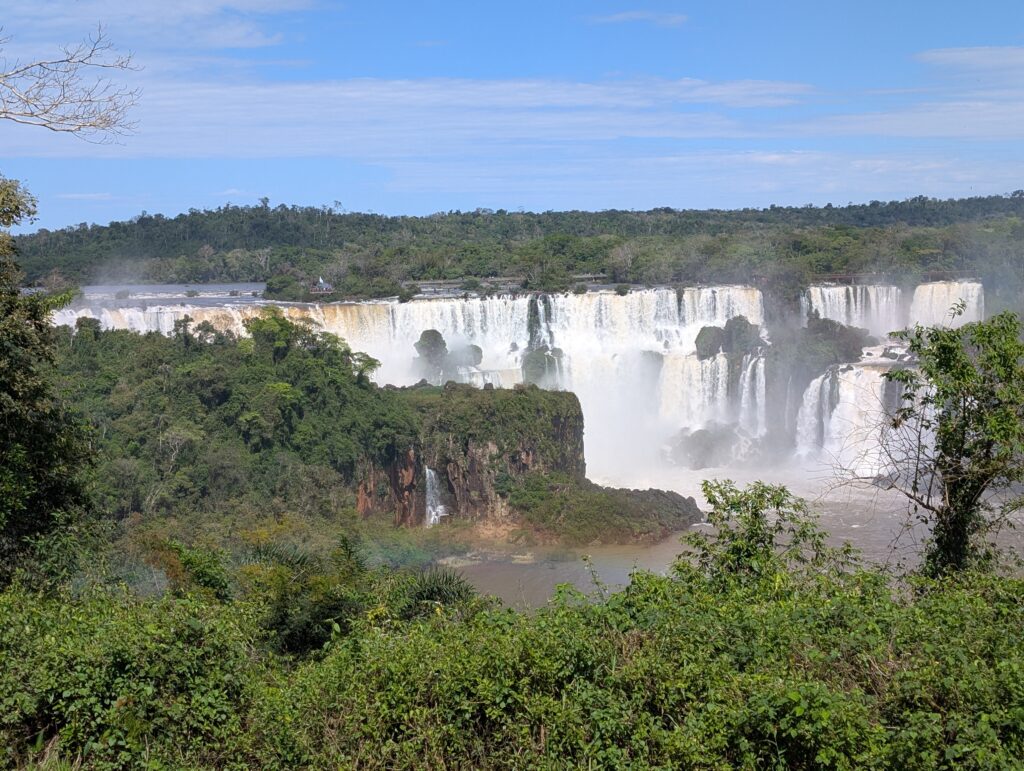
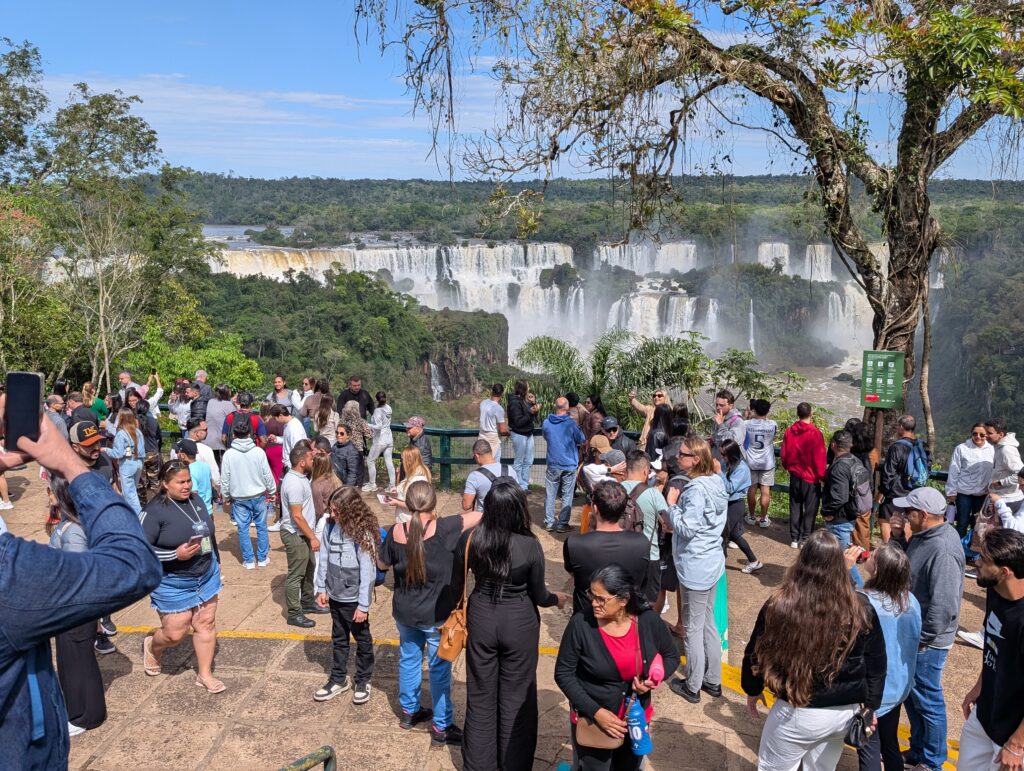
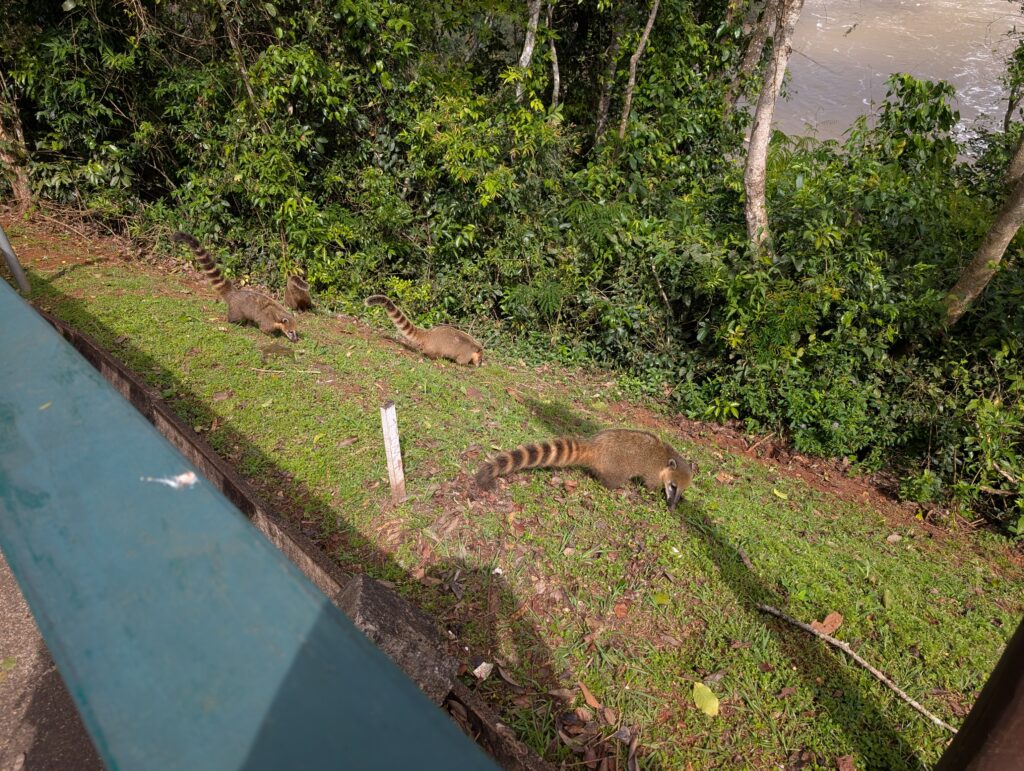
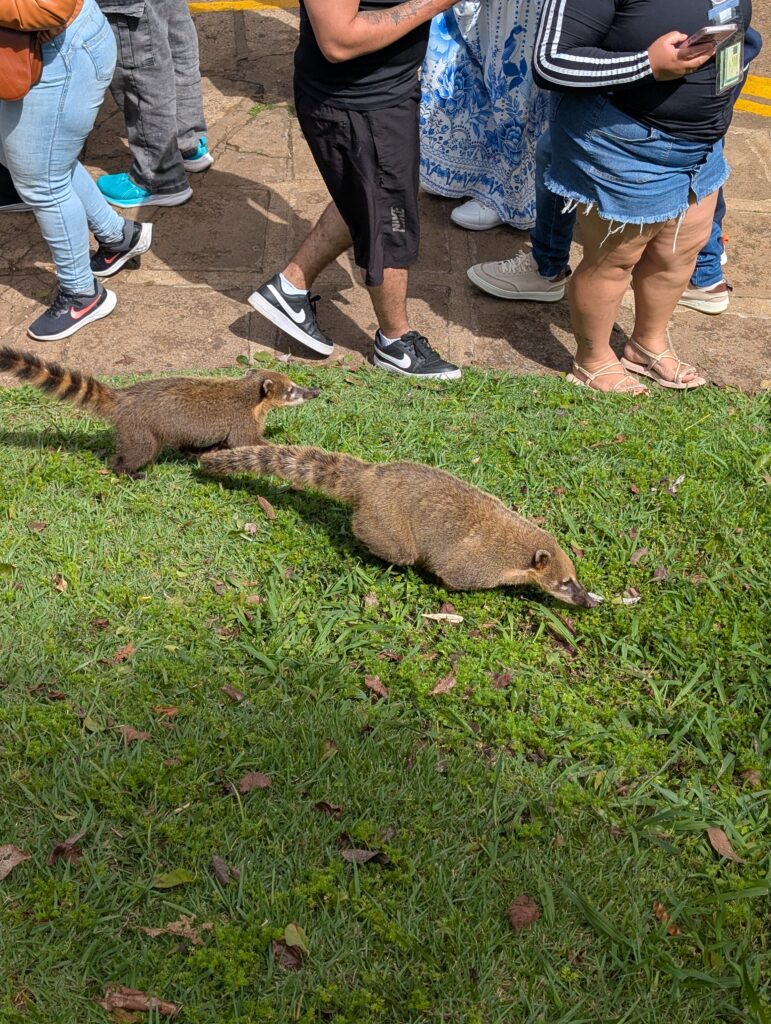
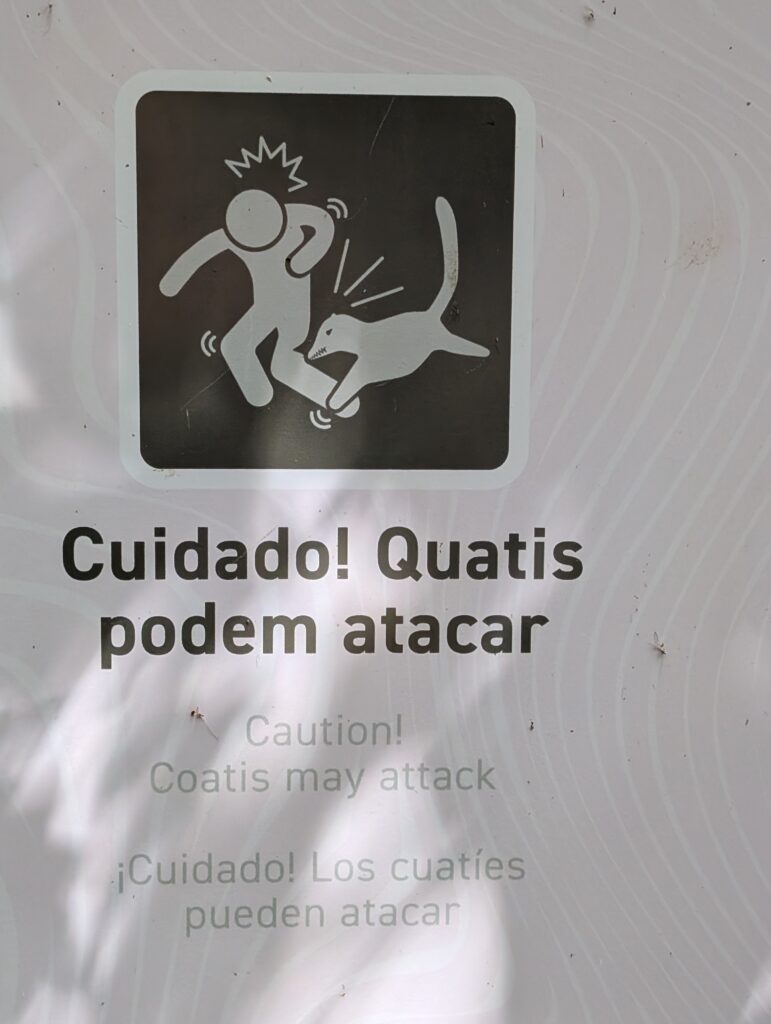
As we took the path past more and more falls, the views got better and better. We wore our rain jackets both because it was a little chilly out and knowing there’d be some residual spray from the falls here and there. Most other people wore full-on ponchos. I hadn’t done a lot of research beyond the basic logistics so what I didn’t realize is that the end of the trail takes you right out into the falls. It was an incredible experience and our rain jackets kept us dry enough, except for our legs. Luckily the early afternoon was reasonably sunny so they dried quickly.
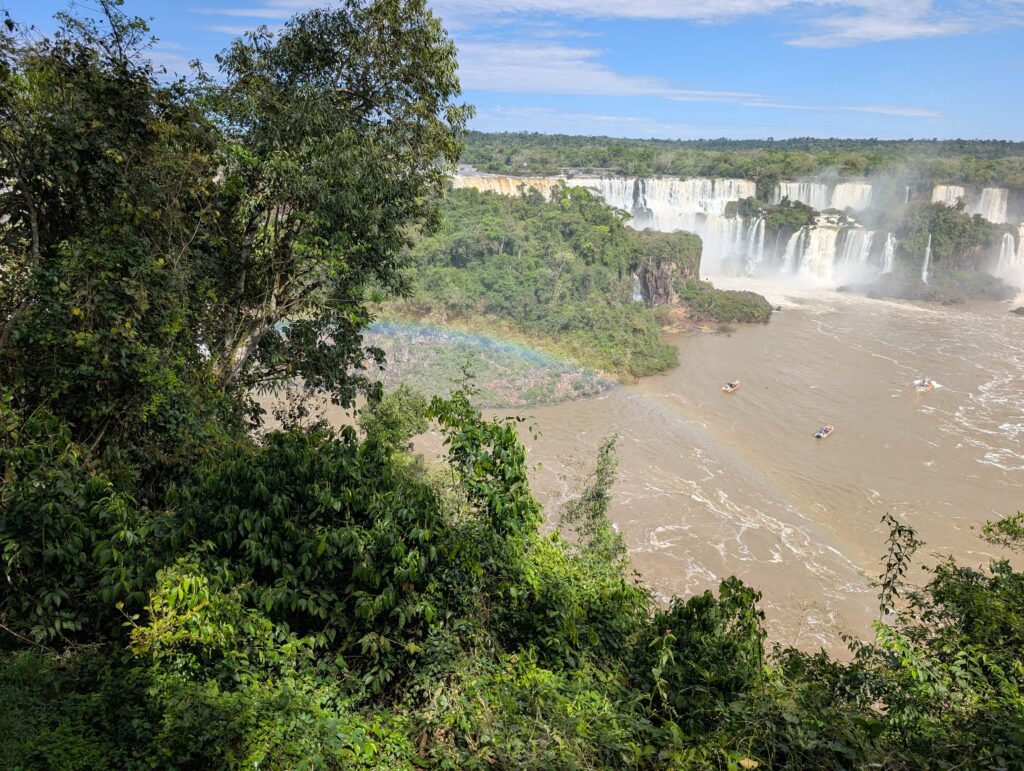
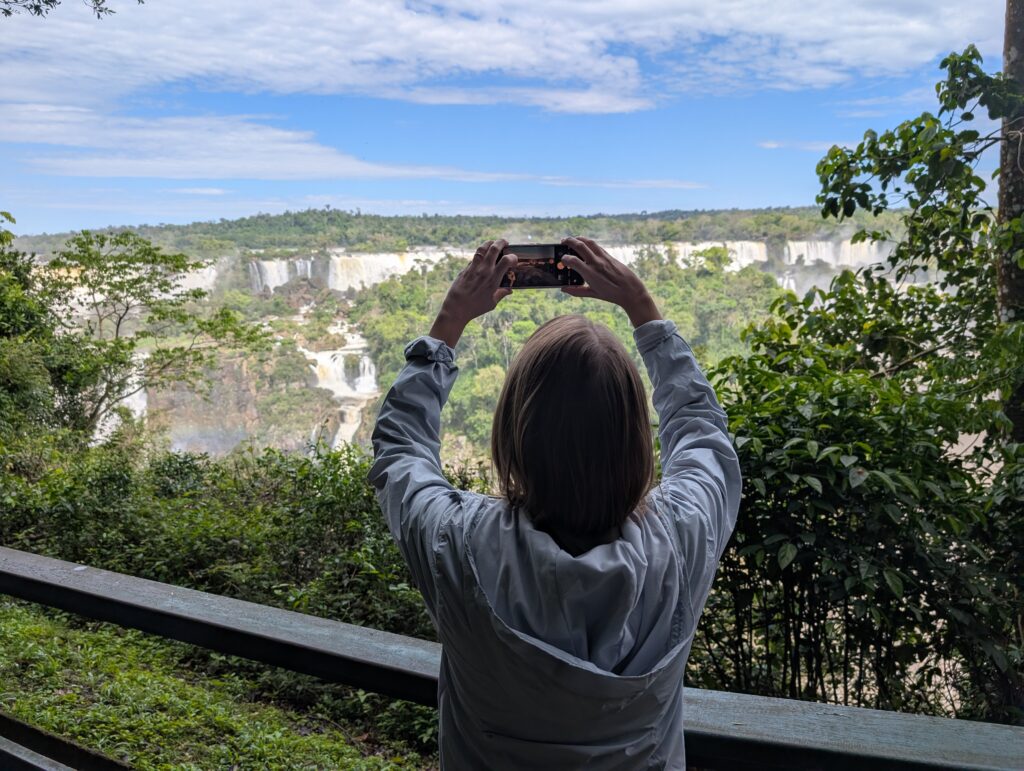
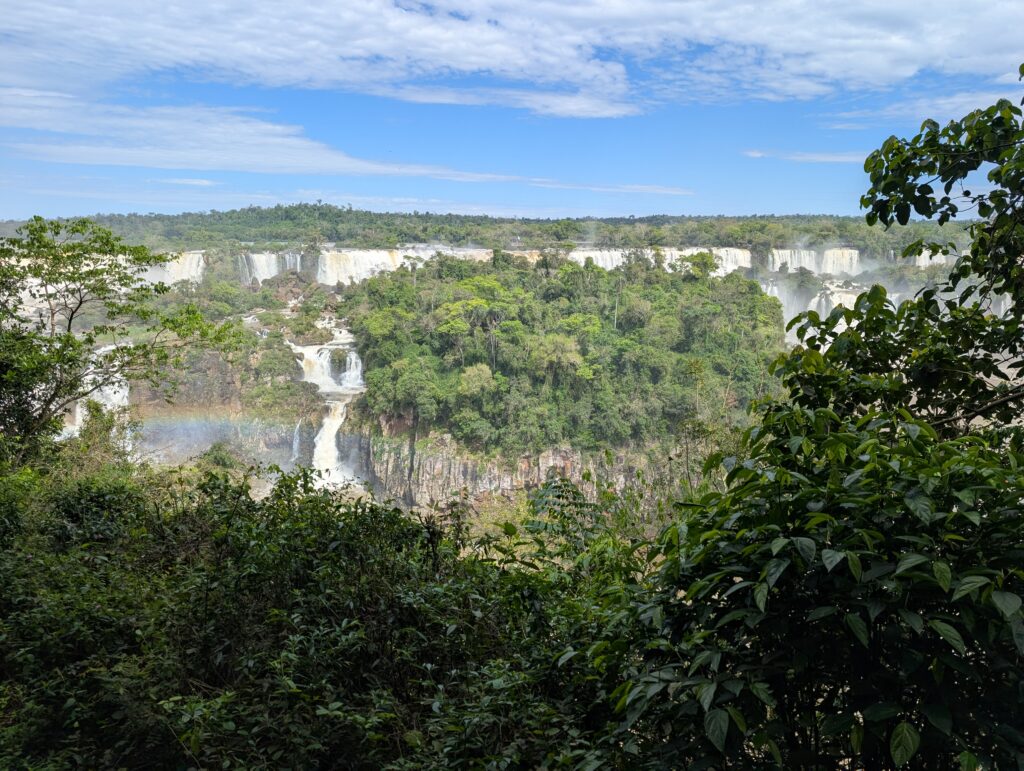
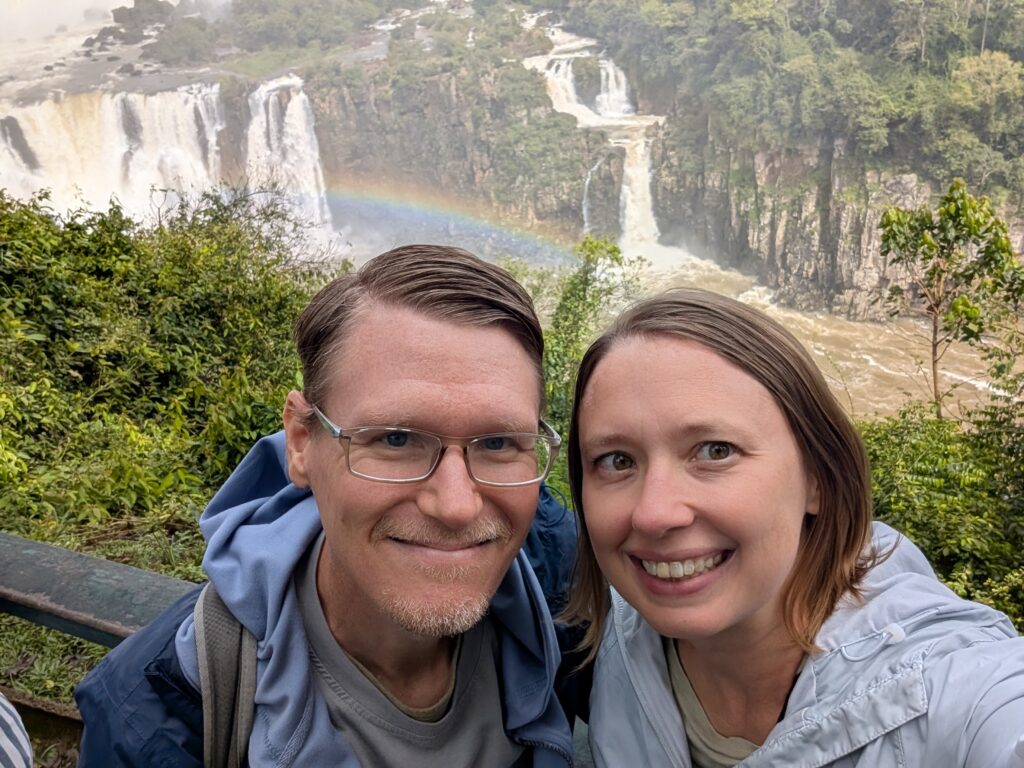
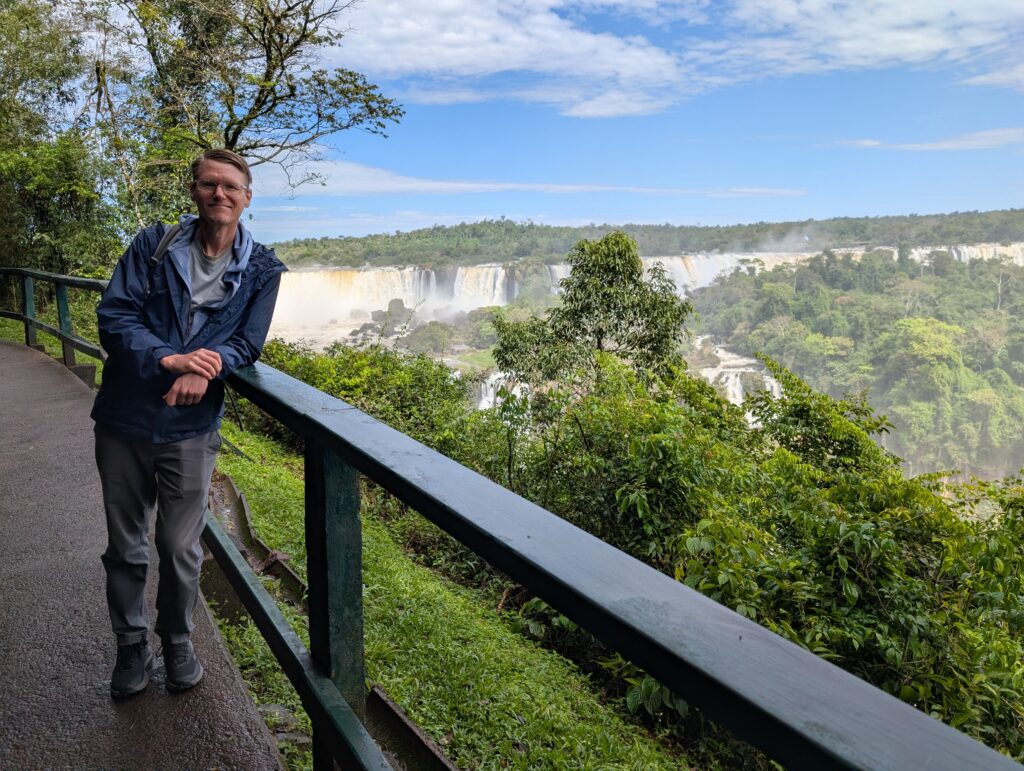
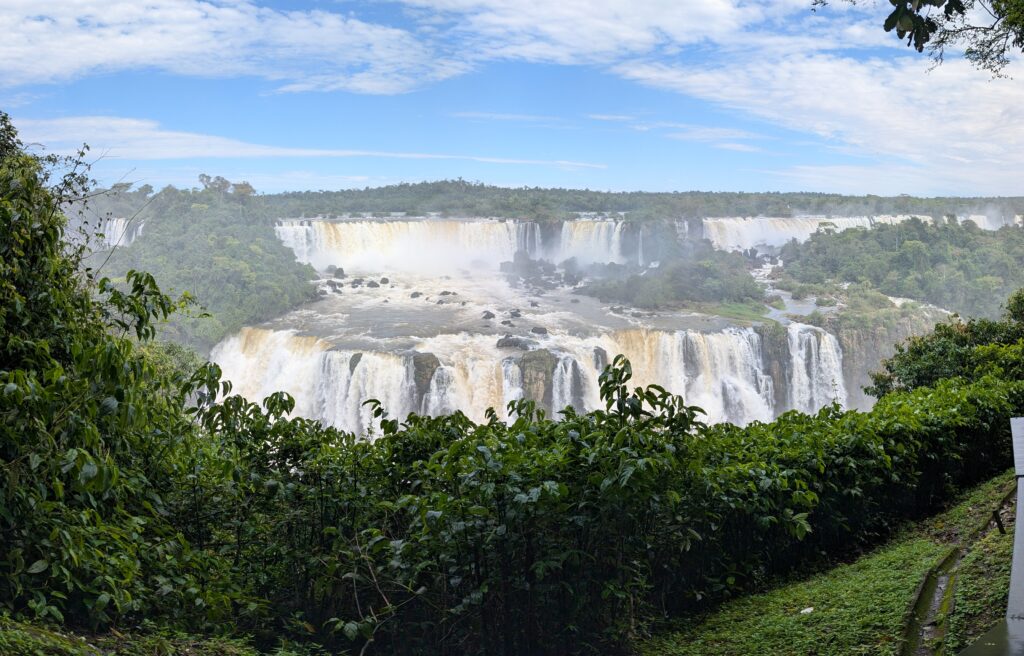
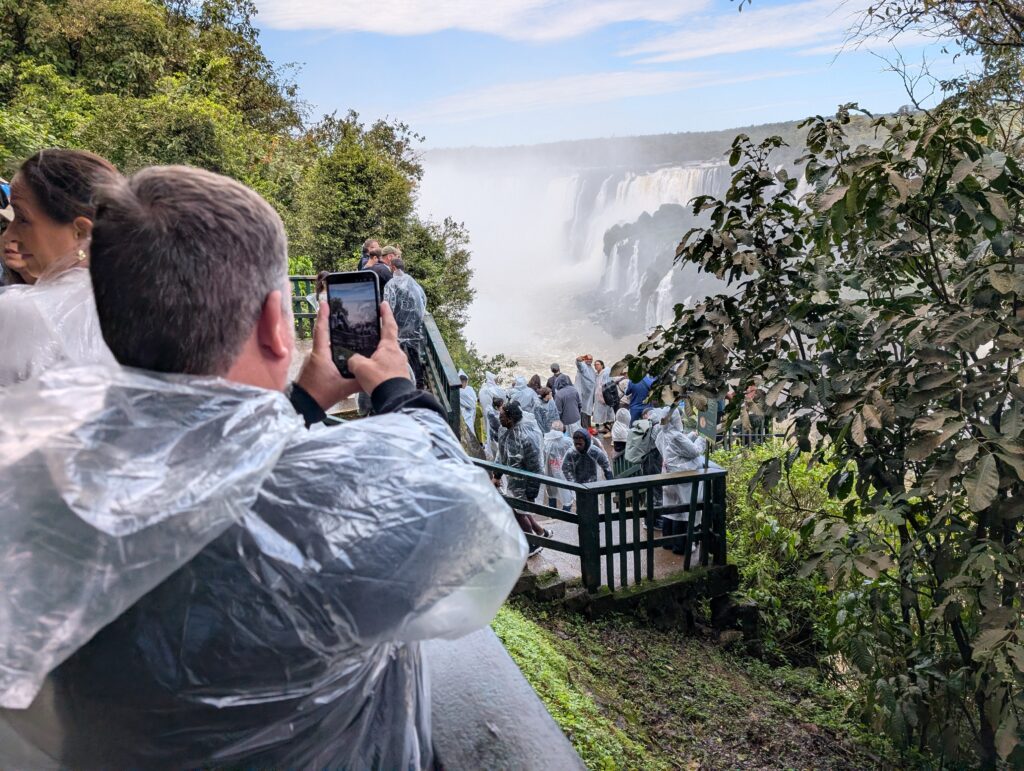
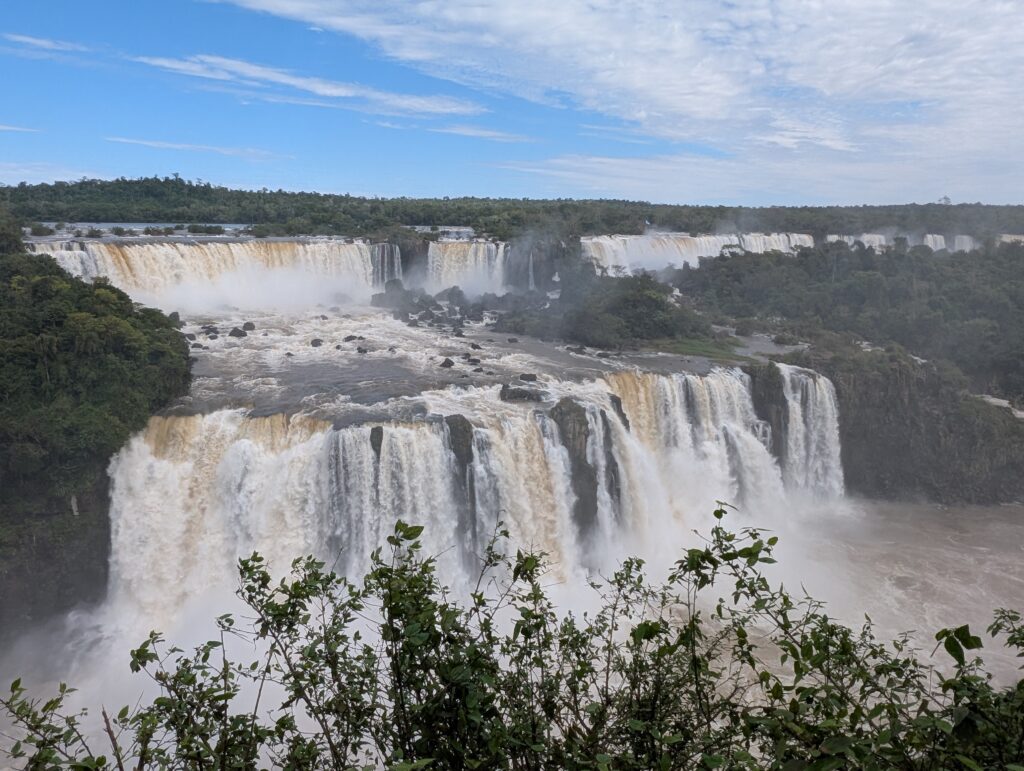
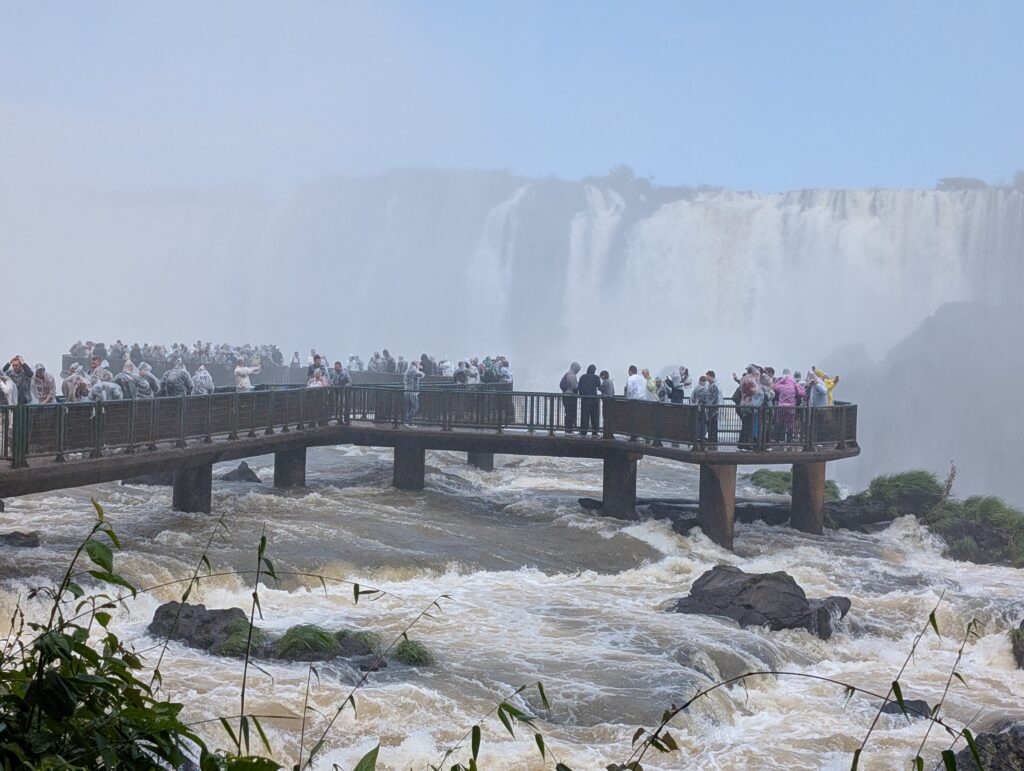
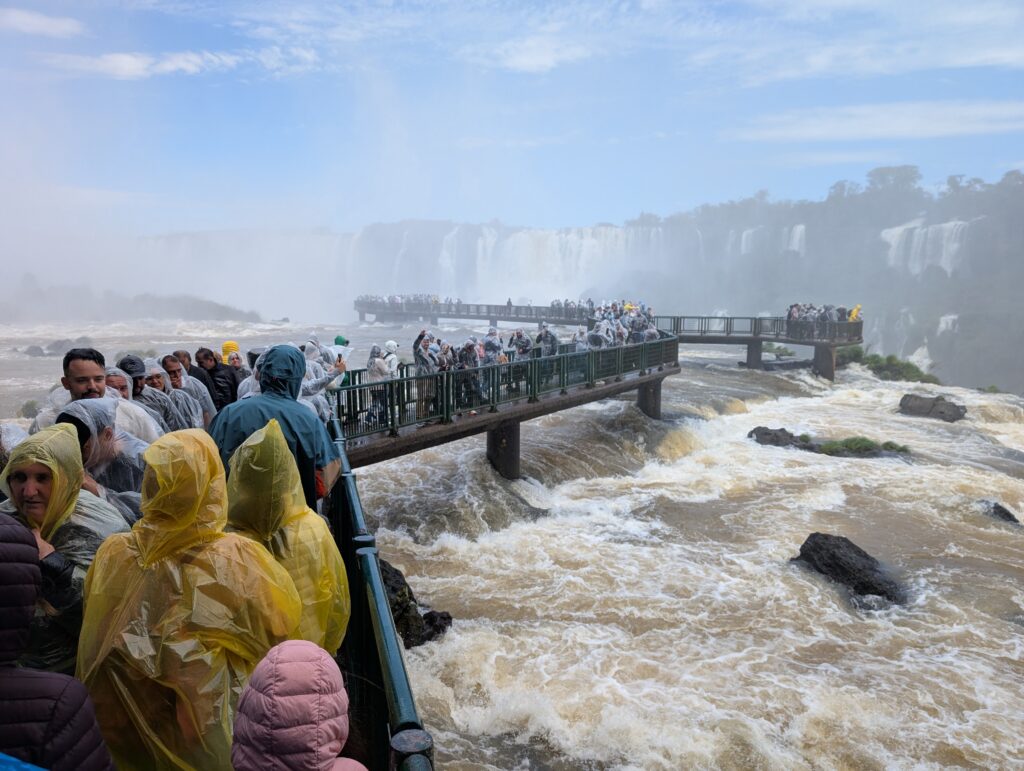
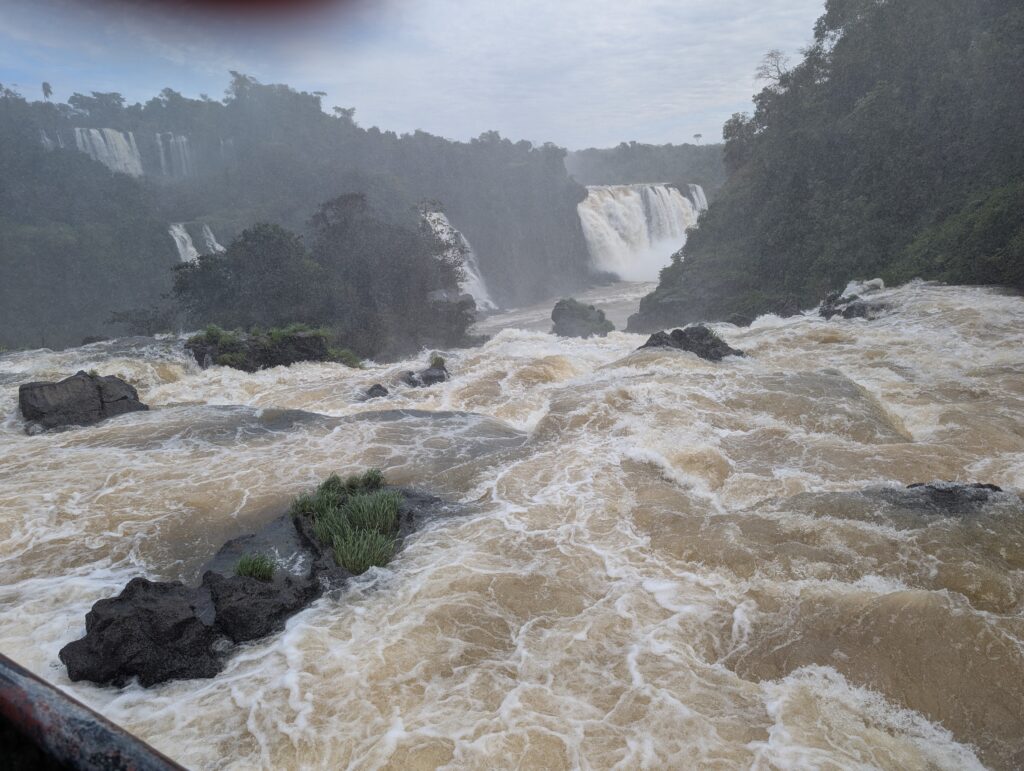
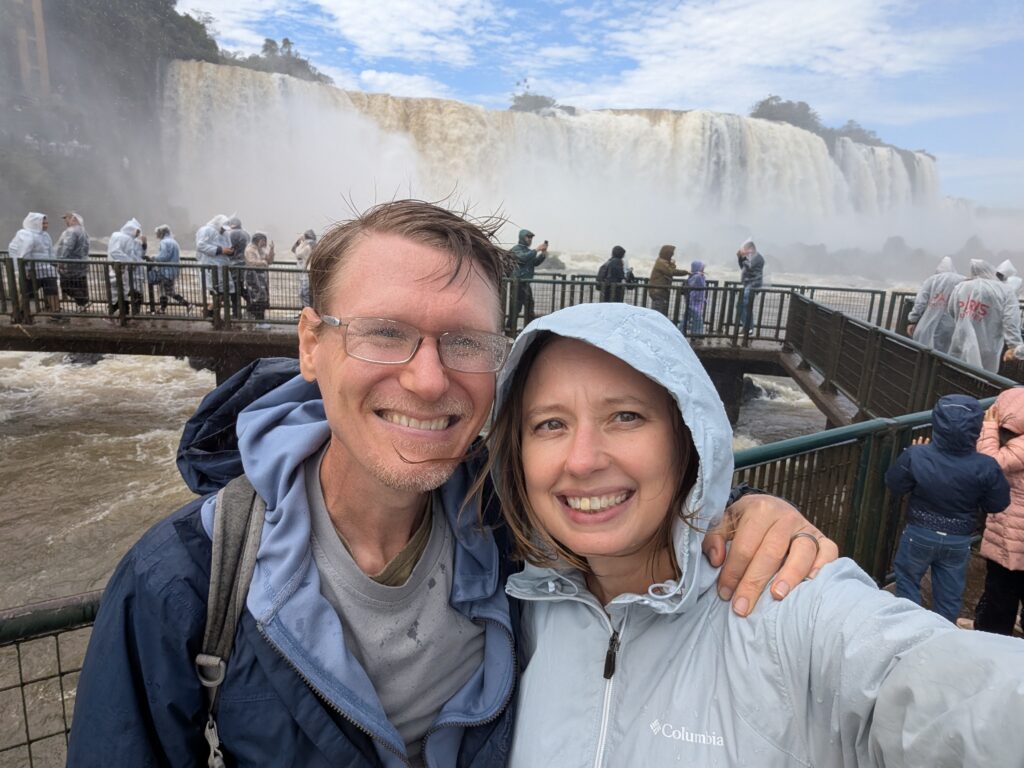
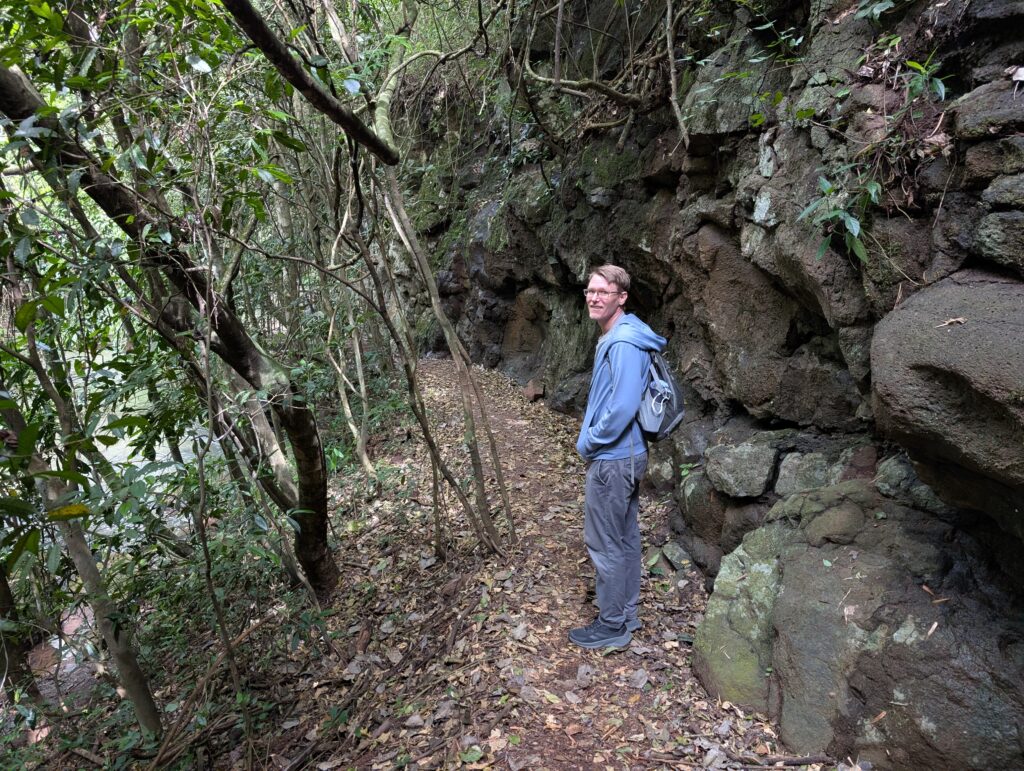
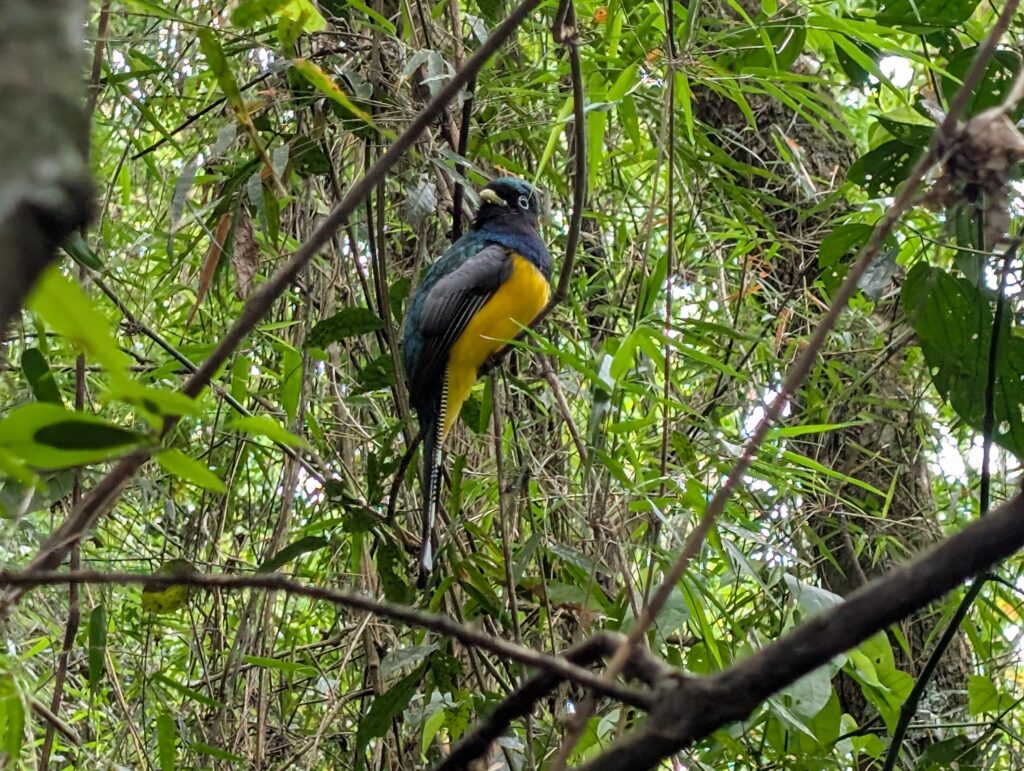
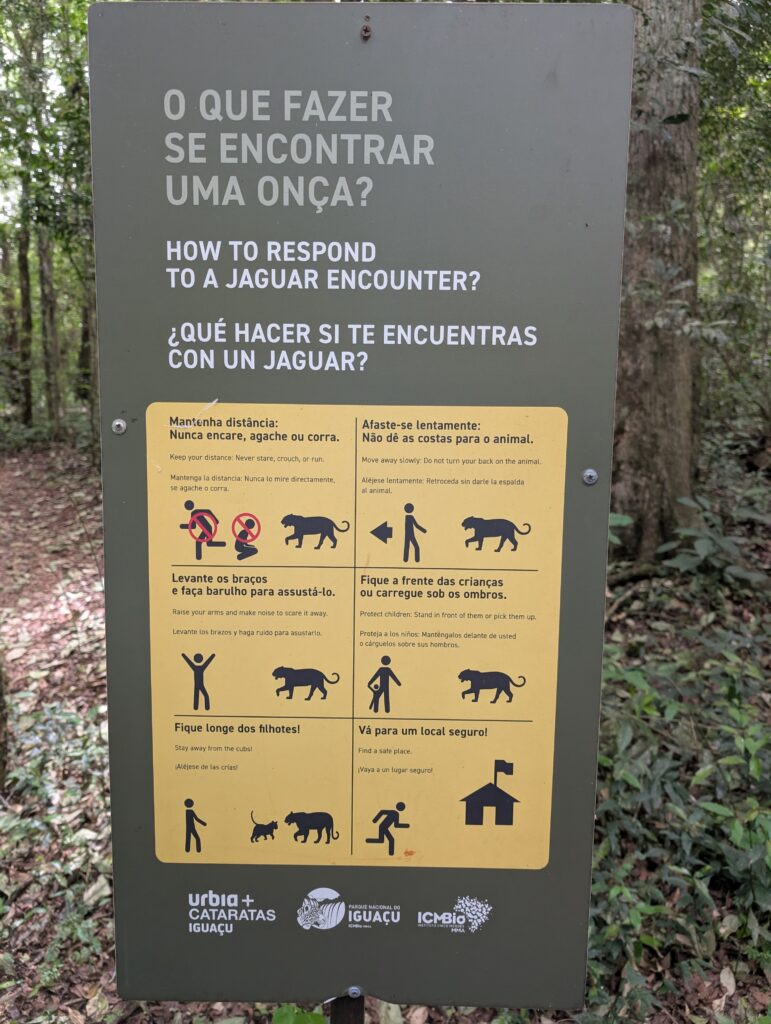
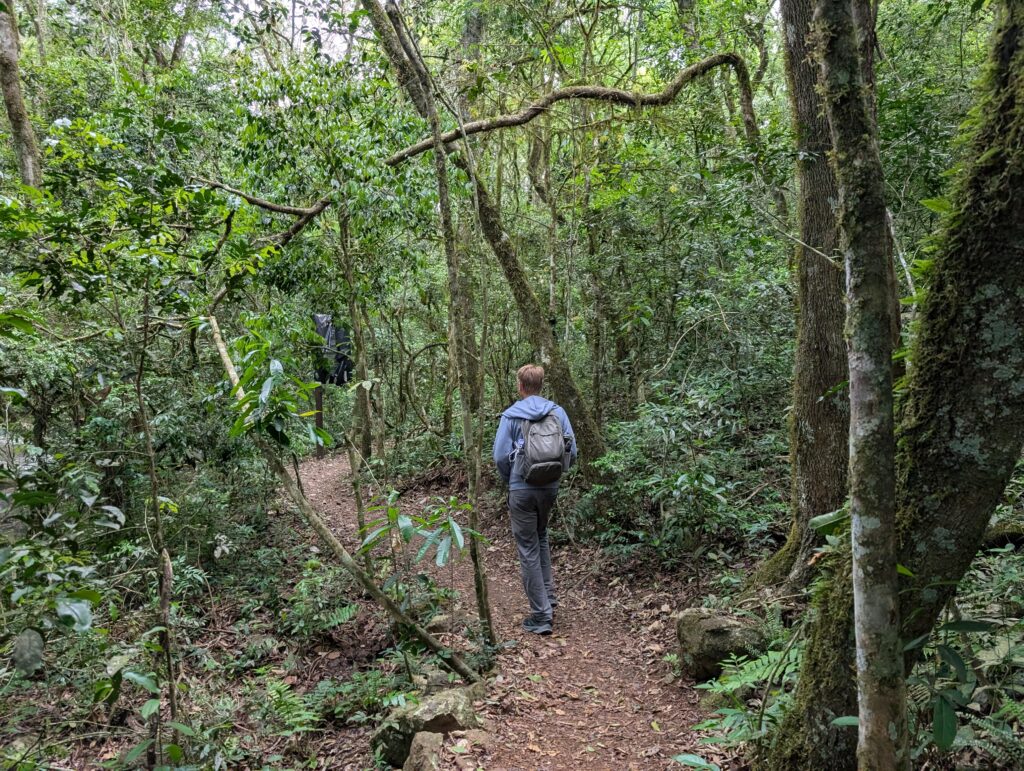
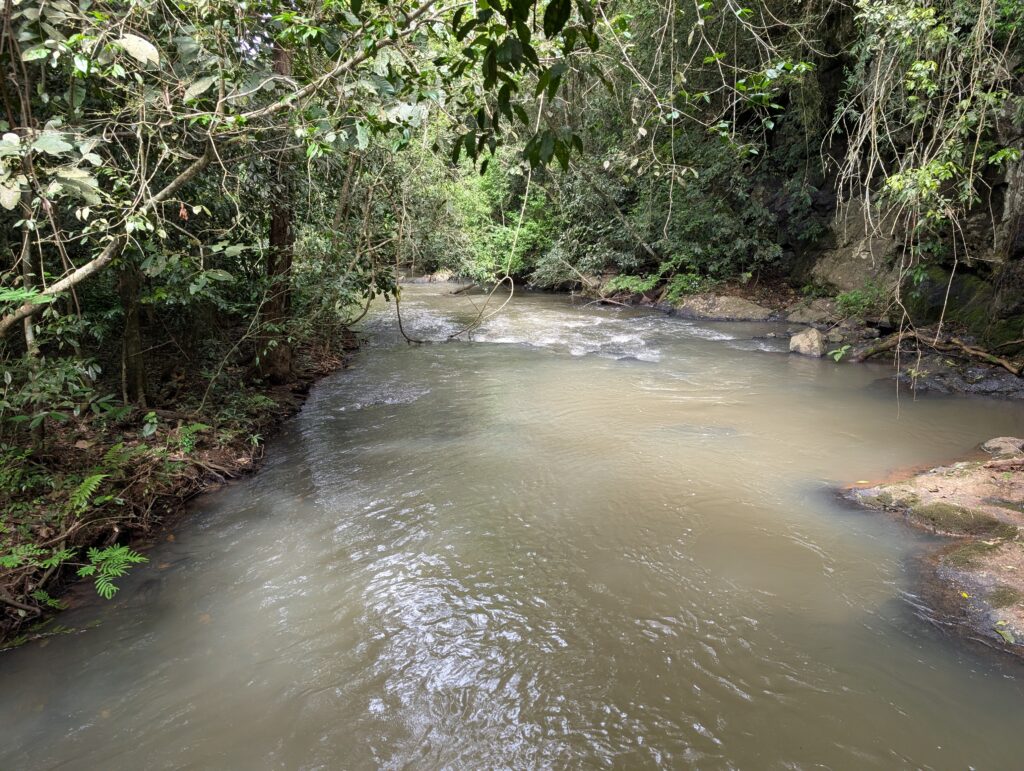
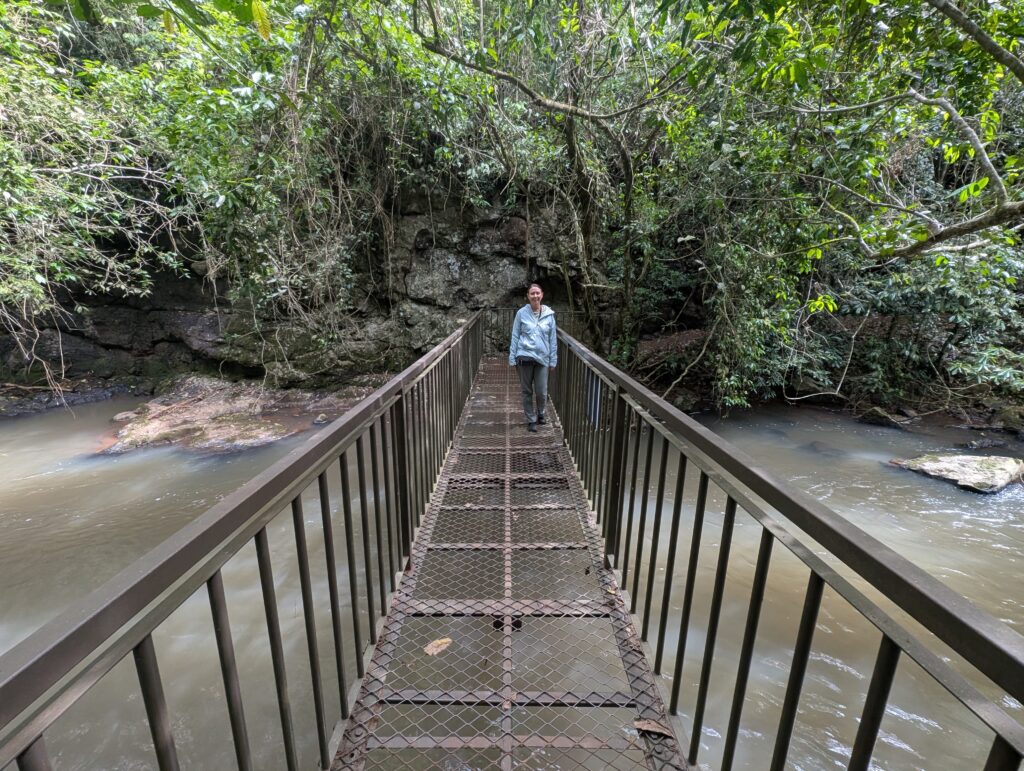
After the falls and a restroom and snack break at Porto Canoas, the facilities at the end of the path, we boarded the bus to go back toward the entry, but got off at the Circuito São João stop to enjoy a little hike. I made sure to note the signs at the entry for how to respond to a jaguar, but luckily we didn’t encounter one. Not information I ever thought I’d need but best to be prepared! We encountered only a dozen or so other people on the trail, so most people seem to focus on just visiting the path to the falls. It wasn’t a long hike (maybe a couple miles) but really enjoyable and worthwhile.
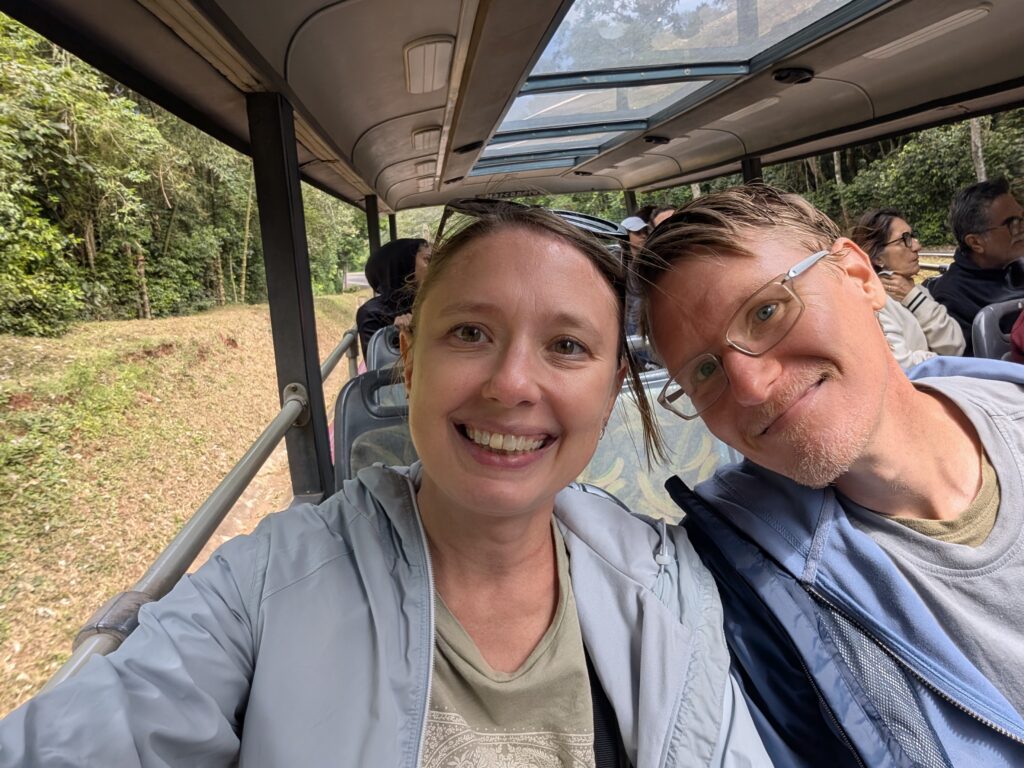
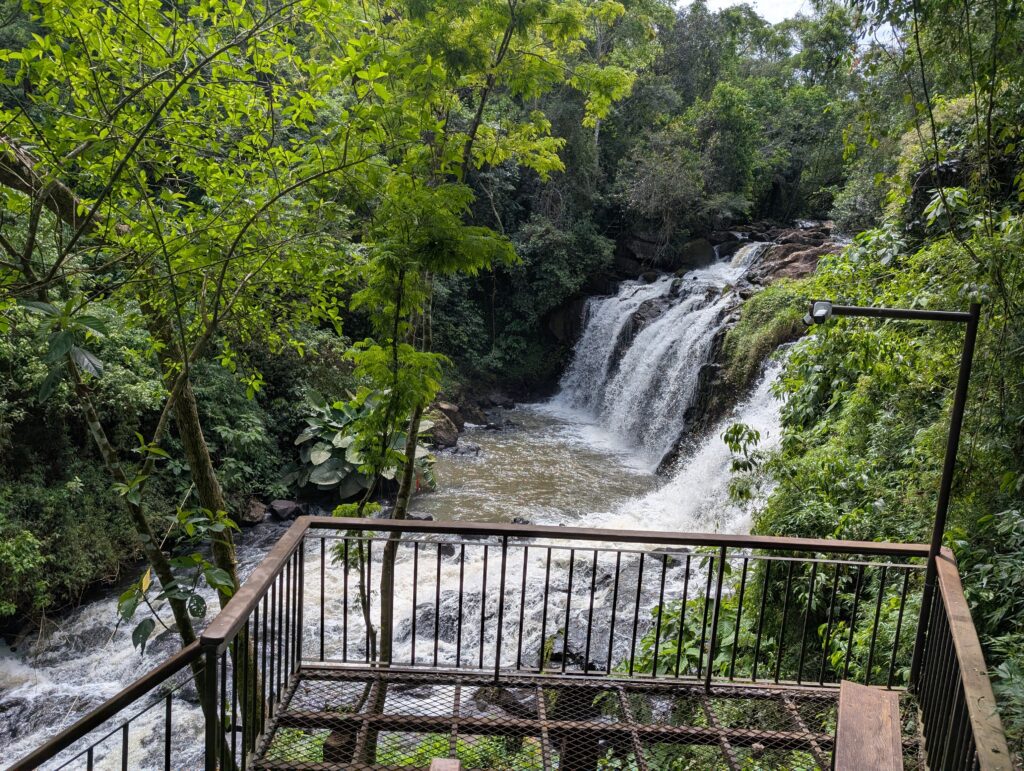
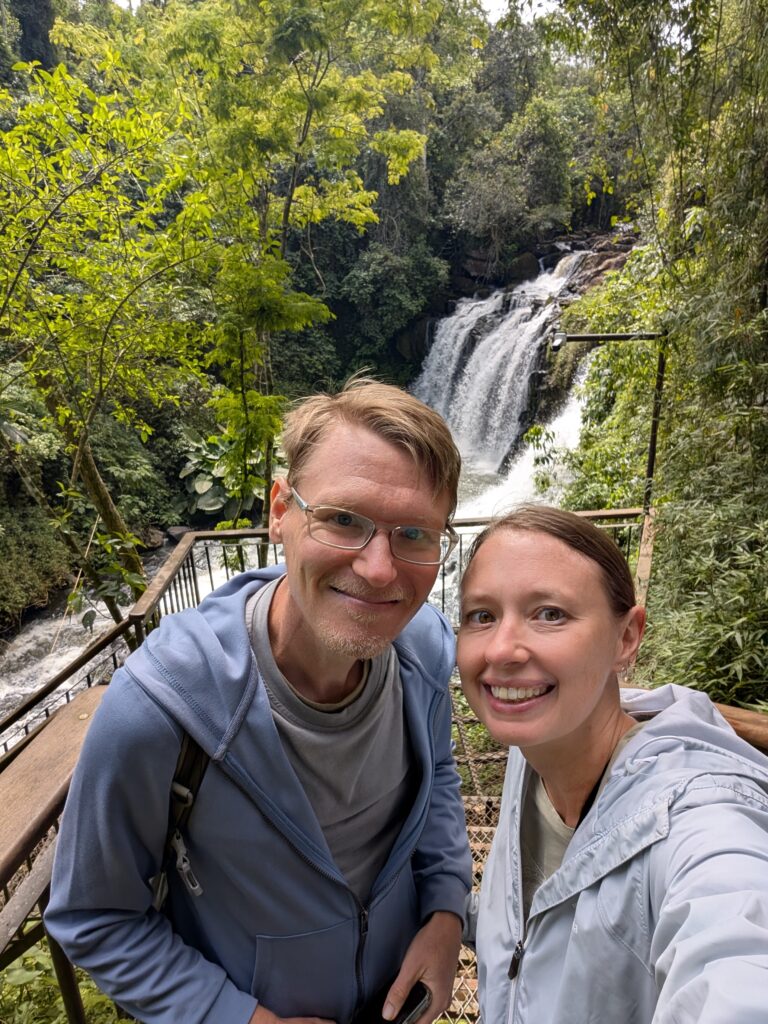
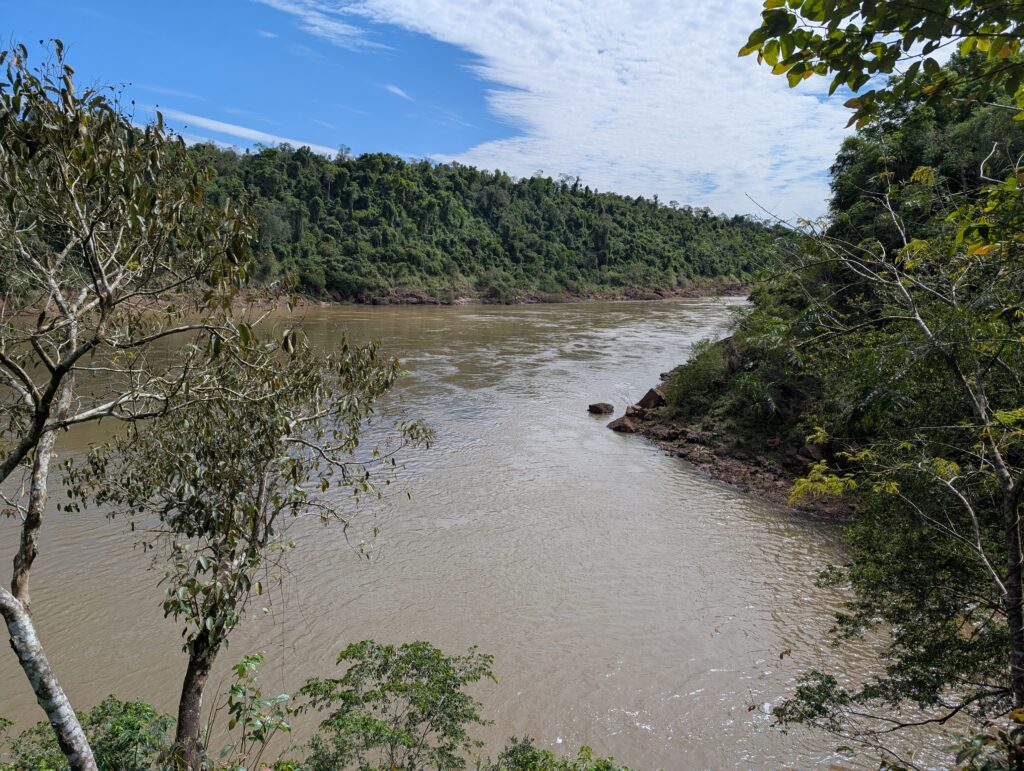
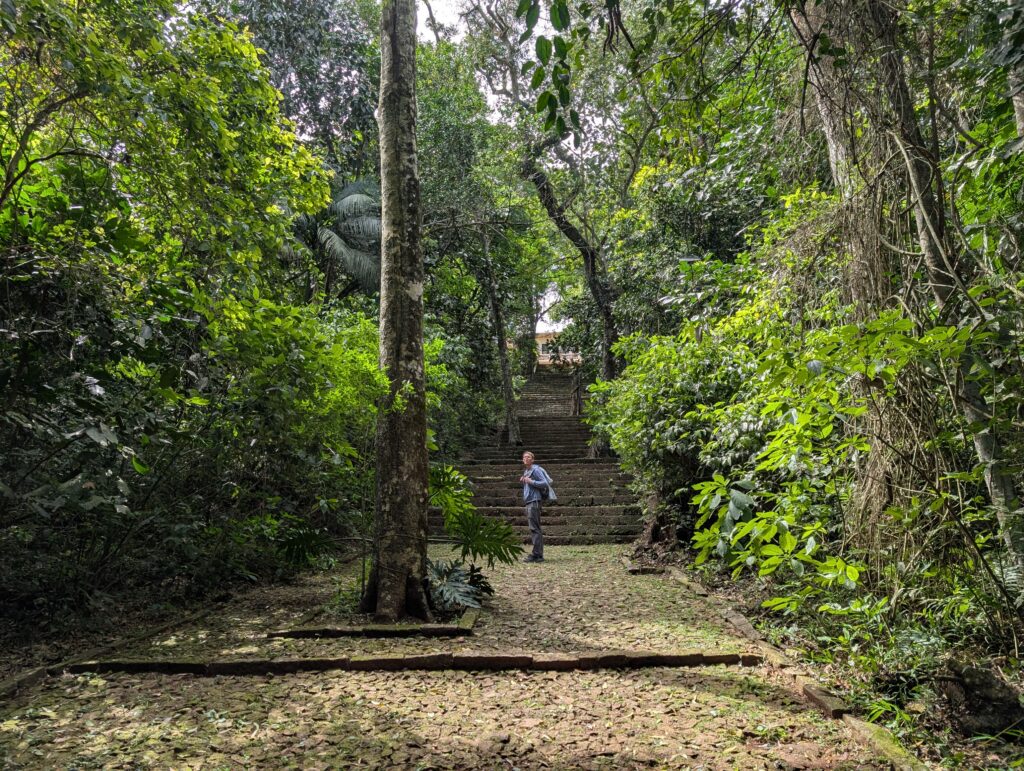
After the hike, we got back on the bus to return to the entrance and walk back to the eco-hostel. I’d made arrangements with them for our transportation to Argentina that afternoon at 4 p.m. We rested in the lobby while waiting for the driver. Although it was less than 10 miles to drive from our hotel in Brazil to our hotel on the Argentine side, it took over two hours. That was reflected in the price of the private transfer, which was 350 reais (about $80) but well worth it to not have to negotiate a taxi or navigate the bus system, though there is a public bus from the company Rio Uruguay that goes between the two towns.
Arrival in Puerto Iguazú
Once we finally crossed the border into Argentina, it took about 10 minutes for our driver to drop us off at our hotel (review below). The owner/manager was at the front desk to greet us and check us in. He was very friendly and kind and even spoke a little English. After a little rest, we headed out to check out the town and try to get some additional cash from an ATM. I’d exchanged just over $100 worth of reais for pesos at the cambio on the Brazil side but needed to be able to pay our two nights at the hotel in cash.
Last time we came to Argentina, I’d come prepared with a couple thousand dollars in crisp new $100 bills to exchange at the cambios, which was the recommended option at the time. However, we found then that ATMs and credit cards were providing a slightly better rate, especially since our bank reimburses all ATM fees, even the super-high ones in Argentina. For this trip, because there was a lot to deal with getting to Brazil (including applying for a visa online and our multi-stop flight itinerary), I didn’t even think about researching money options for Argentina, so I didn’t bring any US $100s to exchange. I think being able to exchange at the cambios would have simpler but we’re getting an ok rate at the ATMs, 1430-1460 pesos per $1. However, not all Argentine ATMs work with international debit cards and they frequently run out of cash, so I was anxious to try to get more cash when we arrived on the Argentine side, especially because a couple of years ago, many restaurants were cash only.
After a couple of tries, we got an ATM to work and swallowed our disgust at the 17,000 peso plus fee (over $10) knowing our bank will reimburse it. It turned out we didn’t need the cash too badly. Most places accept credit cards now, including our hotel that had come up as cash-only when I booked it. Using ATMs has worked out okay in the six weeks we’ve been in Argentina. Western Union has a slightly better rate (around 1500 pesos to $1) but I couldn’t get it to work with my credit or debit card and haven’t planned far enough in advance to try a bank transfer that takes up to four days.
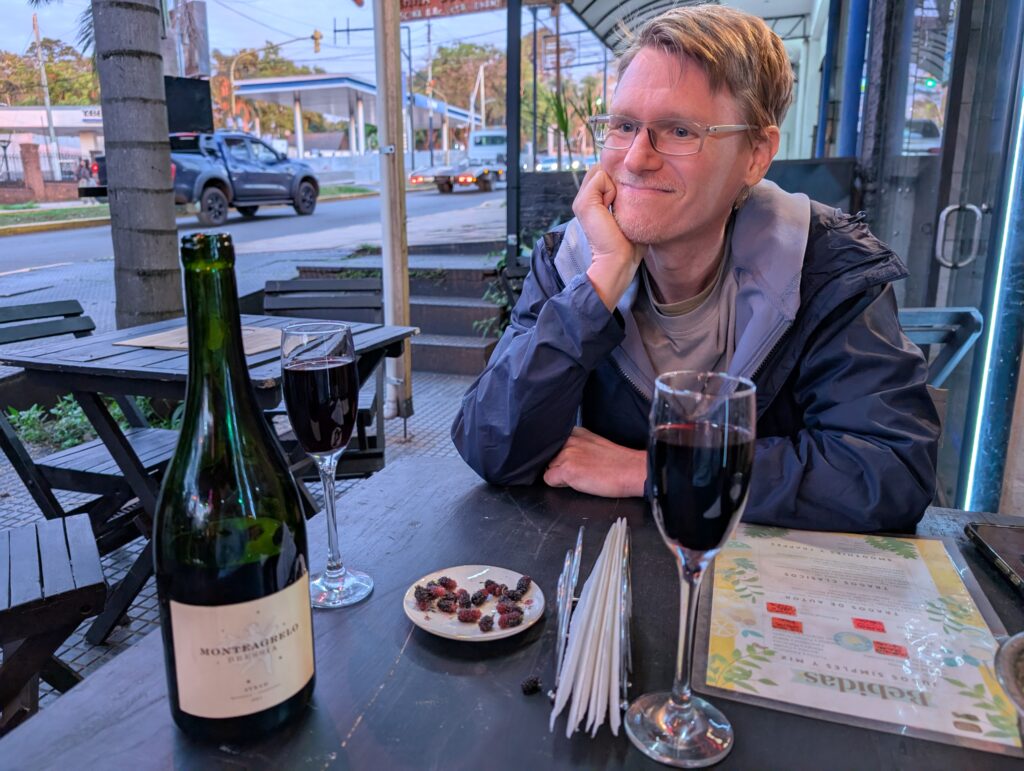
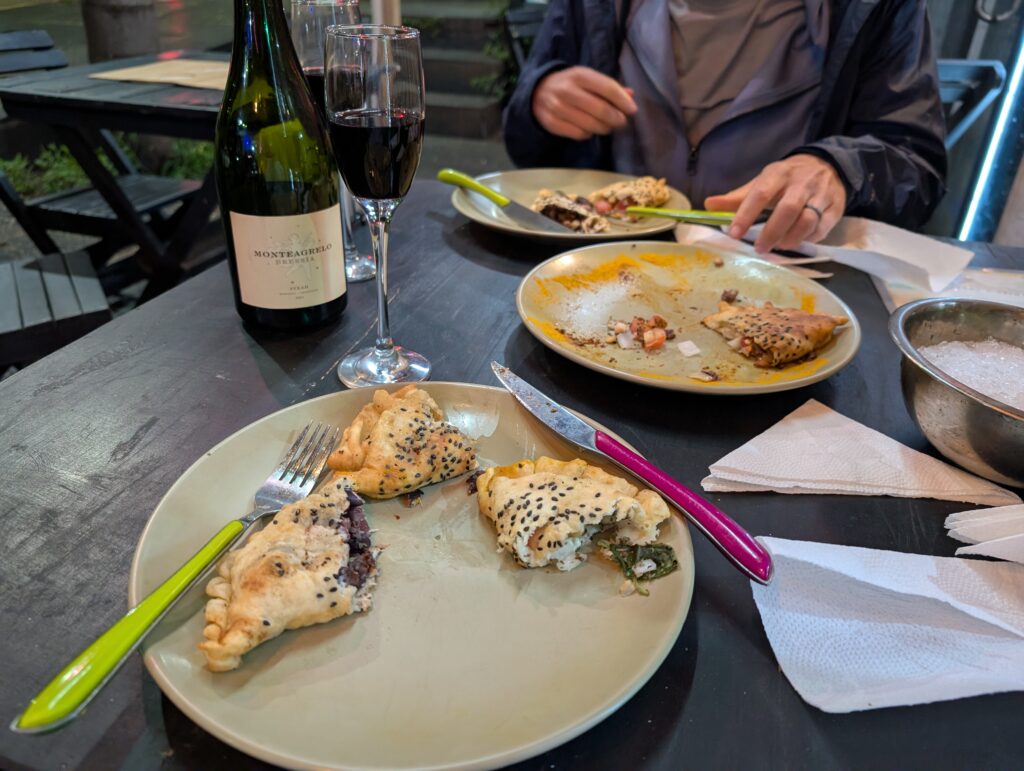
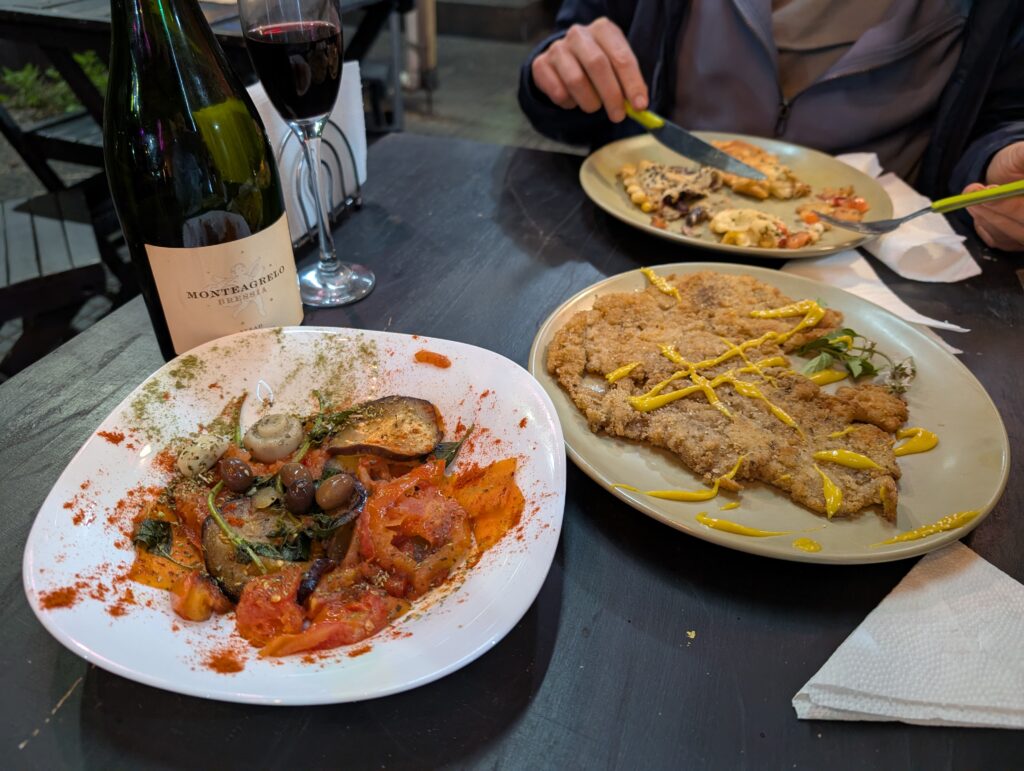
After dealing with the ATM, we went out to dinner at a vegan restaurant called La Vaca Empoderada where we enjoyed some empanadas, a seitan milanese, and ratatouille. All were excellent and they were even able to get a bottle of wine for us even though it wasn’t on the menu.
Las Cataratas de Iguazu
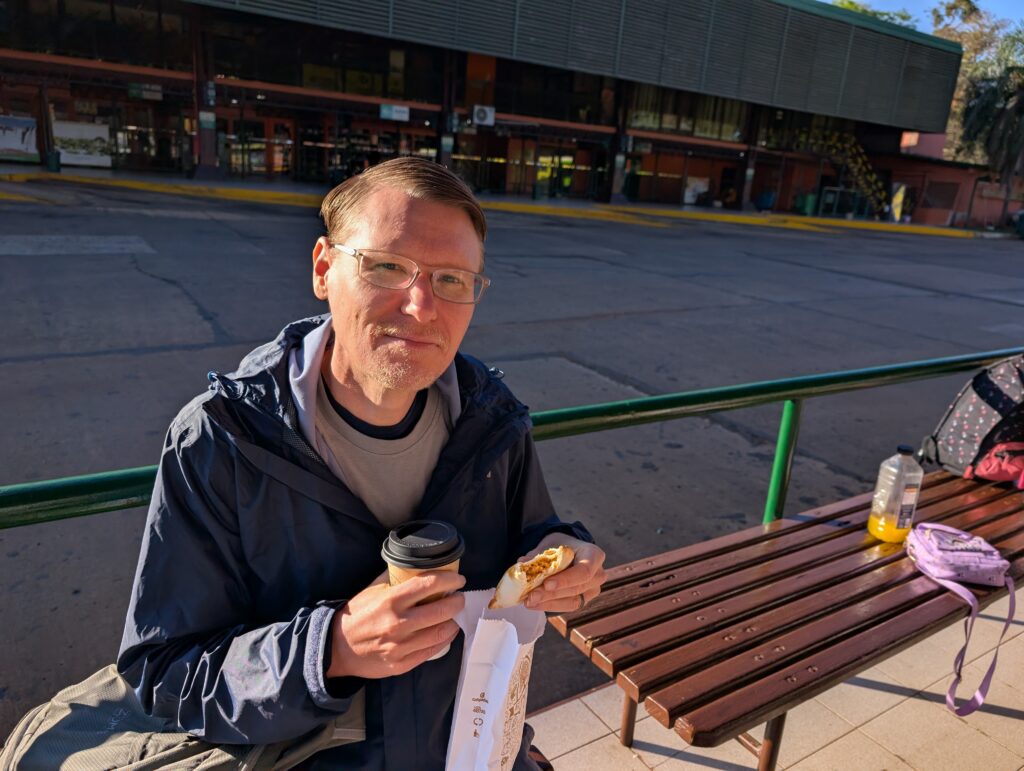
The next day, we definitely wanted to be at the park early. Like the Brazil side, the waterfall viewing is done from a national park, Parque Nacional Iguazú. However, on the Argentine side, there is a reliable public bus that regularly goes from town out to the national park, provided by the bus company Rio Uruguay. We decided not to make the effort to be the first at the park, which was a good call because it really wasn’t that crowded. Instead, we walked into town and found a good cafe americano, some empanadas de pollo, and a medialuna (Argentine croissant) at a bakery near the bus station, which we took to-go. We were able to buy our roundtrip bus tickets with a credit card from the main Rio Uruguay ticket counter (the one in the building, not by the busses) and the woman said the next bus would be in about 10 minutes, giving us just enough time to eat our breakfast before boarding. The bus wasn’t too crowded and it was a nice half hour or so ride to the national park.
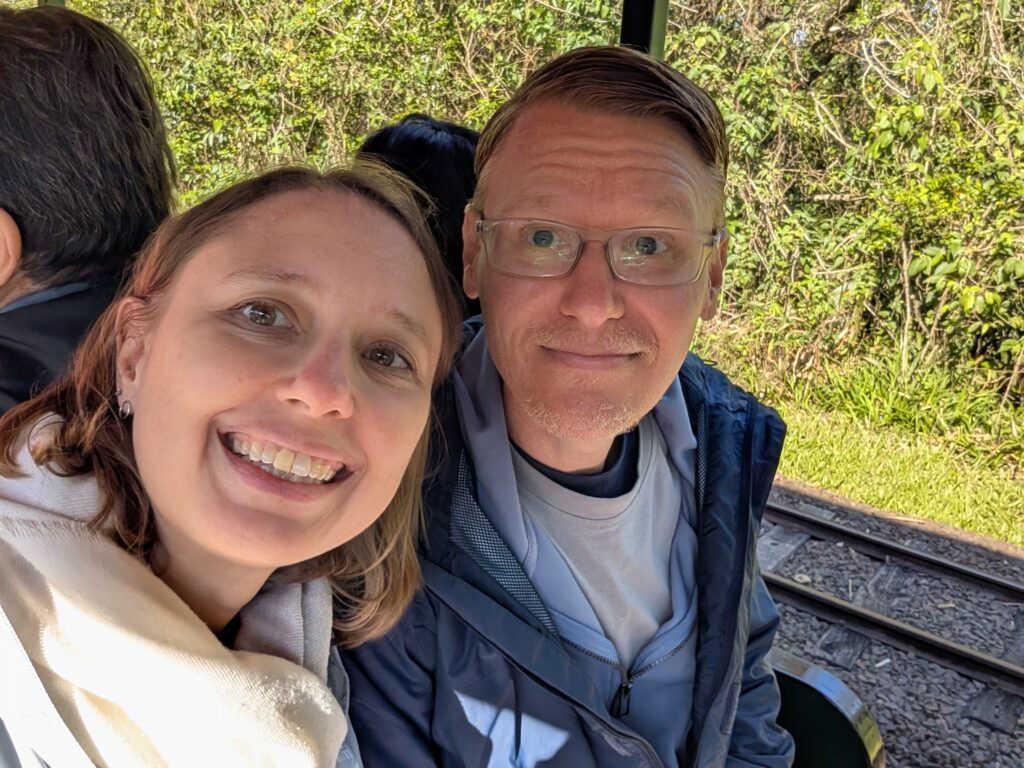
I’d also bought our tickets in advance for this park (over $40 per person, so a little more expensive than the Brazil side) so we joined the short queue to enter. Once in the park we followed the crowd toward the little railway station and picked up a voucher for the 9:20 a.m. train to the trailhead for the falls. You can also just walk (I think it is less than a kilometer or so, though the train takes a longer route around) but it seemed fun to do the train. Like the Brazil side, there were clear paths to follow, but it definitely felt like fewer people and there was more room to spread out. On the Argentine side there is an upper trail and a lower trail. We did the upper first and then the lower. The upper trail takes you over the falls, which was very cool, and we had a great time taking lots of photos on both trails.
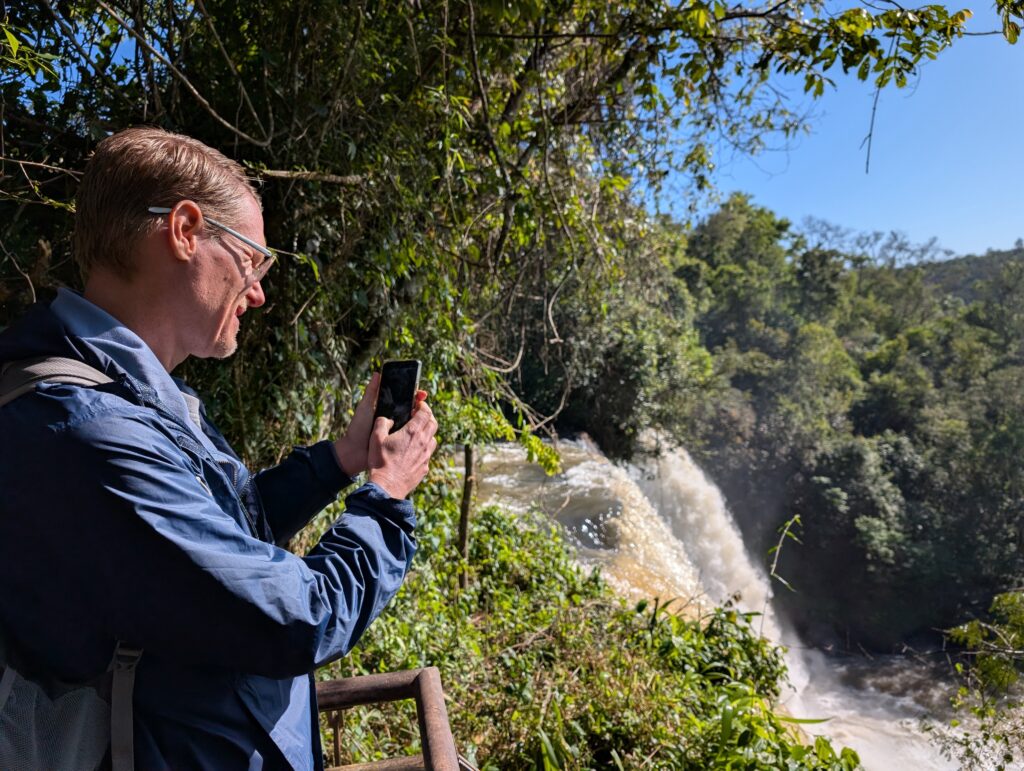
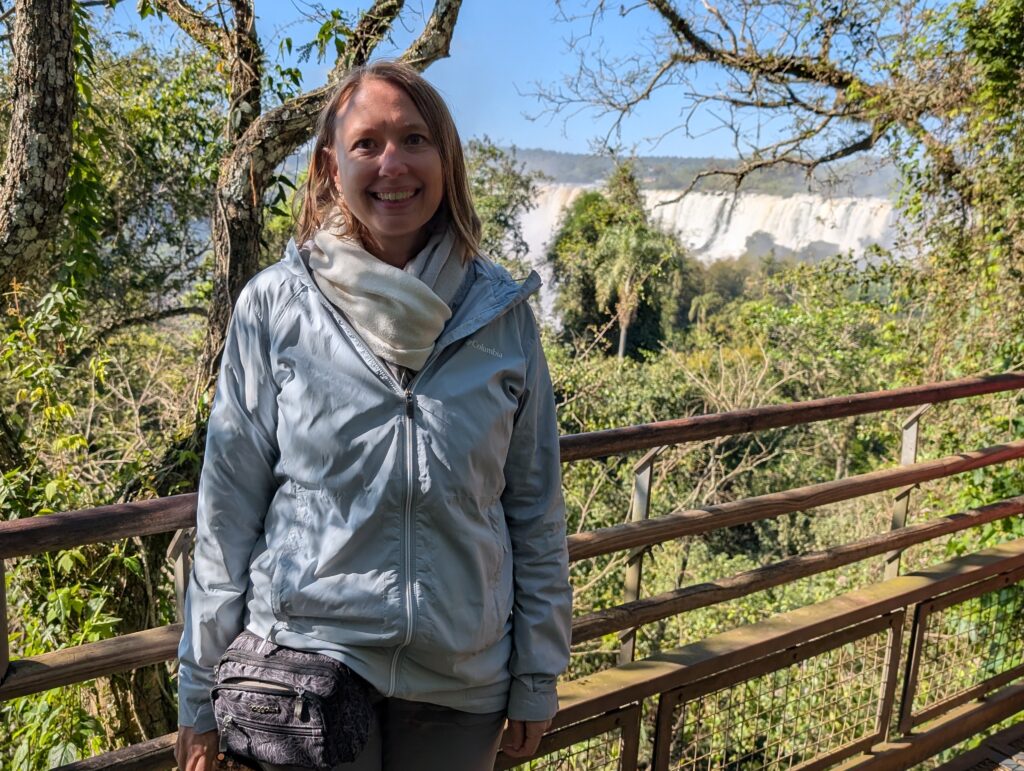
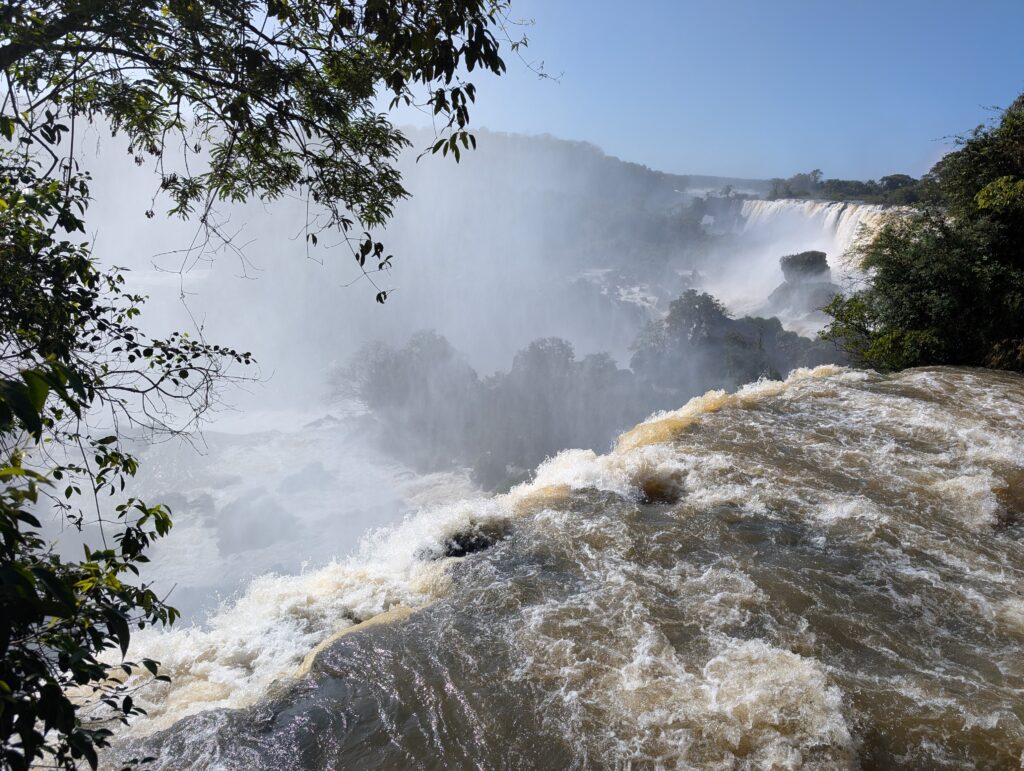
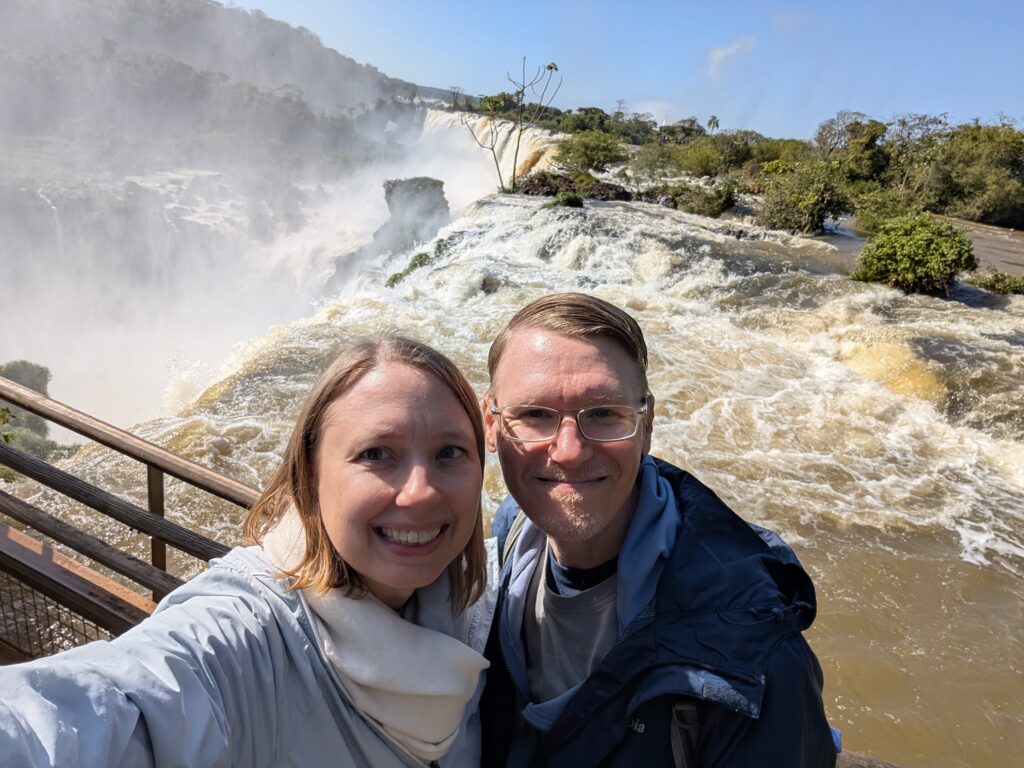
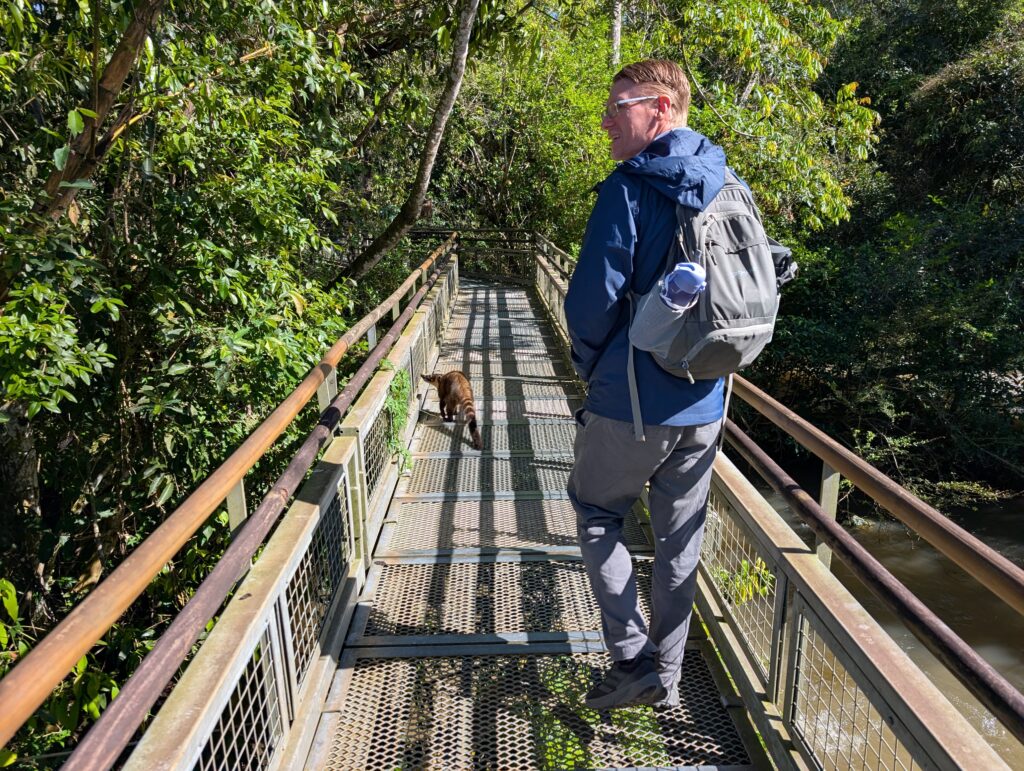
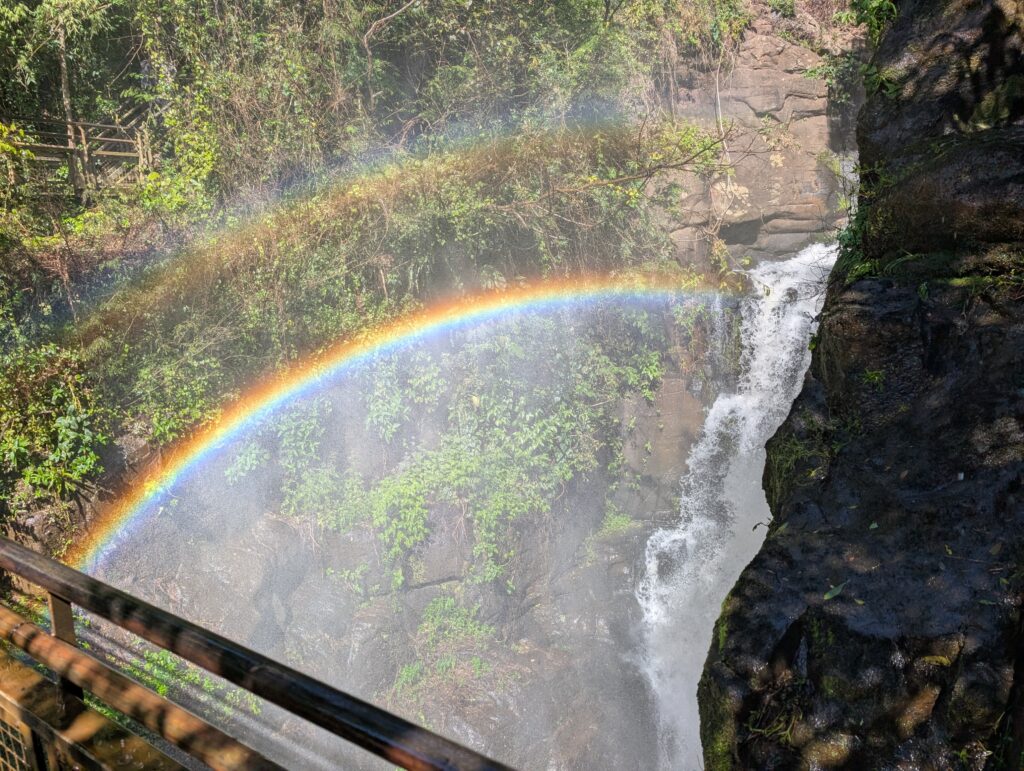
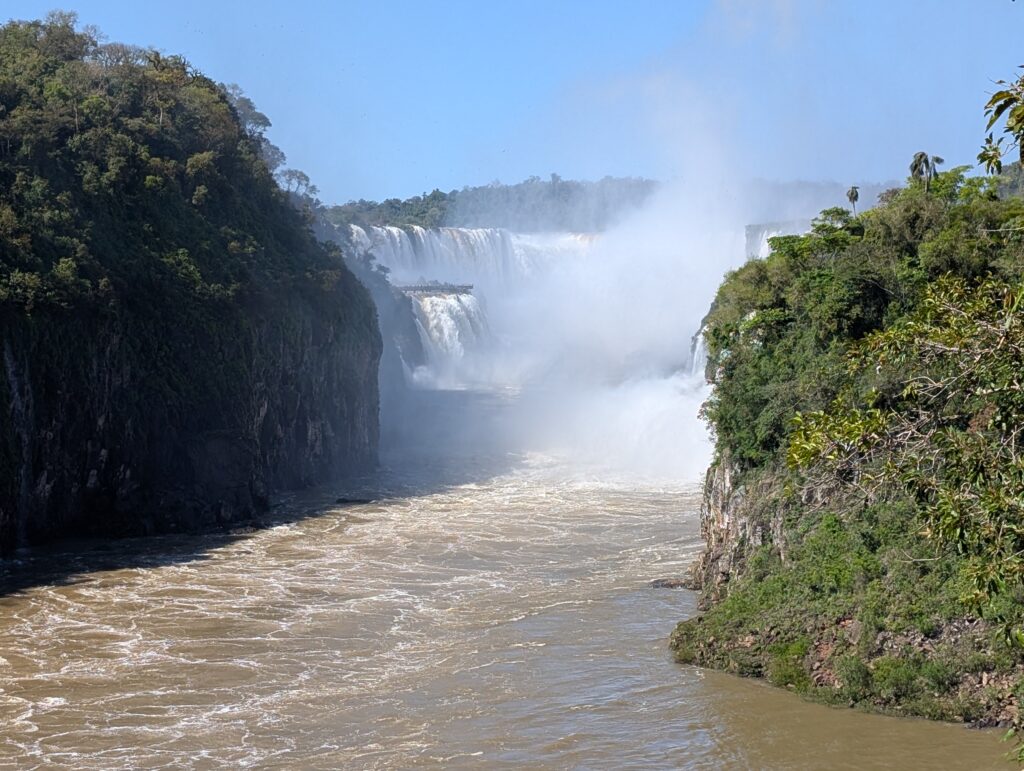
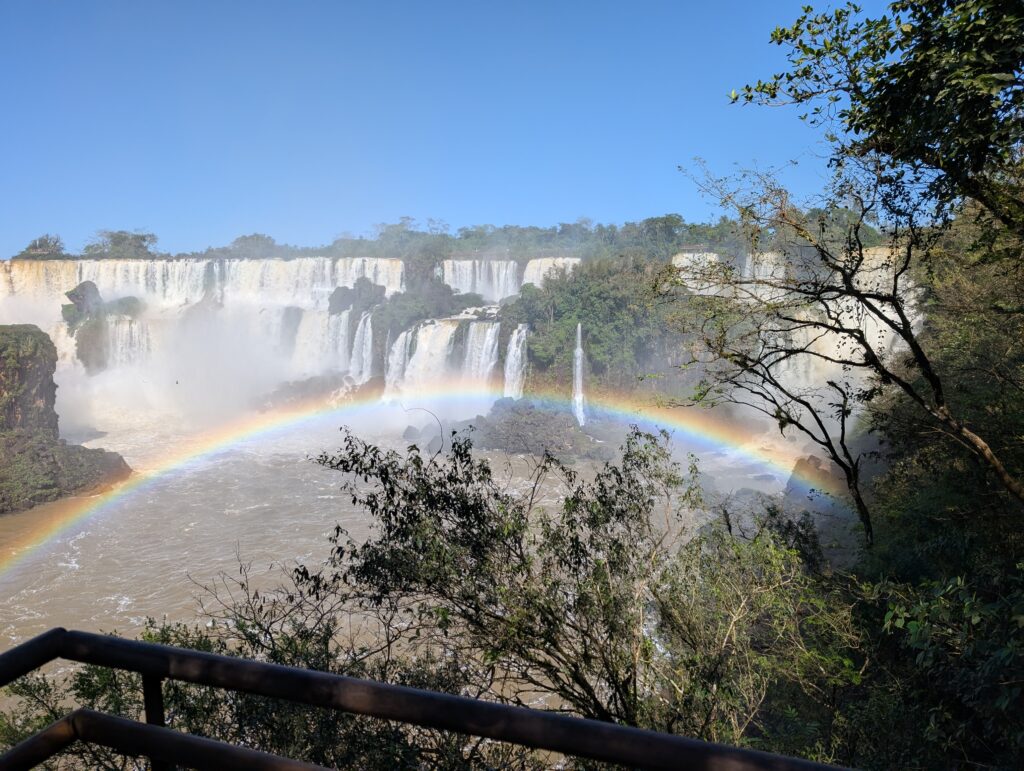
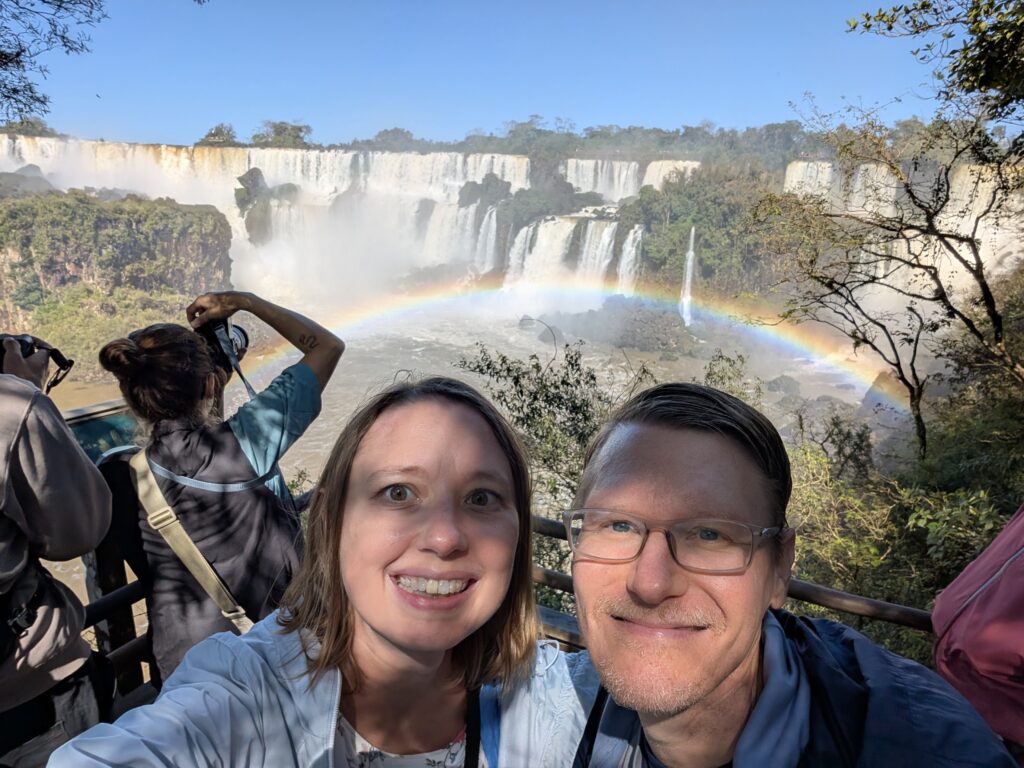
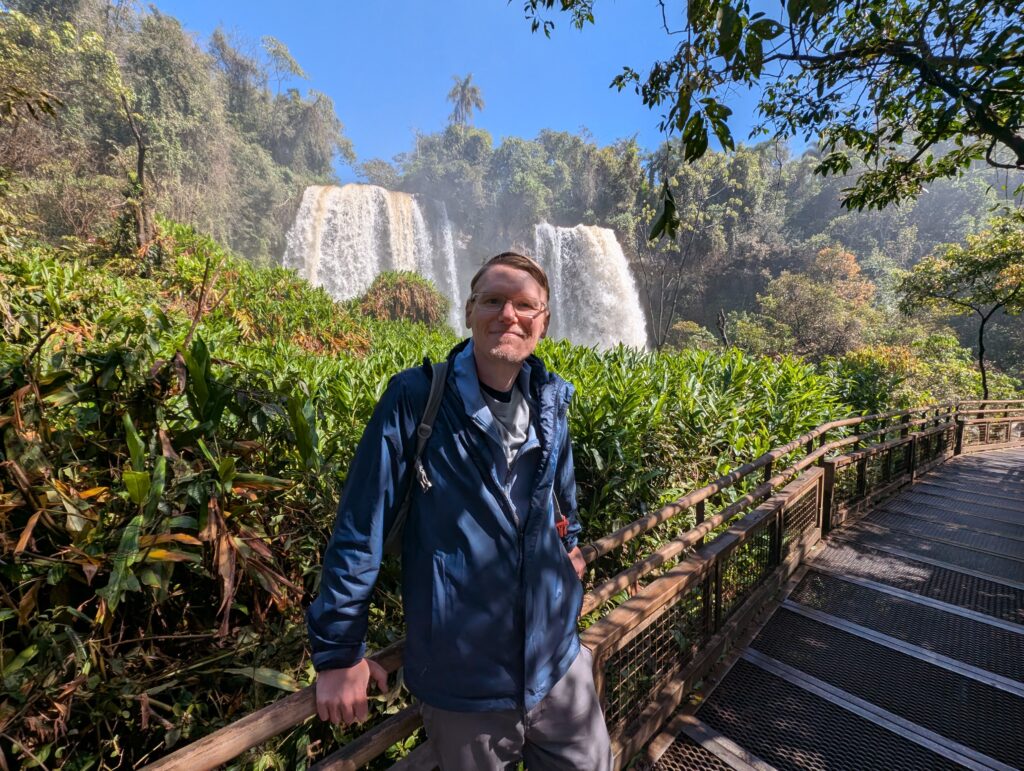
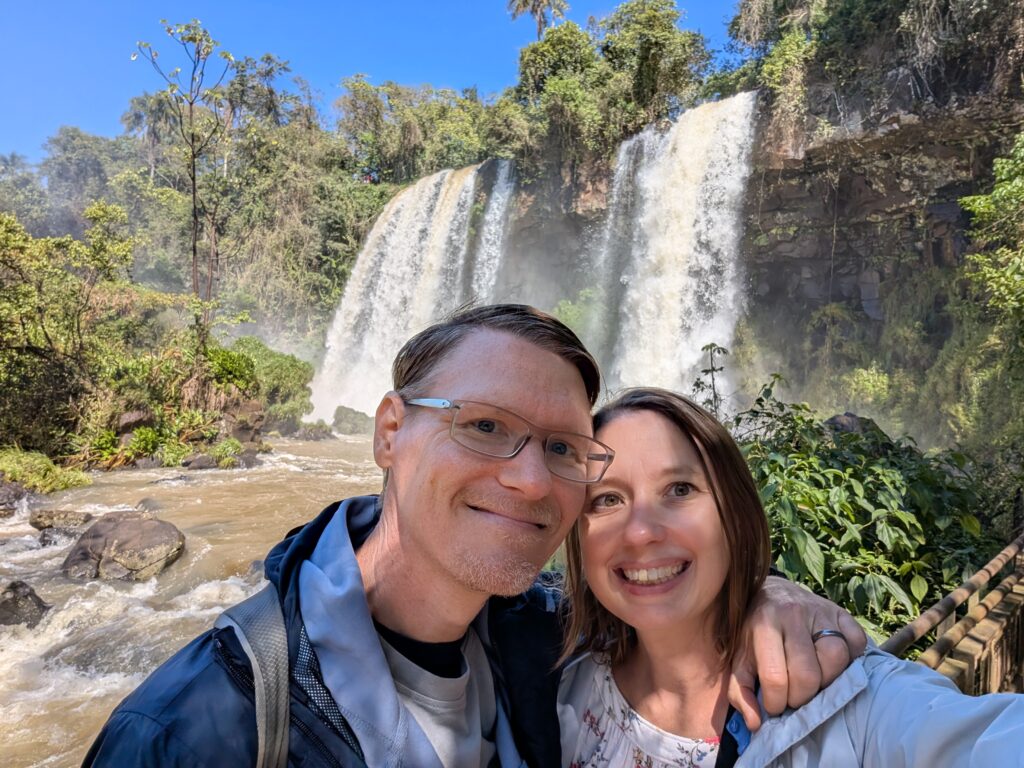
We had a quick snack near the Two Sisters Waterfalls at the end of the lower trail then took the Green Trail back to the front rather than wait for the train again. We also hiked a little ways (maybe a mile out and mile back) on the Macuco Trail, but my feet were starting to hurt after two days of so much walking.
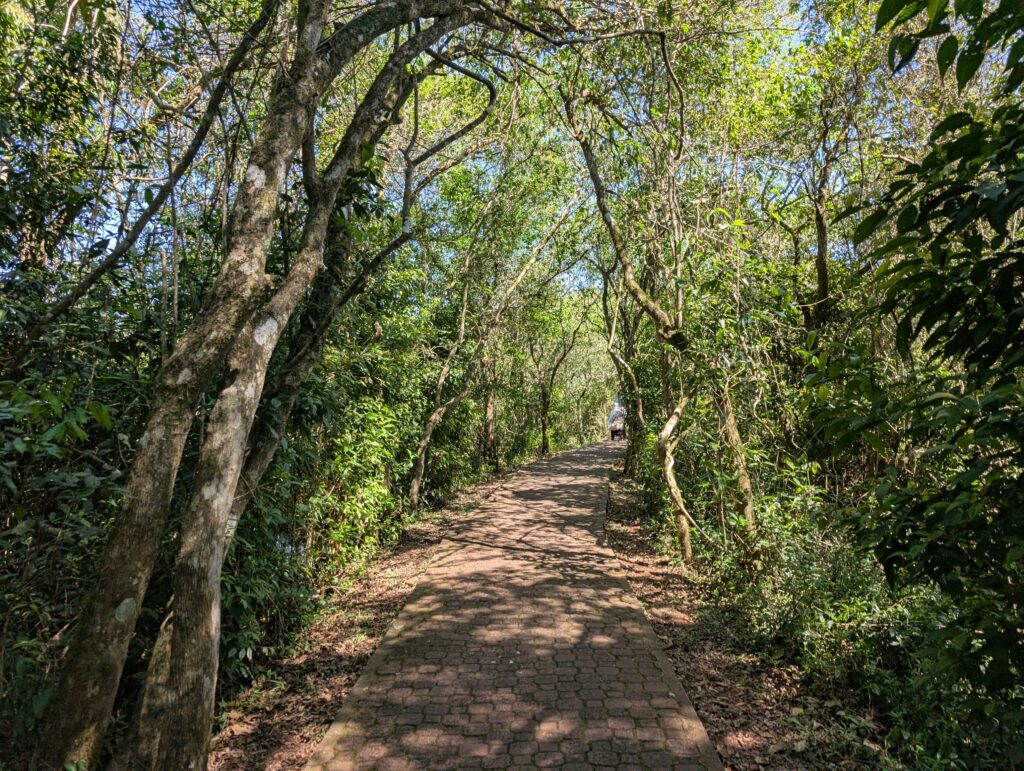
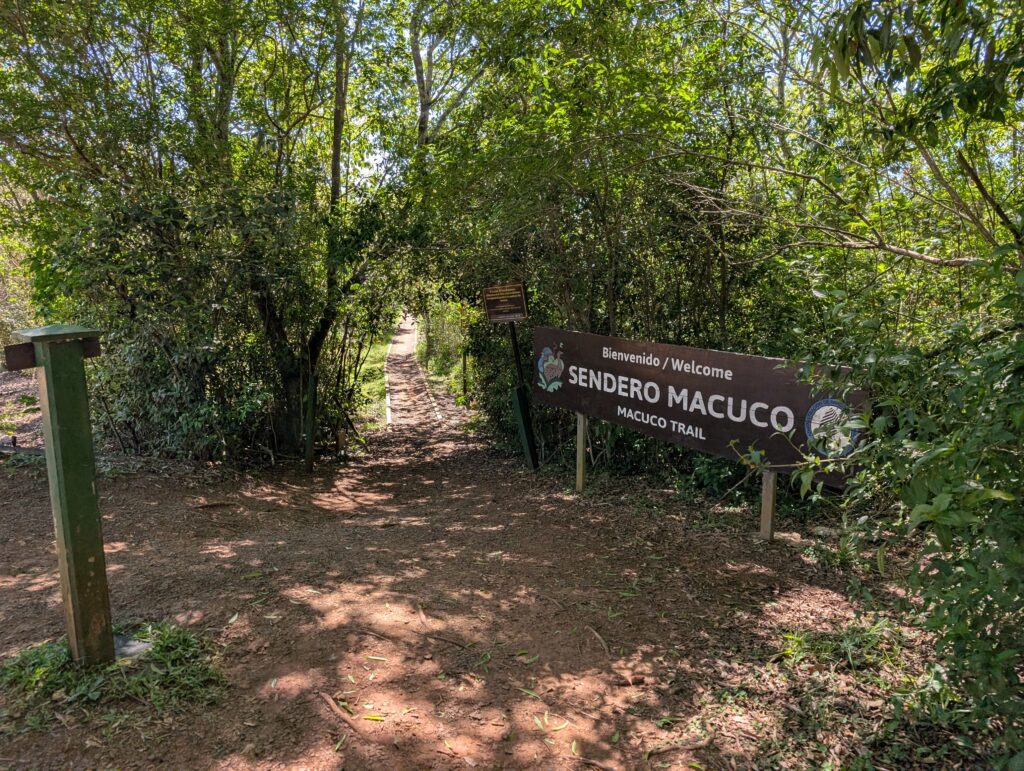
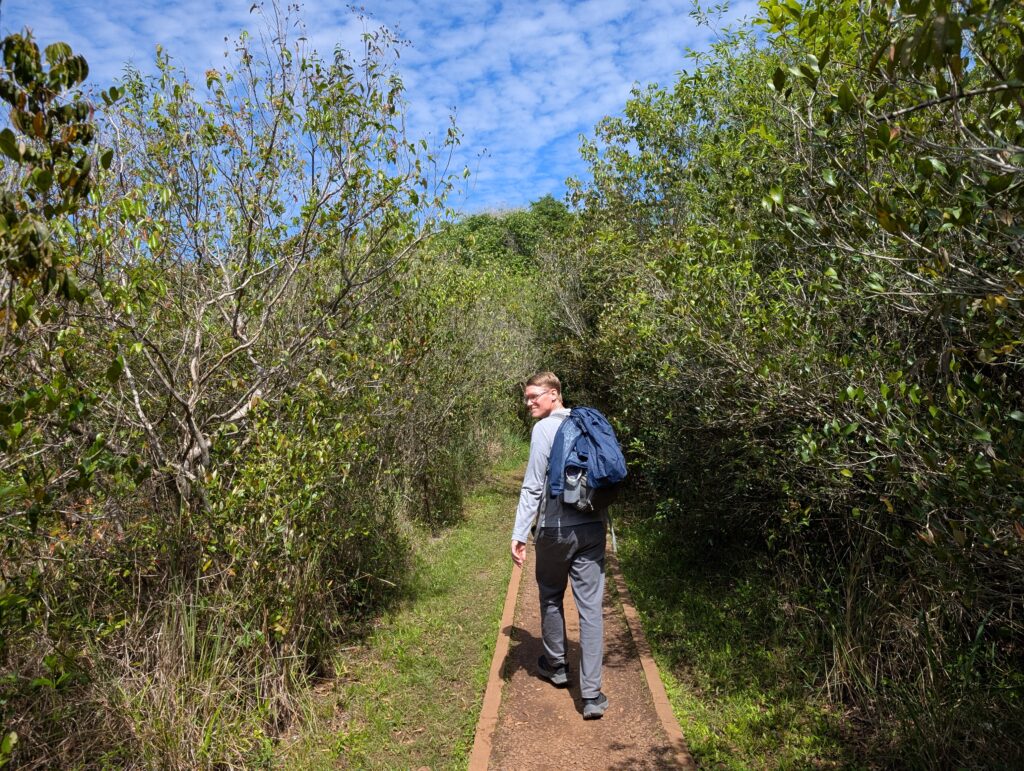
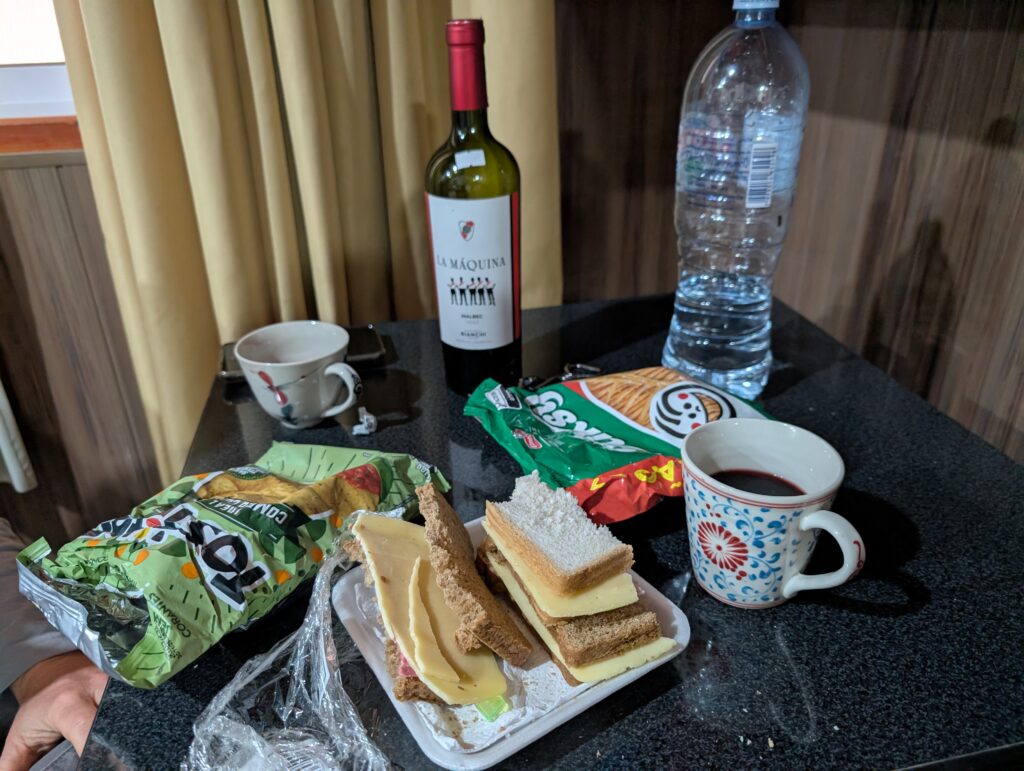
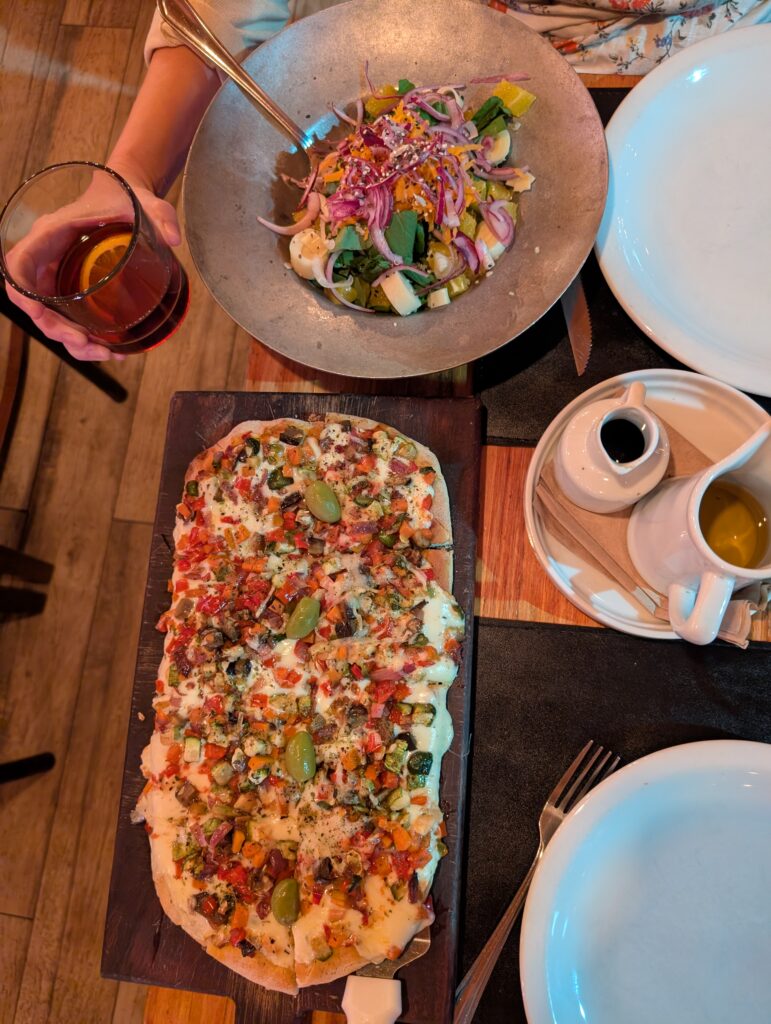
We caught the bus back to town after about a 15-minute wait and picked up some wine and sandwiches at a little mini-mart. Unfortunately, in many parts of Argentina, businesses including supermarkets close for siesta from 1:30 to 5 p.m., and we didn’t get back before the big supermarket near our hotel closed. But our weird late lunch in our room suited us, then after a rest, we went out for pizza and salad (and negronis) that night at a brewpub called Holy Iguazú.
Summary and Departure
We took off for Salta early the next morning. Iguazu Falls completely lived up to our high expectations and was an incredible experience. We felt very lucky we had the chance to see them.
Hotel Reviews
Iguassu EcoHostel – Some good, some bad, but worth it for proximity to the falls – Liked · The location is key here. It is walking distance to the Parque de Aves and Parque Nacional do Iguaçu, which is really worth it. The room was comfortable enough despite some issues. I especially appreciated that they booked our transportation from Foz airport to the hostel and also our transport to our hotel on the Argentine side. This worked very well. For our airport transportation, the driver was waiting for us with the hostel’s name on a sign (I wish they’d told us this was how it worked). The breakfast in the morning was very good and right on time at 7:30. Also, the staff securely stored our luggage when we checked out, which was nice. If you want to use the lockers for valuables, you need your own lock (which we had). I appreciated that they have an onsite burger food truck most nights because otherwise the location is very isolated, but even that was confusing (see below). Disliked · The hostel could do a better job of sharing information. The room was very cold overnight in September but it was unclear if the air con had a heater function (it didn’t seem to). The toilet flush didn’t line up right on the toilet so we had to remove the lid every time to flush. The door to the breakfast room slides rather than opens outward. I and everyone else I saw enter struggled to figure it out. Why not put an arrow on the door? This hostel was just full of needless mystery. Providing more information would help a lot. When asked about the food truck, they could only say the hours are from 6-9. There was no menu available until it opened. I asked about paying by credit card and they said yes, but didn’t also explain that you actually pay when you check out in the morning, like for room service. Also, go early if you’re hungry. We placed our order at 6:30 and it took an hour (which we were told when we ordered) due to other guests ordering first. The food was good and there was a veggie burger option when I asked but not on the main menu. Overall, the food truck is a nice addition, just more needless confusion. The worst part of our stay was other guests were very loud (likely drunk) at 4 in the morning. There are small signs that say quiet hours from 10 p.m. to 8 a.m., but no one pointed them out to us when we checked in and clearly not to these other guests. Another guest tried to yell at them to be quiet a little before 6 which turned into a shouting match, and then the drunk men fell asleep and were snoring. The walls are very thin and the sound carries. They should emphasize the quiet hours to all guests at check in to prevent these problems.
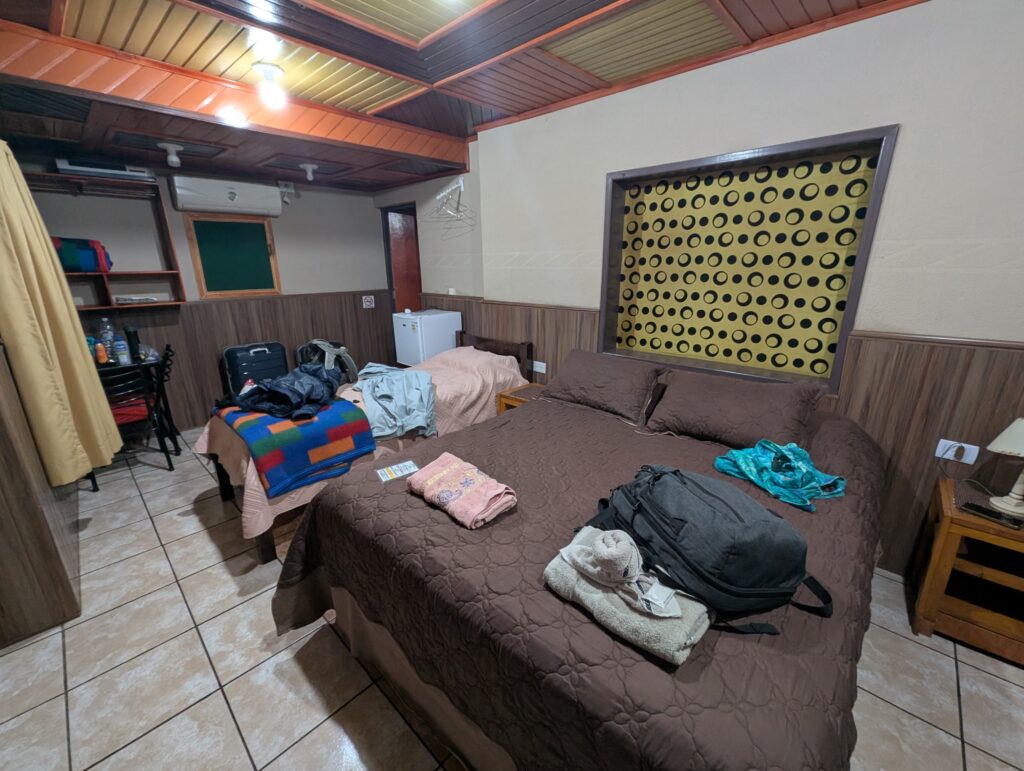
Residencial Arcoiris – Charming little hotel, great value – Liked · We were welcomed very kindly at check in and given helpful information about restaurants and the bus to the national park, which is available very close to the hotel (pay cash when boarding). Our room was large, clean, and very comfortable. There was a portable heater that was very helpful in the early morning in September. The owner/manager kindly offered complimentary coffee and tea to us in the mornings even though we didn’t pay for the breakfast. Disliked · We liked everything, but would have preferred if the lobby had opened a little earlier in the morning. Otherwise the stay was perfect.