Recife, Brazil, (pronounced ruh-SEE-fuh in English and heh-SEE-fee in Brazilian Portuguese) is the closest city to the town we’d selected for our long stay in Brazil. Since we’d need to fly into Recife’s airport, we decided to spend our first three nights there so we could check out the city and the nearby town of Olinda, whose town center is recognized as a UNESCO World Heritage site. Recife is the capital of the state of Pernambuco, a very distinctive cultural region of Brazil (kind of how you think of the South in the U.S.)
Arrival and Day 1
The first thing to know about Recife is that it is not easy to get to from the United States. Our travel took well over 24 hours, starting with our 2.5-hour drive to the St. Louis airport, a short flight to Atlanta then a long (10-hour) overnight flight to Sao Paolo in southern, Brazil, and then a 3-hour flight back north to Recife.
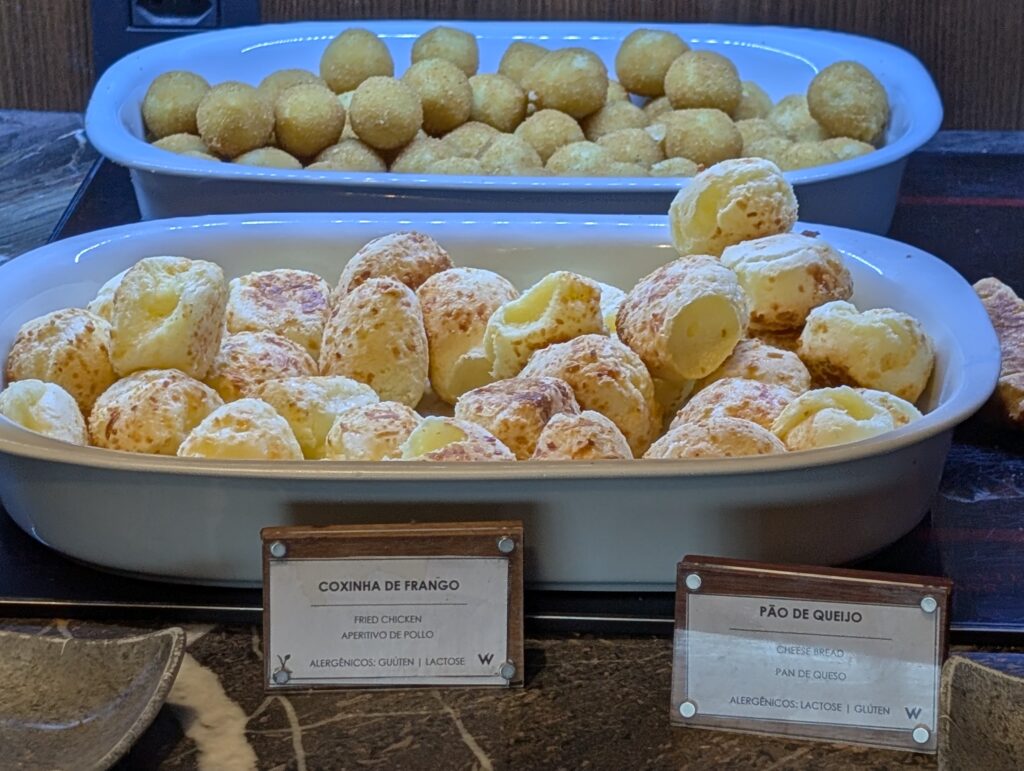
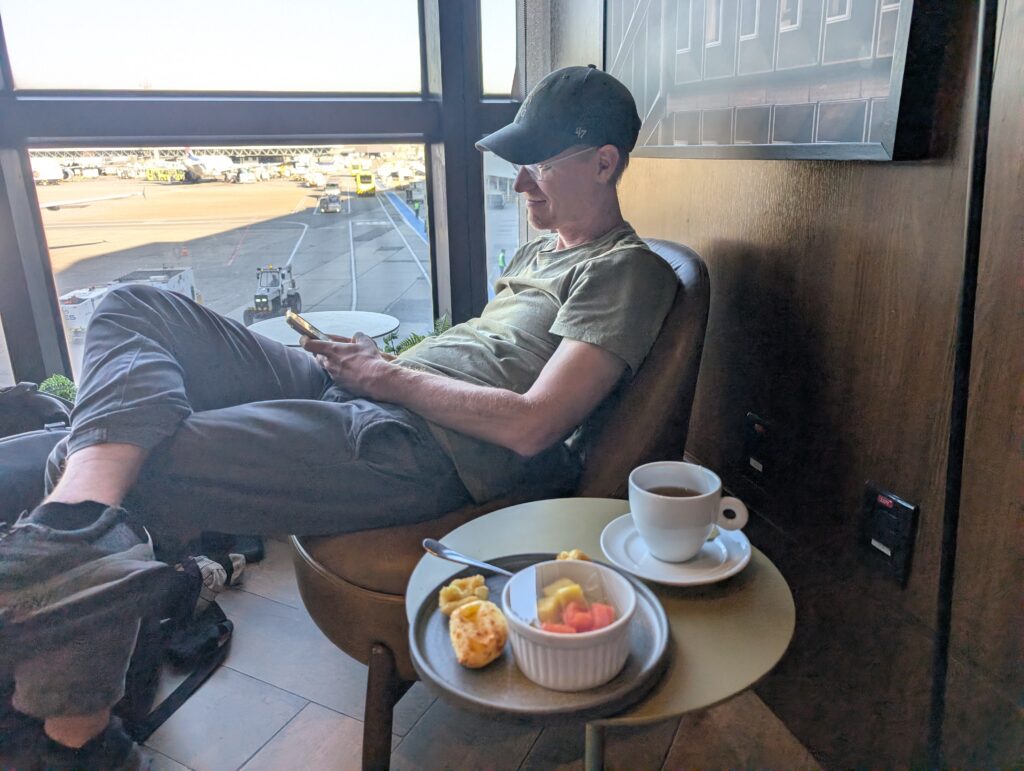
We had two saving graces on our super-long travel day. First, we’d picked up a new premium credit card over the summer to have full lounge airport access again. So we were comfortable during our layover in Atlanta and got to try some of the Brazilian foods on my list for breakfast in the lounge in Sao Paulo: pao de queijo (cheese bread) and coxinha (tear-shaped fried dough with meat). The second was that I’d prebooked an affordable private airport transportation from the airport to our Recife hotel, which worked out great. On our past two legs, we’ve especially struggled on our main arrival day so not needing to worry about navigating Uber or a taxi was very helpful. The driver, hired through Booking.com, was in good contact with me via WhatsApp before and during our arrival and was right on time to pick us up.
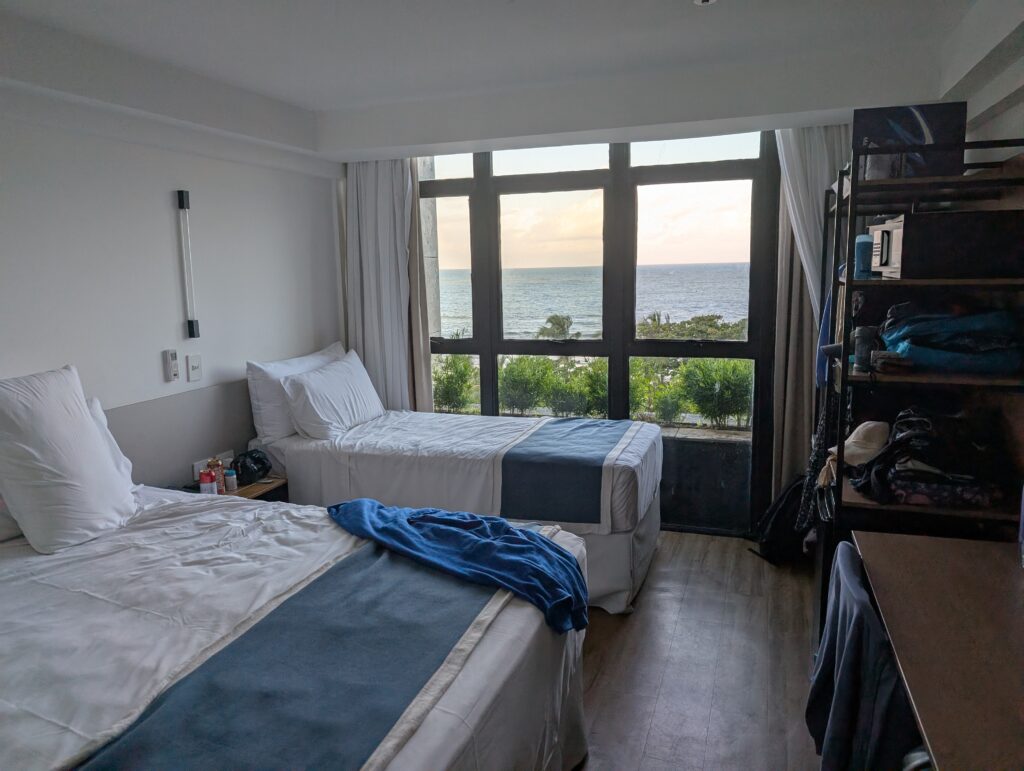
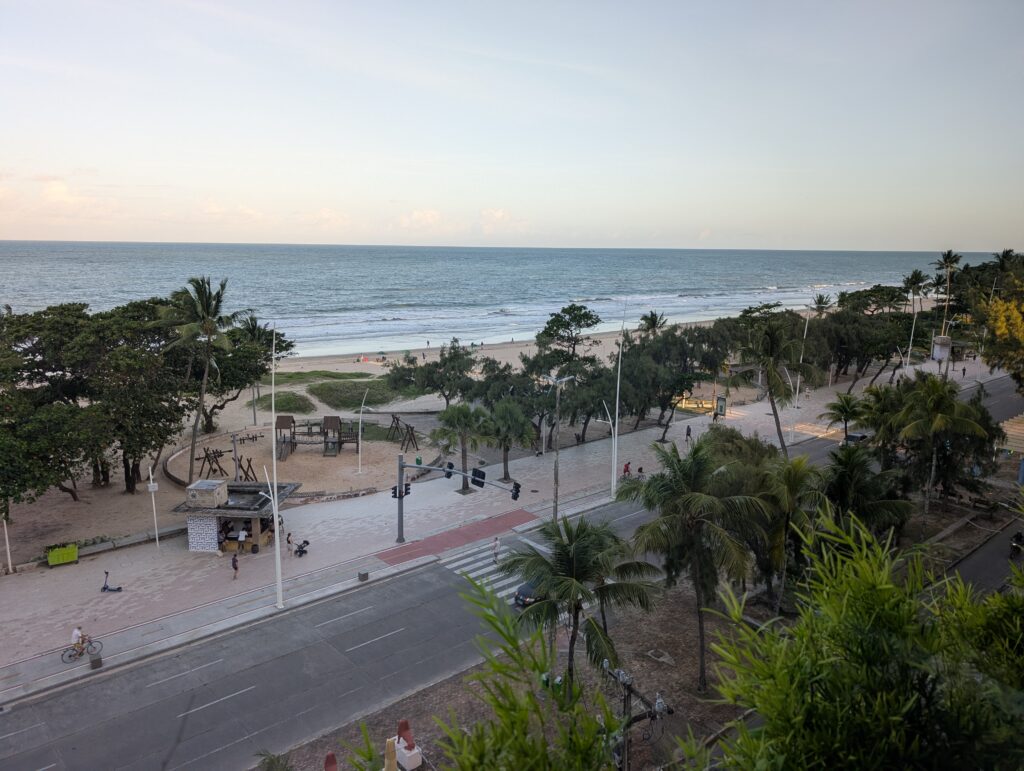
We also arrived to a beautiful view in the hotel room I’d booked in the neighborhood of Boa Viagem, which made our three days in Recife especially enjoyable (review of Marante Plaza Hotel below). Recife is on the Atlantic coast of Brazil, about as far east as South America goes. However, it has the same time zone as the rest of Brazil, so the sun sets each day around 5:30 p.m. (and rises around 5:30 a.m. because Recife is nearish to the equator so has 12-hour days most of the time).


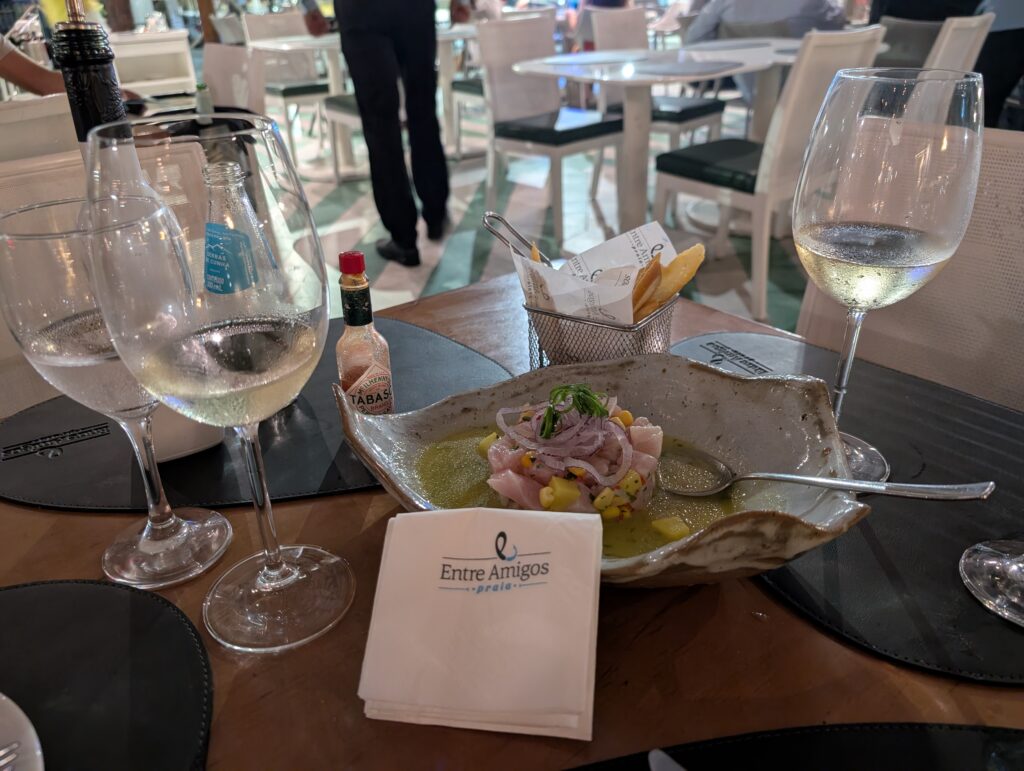
I’d received some great advice from a friend of a friend who grew up in Recife about restaurants and had a reservation waiting for us at a place she recommended called Entre Amigos that had a location a 5-minute walk from our hotel. So we were able to settle into our room, pick up some cash and supplies at a nearby convenience store, and then went out for a very nice seafood dinner. To be honest, we were too tired to wait for our 7:30 reservation and they were able to seat us earlier. We ordered a ceviche appetizer (that included sweet potatoes and corn) and a seafood stew that was served in a big cauldron. Overall, it was a great start!


Day 2 – Recife Old Town
For our first full day in Recife, we started our day with a phenomenal hotel breakfast. Chad teases me about being a sucker for a hotel breakfast (because I love breakfast and I love feeling like I’m getting a good deal or a freebie), but even he agreed this one was special (it didn’t hurt that the buffet included chocolate cake that he gave in and tried on day 3). It even had a cook-to-order station with omelets and tapioca, which I was very eager to try. In Brazil, a tapioca is sort of like a folded flat bread made with cassava flour that gets heated on a griddle until it fuses together. It becomes kind of a thick, chewy crepe and they put all sorts of filling inside, though the classic combo is queijo coalho, a firm cheese that is often served right off the griddle, and coconut flakes. On the first morning, I tried just the queijo coalho in my tapioca, but on the other two mornings I asked for coco too. In addition to the tapioca, the buffet had lots of local hot and cold options. Our favorite was a corn porridge with cinnamon.

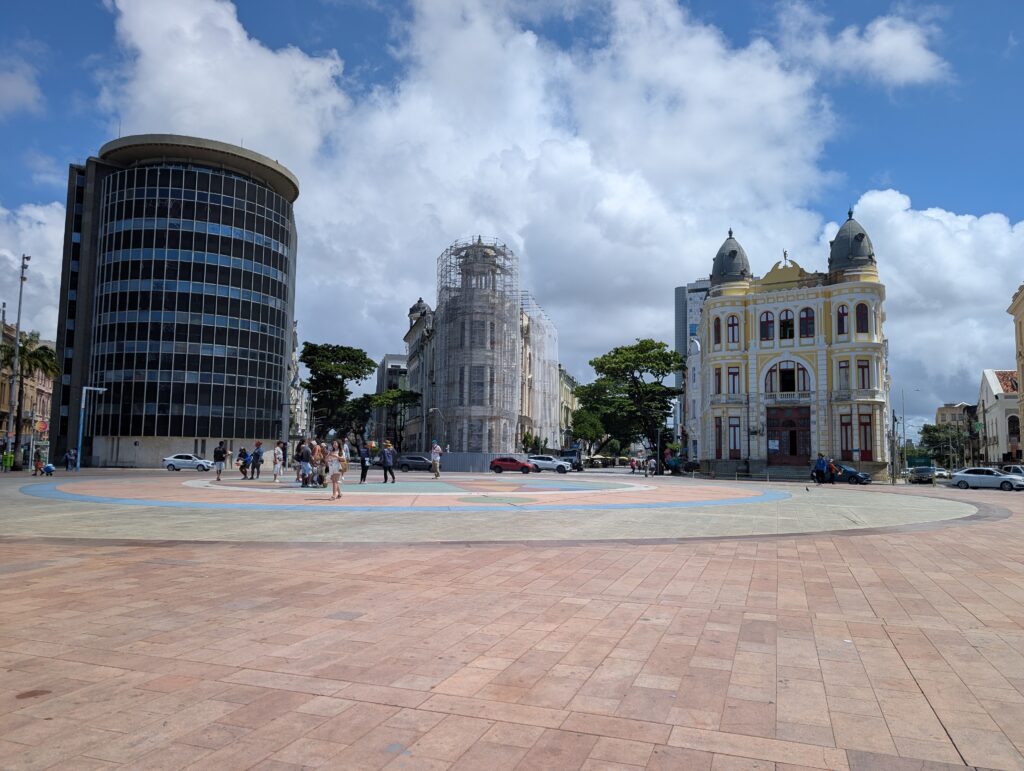
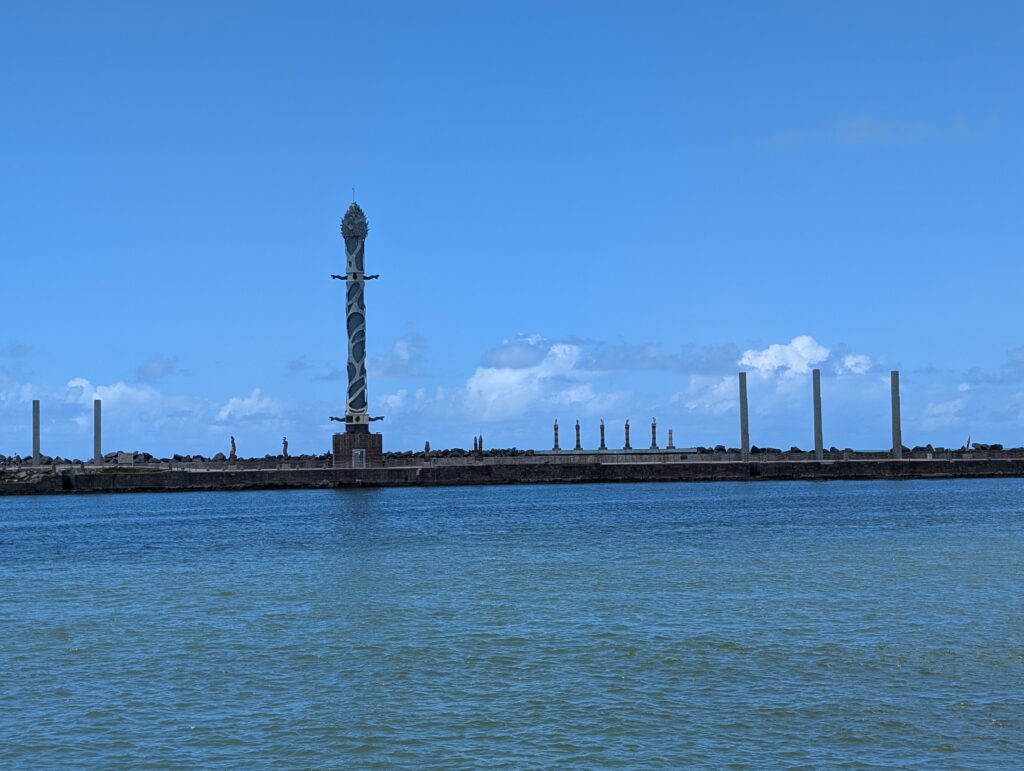
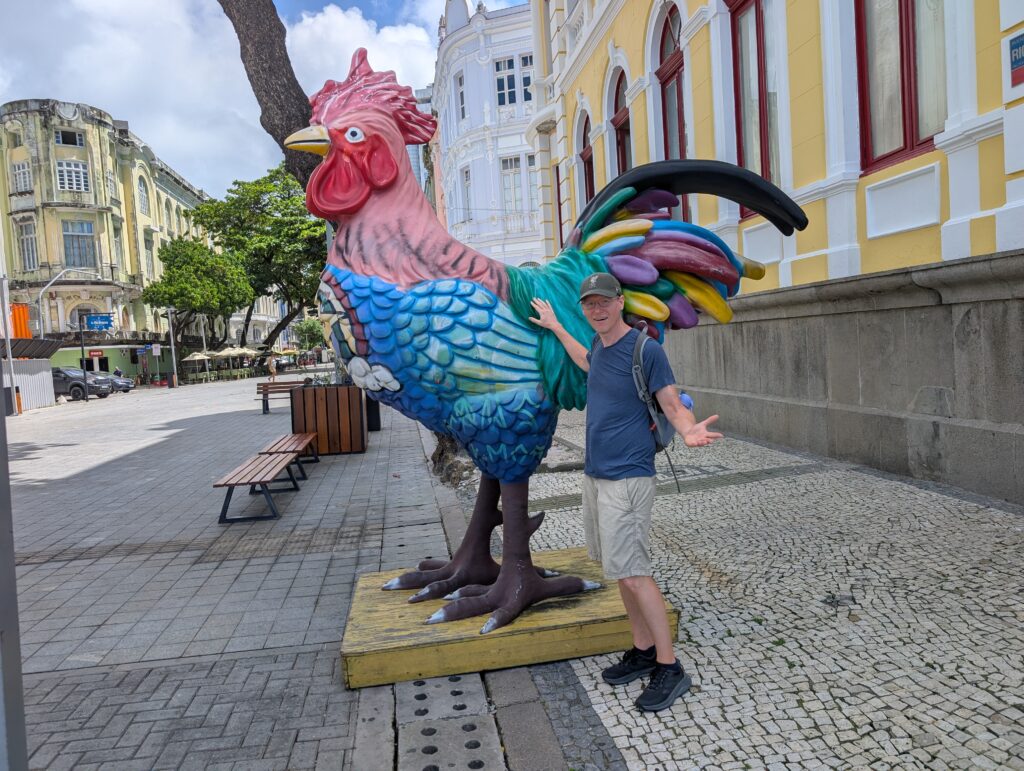
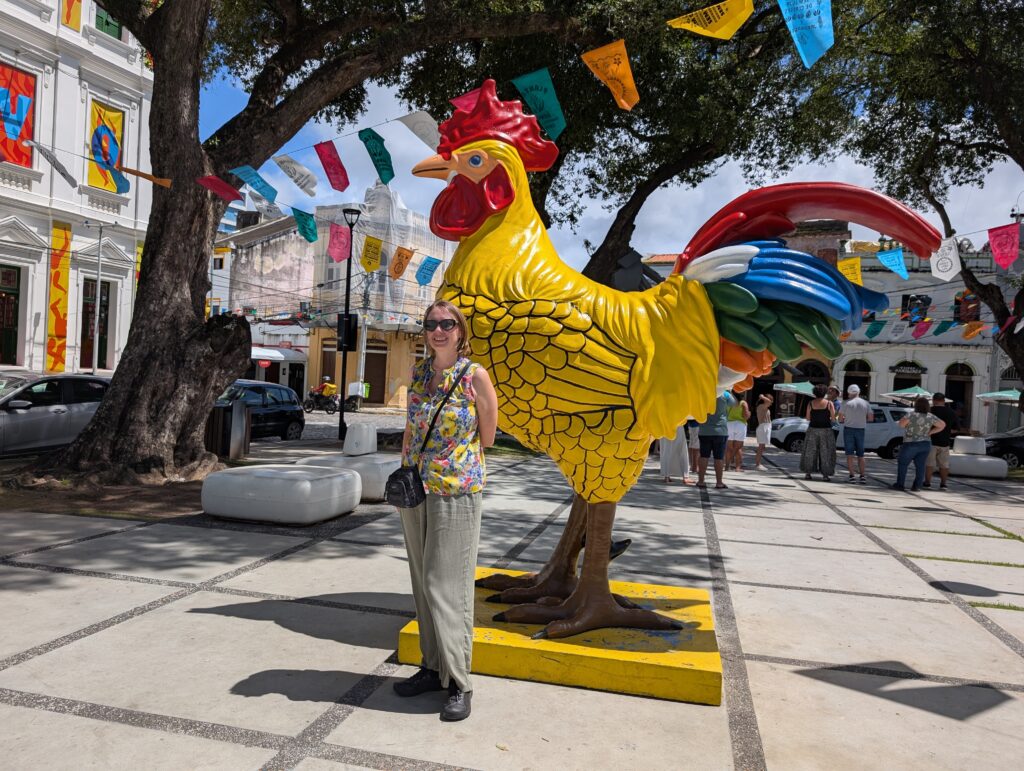
After breakfast, I needed to catch up on some work. Late morning, we took an Uber up Recife’s historic center. We enjoyed seeing the colonial layout and architecture and even found a couple of chicken statues (we’d see many more of those in our next destination).



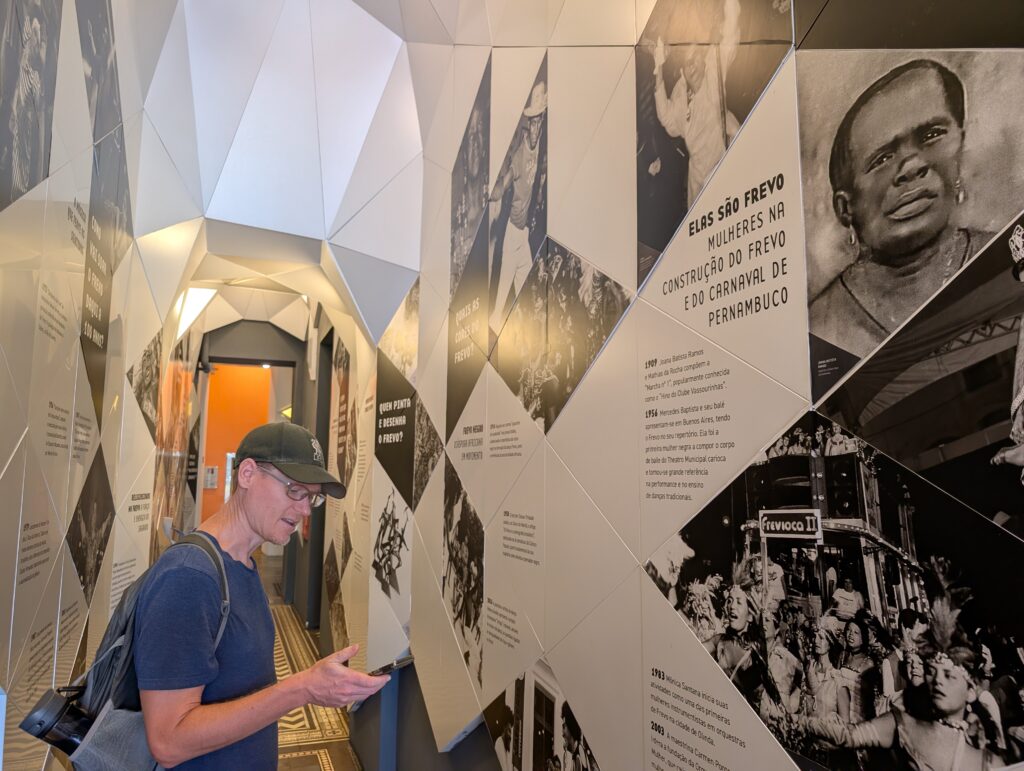
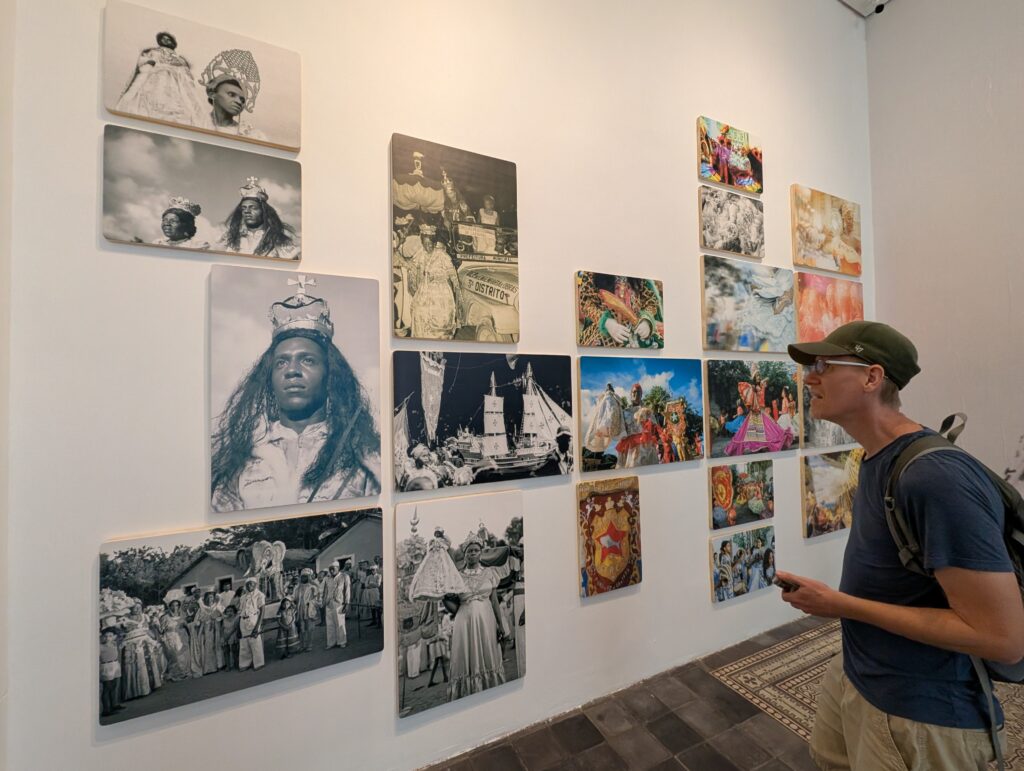
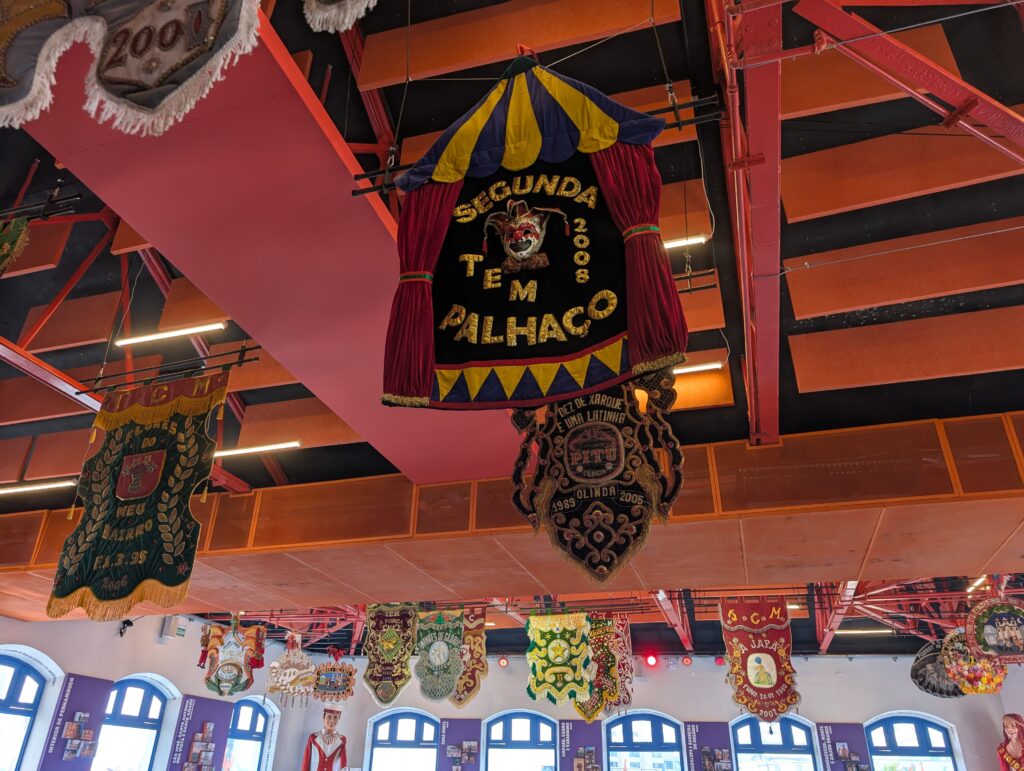
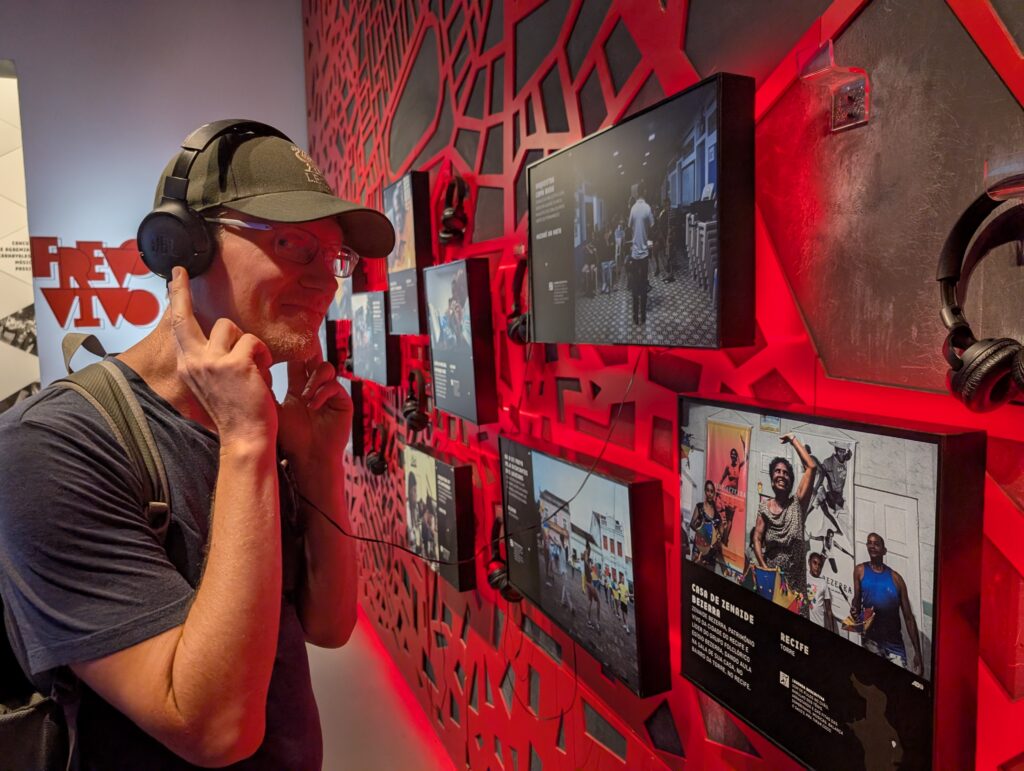
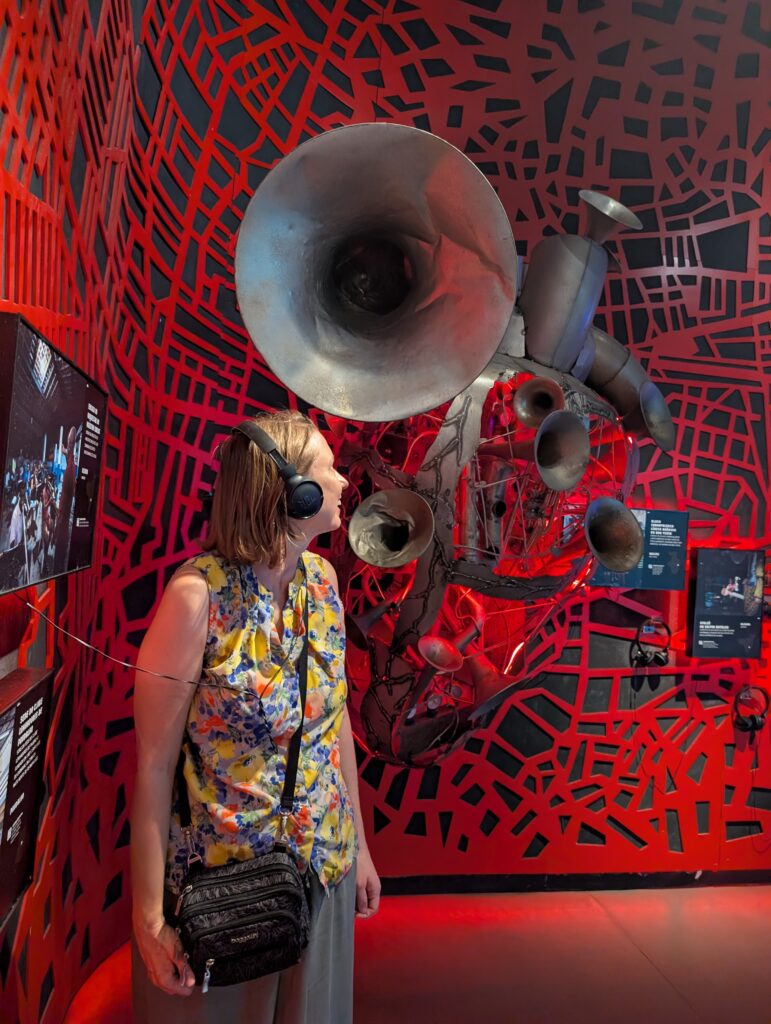
After getting the lay of the land, we checked out a few museums. We were especially eager to learn about frevo music, so we started at the Paço do Frevo, a museum devoted to that. Frevo is a music style that developed in Recife as part of their famous Carnival festivities. It combines marching band instruments with more a dance beat and is traditionally accompanied by very acrobatic dancing. The museum was very interesting and we especially enjoyed hearing some frevo music through the exhibits.



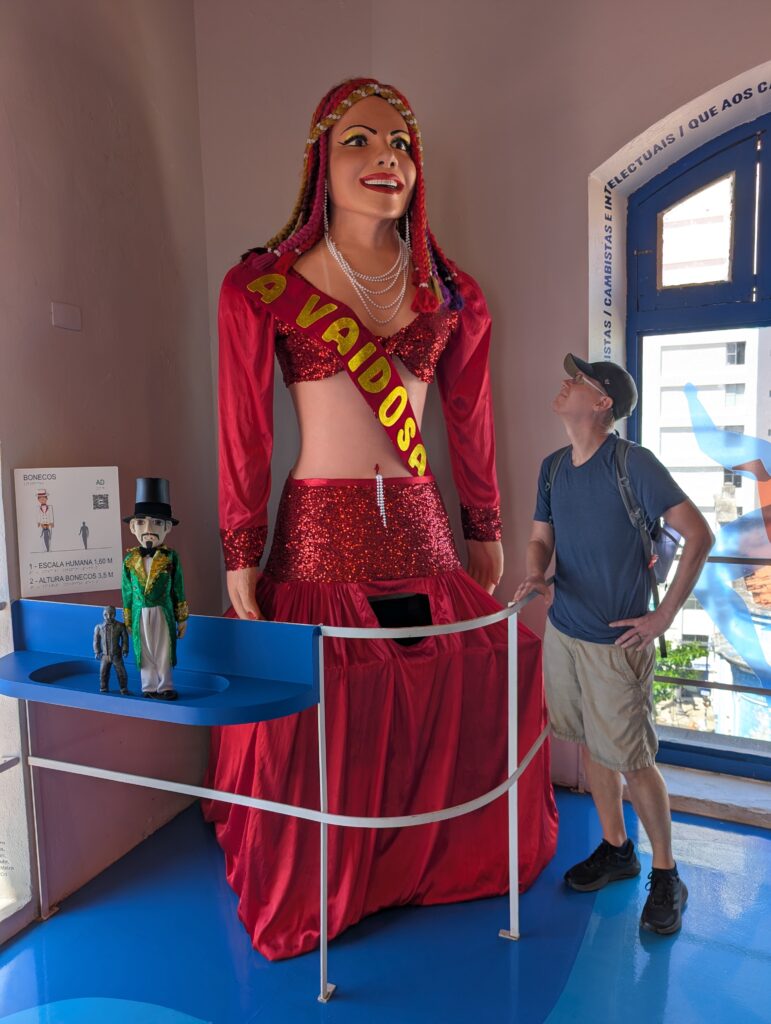
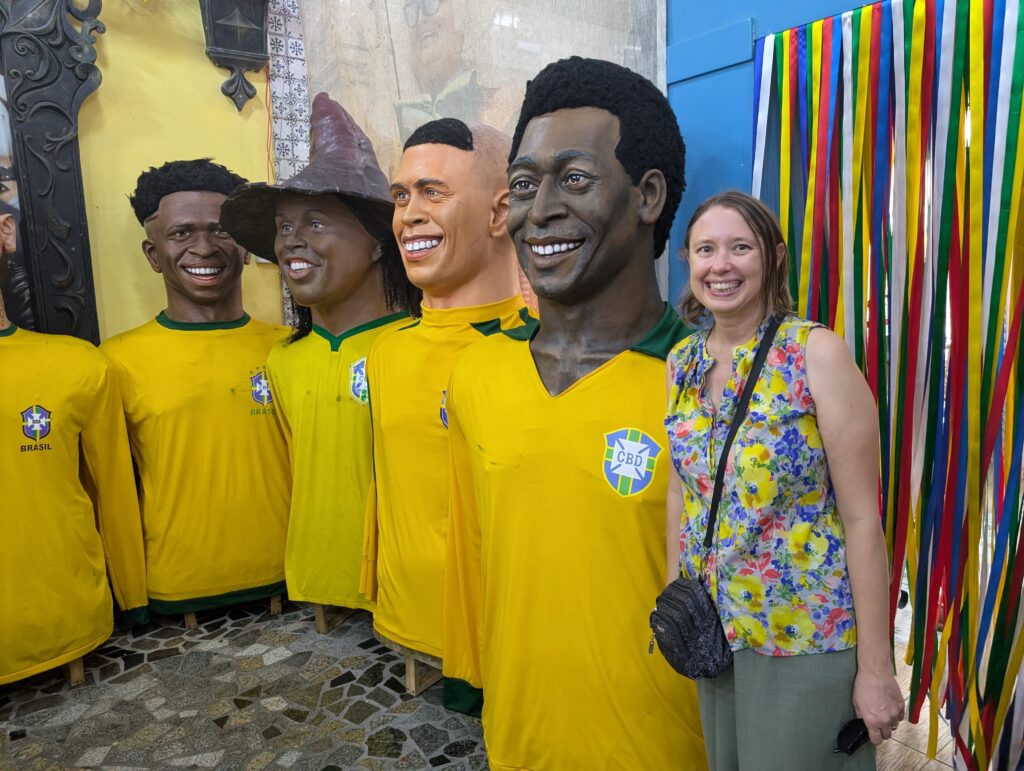
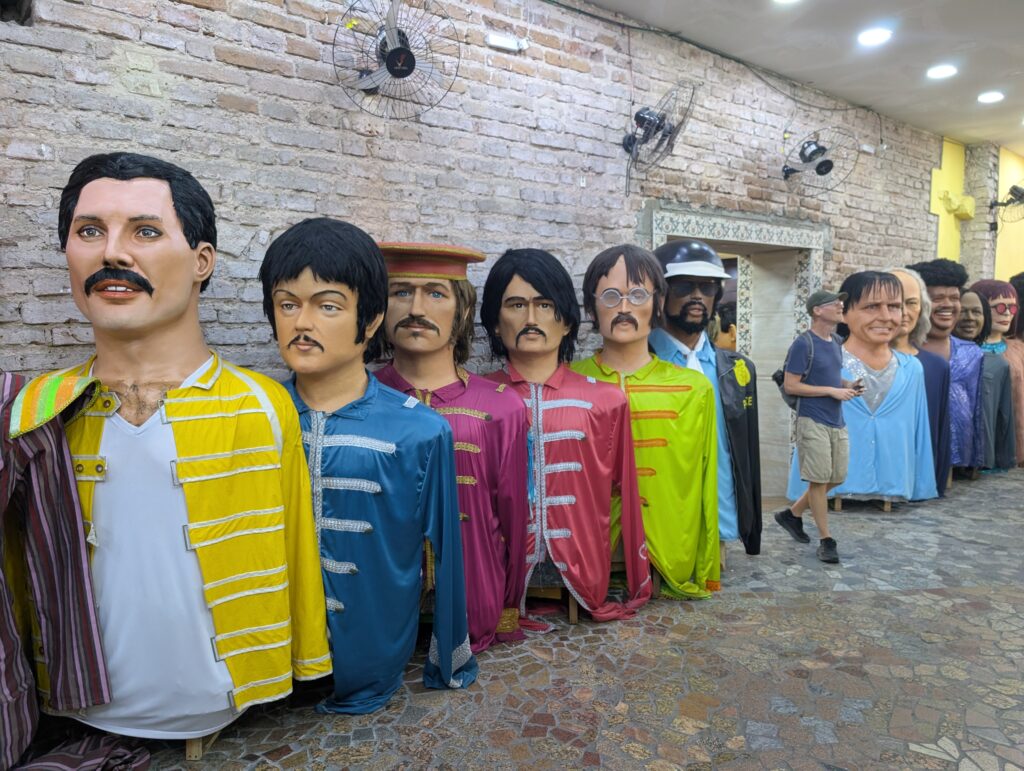
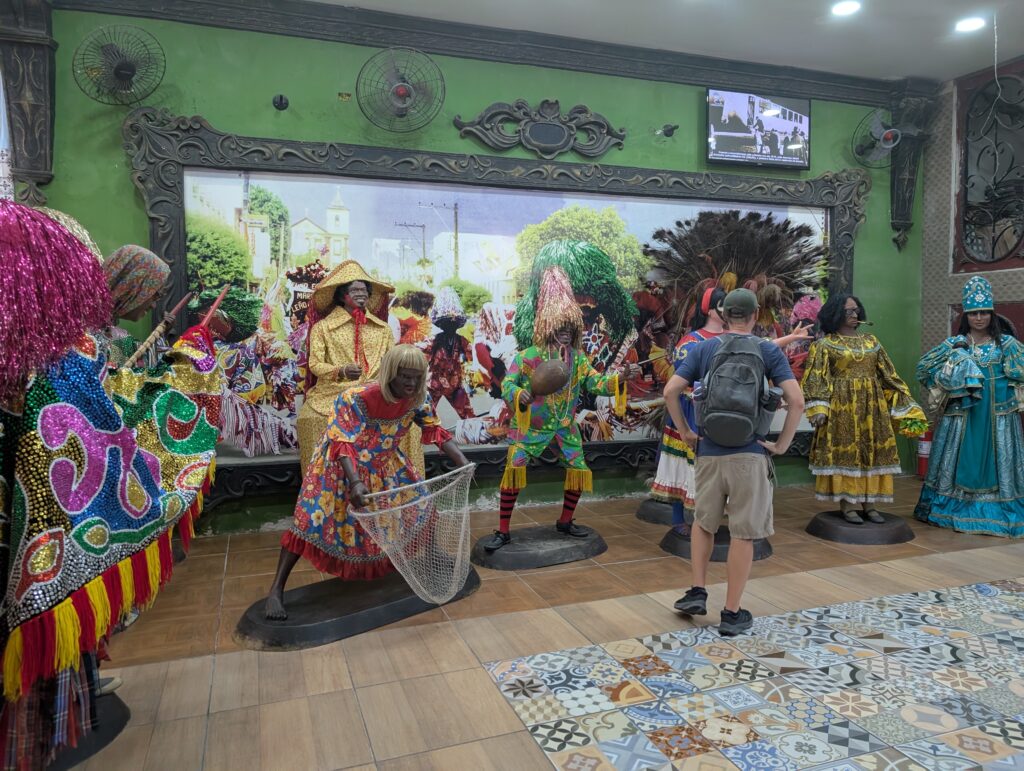
We followed that with a visit to a museum featuring bonecos gigantes, the giant dolls that come out for Carnival. They were truly impressive, especially thinking about how they are carried on a person’s shoulders. Seeing the different characters was a lot of fun and at the end of our visit we were joined by an employee who spoke English who shared some of the stories behind the dolls. We then popped into their sister museum, which we’d also purchased an entry for, to see some of the colorful Carnival costumes.


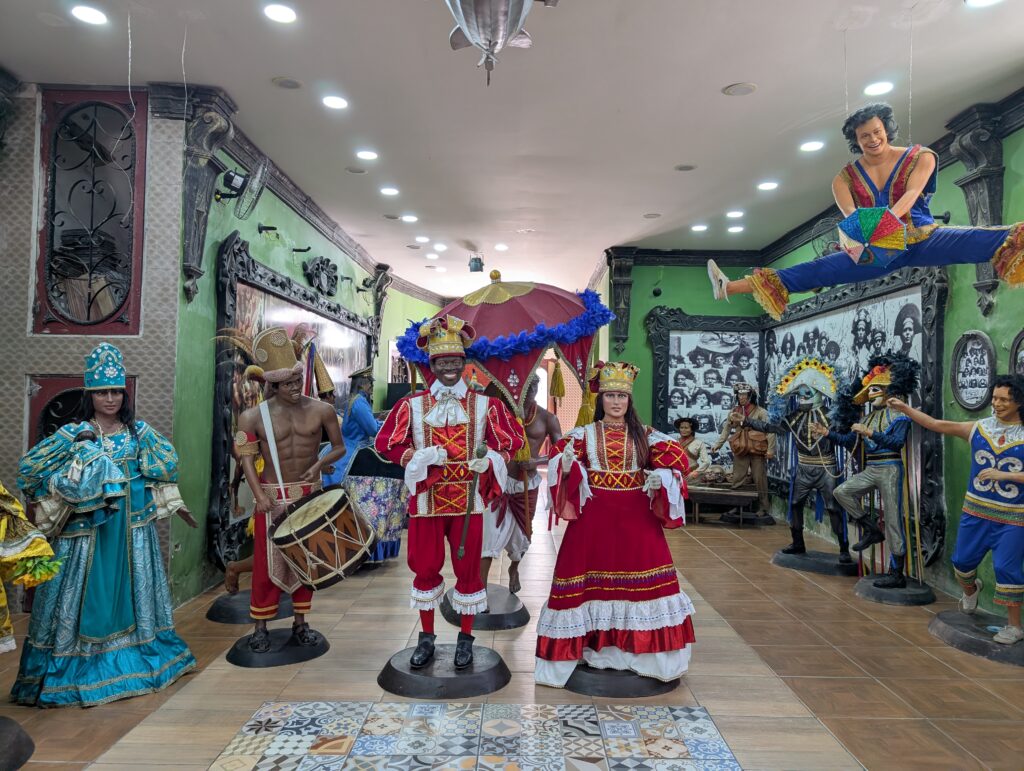
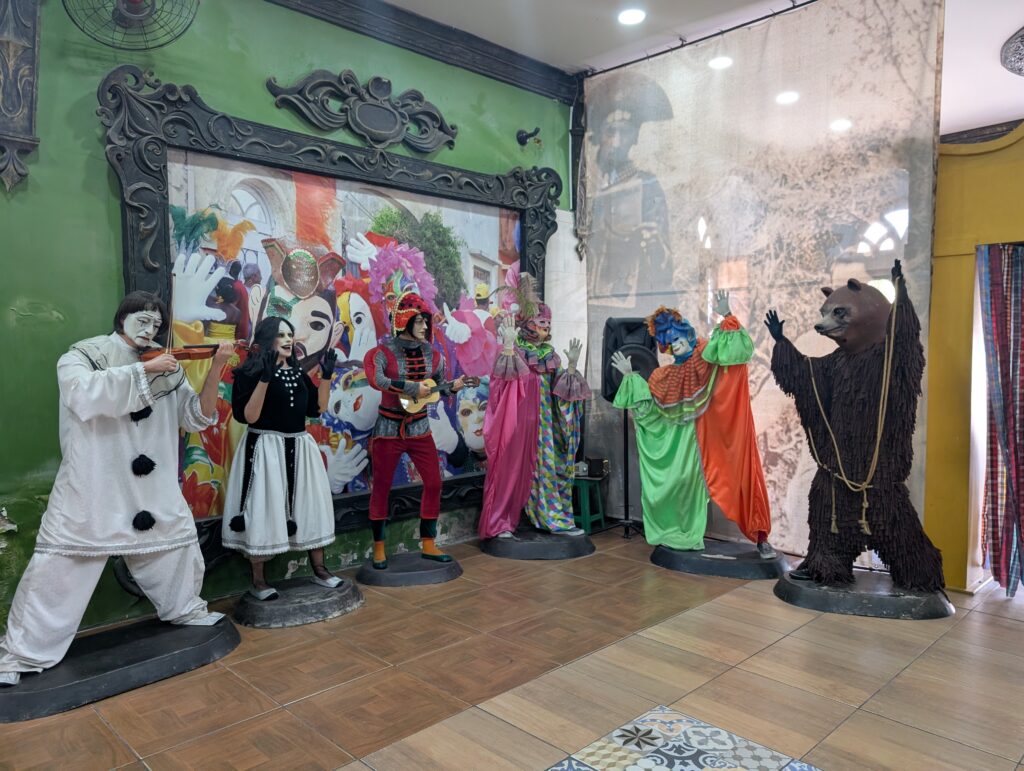
After a delightful cafe break featuring a cappuccino with pepper for Chad and fresh orange and strawberry juice for me (which I somehow neglected to take a photo of), we walked up to one more museum, the Centro Cultural Cais do Sertão, which is a culture museum of the area that especially celebrates the singer Luiz Gonzaga, who popularized the local forró music nationwide. Forró is a folk music using just accordion, triangle, and base drum, plus singing. We enjoyed learning about it and hearing recordings in the museum and later had the opportunity to see it live in Porto de Galinhas, our long stay destination.
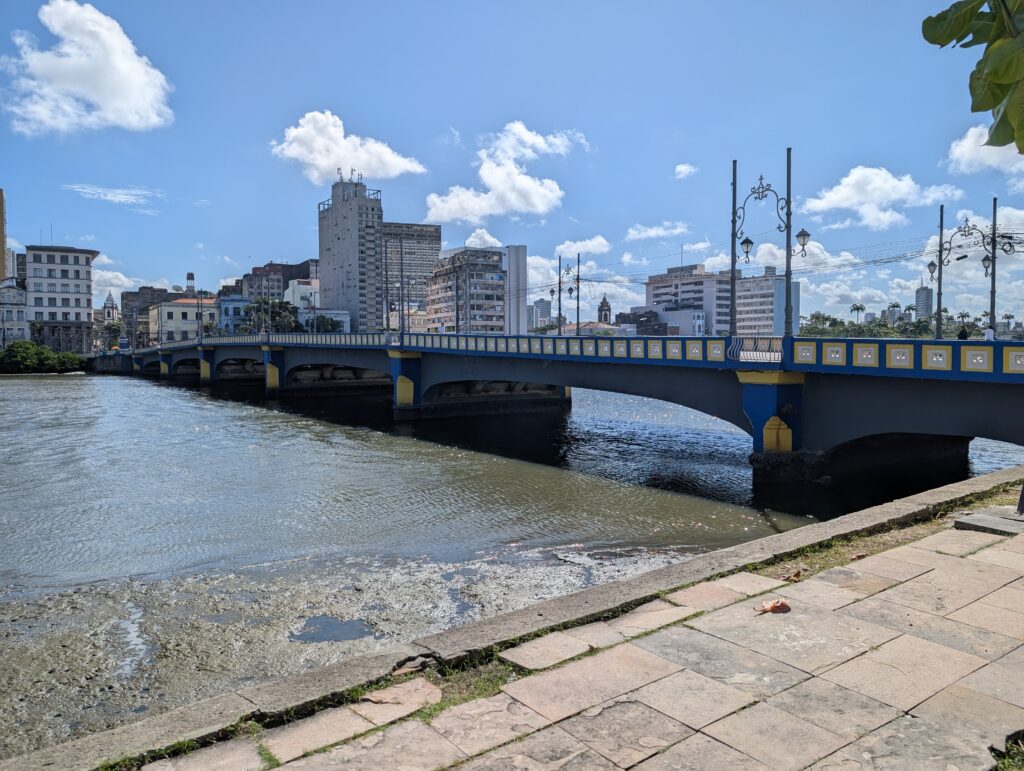

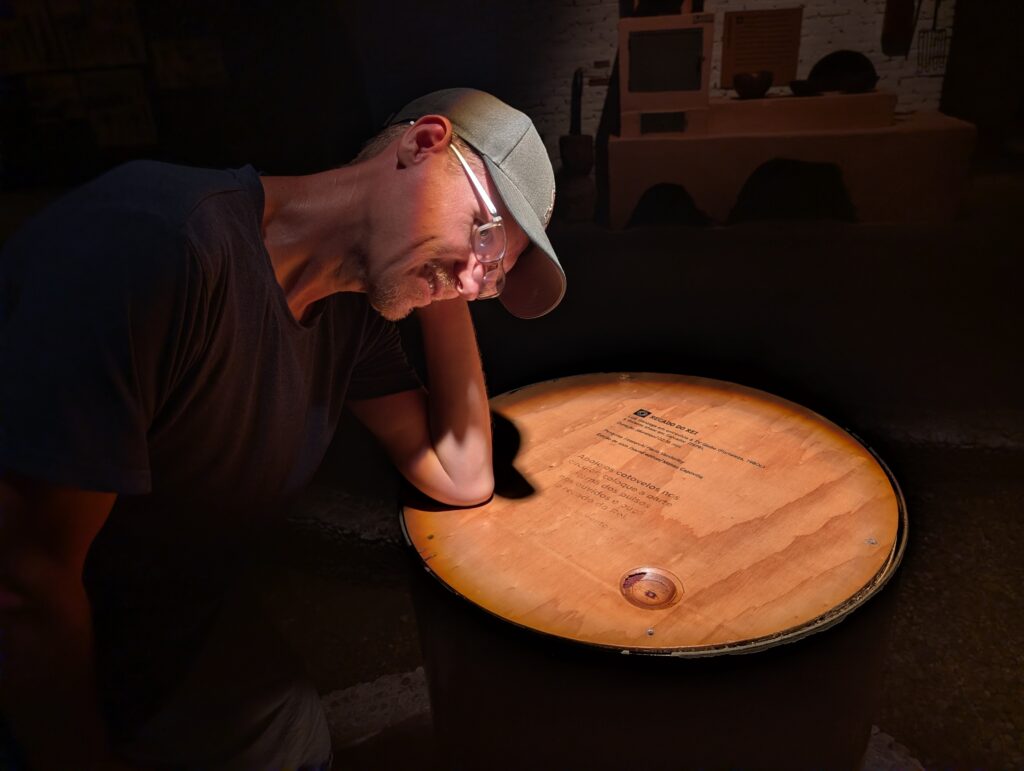

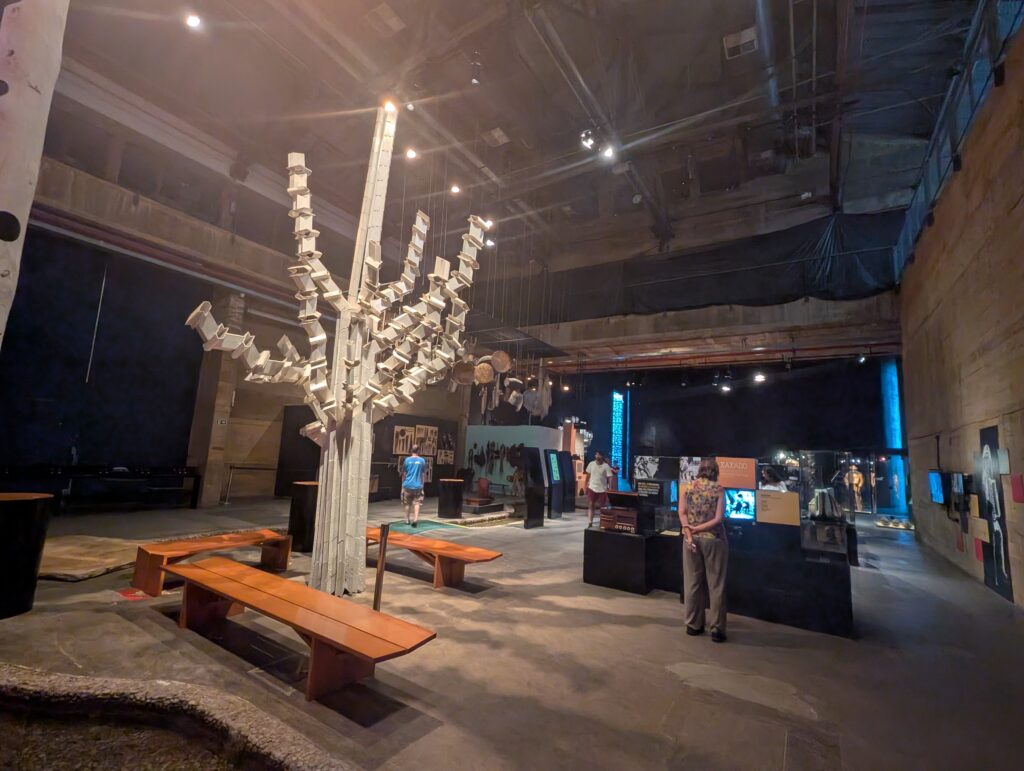

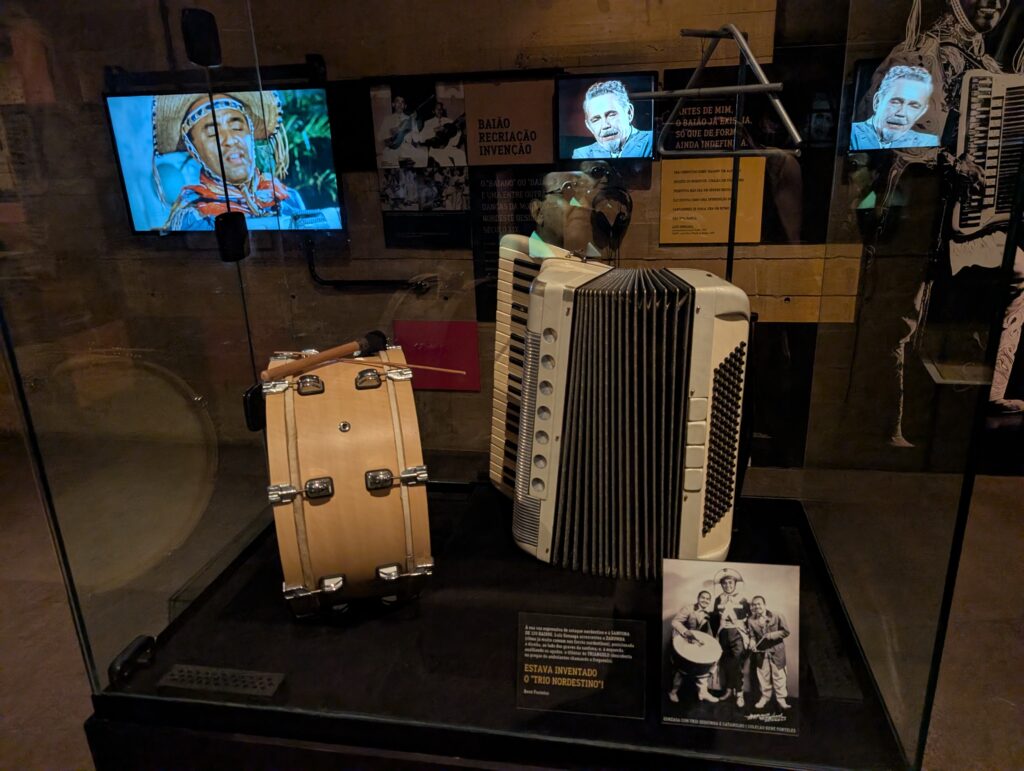
We had a great time learning through all these museums in the old town. The two music museums were each just $2 per person and the doll and costume museums were $10 per person for the combo ticket (paid in the equivalent Brazilian reais, but most places happily accepted credit card).
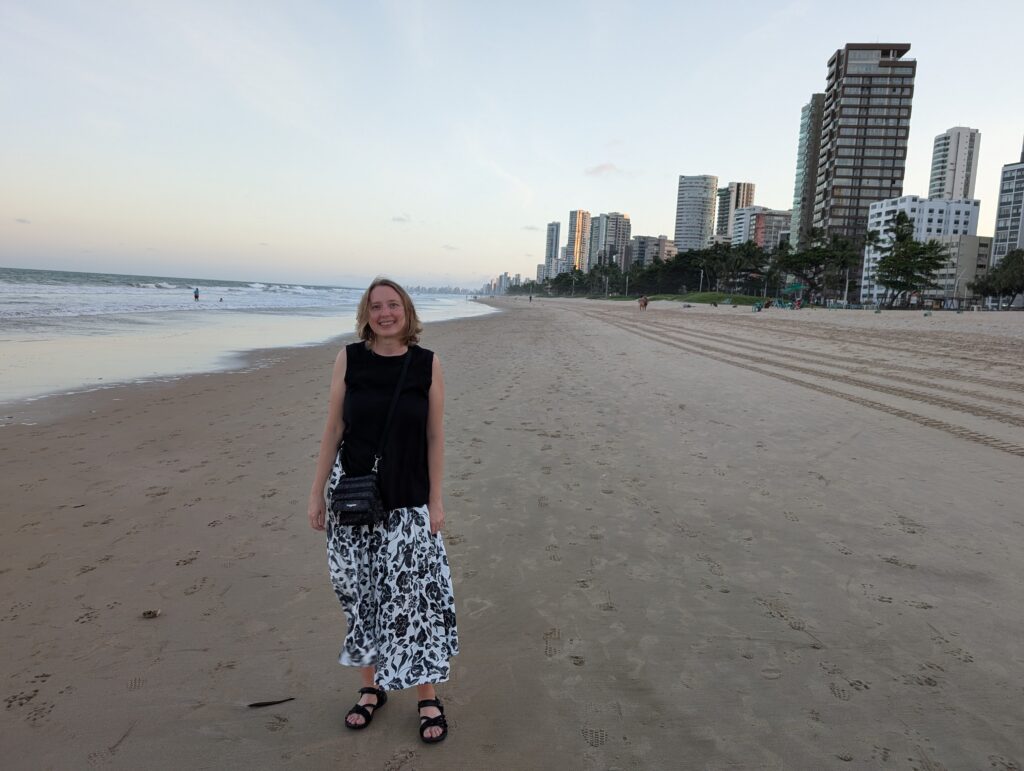
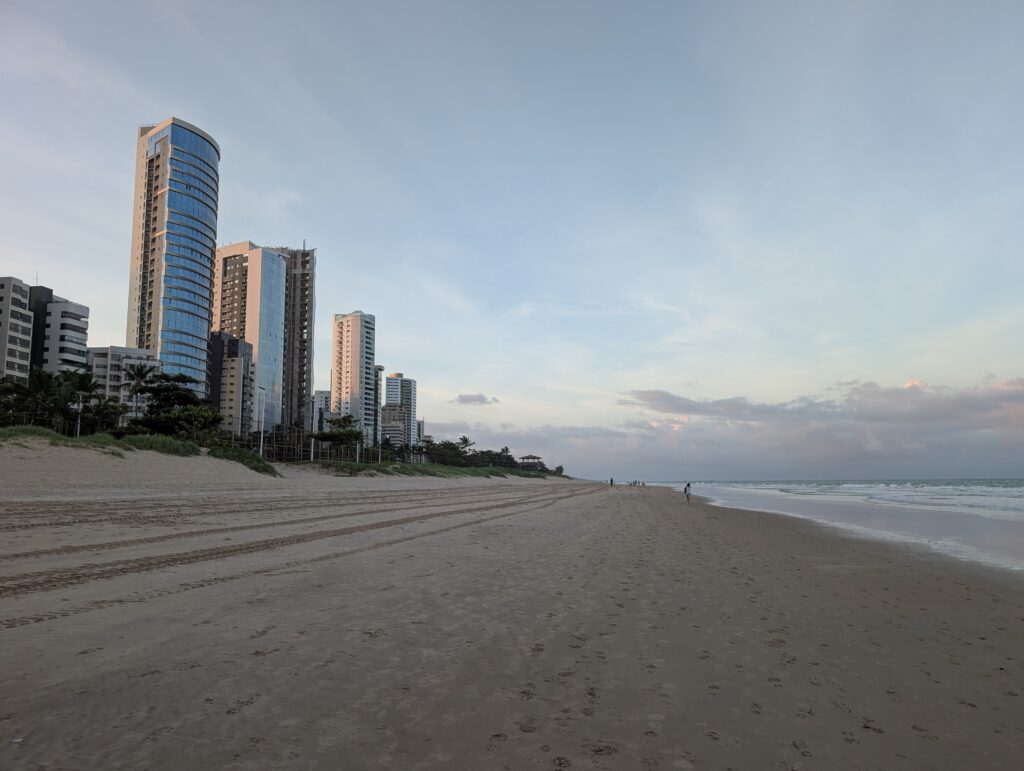
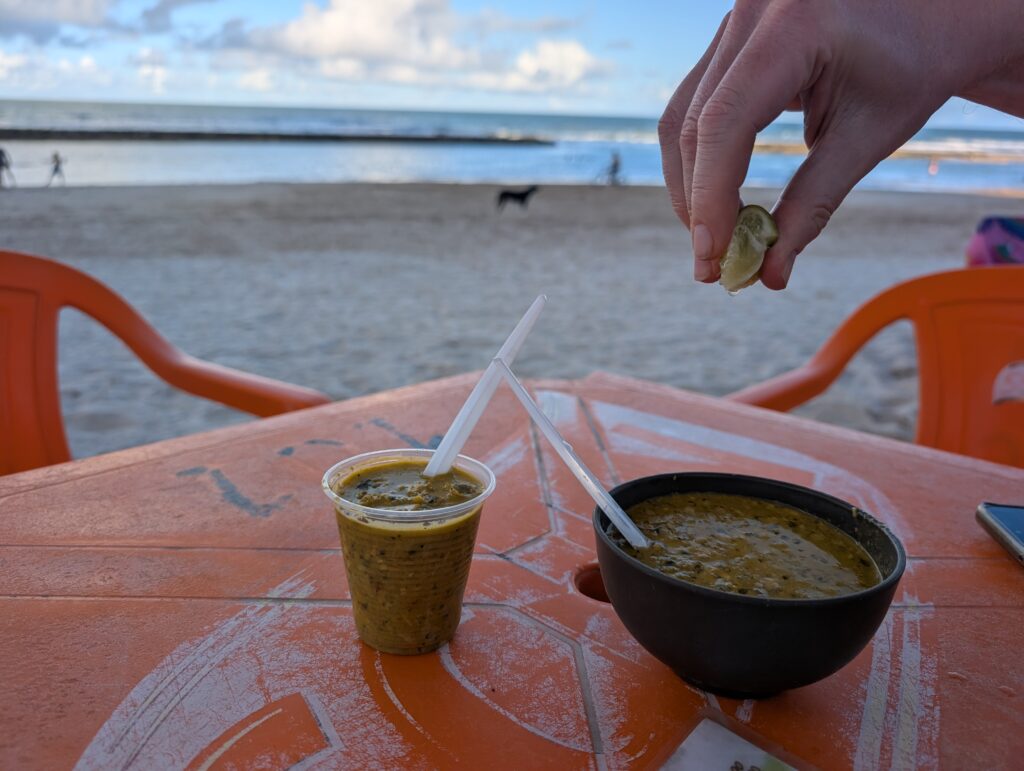
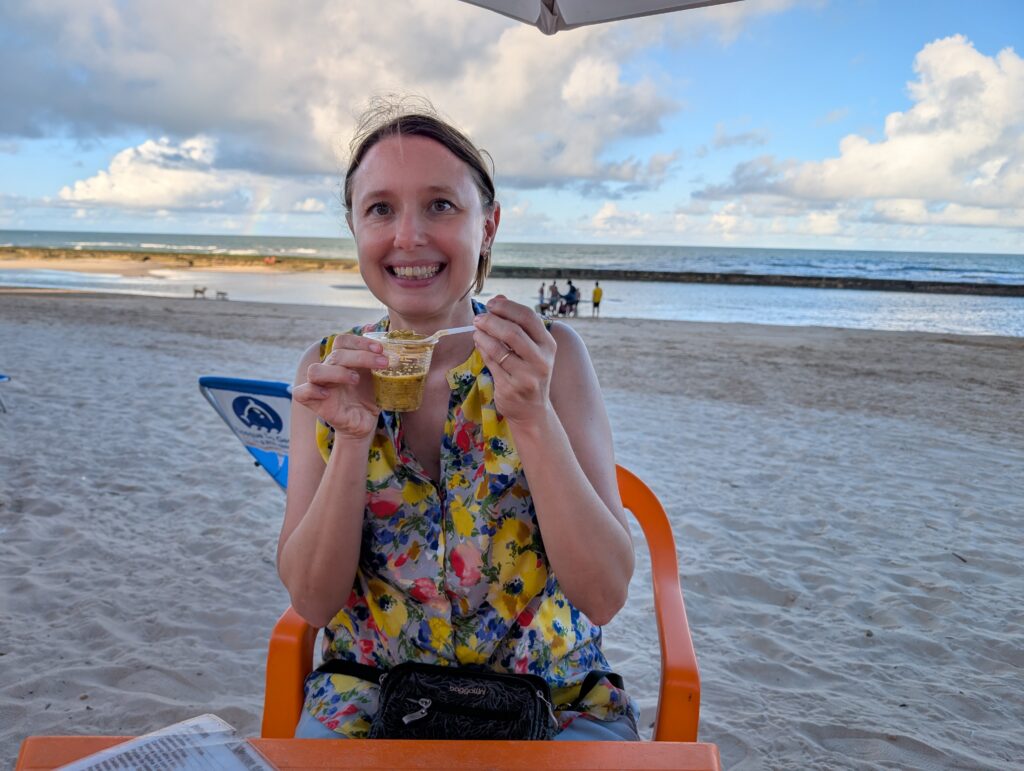
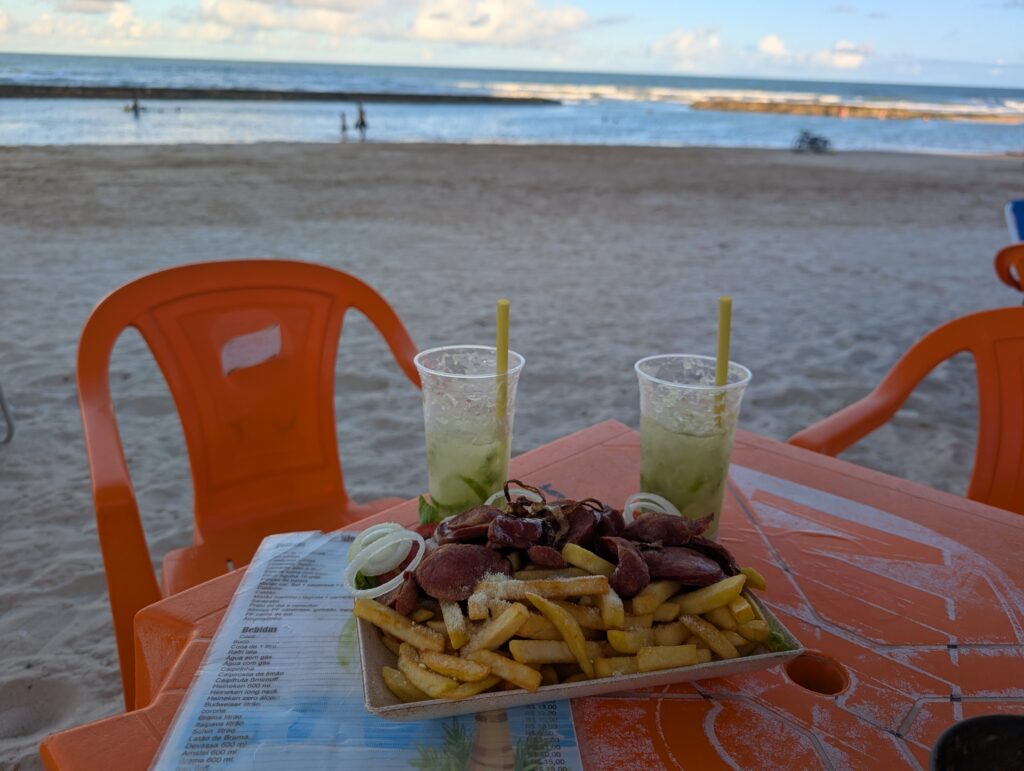
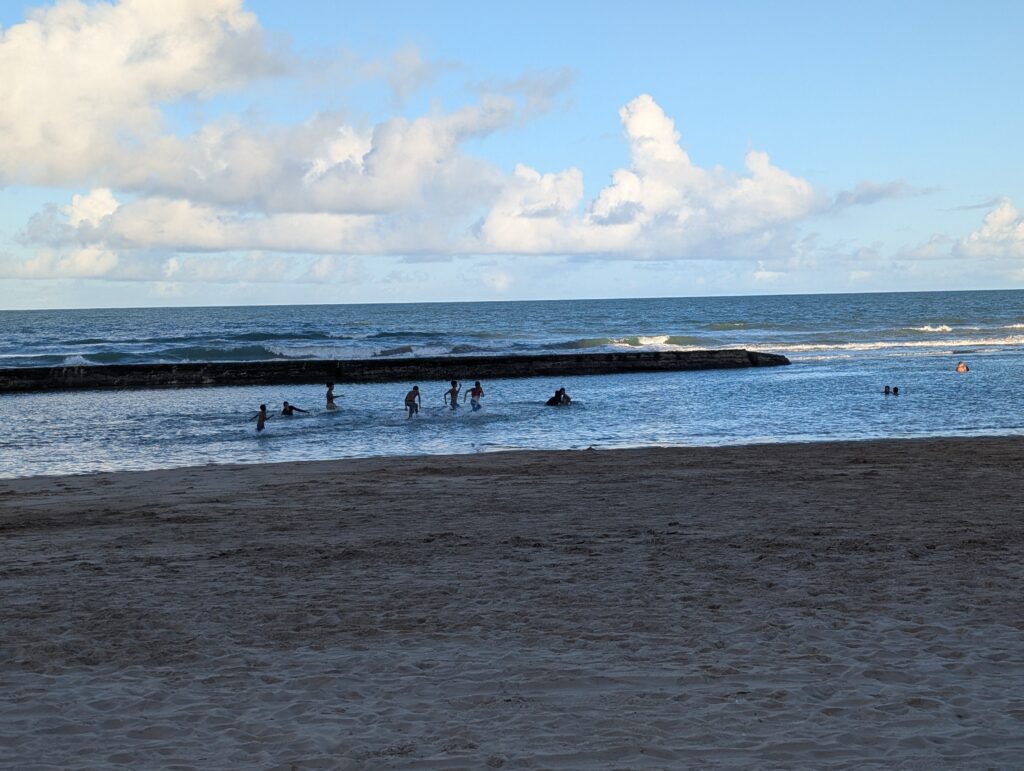
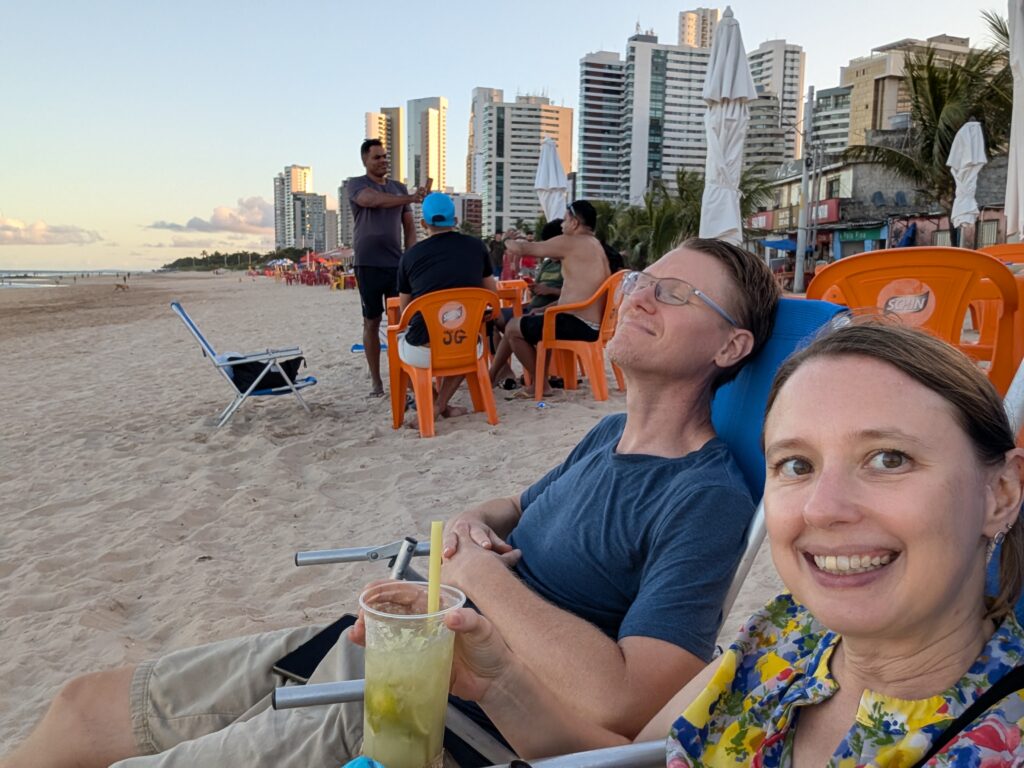
When we returned to our Boa Viagem neighborhood, we took a long beach walk to find a late lunch/early dinner around 4 p.m. There are many informal umbrella-and-table places that serve food, though the one we stopped at didn’t have a menu so we moved on. Finally at the north end of the beach we came across a place with good reviews that had a few locals, great views, and everything we hoped for on the menu. I was eager to try the caldinho. We ordered a couple of caipirinhas (Brazil’s famous cachasa, lime, and sugar cocktail), the caldinho, a caldo (which was just the caldinho served in a bigger bowl), and a local sausage called calabresa. It was a great casual meal and a perfect place for people-watching on the beach.
Day 3 – Olinda
We started our day again with the delicious hotel breakfast and a walk on the beach. Our main activity for the day was to go to the town of Olinda. Since it is just north of Recife, we took an Uber again and arrived in the main part of Olinda at the top of the hill around 11:30 a.m.
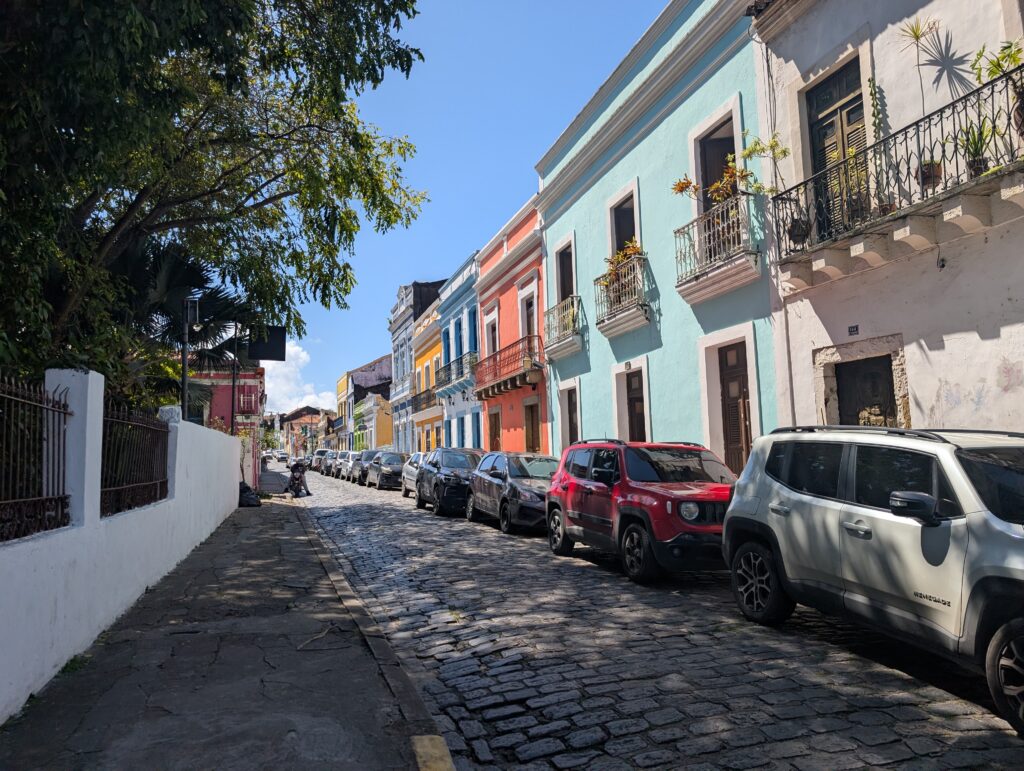
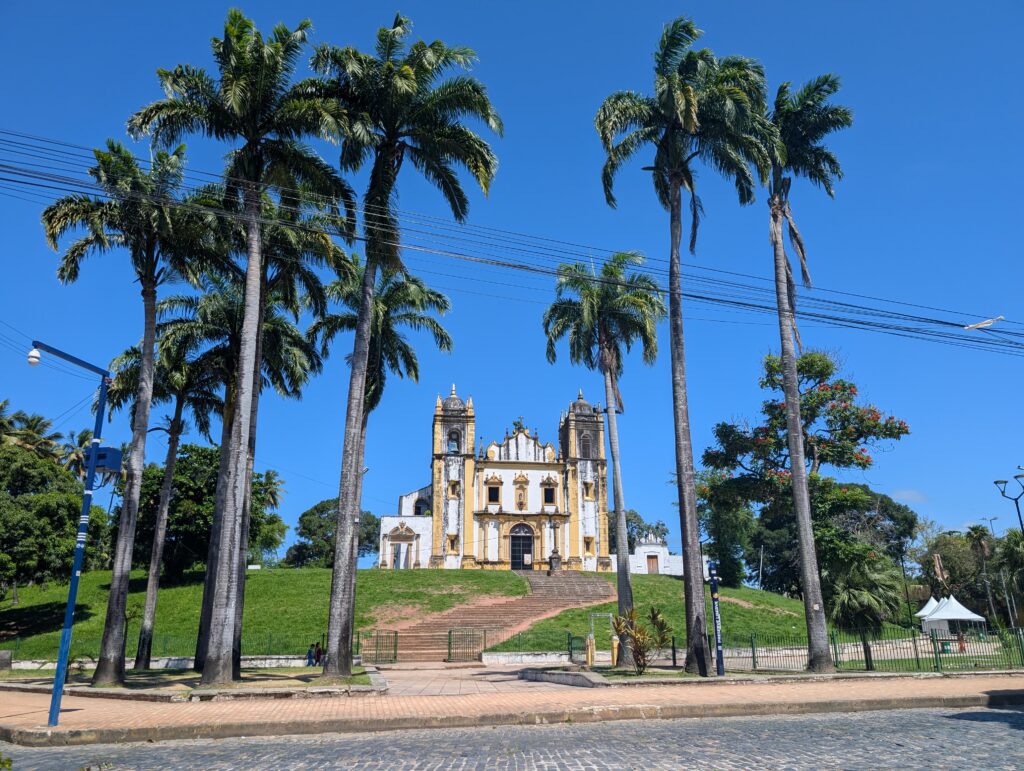
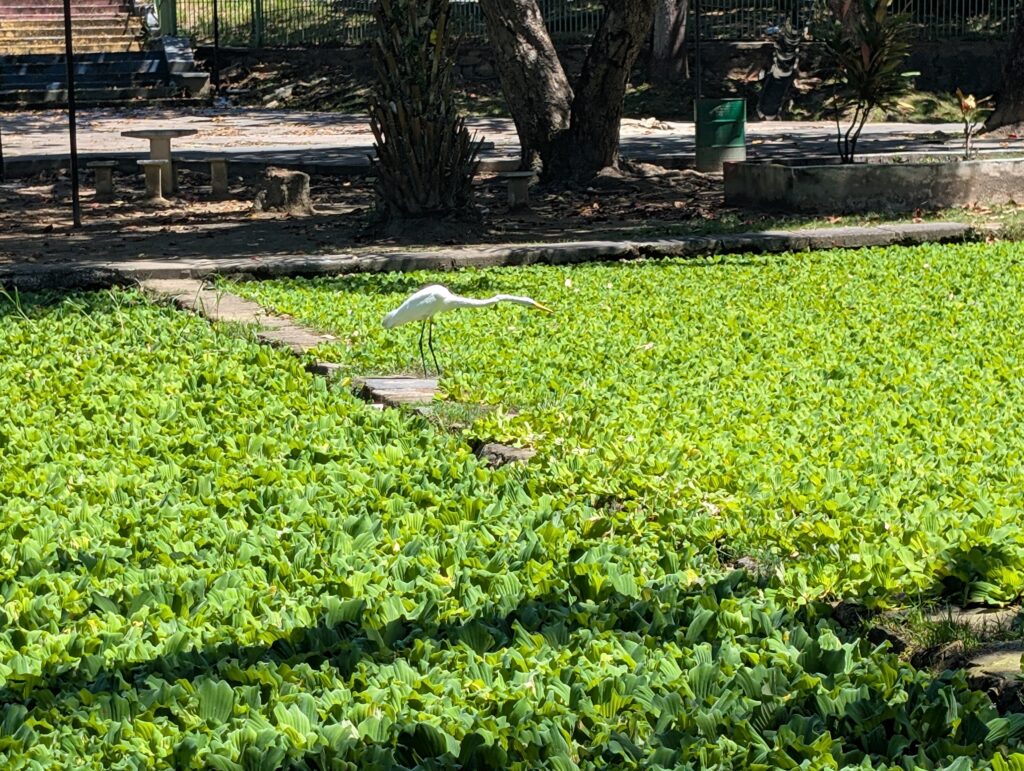
Olinda’s city center is a UNESCO World Heritage Site for its history and preserved colonial architecture. The city was founded by the Portuguese in 1535 and was once the capital of the region. It’s known for its Carnival celebrations, which originated the tradition of the bonecos gigantes we saw in Recife. We walked around the hilltop and then down the hill to see the beach (there wasn’t much of one) and big park. It was a nice town but not spectacular and we really didn’t need 90 minutes to see it all.


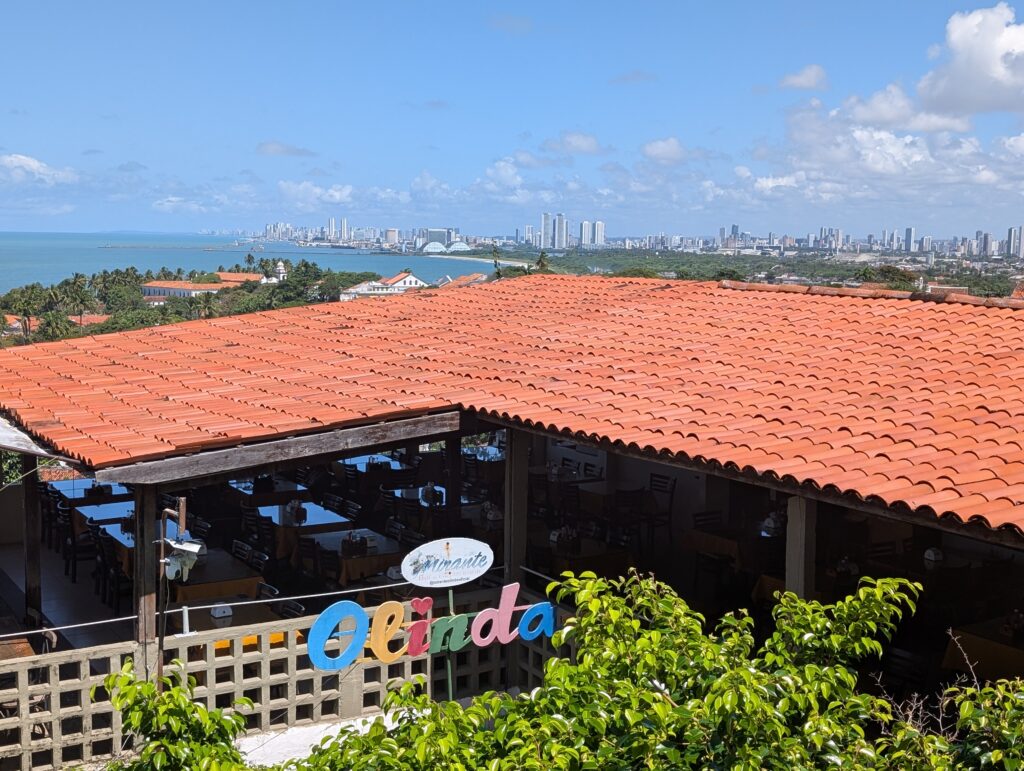


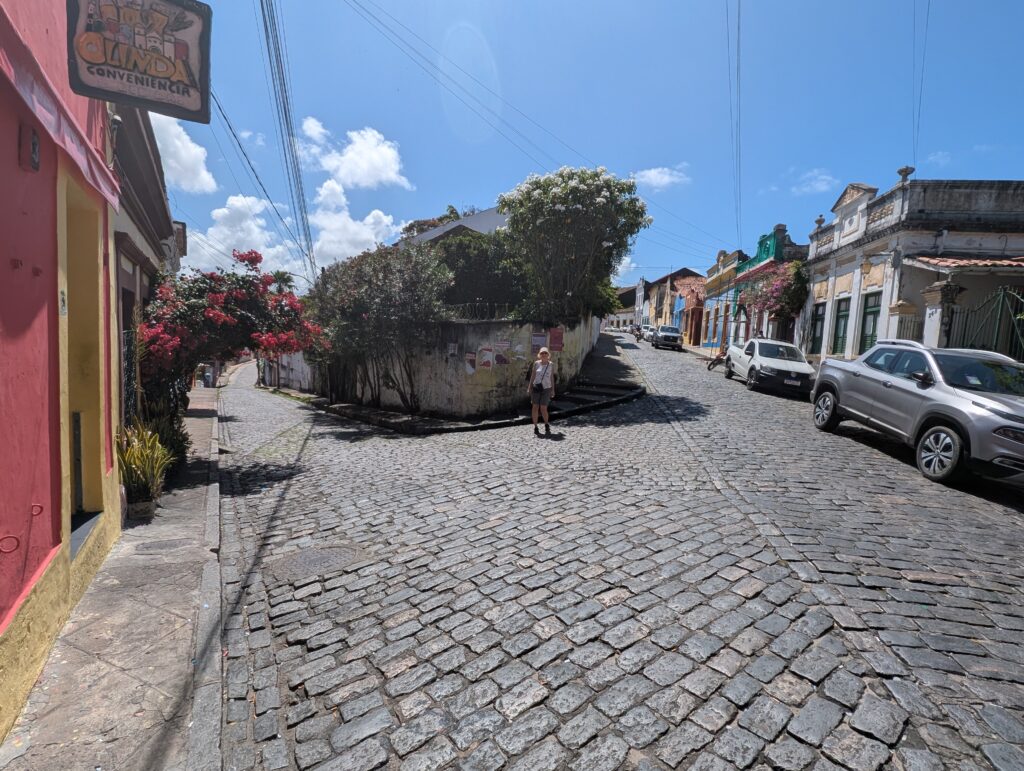

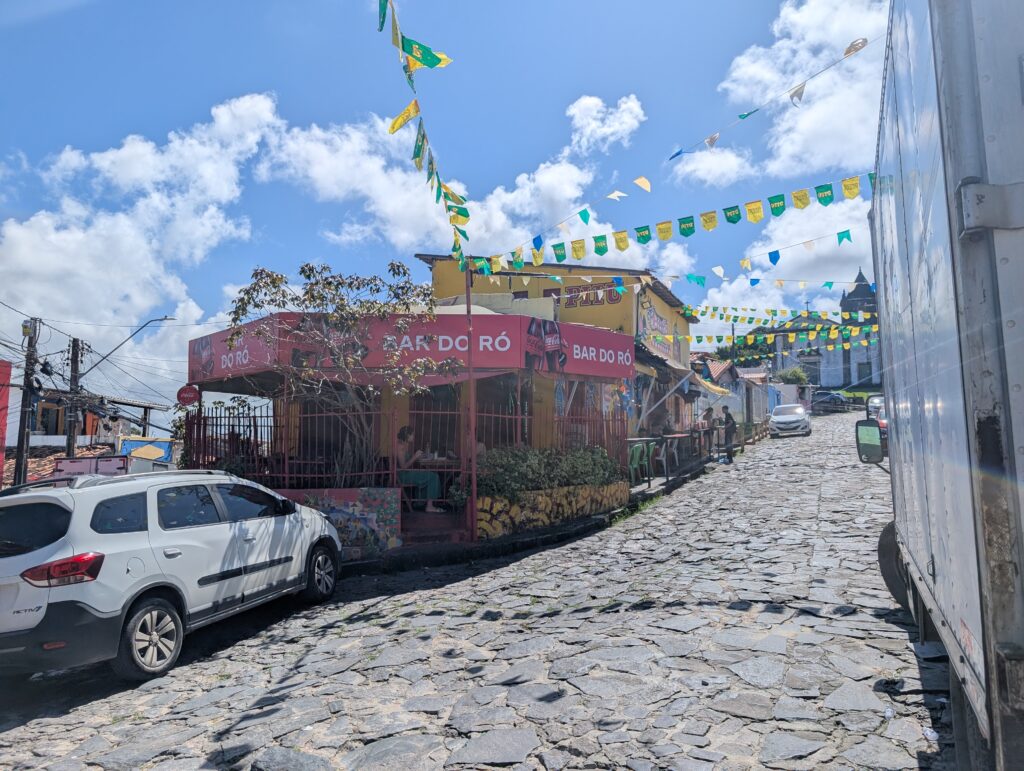
We had to walk up the hill to get to our 1 p.m. lunch reservation, but it wasn’t too bad a climb. The same local friend of a friend recommended the place, Oficina do Sabor, which is known for the local specialty of shrimp stew served in a pumpkin. We were given a nice table on the back patio. They actually had several versions of the specialty in addition to a full menu of Brazilian cuisine. One thing we didn’t love about Brazil is that many restaurant menus are dominated by dishes that serve two people, which was the case here. Chad and I usually like to order different things so we can try more. But we were able to agree on the version of the specialty that included both shrimp and lobster. Sure enough, it came in a pumpkin, which had been roasted and served as a side dish in addition to coconut rice. It was very tasty and fun to eat.


We got an Uber back to our hotel after lunch, where we rested and worked a little. We didn’t really want another meal out in the evening so we managed to find a place to buy some meat and cheese and bread to make sandwiches in the room. Unfortunately there were no vegetables. Normally when I choose a hotel I don’t worry about whether there’s a grocery store nearby (and there usually is anyway) but our part of Boa Viagem was a bit of a food desert.
Departure and Summary
The next morning, we enjoyed one last delicious hotel breakfast, including Chad indulging in the chocolate cake. It was a rainy morning so we spent it in the room until our ride to Porto de Galinhas, a private driver recommended by the same friend of a friend picked us up at 1. Having a local connection was very helpful!
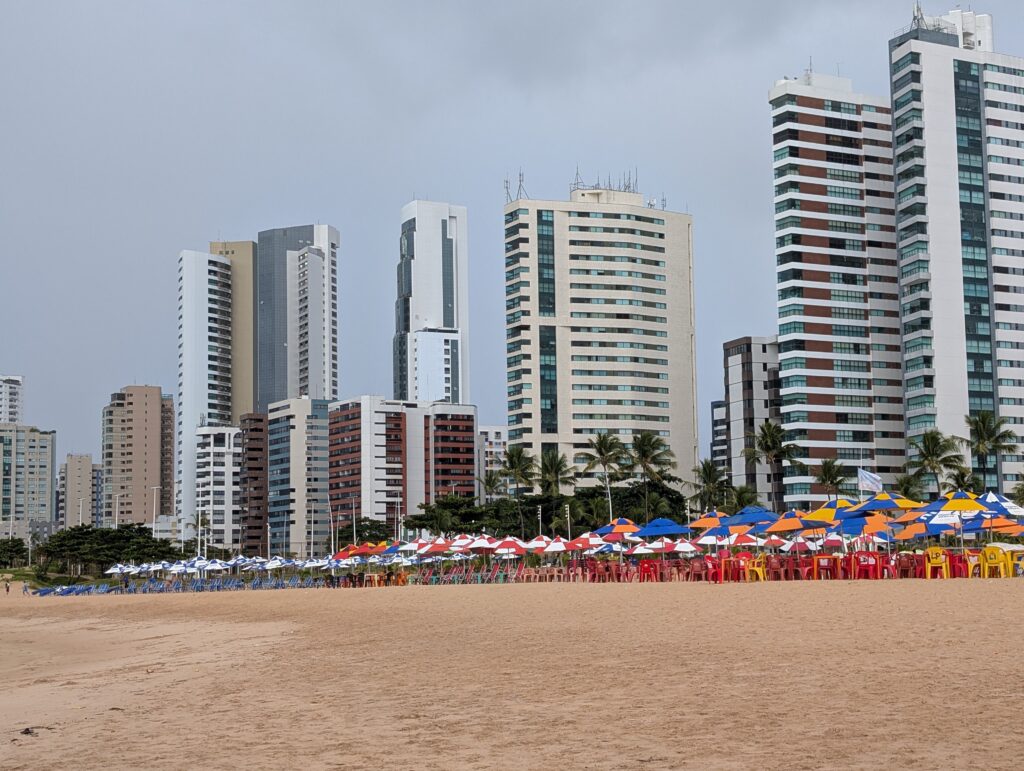
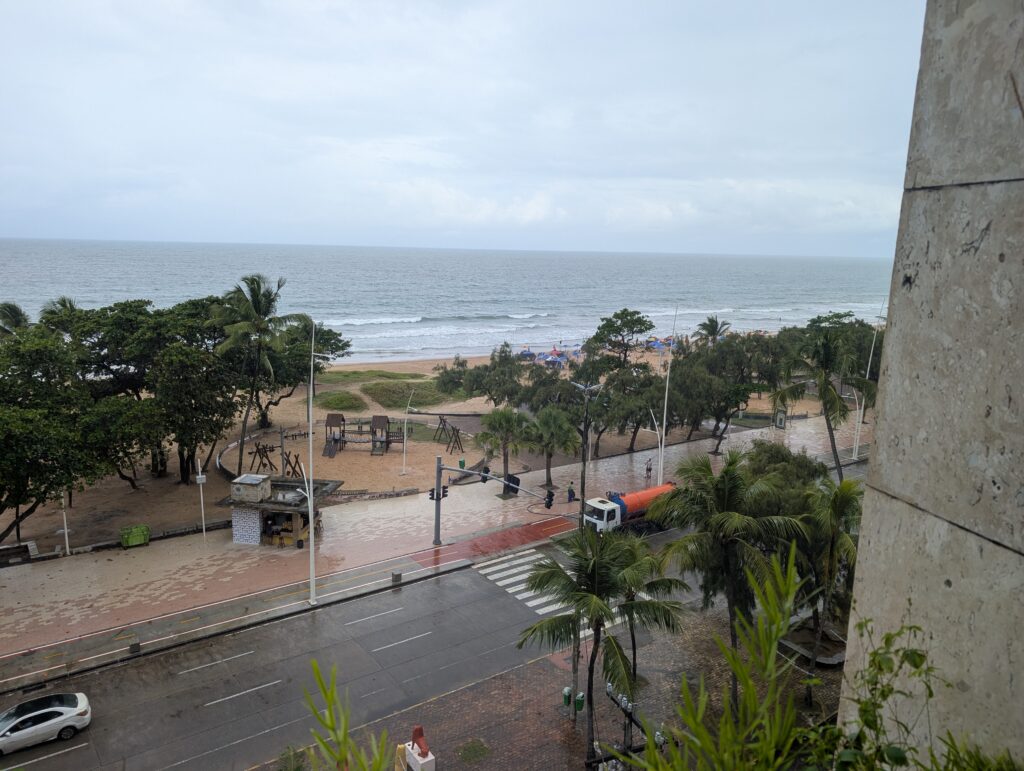
Recife proved to be a great start to Leg 19. There wasn’t so much to do that we ran ourselves ragged and I even had time to work a little here and there. But it still felt very vacation-y with our sea view and beach walks and all the wonderful food.
Review of Marante Plaza Hotel – Room with a View – My husband and I loved our three-night stay here. As foreigners, we were grateful that the front desk staff spoke English. They were all very friendly and professional. The room was perfectly clean and a great size. The view of the ocean from our room was fantastic and well worth the extra cost. It was nice having a mini-fridge in the room. The breakfast buffet was phenomenal including a made-to-order station where we tried tapioca for the first time. There are several great restaurants nearby and walking on the beach each day was fantastic.